// data-verified

5 Best HEPA Shop Vacs of 2026: Suction That Lasts Through Fine Dust

HEPA shop vacs that keep suction when filtering fine drywall dust and debris. Find the right corded extractor or cordless unit for your workshop, garage, or job site.

A shop vacuum with a HEPA filter sounds like the perfect solution for hazardous dust, but many models clog within minutes when tackling fine drywall compound or silica dust. The filters blind over, suction drops, and you spend more time cleaning the vac than using it. That frustration hits harder when you're sanding drywall or cutting concrete and can't afford downtime.

The real choice isn't just about HEPA — it's about matching the vacuum to the dust load. A compact cordless unit that works great for car interiors will choke on a full drywall job. A heavy-duty corded extractor can run all day but weighs 30 pounds. This guide sorts out which HEPA shop vacs actually maintain suction when you need it, and which are better left to light cleanups.

#01

Best Overall

Makita VC4210L 11 Gallon Wet/Dry HEPA Filter Dust Extractor/Vacuum

83 /100
Kirk Score Excellent
Noise Level
60 dB
Power Source
Corded
Tank Capacity
11 Gallons
HEPA Filtration
99.97% at 0.3 microns
Check Details on Amazon

Pros

  • Delivers strong, consistent suction that matches premium dust extractors. — 36 mentions, 91.7% positive
  • Self-cleaning filter reduces clogging and keeps airflow steady during heavy use. — 15 mentions, 86.7% positive
  • Built-in tool-activated outlet starts and stops the vac with your power tool.
  • 11-gallon capacity handles large volumes of debris without frequent emptying.
  • HEPA filter captures 99.97% of dust down to 0.3 microns, meeting OSHA silica standards.

Cons

  • Auto-clean filter pulses with a rhythmic thump every 20 seconds, which can be distracting in quieter workshops. — 27 mentions, 44% negative — thumping reported every 20 seconds; not a defect but a design characteristic
  • Hose splitting and internal auto-clean component wear have been noted after prolonged heavy use. — 17 mentions, 41% negative — durability concerns with hose and internal components

The Makita VC4210L maintains suction through hours of drywall sanding and concrete grinding by pulsing its filter clean automatically, sparing you from stopping to unclog it. The 12-amp motor delivers 148 CFM and 92 inches of water lift, giving it dust extraction performance that rivals high-end extractors from brands like Festool. The auto-clean mechanism fires a rhythmic pulse that knocks dust off the HEPA filter, keeping airflow consistent during continuous heavy use.

That filter-cleaning pulse produces a noticeable rhythmic thump roughly every 20 seconds. In bustling job sites and loud workshops it blends into background noise, but in a quiet garage or basement workshop it can become distracting. This is a deliberate design characteristic, not a malfunction, and the trade-off is sustained filtration with less manual filter tapping.

The Makita's durability generally holds up under professional workloads, but extended heavy use has occasionally led to hose splitting and wear in the auto-clean mechanism itself. These issues are not guaranteed, but they're worth factoring in if the vac will see continuous commercial duty. Keeping the hose clear of sharp bends and promptly replacing worn parts mitigates the risk.

This vac suits professional contractors who need OSHA-compliant silica dust extraction, serious woodworkers managing large workshop dust volumes, and remodelers who want tool activation to run a sander or saw without touching a switch. Portability is not its strong suit — it's a corded machine with an 11-gallon tank that stays put. The thumping auto-clean noise is less of an issue in loud environments, making it a better fit for job sites than quiet home shops. At a premium price, the VC4210L justifies its cost through sustained suction and tool integration, though the ongoing expense of HEPA bags and replacement filters adds up over time.

💡 💡 Tip: To muffle the auto-clean thump, place the vac around a corner or behind a partition — the sound dissipates quickly without affecting suction.

Bottom line: For jobsites and shops that run sander or grinder all day, the VC4210L's sustained suction and OSHA-compliant filtration justify its premium price. The auto-clean thump and occasional hose wear are real trade-offs, but they don't undermine its core dust extraction capability.

Check Latest Price
#02

Best Portable Dual-Power

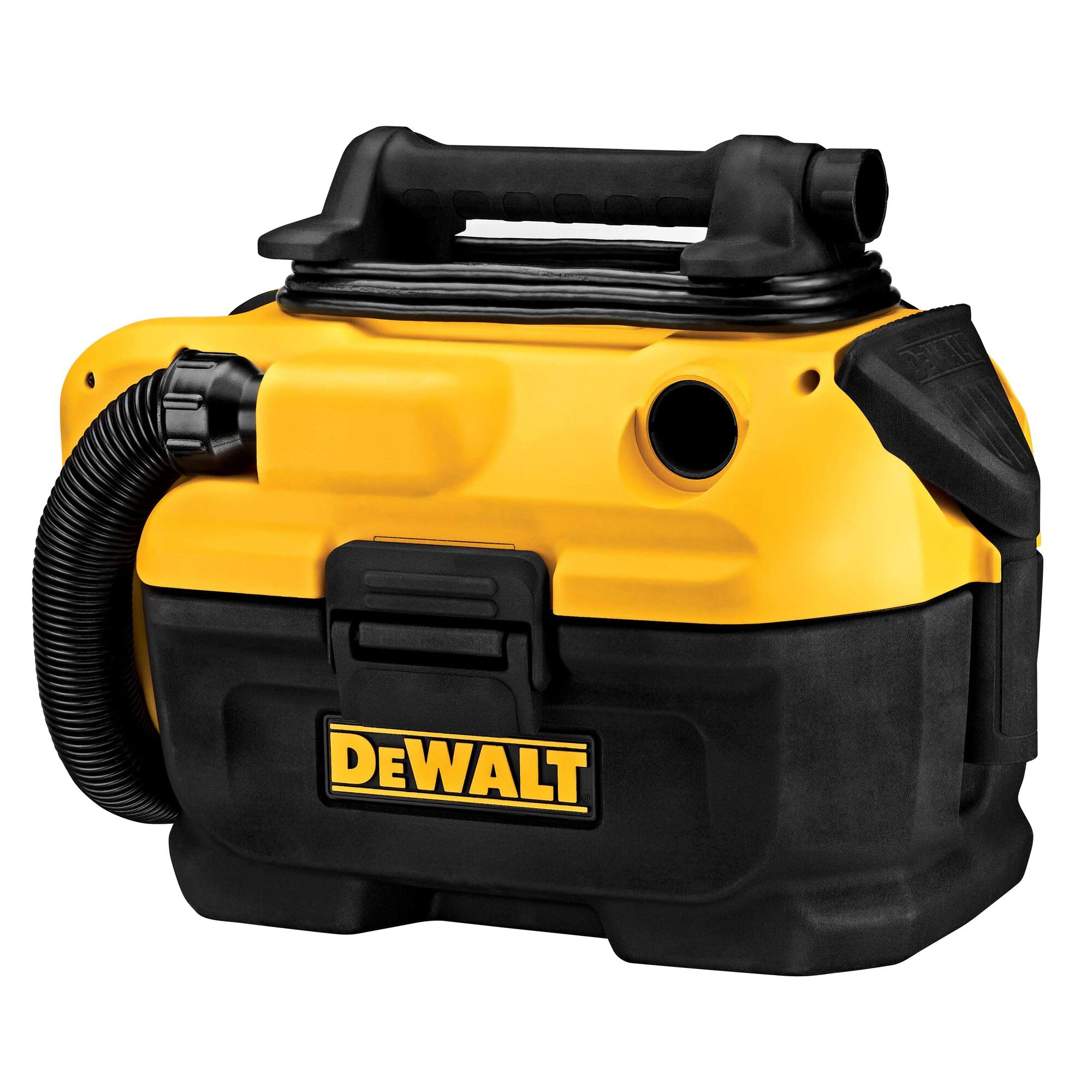
DEWALT DCV581H

91 /100
Kirk Score Outstanding
Noise Level
80 dB
Power Source
Corded/Cordless
Tank Capacity
2 Gallons
HEPA Filtration
HEPA Included
Check Details on Amazon

Pros

  • Extremely lightweight and compact — toss it in the car for on-the-go cleanups. — 307 mentions, 98.4% positive
  • Cordless freedom with unlimited corded runtime — no downtime waiting for batteries to charge. — 162 mentions, 87.7% positive
  • HEPA filtration captures fine dust from drywall, sawdust, and car interiors without spewing particles back into the room. — 884 mentions, 83.5% positive

Cons

  • Suction may feel light when facing larger debris or thick carpeting. — 427 mentions, 54% negative

The DCV581H trades the stationary shop vac’s tank size and suction power for go-anywhere convenience. At around 6.5 pounds, it stows easily in a truck cab or closet, and its dual-power design means you can grab it off the shelf with a charged 20V battery for a quick 10-minute job, or plug it into the wall for longer sessions without waiting for a recharge.

This vac is built for DEWALT tool owners who want a dust-tamer for light debris — think drywall dust after a ceiling cut, sawdust around the miter saw, or dried coffee grounds in the truck floor liner. It’s not intended to replace a corded 6-gallon extractor on a job site. The modest airflow leaves behind larger wood chips and can struggle to lift fine dust trapped deep in thick car mats or carpeting. If your daily work involves heavy concrete grinding or bulk shavings, this isn’t your primary vac.

For fine wood and drywall dust, the sealed canister and included HEPA filter keep particles contained. Emptying the tank is a quick twist of the lid, though the 2-gallon capacity means you’ll be dumping it frequently during any moderate sanding session. The 80 dB hum is present but not deafening, and the side exhaust can kick up light debris if aimed at a dusty floor — best to position it with the outlet facing away.

💡 💡 Tip: For the strongest suction, empty the 2-gallon tank often and tap out the HEPA filter before each session — fine dust loads quickly reduce airflow.

Bottom line: If you already have DEWALT 20V batteries and need a grab-and-go vac for small messes, this dual-power unit delivers real portability and HEPA filtration — just don’t expect it to replace a full-size shop vac for heavy cleanup.

Check Latest Price
#03

Best Cordless Suction

Bosch GAS18V-3N

90 /100
Kirk Score Outstanding
Noise Level
80 dB
Power Source
Cordless (18V)
Tank Capacity
2.6 Gallons
HEPA Filtration
Washable 99.97% at 0.3 microns
Check Details on Amazon

Pros

  • Build quality stands out with a flexible, kink-resistant hose and robust latch system — 70 mentions, 94% positive
  • Strong suction for a cordless vac, outperforming some larger corded models — 46 mentions, 74% positive
  • Lightweight enough to carry one-handed up stairs or around job sites — 35 mentions, 97% positive

Cons

Rotational airflow technology distinguishes this vac from typical cordless dust extractors, sustaining strong suction throughout the tank’s fill without the gradual fade that plagues many battery-powered units. The motor generates enough pull to outwork larger corded shop vacs in direct comparisons, making it a practical option for extracting fine dust from sanders or cleaning up job-site debris. Because it’s a bare tool, the Bosch GAS18V-3N slides directly into existing Bosch 18V AmpShare tool setups—no adapter or separate battery platform needed.

At 2.6 gallons, the tank hits a sweet spot between capacity and carry weight, with an integrated hose cuff storage that simplifies transport across a shop or between vehicles. The flexible 5.25-foot hose resists kinking and couples with a washable HEPA filter rated to capture 99.97% of particles down to 0.3 microns. Noise holds at 80 dB—loud but not extraordinary for a shop vac—and the filter can be rinsed clean when performance drops.

Mobile detailers and Bosch power tool owners will appreciate the cordless freedom to vacuum inside vehicles, on ladders, or in tight garages where plugging in isn’t convenient. The HEPA filtration adds a layer of protection when cleaning fine concrete dust or drywall particles. The trade-off is runtime: on high-suction mode with a 5Ah battery, expect about 20 minutes of continuous operation before a swap. That makes it best suited for intermittent cleanup rather than all-day extraction, and it rules out users who need sustained cordless runtime without pausing to change batteries.

Bottom line: Strong value for Bosch battery system users, with impressive suction and build, though the bare-tool cost and extra battery investment add up.

Check Latest Price
#04

Best Budget HEPA

WEN VC4710

87 /100
Kirk Score Excellent
Noise Level
82 dB
Power Source
Corded
Tank Capacity
5 Gallons
HEPA Filtration
F9 0.3 micron
Check Details on Amazon

Pros

  • Outstanding value; delivers HEPA filtration at a budget price — 39 mentions, 92.3% positive
  • Decent suction and power for general shop cleanup — 23 mentions, 74% positive
  • F9 HEPA filter traps 0.3-micron particles, keeping airborne dust down during cleanup

Cons

  • HEPA filter can clog rapidly with fine drywall dust, requiring regular cleaning — 24 mentions, 42% negative — rapid clogging when used without a dust separator
  • Included hose, wands, and nozzles can detach or crack with regular use — 23 mentions, 83% negative — major frustration with accessories

The WEN VC4710 brings a genuine F9 HEPA filter to a price bracket typically reserved for vacs without fine-particle certification. That 0.3-micron rating means it captures the fine silica dust that cheaper shop vacs simply recirculate, making it a standout for budget-minded workshops concerned about air quality. Its 10-amp motor pulls enough air to handle wet messes, wood chips, and general garage debris with modest noise (82 dB).

The 5-gallon tank handles occasional spills and small workshop cleanups, and a blower port adds utility for clearing leaves or sawdust from benches. Suction is adequate for general debris, though sustained performance with fine dust benefits from a dust separator that keeps the filter breathing longer.

DIYers and hobbyists needing occasional HEPA dust collection will appreciate the VC4710’s low entry cost. The real value emerges when you pair it with a dust separator and replace the undersized, crack-prone hose and wands—two investments that lift performance closer to pricier extractors. Professionals tackling daily drywall dust or heavy job-site debris without an external separator will outgrow this vac quickly.

💡 💡 Tip: A dust separator keeps the HEPA filter breathing longer and avoids performance drops when vacuuming fine drywall dust or sanding debris.

Bottom line: For the price, the WEN VC4710 is a legitimate HEPA shop vac that with a few targeted upgrades can handle light to moderate workshop duty. Skip it if you aren’t willing to replace the attachments or manage filter maintenance.

Check Latest Price
#05

Makita Cordless System

Makita XCV11T 18V LXT Cordless HEPA Dust Extractor

83 /100
Kirk Score Excellent
Noise Level
68 dB
Power Source
Cordless (18V)
Tank Capacity
2 Gallons
HEPA Filtration
99.97% at 0.3 microns
Check Details on Amazon

Pros

  • Cordless portability with included 5.0Ah battery gives up to 60 minutes of runtime per charge.
  • HEPA filtration captures 99.97% of particles at 0.3 microns for cleaner exhaust air.
  • Quiet 68 dB operation lets you work in occupied spaces without excessive noise.

Cons

  • 2-gallon tank fills quickly during larger jobs, interrupting work for emptying.
  • Sustained suction and filter consistency under heavy silica or drywall dust remain field-unconfirmed.

A 2-gallon tank and cordless operation make the XCV11T a grab-and-go extractor for quick cleanups after trim work or small drywall patches. The HEPA filter captures 99.97% of fine particles at 0.3 microns, and the brushless motor sips battery to deliver up to an hour of runtime on a 5.0Ah pack. For continuous silica dust or concrete grinding, this is the wrong tool — sustained suction and filter longevity under heavy dust loading have not been extensively documented. That gap keeps it from competing with auto-clean corded extractors for high-volume work.

Bottom line: If you already own Makita 18V batteries and need a mobile HEPA vac for intermittent fine dust after trim work or small patches, the XCV11T cuts the cord without weighing you down. For continuous heavy-duty dust extraction, a corded auto-clean extractor remains the better route.

Check Latest Price

How to Choose

Tank Capacity

Larger tanks mean fewer trips to empty, but they also add weight and bulk. When you're sanding drywall or grinding concrete, fine dust fills a small tank fast.

A 2-gallon cordless vac can clog and need emptying every 15–20 minutes on a heavy dust job, while an 11-gallon extractor runs for hours. Match tank size to your typical cleanup volume — not just worst-case.

HEPA Filtration Rating

The 99.97% at 0.3 microns rating is a clean-filter lab measurement. In real use, fine dust quickly coats the filter pleats, raising resistance and choking airflow.

Look for large filter surface area or an active cleaning mechanism — a beater bar or reverse-pulse auto-clean — to maintain flow. Small HEPA cartridges in compact vacs clog in minutes with drywall dust, no matter the rating.

Suction Power

CFM and water lift specs tell you the peak capability, but sustained performance drops when filters load up or batteries sag. Cordless vacs often advertise high suction, yet output fades as voltage declines.

For continuous heavy dust, a corded extractor with a strong motor and auto-clean will hold suction steady all day. A cordless unit's peak numbers are only meaningful for brief bursts.

Power Source

Corded vacs deliver unlimited runtime and consistent power, but tie you to an outlet. Cordless models offer mobility for quick callouts and car detailing, yet even the best run 20 minutes on a 5Ah pack under heavy load.

The dual-power vacs that accept both a battery and an extension cord give you the best of both worlds — cordless for short grabs, corded when you need to finish a whole room.

Noise Level

A quiet 60 dB vac lets you work all day without fatigue; an 80 dB unit is like a loud conversation. Some high-performance extractors use filter-cleaning thumps that add rhythmic noise.

If you'll be running the vac continuously near yourself or others, dial in under 70 dB. Occasional quick cleanup can tolerate noise above 80 dB.

Frequently Asked Questions