// data-verified

8 Best Concrete Paint of 2026: The Paints That Last with Proper Prep

Which concrete paints actually hold up on patios, basement walls, driveways, and garages — and how to prep so they don't peel.

Anyone who's painted a concrete floor only to watch it peel up a few months later knows the frustration. Concrete is porous and temperamental — it needs more than just a coat of paint. The good news is that with the right paint and proper preparation, many of these failures are avoidable.

The key is matching the paint to the surface and the expected traffic. Porch paint that handles foot traffic beautifully will lift under car tires. A basement wall sealer isn't designed to withstand chairs scraping across it. This guide cuts through the confusion to help you pick the product that's engineered for your specific job — and shows you what prep steps really matter.

#01

Best Overall

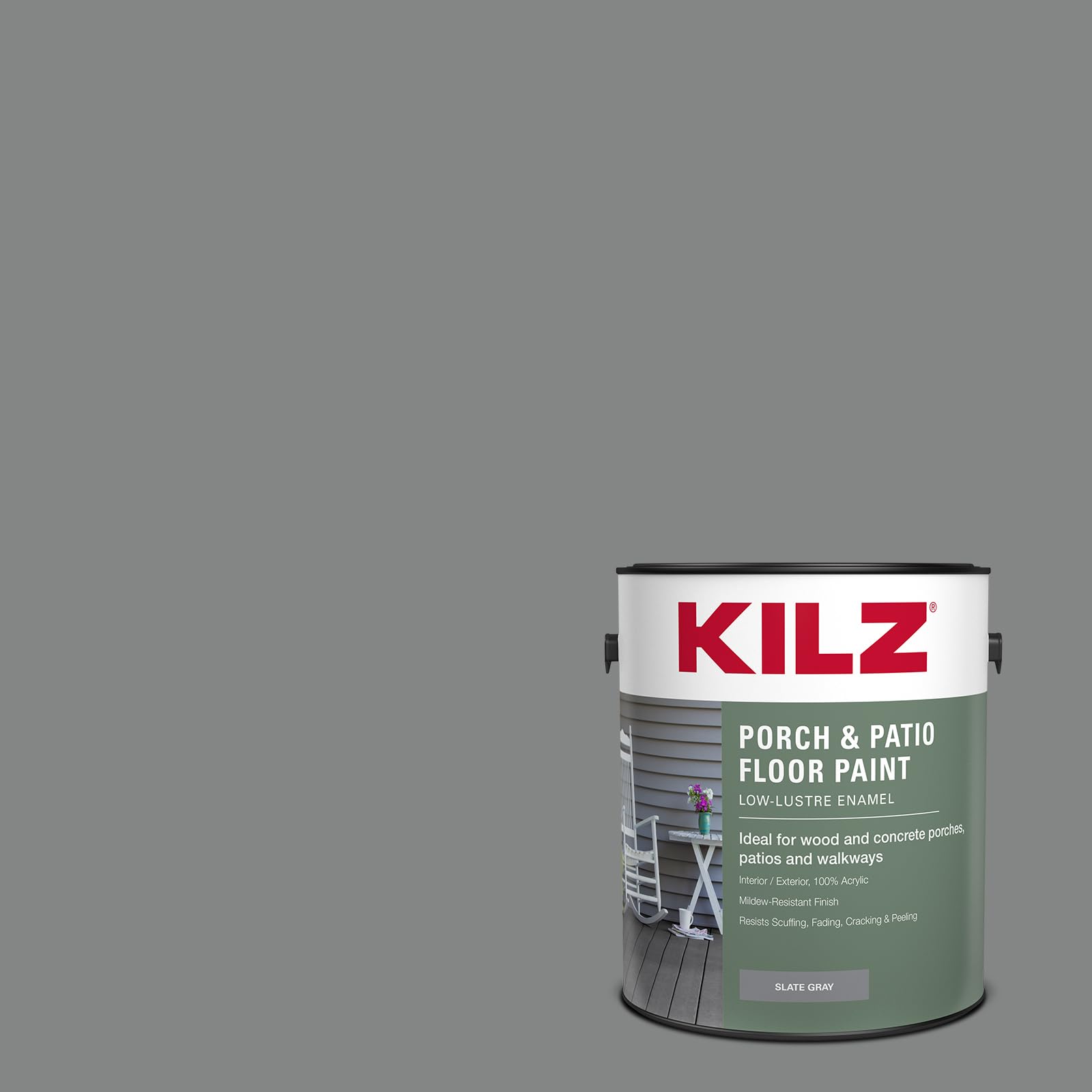
KILZ Low-Lustre Enamel Porch & Patio Latex Floor Paint, Interior/Exterior, Slate Gray, 1 Gallon

92 /100
Kirk Score Outstanding
Paint Type
Acrylic Latex
Coverage per Gallon
200-400 sq ft
Surface Compatibility
Concrete floors (pedestrian only)
Water Resistance Level
Water Resistant
Check Details on Amazon

Pros

  • Covers up to 400 sq ft per gallon with solid hide — 126 mentions, 80% positive
  • Applies smoothly with minimal brush drag or roller spatter — 76 mentions, 95% positive
  • Dries to a uniform satin finish that resists scuffing and water marks — 81 mentions, 98% positive

Cons

  • Occasional peeling or chipping in high-traffic pedestrian zones, especially near edges — 105 mentions, 47% positive — mixed durability feedback, with some experiencing early peeling

The paint flows on evenly and hides surface imperfections well, drying to a uniform satin sheen within a few hours. For residential porches, patios, and basement floors, the cured film holds up to regular foot traffic without scuffing or marring. In higher-traffic zones, some peeling at edges or heavy wear points can occur over time — a tradeoff that matters less on a quiet back porch.

This is a straightforward choice for DIYers refreshing a porch, patio, or basement floor where cars never roll. It's not formulated for driveways or garage floors with vehicle traffic; the paint will lift under hot tires. For those pedestrian-only spaces, the fast dry time and forgiving application mean a weekend project can look good with minimal hassle.

Bottom line: For pedestrian concrete surfaces, KILZ Porch & Patio offers smooth application and a tidy satin look without breaking the budget. Prioritize a harder epoxy if heavy abrasion or rolling loads are expected.

Check Latest Price
#02

Best for Waterproofing Walls

KILZ Basement Waterproofing Paint

93 /100
Kirk Score Outstanding
Paint Type
Water-based waterproofing
Coverage per Gallon
75-125 sq ft
Surface Compatibility
Interior/Exterior walls
Water Resistance Level
Waterproof (12 PSI)
Check Details on Amazon

Pros

  • Creates a durable waterproof barrier that withstands 12 PSI water pressure. — 39 mentions, 95% positive
  • Effectively blocks moisture seepage on interior and exterior masonry walls. — 24 mentions, 92% positive
  • Water-based formula applies easily with minimal odor. — 22 mentions, 95% positive

Cons

  • Not formulated for floors, driveways, or any surface needing foot or vehicle traffic.
  • Coverage can be as low as 75 sq ft per gallon, so large walls need extra product.

Where the top pick covers concrete floors, KILZ Basement Waterproofing Paint is built for walls — specifically those plagued by dampness or seepage. Its water-based formula creates a waterproof membrane that withstands up to 12 PSI of water pressure, making it a solid choice for below-grade interior and exterior masonry surfaces.

It is strictly for vertical concrete, brick, and cinder block walls. This is not a floor coating, driveway sealer, or anything you'd walk on. Coverage per gallon runs 75-125 square feet, so a full basement wall may require more than one can. The payoff is a paint that dries with minimal odor and stands up to moisture where ordinary paints would blister.

💡 💡 Tip: Measure walls carefully; coverage is 75-125 sq ft per gallon — expect to need extra for large basement walls.

Bottom line: For basement walls or exterior masonry needing a water-tight seal, this KILZ formula delivers serious moisture protection — just don't expect it to coat floors or large surfaces cheaply.

Check Latest Price
#03

Best Anti-Slip for Driveways & Walkways

FIXALL Skid Grip Coating

89 /100
Kirk Score Excellent
Paint Type
Acrylic Anti-Slip
Coverage per Gallon
Surface Compatibility
Exterior concrete floors
Water Resistance Level
Waterproof
Check Details on Amazon

Pros

  • Outstanding slip resistance that exceeds ADA requirements — 33 mentions, 97% positive
  • High quality acrylic coating resistant to wear and weather — 64 mentions, 94% positive
  • Reliable performance on concrete porches and walkways — 23 mentions, 87% positive

Cons

  • Adhesion may falter on certain surfaces or during extreme cold, leading to peeling — 31 mentions, 58% positive — mixed durability, with peeling in cold conditions

Unlike the top pick, which is designed for porches and basements, the FIXALL Skid Grip Coating is built for large outdoor concrete surfaces where maximum slip resistance is non-negotiable. The matte acrylic finish bites hard and meets ADA standards, holding up on driveways, walkways, and pool decks. It's only sold in 5-gallon pails, so smaller jobs will end up with unusable excess. Prep is non-negotiable: without meticulous cleaning and etching, adhesion can falter, leading to peeling in cold conditions.

💡 💡 Tip: Etch and pressure-wash the concrete thoroughly, and apply in dry conditions above 50°F to avoid winter peeling.

Bottom line: For safety-priority outdoor areas where massive slip resistance matters more than flexible project sizing, this 5-gallon coating is a solid choice—provided you invest time in meticulous surface prep.

Check Latest Price
#04

Best for Quick-Dry Small Projects

ALLFLOR Porch & Patio Paint

91 /100
Kirk Score Outstanding
Paint Type
Enamel
Coverage per Gallon
Approx. 350 sq ft
Surface Compatibility
Interior/Exterior floors
Water Resistance Level
Waterproof
Check Details on Amazon

Pros

  • Delivers a flawless matte finish in a single coat. — 75 mentions, 91% positive
  • Exceptionally smooth, low-drag application. — 37 mentions, 92% positive
  • Walk-on ready in under two hours for fast project turnaround. — 31 mentions, 94% positive

Cons

  • Long-term durability can be inconsistent; peeling has been reported under sustained use or weather exposure. — 41 mentions, 59% positive — a minority experienced peeling over time

ALLFLOR’s enamel stands out for its rapid curing—walk-on ready in under two hours—and a remarkably smooth, drag-free application that produces a uniform matte look in a single coat. The quart packaging, covering roughly 87 square feet, pushes the per-square-foot cost well above the top pick’s, making this a premium choice for small spaces.

The finish holds up on pedestrian porches and patios, but long-term durability can vary under heavy footfall or weather; occasional peeling has been noted. This paint suits DIYers finishing a small front stoop or balcony floor where quick turnaround and clean appearance outweigh maximum longevity and lowest cost.

Bottom line: This is the right choice when a job’s timeline demands a walkable surface the same afternoon and you’re covering a modest area where quart packaging won’t blow the budget. For larger pedestrian concrete floors, the per-square-foot cost pushes you toward the more economical top pick.

Check Latest Price
#05

Best Interior Concrete Floor Makeover

Rust-Oleum Interior Floor Kit

86 /100
Kirk Score Excellent
Paint Type
Acrylic water-based
Coverage per Gallon
100 sq ft kit
Surface Compatibility
Interior floors
Water Resistance Level
Check Details on Amazon

Pros

  • Easy to apply, even for first-time floor painters. — 103 mentions, 94% positive
  • Bright, clean semi-gloss white that instantly modernizes a room. — 96 mentions, 89% positive
  • Quality finish for interior makeovers on a budget. — 104 mentions, 87% positive

Cons

  • Chipping and peeling can occur under heavy foot traffic or furniture movement over time. — 74 mentions, 58% positive — mixed feedback on longevity

The bundled base and top coat eliminates guesswork, delivering a smooth, semi-gloss white floor that refreshes dated concrete in a single afternoon. The water-based acrylic goes on without harsh fumes and cures to a surface that stands up to daily comings and goings in a bathroom or laundry room.

Coverage is limited to 100 sq ft, so multiple kits are needed for anything larger than a compact space. A full 7-day cure is required before the finish hardens completely, and the kit is not suited for garages or high-traffic basements where wheeled equipment or heavy furniture could accelerate wear.

Bottom line: If you need a lower-risk alternative to epoxy for a small, light-traffic interior floor, this kit provides a simple refresh — just budget extra time for curing and expect occasional touch-ups.

Check Latest Price
#06

Foundation Walls

Liquid Rubber Concrete Sealant

90 /100
Kirk Score Outstanding
Paint Type
Liquid rubber elastomeric
Coverage per Gallon
Surface Compatibility
Walls only
Water Resistance Level
Waterproof
Check Details on Amazon

Pros

  • Highly effective waterproofing seal — 149 mentions, 92% positive
  • Easy brush/roller application — 109 mentions, 89% positive

Cons

  • Cured finish stays tacky — unsuitable for floors or any surface you walk on — 55 mentions adhesiveness, 42% negative — sticky finish is inherent to the rubber membrane

This zero-VOC liquid rubber coating stretches up to 900% to create a seamless, waterproof barrier on foundation and basement walls. It is not a decorative paint and the cured surface stays permanently tacky, so it’s not suited for floors or walkable surfaces. For below-grade wall sealing, it delivers serious moisture protection.

Bottom line: If you need to stop moisture on basement or foundation walls and can accept a tacky, non-walkable finish, this liquid rubber membrane is a strong performer.

Check Latest Price
#07

Basement Walls

AMES Blue Max Waterproofer

90 /100
Kirk Score Outstanding
Paint Type
Elastomeric liquid rubber
Coverage per Gallon
Surface Compatibility
Walls only
Water Resistance Level
Waterproof
Check Details on Amazon

Pros

  • Seals foundation walls effectively against water intrusion. — 79 mentions, 87% positive
  • Good water resistance, forming a durable flexible barrier. — 28 mentions, 89% positive

Cons

  • Strong odor may linger during indoor use, requiring ventilation. — 10 mentions, only 40% positive

The 900%-elongation elastomeric coating forms a flexible white barrier that effectively waterproofs concrete and masonry walls. The strong odor during application can linger without good ventilation, so it's best suited to exterior or well-ventilated basement work. It matches the waterproofing performance of similar liquid rubbers, but the smell keeps it as a backup sealer — and it's not intended for floors or walking surfaces.

Bottom line: Pick this for exterior foundation waterproofing or ventilated basement walls only — the odor makes it a poor choice for tight indoor spaces.

Check Latest Price
#08

Garage Floors

Rust-Oleum EPOXYSHIELD Garage Floor Kit

84 /100
Kirk Score Excellent
Paint Type
2-part epoxy
Coverage per Gallon
400-500 sq ft
Surface Compatibility
Garage floors
Water Resistance Level
Waterproof
Check Details on Amazon

Pros

  • Delivers a deep, showroom-quality gloss that transforms a garage into a polished space. — 74 mentions, 99% positive
  • Applies smoothly for an epoxy system, with manageable working time and clear topcoat. — 74 mentions, 88% positive

Cons

  • Batch inconsistency: some cans arrive with hardened clumps that can mar the final surface. — 31 mentions, only 6% positive — many reports of lumpy, defective product

When defect-free, this two-part epoxy spreads evenly and cures to a deep, glossy finish that rivals professional installations. Some kits contain clumpy hardener that can ruin the floor during application, and even successful coats can peel or lift under hot vehicle tires over time — a gamble at its premium price.

Bottom line: Suits the detail-oriented DIYer who can inspect the kit before starting and is comfortable with potential touch-ups or re-coating later — the glossy result justifies the risk for those who prioritize appearance over guaranteed durability.

Check Latest Price

How to Choose

Surface Compatibility

The first question is always vertical or horizontal. Floor paints are engineered for abrasion from foot traffic and furniture, while wall paints prioritize coverage and moisture blocking. Using a wall sealer on a floor invites peeling and scuffing within weeks.

Equally critical: interior versus exterior. Exterior paints must handle UV exposure, freeze-thaw cycles, and standing water, forcing heavier binders and mildewcides. A bathroom's interior floor coating won't survive a season of sun and rain, and a UV-resistant driveway coating can off-gas inside for months.

Paint Type

Acrylic latex is the workhorse — water-cleanup, forgiving, and suitable for pedestrian concrete. Epoxy and enamel formulas offer harder, glossier finishes but demand precise mixing, longer cure times, and near-perfect surface prep. A one-part acrylic is forgiving; a two-part epoxy punishes shortcuts.

The hidden trade-off: epoxies bond so tightly that any trapped moisture pushes them off in large sheets, whereas acrylics tend to wear gradually, making touch-ups simpler. For garage floors that see hot tires, only a true two-part epoxy or specialty automotive-rated coating has a chance — and even then, preparation must include mechanical grinding.

Coverage per Gallon and Recommended Coats

Don't let high coverage numbers fool you. Porous concrete drinks paint; the first coat on rough, unsealed concrete can cover as little as 150 sq ft, even if the can says 400. Budget for a minimum of two coats, often three on a thirsty slab.

Waterproofing paints are especially thin on coverage — some cover only 75 sq ft per gallon. If you're coating a basement wall, you'll need twice the gallons you'd expect from a conventional wall paint, so plan accordingly.

Tolerance for Vehicle Traffic

The distance between 'porch paint' and 'garage paint' is a gulf. Passenger car tires heat up while driving and can reach 140°F; that heat softens standard acrylic latex, which then peels off in sticky sheets when the car rolls over it.

Products marketed for garage or driveway use must explicitly claim hot-tire pickup resistance and often require mechanical etching, not just acid washing, to achieve a profile deep enough to resist shearing. If the label doesn't mention vehicle traffic, assume it's not safe for it — no matter how glossy or tough it looks.

Water Resistance Level

Water resistant' means the coating sheds surface water but won't hold back hydrostatic pressure. For a porch that gets occasional rain, that's fine. 'Waterproof' means the film creates a continuous barrier that resists liquid water under pressure, up to a rated PSI. That's the difference between a dry basement and a damp one.

Know the source of the moisture: exterior walls need a waterproofer, but interior slabs over a damp crawlspace may only need a water-resistant floor paint paired with a vapor barrier underneath. Applying waterproof membrane on a floor with rising moisture can cause blistering as the moisture tries to escape.

Frequently Asked Questions