// data-verified

10 Best Deck Paint of 2026: Stain vs. Paint Enduring Sun and Traffic

Which deck paint or stain actually resists peeling and fading after a year of sun, rain, and foot traffic — and which ones demand too much upkeep.

Refinishing a deck is a weekend of hard work, so seeing new stain peel or turn cloudy after one summer is disheartening. Many off-the-shelf formulas promise years of protection, but real-world conditions—direct sun, standing moisture, and foot traffic—routinely cut that lifespan in half.

The key is understanding that deck coatings split into two camps: penetrating oil-based stains that fade gracefully, and water-based paints/stains that offer easy cleanup but often demand yearly touch-ups. The picks ahead highlight products that balance application simplicity with the staying power your deck actually needs, so you spend more time enjoying and less time recoating.

#01

Best Overall

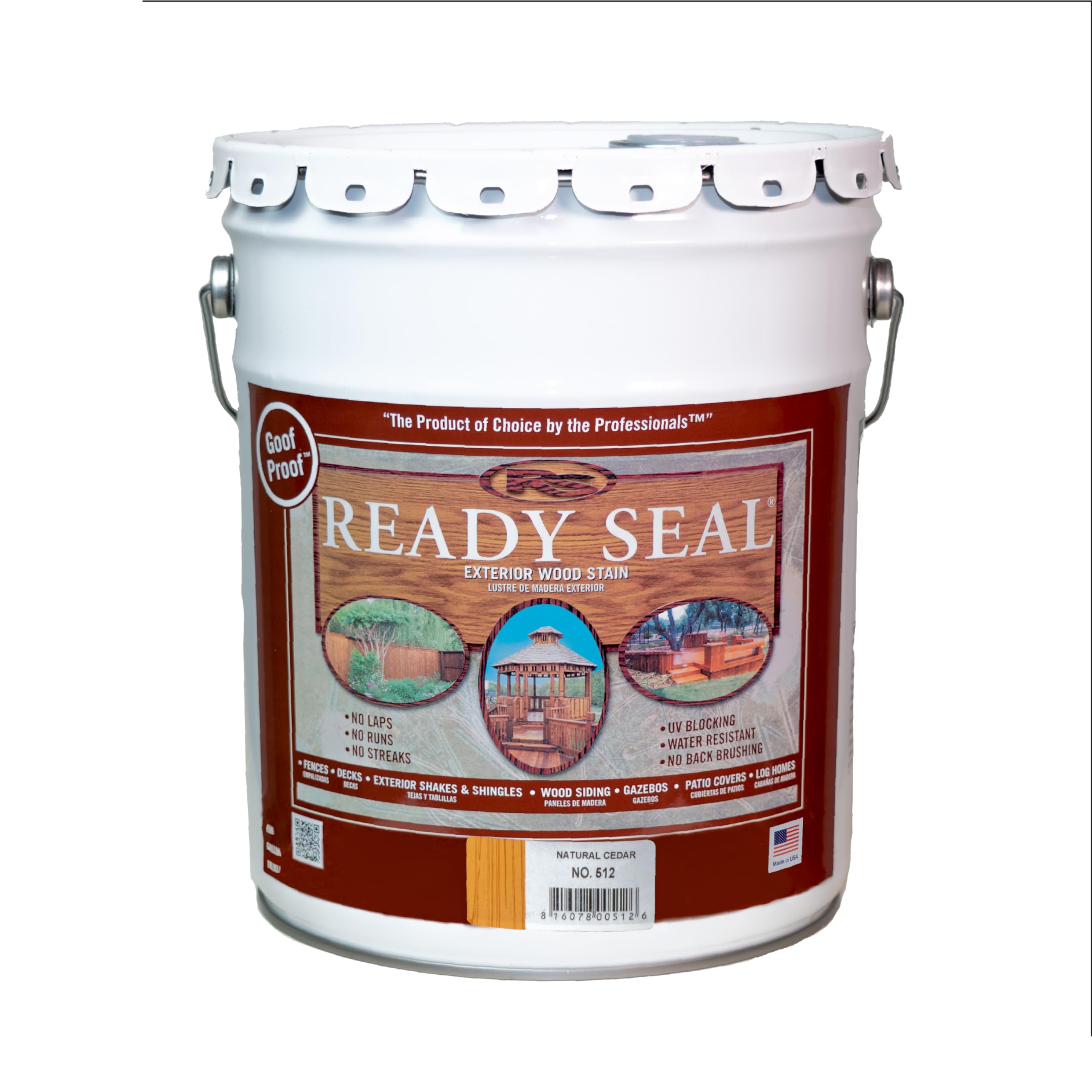
Ready Seal Natural Cedar Stain

93 /100
Kirk Score Outstanding
Base
Oil-based
Opacity
Semi-transparent
Product Type
Oil-based semi-transparent stain
Coverage per Gallon
125 sq ft
Check Details on Amazon

Pros

  • Applies without back-brushing or a visible overlap zone, eliminating lap marks and streaks. — 914 mentions, 98.5% positive
  • Produces a rich, even cedar tone that makes weathered decks look revitalized. — 691 mentions, 95.4% positive
  • Deep penetration into wood fibers gives good coverage and long-term grain protection. — 403 mentions, 83% positive

Cons

  • Color may fade noticeably within 12 months on decks receiving direct sun, necessitating earlier recoating than anticipated. — 296 mentions, 31% negative — some users note significant fading within a year, requiring more frequent reapplication than expected.

Ready Seal's semi-transparent oil formula penetrates deeply without demanding back-brushing or meticulous technique. The stain self-levels to a uniform finish, so even first-time deck refinishers can avoid lap marks and streaks, covering up to 625 square feet per pail. It goes on in direct sun or on damp wood, tightening the window for a quick project.

Owners of large decks who prioritize a natural cedar grain enhancement and a no-fuss application will find it a practical match. The oil base enriches wood color out of the can, but the trade-off is that UV fading can set in within a year on fully exposed decks, meaning a maintenance coat may be required more often than with some higher-solids competitors. This suits DIYers willing to refresh the finish periodically rather than sand peeling film-forming coatings.

💡 💡 Tip: Expect to refresh the top coat every 12–18 months on sun-exposed decking to keep the natural cedar color from turning gray.

Bottom line: If you'd rather recoat occasionally than fight peeling paint, this 5-gallon pail's bulletproof application makes it a strong choice for large cedar-toned decks.

Check Latest Price
#02

Best Heavy-Duty Paint

INSL-X Tough Shield Floor and Patio Paint, Gray Pear, 1 Gallon

88 /100
Kirk Score Excellent
Base
Water-based
Opacity
Opaque (satin)
Product Type
Waterborne acrylic enamel paint
Coverage per Gallon
350-450 sq ft
Check Details on Amazon

Pros

  • One-coat coverage even on rough, weathered wood, saving time and material. — Coverage consistency praised across a wide range of deck conditions.
  • Quick-drying, buttery flow that self-levels without brush marks. — Application ease repeatedly highlighted even by first-time paint users.
  • Satin finish resists sun, rain, and pet claws noticeably longer than typical floor paints. — Real-world durability feedback shows strong long-term resistance to weather and traffic.

Cons

  • Premium cost per gallon; occasional peeling in extreme high-traffic spots after prolonged exposure. — Long-term wear reports note adhesion loss in the most punished areas.

INSL-X Tough Shield Paint stands apart from semi-transparent stains by delivering full, opaque coverage that hides old wood blemishes and worn grain in a single pass. Its waterborne acrylic enamel dries quickly to a beautiful satin sheen, and the buttery consistency levels out smoothly without brush drag, so even large deck surfaces look uniform without lap marks. Unlike oil-based finishes that fade within a season, this gray pearl formula locks in a colorfast barrier that shrugs off sun, rain, and repeated scrubbing.

This paint makes the most sense for homeowners whose decks see muddy paws, furniture drag, and heavy foot traffic day after day. The premium price tag pays off in cleanability and toughness—when surface preparation is thorough, it holds strong season after season. The one known caveat is that in extreme high-impact zones, adhesion can give way over time; spot touch-ups are straightforward, but those wanting a zero-maintenance finish for the most battered paths should weigh that trade-off.

💡 💡 Tip: Power-wash, degloss, and etch the wood thoroughly before painting; the film anchors best to a roughened surface profile.

Bottom line: For decks that take genuine punishment, this paint's lasting scrub resistance and rich satin look offset the higher upfront outlay—just commit to meticulous prep.

Check Latest Price
#03

Best Paint Finish for Porches

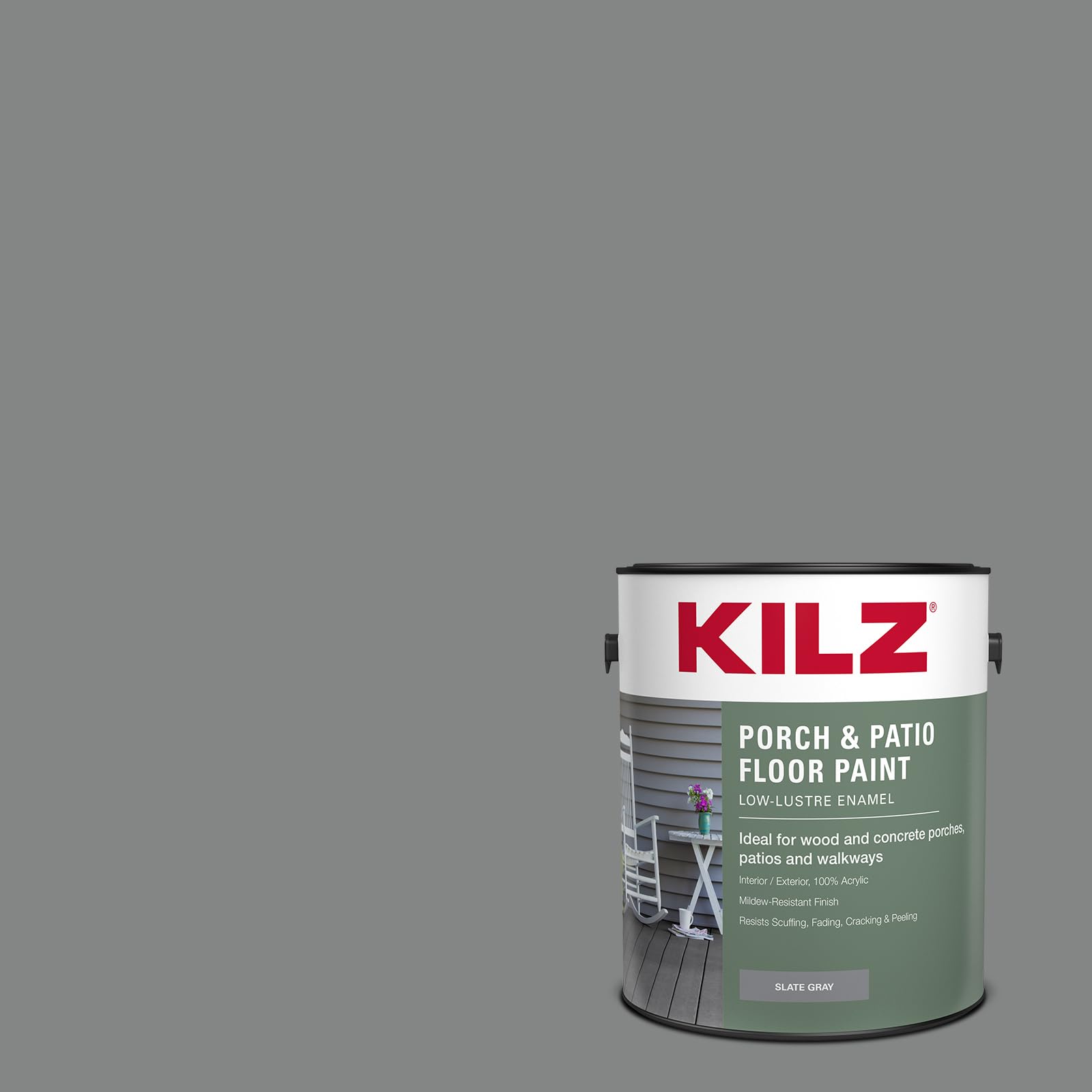
KILZ Porch & Patio Floor Paint

92 /100
Kirk Score Outstanding
Base
Water-based
Opacity
Opaque (low-lustre)
Product Type
Acrylic latex floor paint
Coverage per Gallon
200-400 sq ft
Check Details on Amazon

Pros

  • Coverage that conceals old surfaces in one to two coats — 126 mentions, 80% positive
  • Uniform, satin-like finish that makes porches look brand new — 81 mentions, 97.5% positive
  • Smooth application with a roller or sprayer — flows out with minimal effort — 76 mentions, 94.7% positive

Cons

  • Adhesion on exposed wood can break down, leading to peeling or blistering after a single season — 105 mentions, 53.4% negative

The KILZ paint goes on exceptionally smooth with a roller or sprayer, drying quickly to a uniform satin sheen that hides old wood imperfections. Unlike penetrating deck stains that leave grain visible, it delivers an opaque, modern surface — a distinct aesthetic choice for those wanting a painted-deck look.

This suits covered porches and patios with light to moderate foot traffic where a contemporary update is the goal. On exposed wood decks, long-term adhesion can falter, leading to peeling or blistering that may require annual touch-ups — it's not a heavy-duty substitute for professional-grade paint.

💡 💡 Tip: Thorough surface prep and priming are essential; on fully exposed decks, this paint performs best when recoated annually before peeling starts.

Bottom line: For covered porches seeking a sleek, opaque modern finish without the upkeep of penetrating stains, this paint offers a budget-friendly refresh. Expect to recoat periodically if the deck faces direct sun and moisture — it's not a set-and-forget solution.

Check Latest Price
#04

Best Water-Based Stain for Easy Cleanup

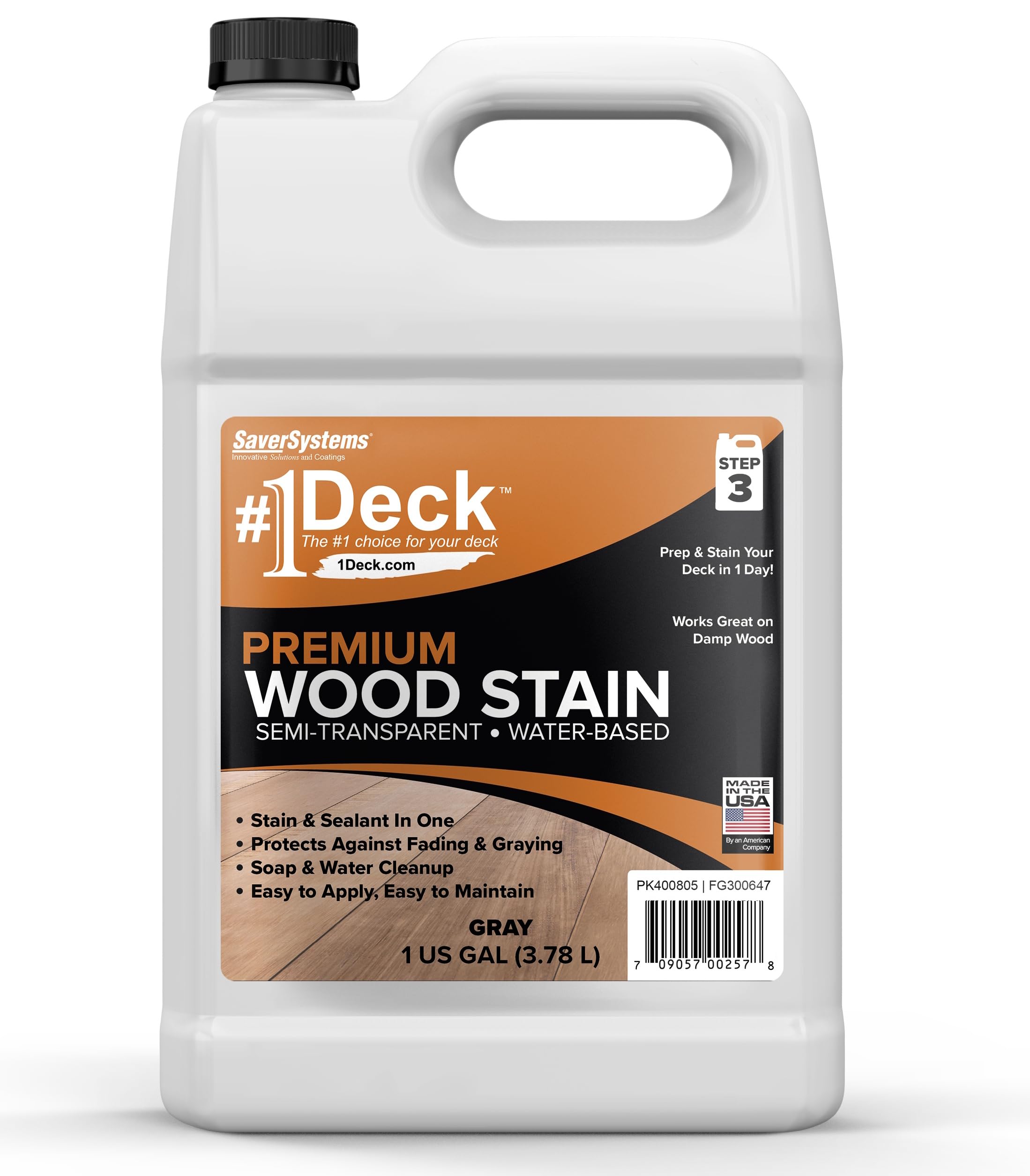
#1 Deck Premium Semi-Transparent Wood Stain

89 /100
Kirk Score Excellent
Base
Water-based
Opacity
Semi-transparent
Product Type
Water-based semi-transparent stain
Coverage per Gallon
Check Details on Amazon

Pros

  • Rich, even gray color that makes decks look nearly new — 120 mentions, 92.5% positive
  • Beginner-friendly application with brush, roller, or sprayer — 112 mentions, 96.4% positive
  • Effective water repellency when freshly applied — 50 mentions, 94% positive

Cons

  • Peeling can appear within a year on surfaces with even minor prep flaws — 75 durability mentions, 40% negative; complaints of peeling after one season

The SaverSystems #1 Deck stain creates an even, rich gray hue that makes aged wood look revitalized with a single application. It applies more easily with water-based tools than the oil-based top pick and cleans up with just soap and water, which is a major convenience for weekend projects. The tradeoff is that this stain relies heavily on surface preparation — without meticulous sanding and cleaning, peeling can set in after only one season, particularly in harsh weather.

This suits deck owners who love the look of a semi-transparent gray and don't mind re-staining annually. If you expect a multi-year finish or have a deck exposed to heavy snow and ice, the oil-based alternative forgives more prep mistakes.

💡 💡 Tip: Thorough sanding and cleaning before application greatly reduce the risk of early peeling.

Bottom line: For deck owners willing to re-stain yearly in exchange for a gorgeous water-based gray finish and easy cleanup, this is a compelling choice — those wanting a set-and-forget coating should look to the oil-based top pick.

Check Latest Price
#05

Best Quick-Dry Premium Paint

California Allflor Enamel

91 /100
Kirk Score Outstanding
Base
Water-based
Opacity
Opaque (satin)
Product Type
Water-based enamel paint
Coverage per Gallon
350-400 sq ft
Check Details on Amazon

Pros

  • One coat can deliver an even, opaque finish on primed or previously painted surfaces. — 75 mentions, 90.7% positive
  • Application is smooth and dries to a uniform, attractive satin sheen. — 37 mentions (application), 29 mentions (appearance)
  • Dries in about 3 hours, so recoating or light traffic can resume the same day. — 31 mentions, 93.5% positive

Cons

  • Quart-only packaging drives per-gallon cost very high — impractical for large decks.
  • Durability under frequent use can fall short; plan on seasonal touch-ups or recoating. — 41 mentions, 41.5% negative

Where oil-based stains soak in and require minimal skill, this water-based enamel builds a smooth, opaque satin film that highlights a refined deck-gray tone. Coverage is so effective that a single coat can achieve an even, opaque finish, and it dries to a walkable surface in about 3 hours, letting you finish a small deck or staircase in a single weekend.

The quart size keeps the per-gallon cost high, so this makes economic sense only on a porch floor, landing, or a few steps. Adhesion hinges on thorough prep; bare wood or concrete must be cleaned and roughed up, or peeling can appear within months. This is a quick cosmetic upgrade, not a set-and-forget solution for high-traffic decks.

💡 💡 Tip: Sand or pressure-wash the surface until it feels rough — this enamel bonds poorly to smooth or dirty substrates.

Bottom line: For a porch floor or set of steps that won't see daily abuse, this enamel delivers an enviable satin finish with a quick turnaround — just be ready to invest in thorough prep and accept that it's no lifetime coating.

Check Latest Price
#06

Best for Wet Environments

SEAL-ONCE Marine Sealer

87 /100
Kirk Score Excellent
Base
Water-based
Opacity
Semi-transparent
Product Type
Water-based polyurethane sealer & stain
Coverage per Gallon
Check Details on Amazon

Pros

  • Effective waterproofing and water beading on constantly wet wood — 106 mentions, 86.8% positive on sealing; 104 mentions, 78.8% positive on water beading
  • Applies easily and cleans up with just soap and water — 84 mentions, ~94% positive on ease of application
  • Dries quickly to reduce downtime between coats — 84 mentions, ~80% positive on drying

Cons

  • The color can appear milky or bluish rather than a true coastal gray — 75 mentions, 56% negative — descriptions include 'milky looking' and 'plastic film look'

Unlike oil-based stains that produce a predictable rich tone, this marine-grade sealer focuses on repelling water from wood that stays wet — pool surrounds, piers, boat docks. The low-VOC, water-based formula means no harsh fumes and soap-and-water cleanup. It dries quickly, forming a barrier that beads water even in constant moisture exposure.

The tradeoff is appearance: the coastal gray can veer toward a milky or bluish haze, not a clean gray. For buyers who prioritize precise color on a standard deck, that's a boundary condition. But if you're sealing a dock or saltwater pool deck where water resistance matters more than aesthetics, this sealer earns its premium. Test on scrap wood before committing to the full surface.

Bottom line: For a dock, pool surround, or pier that stays wet, the water-beading ability justifies the premium — just plan on a finish that might not match the swatch.

Check Latest Price
#07

Budget Waterproofing

Thompson's WaterSeal Clear

91 /100
Kirk Score Outstanding
Base
Water-based
Opacity
Clear
Product Type
Water-based clear waterproofer
Coverage per Gallon
375 sq ft
Check Details on Amazon

Pros

  • Very easy to apply with a sprayer or brush, goes on evenly — 94 mentions, 92.5% positive
  • Effectively repels water, causing beading on treated surfaces — 139 mentions, 72.7% positive

Cons

  • Can dry with a permanently sticky surface that collects dirt and leaves, making it unsuitable for foot traffic — 101 mentions on drying, 62% negative; 82 mentions on texture, 86.6% negative — many users describe a permanently tacky feel, especially if applied even moderately thick

It goes on smoothly and beads water effectively, proof of protection. But the clear finish can dry to a permanently greasy film that collects dirt and leaves, ruling out walking surfaces. Milkiness may further undercut the look. Best confined to railings, planters, or non-traffic deck parts where its ultra-low price offsets the cosmetic and feel trade-offs.

Bottom line: This is a budget option for non-walking deck elements like railings and planter boxes — not for deck floors where a tack-free surface is essential.

Check Latest Price
#08

Warm-Toned Waterproofer

Thompson's Semi-Transparent Stain

88 /100
Kirk Score Excellent
Base
Water-based
Opacity
Semi-transparent
Product Type
Water-based semi-transparent stain & sealer
Coverage per Gallon
150-400 sq ft
Check Details on Amazon

Pros

  • Effectively waterproofs, water beads up nicely on treated surfaces. — 10 mentions, 100% positive on water resistance
  • Easy to apply and dries quickly. — 30 mentions, 70% positive (application)

Cons

  • Color can appear brick red or orange rather than the expected chestnut brown. — 29 mentions, 55.2% negative

This stain seals water out effectively, with quick drying and easy application. The color, however, leans strongly toward brick red rather than chestnut brown, so testing on scrap wood is wise. Durability can be mixed, with some decks needing a re-coat after one winter.

Bottom line: Fits decks where a warm reddish tone and reliable water beading matter more than color accuracy; always test on scrap wood first.

Check Latest Price
#09

Alternative Stain

KILZ Waterproofing Wood Stain

91 /100
Kirk Score Outstanding
Base
Water-based
Opacity
Semi-transparent
Product Type
Acrylic semi-transparent stain
Coverage per Gallon
250-300 sq ft
Check Details on Amazon

Pros

  • Cleanup requires only soap and water, no solvent hassle. — 33 mentions, 90.9% positive
  • Semi-transparent finish highlights the wood's natural grain with a vivid appearance when first applied. — 26 mentions, 92.3% positive (appearance); 33 mentions, 97% positive (quality)

Cons

  • Peeling and bare spots can appear after a single winter, especially in harsh climates. — 15 mentions, 33% negative

This stain simplifies deck refinishing with easy water-based application and soap-and-water cleanup, delivering a vibrant, grain-revealing finish. The color can lean orange rather than natural cedar, making it less predictable for exterior wood decks that require a specific tone.

Bottom line: Works for deck owners who want a warm, vibrant wood finish and are willing to test the color on a hidden board first.

Check Latest Price
#10

Also Great

Pros

  • Color chips match real SW formulas, simplifying final product selection — from top reviews and topics
  • Compact, portable format for taking to the job site or comparing against existing decking

Cons

  • This is not a deck paint or stain; it is a color selection reference — outside_intent_boundary

The deck complete fan includes assorted real paint chips, making it a practical planning tool for narrowing down SW stain colors before purchasing the actual product. It earns its spot here as a selection aid, but it is not a deck coating — no stain or sealer in the box, just the palette to inform your choice.

Bottom line: Pick this up if you plan to use Sherwin-Williams deck coatings and need to visualize colors in person; move on to actual stains if you are ready to apply.

Check Latest Price

How to Choose

Stain & Sealer vs. Opaque Paint

Stains penetrate the wood and allow grain to show, while opaque paints sit on top and hide it entirely. Paints can peel if water gets trapped underneath, but they hide old discoloration better. Stains tend to fade rather than peel, making recoating less scrape-intensive.

Oil-Based vs. Water-Based

Oil-based stains penetrate deeper and can be applied in sun or light rain, but cleanup requires mineral spirits. Water-based formulas clean with soap and water, but they're more likely to peel on poorly prepped wood and may need annual touch-ups.

Opacity & Finish

Clear sealers offer minimal UV protection and may turn milky under heavy sun. Semi-transparent stains add color while letting grain show, but color can fade to orange or red. Solid/opaque coatings block UV completely and give a uniform color like paint, but they can trap moisture and blister.

Coverage per Gallon

Most gallons cover 200-400 sq ft, but second coats can consume just as much. Planning for two coats is essential with semi-transparent stains, and uneven wood porosity can cause wild variations in spread rate.

Understanding Durability Claims

Labels promising '5-year protection' rarely account for horizontal deck boards that take full sun and foot traffic. In practice, expect to recoat every 2-3 years for oil-based stains and 1-2 years for water-based, regardless of claim. Test a small section and see how it holds up before committing to the whole deck.

Frequently Asked Questions