// data-verified

11 Best Deck Sealer of 2026: Sealers That Actually Last 2+ Years

Which deck sealers deliver true waterproofing for wood decks without early peeling, tacky finish, or color surprises—and how often you'll realistically need to recoat.

Ask any deck owner how long their last sealer held up, and you'll hear the same frustration: the label promised 5 years, but after one muddy spring, water was soaking in and the color washed out. That gap between marketing and pavement-level reality defines the deck sealer aisle.

No sealer is truly set-and-forget. But the best ones make reapplication a rare chore rather than an annual scramble. This guide cuts through the inflated claims to surface sealers that bead water reliably, apply without streaky fuss, and show honest staying power on real decks—not test panels.

Whether you're spraying a big cedar deck or brushing a delicate hardwood railing, we've matched the right formula to your wood type, sun exposure, and appetite for yearly touch-ups. Know which sealers earn their place—and which ones leave you on your hands and knees with a scraper.

#01

Best Overall

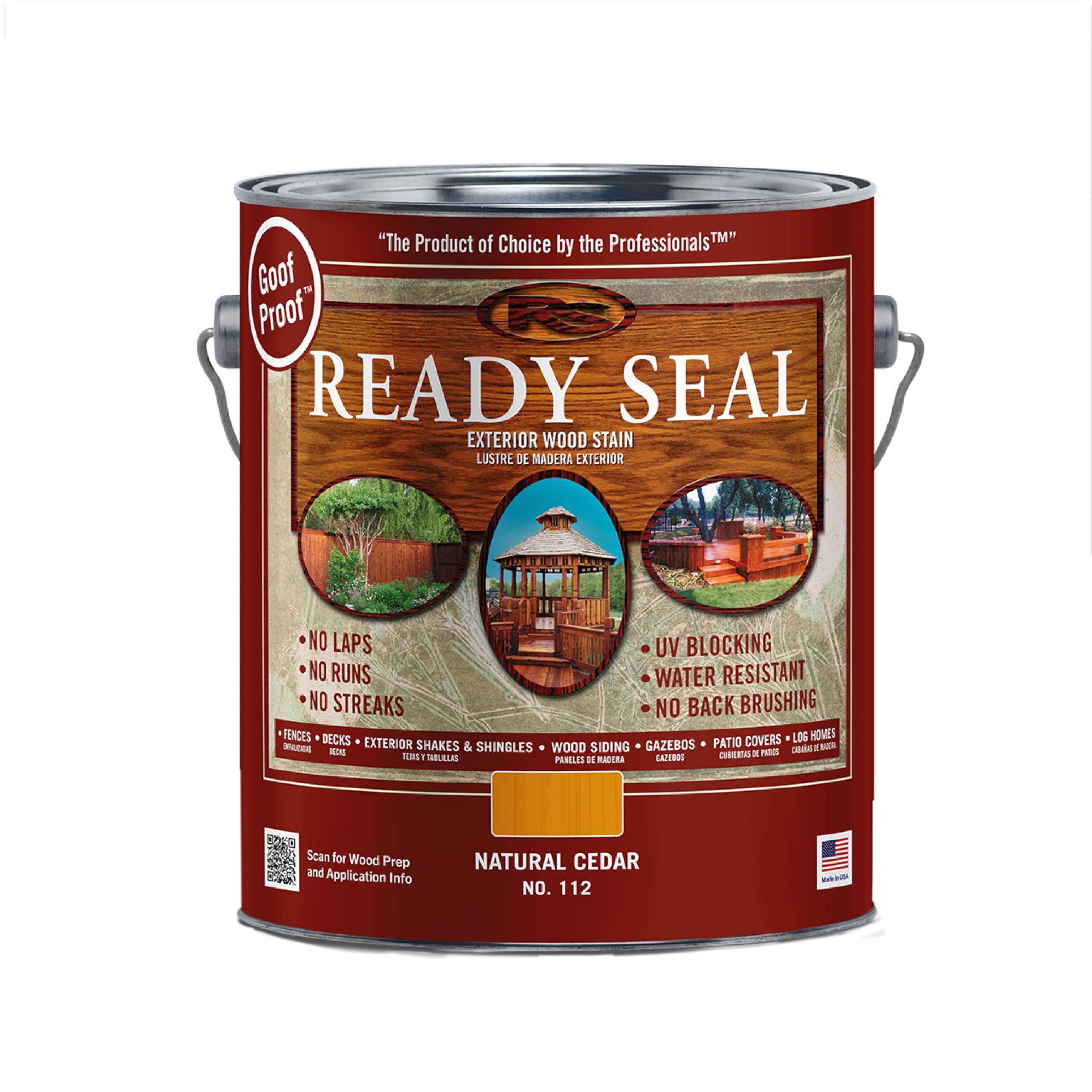
Ready Seal Natural Cedar

93 /100
Kirk Score Outstanding
Coverage
100–150 sq ft/gal rough
Base Type
Oil-based
Application
Spray, roller, brush; any temp
Transparency
Semi-transparent, Natural Cedar
Check Details on Amazon

Pros

  • Spray-and-go formula eliminates lap marks and streaks, even in full sun — 914 mentions, 98.5% positive
  • Deep cedar tone revives weathered wood to a brand-new look — 853 mentions, 96.6% positive
  • Strong water beading that repels moisture and delays wood decay — 342 mentions, 90.1% positive for effectiveness

Cons

  • Color on horizontal boards in direct sun may fade sooner than expected, requiring reapplication every 2–3 years rather than the advertised 5–7 — 296 mentions, 31% negative

Ready Seal’s standout trait is its effortless application — it sprays, rolls, or brushes without leaving lap marks, runs, or streaks, even in direct sunlight, and requires no back-brushing. The oil penetrates deeply, reviving grayed cedar to a rich, natural tone, while water beads up instantly to protect against rot and swelling. With coverage around 100–150 square feet per gallon on rough wood and the ability to apply in any temperature, it’s among the most forgiving deck coatings for DIYers.

It’s tailored for homeowners tackling large deck or fence refreshes who want beautiful color and moisture protection without worrying about precise technique. Set your expectations for reapplication every 2–3 years on sun-baked horizontal boards — the warm cedar hue will lighten sooner than the 5–7 year promise, but the wood stays sealed. Those with strong odor sensitivities should ventilate well, as the oil scent is noticeable during application.

💡 💡 Tip: Keep the area well-ventilated during application and let the mild oil scent dissipate for a day before heavy use — the odor is temporary but noticeable.

Bottom line: For a hassle-free deck stain that sprays on evenly and protects with aggressive water beading, the Ready Seal Natural Cedar is the most DIY-friendly option in its class — just plan on a refresh every few years if sun exposure is high.

Check Latest Price
#02

Best Eco-Friendly Spray-On Sealer

Eco Advance Wood Siloxane Waterproofer

89 /100
Kirk Score Excellent
Coverage
100–150 sq ft/gal
Base Type
Water-based siloxane
Application
Garden sprayer; ready-to-use
Transparency
Clear, dries invisible
Check Details on Amazon

Pros

  • Ships ready-to-use for garden sprayers — no mixing or special tools needed — 72 mentions, 98.6% positive on ease of application
  • Effective on raised garden beds, chicken coops, and playhouses without harming plants or pets — 66 mentions, 75.8% positive on effectiveness
  • Dries quickly, often within an hour, and cleans up with soap and water — 37 mentions, 91.9% positive on drying time

Cons

Eco Advance’s water-based siloxane formula is the go-to when toxicity matters: it’s safe for edible garden beds, chicken coops, and pet enclosures. Applied with a basic pump sprayer, it soaks into wood quickly, dries within an hour, and leaves an invisible breathable barrier that won’t trap moisture. For fences, vertical planter walls, and playground sets, this is a straightforward, low-odor solution. On horizontal deck boards exposed to heavy rain and foot traffic, however, its water resistance and longevity fall short of oil-based alternatives. That makes it a smart choice for vertical outdoor wood near food or animals, not a primary deck-floor defense.

Bottom line: A safe, eco-friendly option for vertical surfaces and garden projects, but not robust enough as a primary deck sealer for high-wear areas.

Check Latest Price
#03

Best for Exotic Hardwoods

DeckWise Ipe Oil

92 /100
Kirk Score Outstanding
Coverage
250 sq ft/gal
Base Type
Oil-based
Application
Brush or roller
Transparency
Semi-transparent natural brown
Check Details on Amazon

Pros

  • Restores grayed Ipe and Cumaru to a lush, like-new brown without masking the grain. — 65 mentions, 96.9% positive on appearance
  • Penetrates even ultra-dense deck boards with minimal effort and no thick film. — 39 mentions, 97.4% positive on application
  • Keeps water beading and blocks UV graying through an entire season. — 39 mentions, 97.4% positive on effectiveness

Cons

  • The tint may deepen to a reddish-brown that differs from the original wood color, so test on a hidden spot first. — 28 mentions, 50% negative on color tint — mixed opinions on final shade

Unlike multi-surface oils that dilute performance across furniture and decks, DeckWise Ipe Oil is built solely for Ipe, Cumaru, and Tigerwood decking. The high-VOC formula absorbs into tight grain rapidly, shedding water and blocking UV light for a full season. Brush or roll it on and watch it wick in without heavy back-brushing — a critical advantage on rock-hard wood.

It targets owners of premium decks who demand specialized care. The natural tint can shift the wood a shade darker toward reddish-brown — not a defect, but a visual departure worth testing on an off-cut. For pressure-treated pine, the cost is hard to justify, and the formula is not available in VOC-restricted California counties.

Bottom line: If preserving an investment-grade Ipe or Tigerwood deck matters more than saving on stain, DeckWise Ipe Oil earns its premium price with one-coat penetration and season-long UV resilience.

Check Latest Price
#04

Best for Waterfront & Marine Use

Seal-Once Marine Ready Mix

87 /100
Kirk Score Excellent
Coverage
200–300 sq ft/gal
Base Type
Water-based polyurethane
Application
Spray, brush, roller; fast dry
Transparency
Clear with slight sheen
Check Details on Amazon

Pros

  • Exceptional water repellency on docks and marine wood surfaces — 104 mentions, 78.8% positive on water beading; sealing performance 106 mentions, 86.8% positive
  • Easy to apply with brush or spray and dries quickly to a clear finish — 84 mentions on drying time, 79.8% positive; ease of application 84 mentions, 94.0% positive
  • Non-toxic formula safe for plants, pets, and aquatic life — Quality mentions 155, 87.7% positive; many positive notes on eco-safe handling

Cons

  • May slightly darken some wood species or leave a subtle milky film — 75 mentions, 56.0% negative on discoloration
  • Cost per square foot is high compared to general-purpose deck sealers

Designed for over-water use, this sealant is certified non-toxic to aquatic life — the clear choice for docks, piers, and decks beside lakes or saltwater. It penetrates quickly, dries to a non-yellowing finish, and keeps wood beading water relentlessly without heavy fumes or hazardous runoff.

This 2-gallon kit fits waterfront owners who need broad coverage and eco-safe handling. On some boards the finish may darken slightly or take on a faint milky cast — an aesthetic trade-off that matters most on showpiece decking. The premium price places it beyond casual budget projects, but for high-moisture exposure it delivers what general-purpose sealers cannot.

Bottom line: For docks, piers, and decks that live next to water, this 2-gallon kit provides relentless beading and aquatic safety; the occasional color shift and premium cost are the price of specialty protection.

Check Latest Price
#05

Best Budget Semi-Transparent

Thompson's Semi-Trans Chestnut

88 /100
Kirk Score Excellent
Coverage
150–400 sq ft/gal
Base Type
Water-based
Application
Brush or spray; damp wood ok
Transparency
Semi-transparent Chestnut Brown
Check Details on Amazon

Pros

  • Fast-drying formula can be applied to damp wood, speeding up project timelines. — 30 mentions, 70% positive on application
  • Generous coverage of up to 400 sq ft per gallon stretches a gallon further. — 23 mentions, 78.3% positive on coverage
  • Delivers water beading that meets ASTM D-4446, protecting decks from moisture damage. — 10 mentions, 100% positive on water resistance

Cons

  • The stain leans toward a brick red rather than the expected chestnut brown, potentially clashing with some home color schemes. — 29 mentions, 55.2% negative on color

For budget-conscious waterproofing, Thompson's surpasses the ASTM D-4446 water beading standard at a mid-range price, a clear advantage over clear multi-surface alternatives that can remain tacky. Coverage is generous, and the water-based formula sprays or brushes onto damp wood with minimal fuss — drying fast so you can walk on it within hours.

The catch: instead of a neutral chestnut, the color skews noticeably toward brick red. That reddish cast works on fences or vertical surfaces but may clash with cooler-toned exteriors. If your deck demands a true brown, this stain will feel off. For anyone prioritizing affordable water protection on large areas and forgiving the warm undertone, it delivers solid value.

Bottom line: If water beading and fast application matter more than an exact chestnut color, this budget-friendly stain seals the deal with minimal hassle.

Check Latest Price
#06

Best Water-Based Natural Look

SaverSystems #1 Deck Natural

89 /100
Kirk Score Excellent
Coverage
100 sq ft/gal
Base Type
Water-based <50 g/L VOC
Application
Brush, roller, spray; damp wood ok
Transparency
Semi-transparent Natural
Check Details on Amazon

Pros

  • Beautiful, rich color that accentuates wood grain with a matte finish — 120 mentions, 92.5% positive on appearance
  • Very easy to apply with brush or sprayer; no streaking — 112 mentions, 96.4% positive on ease of application
  • Good water beading and UV protection when freshly applied — coverage/water resistance feedback; 37 mentions 89.2% positive on coverage

Cons

  • Horizontal surfaces may show peeling after a single winter, necessitating an annual recoat. — 75 mentions, 40% negative on drying time/durability; peeling and wear complaints

Unlike crystal-clear sealers that favor invisibility, this semi-transparent stain enriches wood grain with a warm natural tone and a modern matte finish. It sprays or brushes on easily without streaking, and fresh coats bead water effectively for good initial protection — all with low odor and VOCs.

On decks, the tradeoff is durability: peeling may appear after one winter on horizontal boards, so yearly recoating is common. For vertical applications like fences or siding, the stain holds up far better and delivers the upscale look many owners want.

Bottom line: For fences, siding, and vertical woodwork, this stain offers a beautiful, easy-to-apply finish at a fair price — just plan on annual maintenance if used on decks.

Check Latest Price
#07

Fine woodwork

Cabot Jarrah Brown

92 /100
Kirk Score Outstanding
Coverage
100 sq ft/qt (approx 400/gal)
Base Type
Oil-based
Application
Brush or cloth; yearly on horizontal
Transparency
Translucent Jarrah Brown
Check Details on Amazon

Pros

  • Penetrates deeply for a rich, natural look on exotic hardwoods — 172 mentions, 96.5% positive on quality
  • Easy brush-on or cloth application; dries quickly with minimal prep — 124 mentions, 83.1% positive on application

Cons

  • Color may fade within a year on horizontal deck surfaces, requiring frequent reapplication — 107 mentions, 31.8% negative on durability

The three-oil blend penetrates exotic hardwoods deeply, delivering a rich mahogany tone and strong water repellency. But on horizontal deck surfaces, color can fade within a year, requiring annual reapplication that becomes expensive for larger projects. It's a better fit for furniture, railings, and trim, where the premium look justifies the upkeep.

Bottom line: For furniture, trim, and exotic wood accents where annual maintenance is acceptable, the deep color and water protection are worthwhile; for full deck coverage, it's too costly and high-maintenance.

Check Latest Price
#08

Cedar verticals

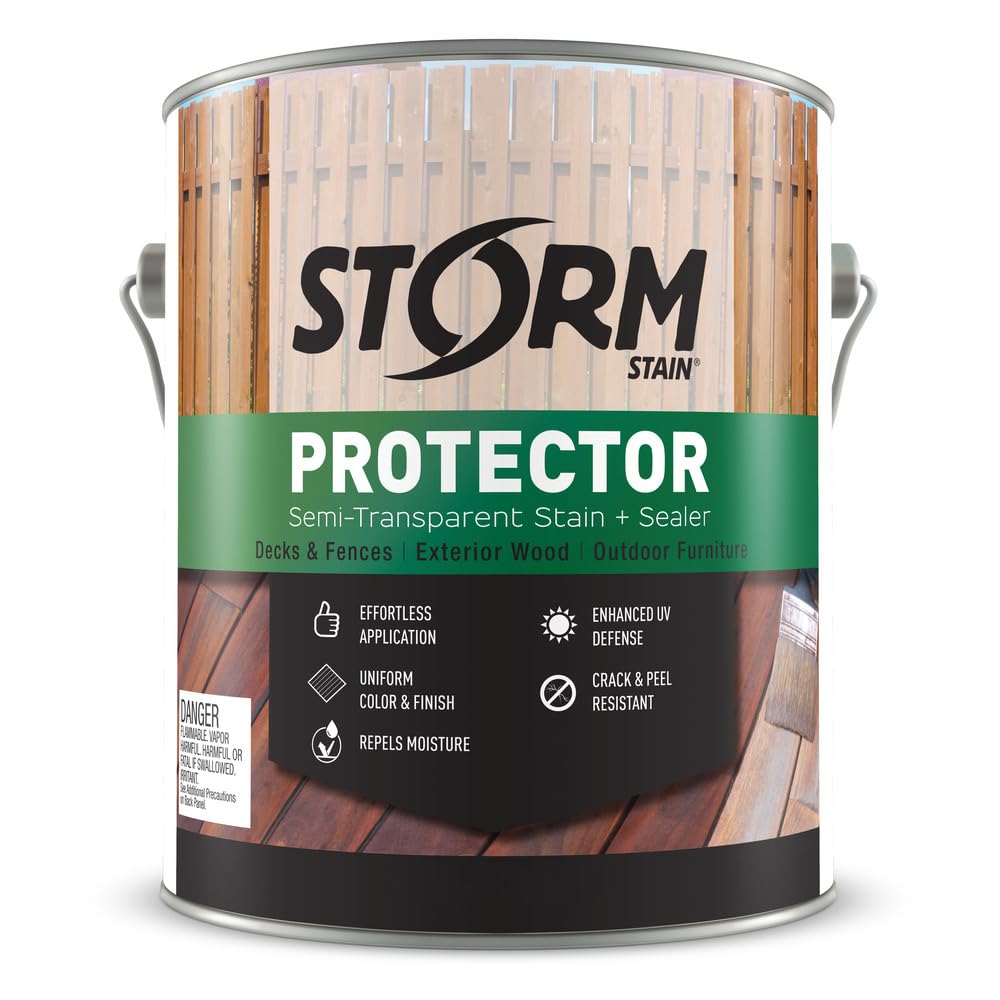
Storm System Protector Cedartone

88 /100
Kirk Score Excellent
Coverage
100 sq ft/gal
Base Type
Oil-based
Application
Brush, roller, sprayer
Transparency
Semi-transparent Cedartone
Check Details on Amazon

Pros

  • Rich cedartone finish that makes older lumber look brand new — 96 mentions, 85.4% positive on appearance
  • Applies evenly with a sprayer and grips quickly for an oil-based product — 57 mentions, 89.5% positive on application

Cons

  • Color may fade noticeably within a single season in direct sun — drying time topic also references fading concerns; some users note quick color loss

The rich cedartone color brings older fences and pergolas back to life in a single spray coat, and the oil-based formula penetrates evenly. However, horizontal deck boards in direct sunlight can see the color fade within one season, and over-application leaves the surface tacky for days—this makes it a better fit for vertical wood with controlled weather windows.

Bottom line: For cedar fences and pergolas out of direct sun, this stain delivers a warm, refreshed look—just plan application around dry weather.

Check Latest Price
#09

Scuff-resistant deck

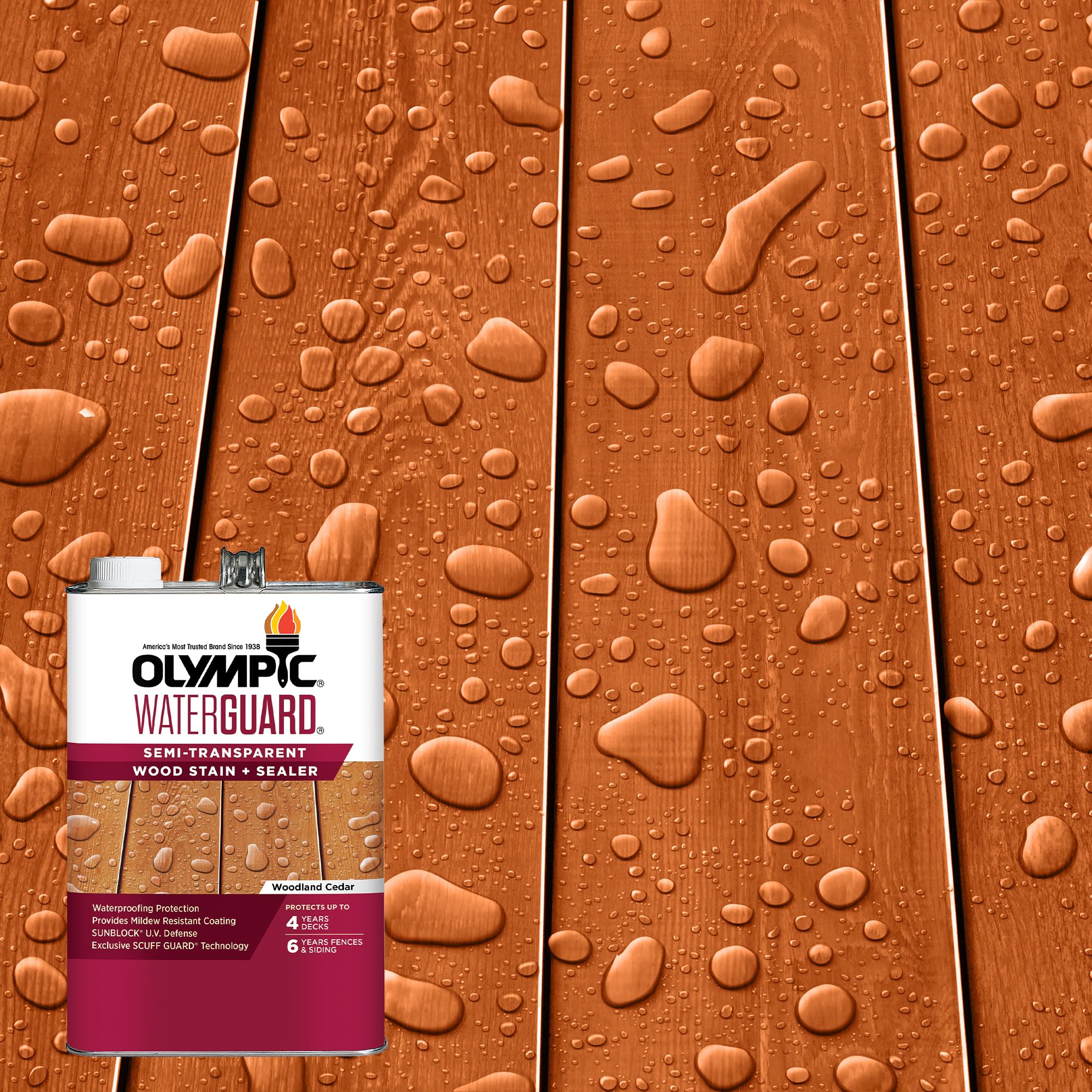
Olympic WaterGuard Cedar

88 /100
Kirk Score Excellent
Coverage
250–350 sq ft/gal
Base Type
Water-based
Application
Spray or brush; soap & water
Transparency
Semi-transparent Woodland Cedar
Check Details on Amazon

Pros

  • Covers generously with minimal effort, reducing the need for multiple coats. — 22 mentions, 86.4% positive on application
  • Repels water effectively after rain, keeping wood dry beneath the surface. — 19 mentions, 73.7% positive on water resistance

Cons

  • Finish can turn milky white if rained on shortly after application. — 12 mentions, 33.3% negative on finish — milky coating reported after first rain

Olympic WaterGuard Cedar gives low-traffic decks and furniture a rich cedar tone with built-in scuff resistance, all at a low price. It demands a careful weather window — rain before curing can mar the finish, and cool humid conditions may prolong tackiness. That makes it suited for DIYers who can shield the wood during a dry cure, not for large, exposed decks.

Bottom line: This is for a covered furniture project or small patio where you can guarantee a rain-free curing window — the scuff resistance and cedar color deliver solid value at this price.

Check Latest Price
#10

Clear fence seal

Thompson's Water Seal 21802 VOC Wood Protector

91 /100
Kirk Score Outstanding
Coverage
300–400 sq ft/gal on cedar/oak
Base Type
Water-based
Application
Brush, roller, dip, spray
Transparency
Clear
Check Details on Amazon

Pros

  • Water beads and runs off surfaces, keeping vertical wood dry. — 16 mentions, 100% positive on water resistance
  • Goes on easily with a brush or roller and gives wood a rich, natural look without an orange or yellow tint. — 13 mentions on ease of use, 76.9% positive; appearance 11 mentions, 81.8% positive

Cons

  • Thick consistency resists smooth spray application; a brush or hand-rubbing is the practical method for even coverage. — 5 mentions, 60% negative on spray compatibility; mixed absorption reports

This clear protector enriches cedar and redwood tones while shedding water effectively, making it a good fit for fences and outbuildings. However, its thick consistency makes spray application a struggle; brushing or hand-rubbing works, but it's not suited for large deck flooring. Over-application or high humidity can lead to tackiness.

Bottom line: For vertical surfaces like fences and outbuilding walls where you want a clear, water-repellent finish that brings out natural wood color — and you don't need to spray — it's a cost-effective way to protect and enhance. Avoid for horizontal decking or spray-heavy projects.

Check Latest Price
#11

Permanent aged look

Eco Wood Treatment Silvery Patina

91 /100
Kirk Score Outstanding
Coverage
750 sq ft per 5-gal kit
Base Type
Powder concentrate (mix water)
Application
Brush, sprayer, roller; one-time
Transparency
Silvery patina (weathered look)
Check Details on Amazon

Pros

  • Mix with water and spray — no back-brushing required — 31 mentions, 96.8% positive on ease of application
  • 100% organic and safe around pets, edible gardens, and water features — 9 mentions, 100% positive on eco-friendliness

Cons

  • Color may appear blotchy or uneven on fresh pressure-treated lumber — 18 mentions, 44.4% negative on weathering

Eco Wood Treatment delivers a weathered silver-gray finish with just water and a sprayer — no VOCs, no reapplication ever. The color change is permanent, and blotchiness can occur on new pressure-treated wood. This is an aesthetic aging treatment, not a traditional clear deck sealer; anyone needing waterproofing without altering color should look elsewhere.

Bottom line: For the fence or barn owner who wants a permanent, rustic gray look and values non-toxic ingredients over uniform color — not a deck waterproofing solution.

Check Latest Price

How to Choose

Oil-Based vs. Water-Based

Oil-based sealers soak deep into wood fibers, displacing moisture and hardening throughout. They offer superior penetration and natural water beading but require mineral spirits for cleanup, emit fumes during application, and take longer to dry. This slow cure is what builds lasting protection, not a flaw—but it means you can't rush the job.

Water-based sealers form a surface film with microscopic adhesion. They dry in hours, clean up with soap and water, and maintain color clarity, yet they are more vulnerable to peeling if internal wood moisture escapes too fast. The trade-off: easy application and low odor, but thinner coats and more frequent reapplication on horizontal surfaces.

Transparency and Color Accuracy

Clear sealers let wood grain show through unchanged, but they offer zero UV screening—so expect faster graying and more frequent recoats. Semi-transparent and translucent stains add pigment that shields fibers from sun damage while still revealing the grain, though the actual hue often reads warmer or redder than the swatch suggests.

On new pressure-treated pine, most 'chestnut' or 'cedar' shades pull orange-red. On older, grayed wood, the same product can look muddy. If color uniformity is critical, test a hidden patch first and accept that semi-transparent means semi-predictable.

Coverage per Gallon

Coverage isn't just about square footage—it's about how thirsty your wood is. Manufacturers quote rates on smooth or moderately rough lumber; a cracked, heavily weathered deck can drink twice as much, putting your budget projection off by 50% or more. Always round up by 20% beyond the label estimate.

Oil-based formulas tend to go further on dense hardwoods because they spread thin and penetrate instead of pooling. Water-based sealers require heavier wet coats to achieve a continuous film, so check whether the stated coverage assumes one coat or the recommended two.

UV Protection and Fade Resistance

UV rays break down lignin—the glue holding wood cells together—long before water causes rot. A sealer without specific UV inhibitors leaves wood graying under the clear film. Semi-transparent and solid stains absorb the brunt of the sun, while clears require a separate UV-blocking additive or simply won't protect color.

Even top-rated sealers show fading complaints around 30% in the first year on decks with zero shade. The pragmatic approach: treat any horizontal, full-sun surface as a 2-year reapplication zone regardless of the product's promise.

Application Method and Sprayer Compatibility

Sprayers are a lifeline for large decks, but thick oil-based sealers can clog tips unless reduced properly. Products labeled 'spray-ready' still benefit from straining and back-brushing to work the liquid into cracks and avoid puddles.

Hand application with a brush or pad gives you control at edges and knots, but significantly extends labor time. If you choose a sealer that demands hand-rubbing over spraying, confirm your schedule can absorb the extra hours—skipping it often leaves glossy patches and early failure points.

Frequently Asked Questions