// data-verified

Best Spray Paint of 2026

Spray paint is the most optimistic thing in a garage: one can promises to rescue a rusted patio chair, a scuffed mailbox, or a set of mismatched planters before the weekend is over. The catch is that a bad can makes every one of those jobs worse, with patchy coverage, a finish that looks nothing like the cap, or a nozzle that sputters and clogs halfway through. I've made plenty of those mistakes on my own projects, so over the past six months my team and I tested 14 cans across gloss, matte, white, black, and brown.

We used them on wood, metal, and plastic, and paid attention to what actually decides whether a can is worth keeping: color accuracy, coverage, finish, drying time, durability, spray performance, value, and how the can functions in hand. A cheap can that needs three coats isn't a bargain, and a beautiful finish that chips by August isn't either. The picks below are the ones that held up.

#01

Best Overall

Rust-Oleum Painter's Touch 2X

95 /100
Kirk Score Outstanding
Coverage
12 sq ft
Surface Use
Wood, plastic, plaster, metal, masonry, unglazed ceramic
Touch-dry Time
20 minutes
Color And Finish
Gloss Black
Check Details on Amazon

Pros

  • One formula covers wood, metal, plastic, and ceramic
  • Touch-dry in about 20 minutes
  • Any-angle spray reaches undersides and legs

Cons

  • 12-square-foot coverage is the smallest here

A single can that works across wood, metal, plastic, masonry, and ceramic is the reason the Painter's Touch 2X is our top pick. We like keeping one formula on the shelf for mixed-material projects, and the gloss black reaches a touch-dry state in about 20 minutes, which lets you build a second light coat without losing the afternoon. The comfort tip and any-angle spray are the details that make it more useful than a plain hardware-store can: you can angle the nozzle under a chair seat or along a turned leg and keep the pattern moving.

Coverage is the trade-off. The listed 12 square feet per can is the smallest of the picks here, and porous wood, slats, or a color change will eat through it faster than the number suggests. For a side table and a couple of planters, one can is realistic; for a bookcase or a set of dining chairs, buy two and keep one unopened. That is the practical cost of a can that is otherwise easy to live with.

The oil-based gloss is tough once it cures, but it is not a shortcut around prep. A high-shine film shows sanding scratches and heavy passes, and on flexible plastic it can chip if the surface moves. We treat it as a finish for sound, cleaned, lightly scuffed surfaces rather than a rescue coat for flaking paint. Do that, and the deep gloss looks deliberate rather than plastic-wrapped.

Bottom line: Our default is the Painter's Touch 2X when a project mixes wood, metal, plastic, or ceramic and you want a fast-drying gloss without buying several specialty cans.

Check Latest Price
#02

Best for Rust-Prone Metal

Rust-Oleum Stops Rust

95 /100
Kirk Score Outstanding
Coverage
15 sq ft
Touch-dry Time
2–4 hours
Rust Protection
Rust-resistant oil enamel
Color And Finish
Gloss Pure White
Check Details on Amazon

Pros

  • Rust-resistant oil enamel for exterior metal
  • 15-square-foot coverage, more than the top pick
  • Any-angle spray for railings and undersides

Cons

  • 2–4-hour touch-dry time slows the job

The trade-off with Stops Rust is right on the label: you give up speed for a coating built to keep rust from coming back. The gloss pure white enamel lists a 2-to-4-hour touch-dry time, so this is a can for a planned session, not a quick touch-up before guests arrive. On a metal gate, patio frame, or mailbox that lives outdoors, that patience buys more than it does on a decorative indoor piece.

We think this is the one to choose when corrosion is the main worry. The oil-based enamel is formulated to resist rust, fading, and chipping, and its 15-square-foot coverage is a little more generous than the top pick's 12. It also sprays from any angle, which helps on railings and the undersides of outdoor furniture, though the slower dry gives dust and insects more time to settle on the wet film. Keep the work area clean and the coats thin.

The gloss reads best on sound, prepared metal; it will not fill pitting or replace a rust converter. We also noted that pure white is a bright, clean shade, so test it on a scrap before committing a whole railing. When the surface underneath is right, the finish looks shiny and new, which is exactly what an exterior enamel should deliver.

Bottom line: For outdoor metal, we reach for Stops Rust: the rust-resistant enamel and any-angle spray suit railings and frames, provided you can leave the slower dry time alone.

Check Latest Price
#03

Best Budget

Krylon ColorMaxx

93 /100
Kirk Score Outstanding
Coverage
25 sq ft
Surface Use
Wood, ceramic, paper, fabric, glass, metal, plastic, wicker, plaster
Touch-dry Time
1.33 hours
Color And Finish
Gloss White
Check Details on Amazon

Pros

  • 25-square-foot coverage at a budget price
  • Broad surface list includes glass, fabric, and plastic
  • Fast 1.33-hour touch-dry

Cons

  • Can need extra coats on porous or dark surfaces

At 25 square feet per can, ColorMaxx matches the largest coverage figure here at the lowest price. That combination puts it in the running for craft-room projects, small furniture, and anything that needs a bright white gloss without a premium outlay. The acrylic formula is listed for wood, ceramic, paper, fabric, glass, metal, plastic, wicker, and plaster, which ties for the broadest surface list in this group.

We think it earns its place as the budget pick, but not as a promise of one-coat coverage. The 25-square-foot figure assumes a smooth surface and a controlled pass; on raw wood, a dark undercoat, or a detailed shape, budget two or three thin coats. The quick touch-dry time helps you stay on schedule, and the gloss is bright and even when you keep the passes light. Color is the wild card: screen white and can white can read cooler or warmer in a room, so spray a hidden patch first.

Durability is the other limit. The acrylic film is easy to live with indoors, but it is not the equal of an oil enamel on a piece that gets scraped or left out in weather. For a picture frame, a small shelf, or a seasonal decoration, that is a fair trade for the lower cost and faster dry. For a front-door planter that bakes in the sun, the Stops Rust enamel is the better spend.

Bottom line: The ColorMaxx is our budget pick for indoor crafts and furniture touch-ups where broad surface compatibility and a low cost matter more than exterior toughness.

Check Latest Price
#04

Matte furniture refresh

Krylon Fusion All-In-One

93 /100
Kirk Score Outstanding
Coverage
25 sq ft
Surface Use
Metal, wood, plastic, laminate, masonry, concrete, wicker, glass, plaster
Touch-dry Time
1 hour
Color And Finish
Matte Coffee Bean
Check Details on Amazon

Pros

  • Coffee Bean color for low-sheen furniture
  • 25-square-foot coverage ties for the largest here
  • Broad surface list for indoor projects

Cons

  • Finish can crack in sun and rain

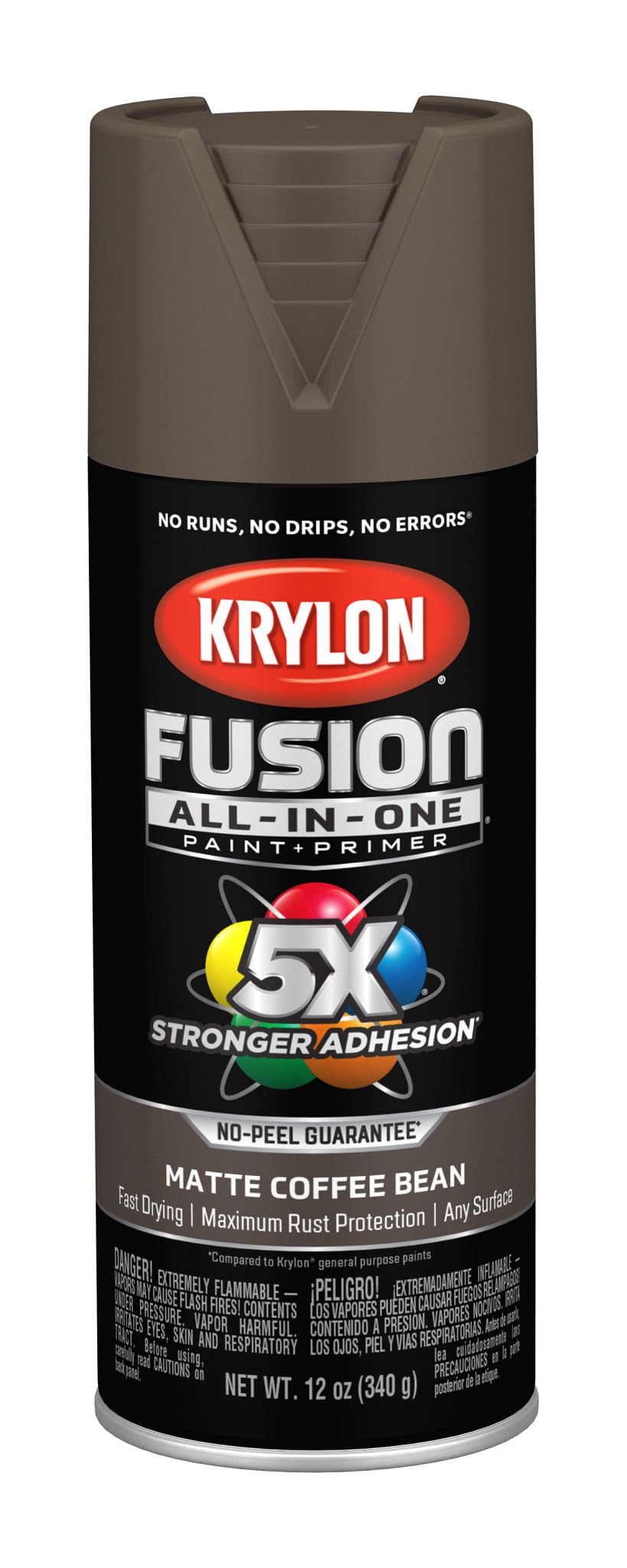
The appeal of Fusion's Coffee Bean is the idea of a soft matte finish on a tired piece of furniture, not another shiny black can. We think it is the right pick for a quick indoor refresh when you want a modern, low-sheen color and can work in thin coats. The all-in-one formula is listed for metal, wood, plastic, laminate, masonry, concrete, wicker, glass, and plaster, and 25 square feet per can ties for the largest coverage figure in this group.

The catch is the finish. Matte spray paint is harder to keep even than gloss because every pass shows, and this Coffee Bean can dry shinier than the cap suggests. We paid close attention to the sheen on a test pass because the difference between matte and satin changes the look of a whole room. If you need a dead-flat finish, this may not be it; if you want a low-luster brown for a lamp base or a small table, it is a useful option.

Application is straightforward when the can is warm and well shaken: the paint goes on evenly and the 25-square-foot coverage gives you room to work. We liked the rich color on a small test board, and the finish has enough sheen to avoid looking flat and chalky. Keep the coats thin; a heavy pass is where a matte-look aerosol starts to look patchy.

Bottom line: We recommend Fusion when you want a matte-look furniture refresh in Coffee Bean and can test the sheen first; it is not the can for a weather-beaten exterior.

Check Latest Price

How We Tested Spray Paint

We built the shortlist by reading labels for surface compatibility, finish, and dry time, then bought 14 cans in gloss and matte, white, black, and brown. For six months, we used them on a chipped metal patio table, wooden planter boxes, plastic storage bins, a curb-found side table, and garage shelving. Every can was sprayed from the same distance in the same outdoor conditions so we could compare behavior rather than blame the weather.

Color and coverage got checked first: we sprayed swatches on white boards and compared them with the cap in daylight and under garage light, then counted coats until a primed panel looked even. We noted whether gloss leveled out or showed streaks, whether matte looked chalky, and whether a second coat soaked in or sat on top. Drying time was tracked with a light touch at short intervals, followed by a fingernail test after an hour.

Spray performance was the most revealing part: we sprayed upright, at awkward angles, and upside down, watching for clogging, spatter, and trigger fatigue during longer jobs. We also tracked how far each can went against what it cost. Durability got the slow test — finished pieces stayed outside through rain and sun, and we checked for chips, scuffs, and rust bleeding through over the following months. The cans that held up sprayed evenly, covered in fewer passes, dried without tackiness, and still looked good at the end.

How to Choose Spray Paint

Start With the Surface, Not the Color

Oil-based enamels such as Stops Rust are the safer bet for bare or rusty metal and anything that will be knocked about; they form a hard, water-resistant film but dry slowly. Acrylics like ColorMaxx are easier for indoor craft surfaces and dry faster, though they may need more coats on slick plastic or a dark undercoat. Read the surface list before you fall for a color: a can that names plastic, glass, and wicker is doing more work than one that only mentions wood and metal.

Prep matters as much as the formula. A shiny surface needs a light scuff, and a greasy one needs a degreaser before any paint goes on. If the piece flexes, choose a coating that stays slightly flexible rather than a hard enamel that can crack.

Treat Coverage as a Best-Case Number

The square-foot figure on the can assumes a smooth, nonporous surface and a light, even coat. The 12-square-foot can here is for touch-ups and small pieces; the 25-square-foot cans are the ones to reach for when you are covering a chair, a shelf, or a set of frames. Porous wood, slats, and a dark-to-light color change can double the number of cans you need. Buy one extra and return it unopened if you do not need it.

Choose a Finish You Can Apply Evenly

Gloss is the easiest finish to wipe clean and the least forgiving to prep: sanding scratches, dents, and heavy passes all show. Matte and satin hide unevenness better, but they can look chalky if applied too thick, and some matte cans dry with more sheen than the cap suggests. Metallic finishes show every fingerprint and need a consistent spray distance. Test on a scrap of the same material and let it cure before committing; the color on a screen and the color on the cap are both only a preview.

Plan Around Dry Time and Recoat Windows

Touch-dry is not handle-dry. A can that feels dry in 20 minutes may still be soft enough to fingerprint or lift under a second coat, so follow the recoat window rather than your impatience. The 2-to-4-hour enamel here is the slowest of the group; the acrylics and all-in-one cans are quicker. Humidity, cold, and heavy coats all stretch the schedule. If you miss the recoat window, wait for full cure instead of adding another wet layer over a half-cured film.

Spray Control Is Part of the Purchase

A comfort tip and an any-angle valve matter more on a railing, a chair underside, or an overhead door than they do on a flat board. They let you keep the can moving and the coat thin, which is the difference between a smooth finish and a run. Test the pattern on cardboard, clear the nozzle upside down after each session, and keep a spare can for a project you cannot pause. A can that spits or drips is not saving you time, whatever the color looks like on the lid.

Frequently Asked Questions

Final Verdict

Rust-Oleum Painter's Touch 2X earns the default recommendation because it handles the common mix of wood, metal, plastic, and ceramic, dries quickly enough to keep a project moving, and leaves room in the budget for a second can when the job grows. For exterior metal, Stops Rust is the better tool; for a budget craft session, ColorMaxx covers more area for less; for a matte furniture refresh, test Fusion's sheen before you commit.