// data-verified

9 Best Adhesive for Plastic to Metal 2026: Picks per Plastic Type

Stop guessing which glue bonds plastic to metal—match your plastic type and project to the right adhesive for a lasting hold.

Walk into any hardware store and you'll find rows of adhesives claiming to bond 'anything to anything.' But when you're trying to stick a plastic bracket to a metal frame, generic claims don't help. The real challenge is that 'plastic' isn't one material—polypropylene, ABS, and polyethylene each demand a different chemistry for a lasting hold. Pick the wrong adhesive and the bond fails, no matter how carefully you apply it.

This guide sorts through the sea of super glues, epoxies, and construction adhesives by matching them to the plastic you're working with and the job at hand. You'll also learn why surface prep can turn a 5-minute fix into a multi-day frustration if skipped, and how to choose between a fast-curing gel and a slower, stronger epoxy when your repair has to survive vibration or weather.

#01

Best Overall Plastic‑to‑Metal Epoxy
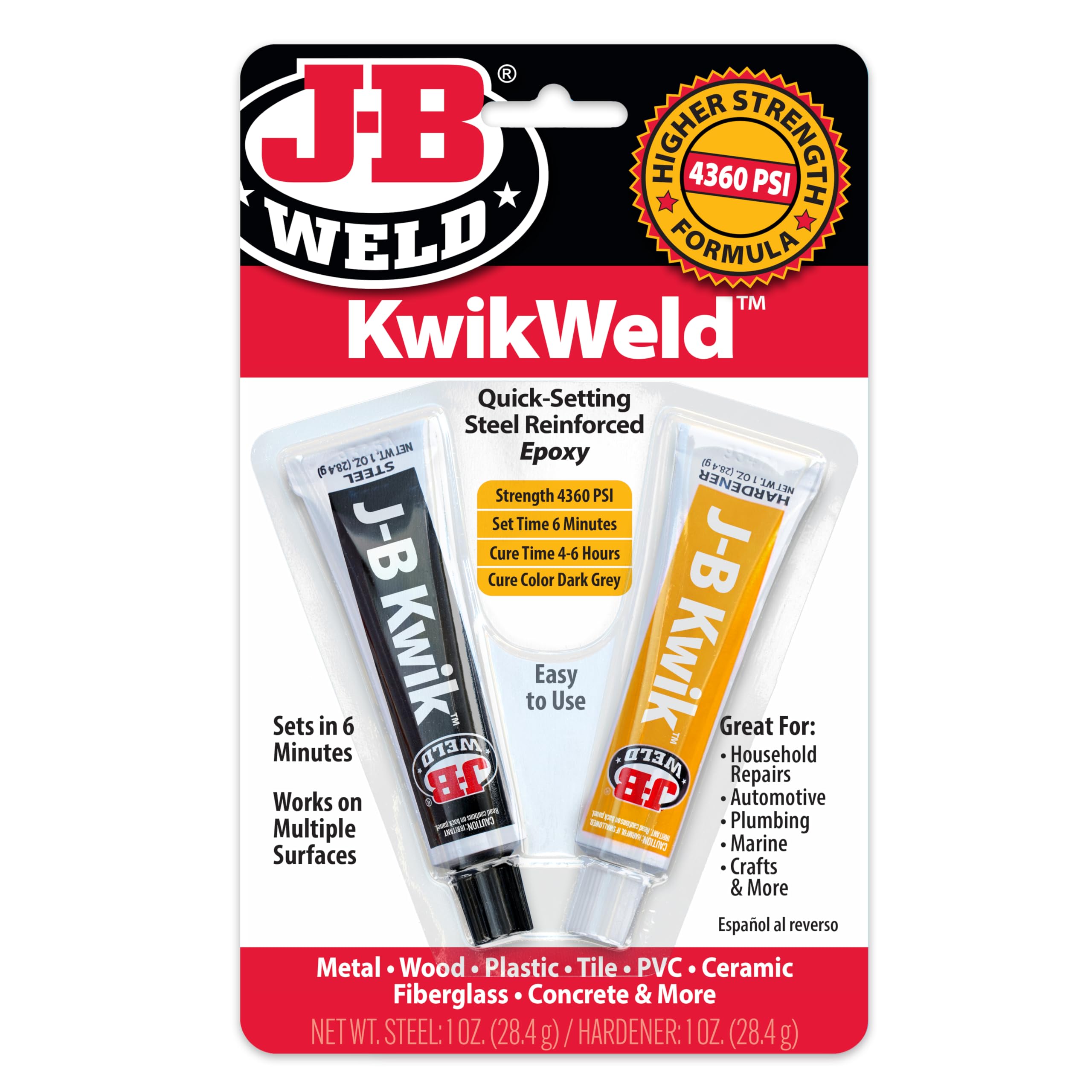
J-B Weld KwikWeld

93 /100
Kirk Score Outstanding
Adhesive Type
Steel Reinforced Epoxy
Set & Cure Time
6 min set
Waterproof & Outdoor
Waterproof
Plastic Compatibility
Most plastics, metal (not PE/PP)
Check Details on Amazon

Pros

  • 6‑minute set time suits quick plastic‑to‑metal fixes — 554 mentions, 84% positive on effectiveness
  • Steel‑reinforced bond holds strong on metal, plastic, and wood — 324 mentions, 70% positive on bond strength
  • Simple mix‑and‑apply process, beginner‑friendly — 178 mentions, 88% positive on ease of use
  • Waterproof once cured, suitable for outdoor or damp environments
  • Withstands moderate heat up to 230°F and vibration without loosening

Cons

  • Adhesion on smooth or painted metal can be unreliable without thorough scuffing — 157 mentions of adhesiveness failures on enamel‑painted metal
  • Fully cured epoxy can be brittle and crack under sudden impact — Multiple reviews note cracking under pressure

KwikWeld’s 6‑minute set time and steel‑reinforced formulation turn a frantic plastic‑to‑metal fix into a short pause. It grabs metal brackets, plastic housings, and wood surfaces with equal urgency, so a broken appliance handle or a loose metal mount is ready to handle again before a coffee break ends. The dark grey cured finish blends unobtrusively into most repair zones, and the syringe‑style dual‑plunger dispensing makes mixing straightforward even if you’ve never used a two‑part epoxy before.

Once cured, the bond delivers a tensile strength of 3127 PSI and stays waterproof — rain, humidity, or the occasional splash won’t soften it. It handles moderate engine‑bay heat up to 230°F and ordinary vibration without loosening, which covers most home, auto, and outdoor projects that aren’t next to the exhaust manifold. Because the epoxy cures to a rigid solid rather than a flexing rubber, it holds its shape under steady load but won’t bend with the part.

That rigidity is where expectations need to align with the product’s limits. The cured KwikWeld compound does not give, so a sudden sharp impact — a hammer strike, a dropped toolbox — can crack the epoxy line rather than let it flex. On painted metal surfaces, especially glossy enamel, adhesion can falter unless the area is scuffed thoroughly to create a mechanical grip. A quick sanding step changes the outcome from a peel‑off failure to a bond that stays put, and for most plastic‑to‑metal joints on brackets and handles, the extra minute of prep is all it takes.

This epoxy is built for DIYers who need a fast, steel‑fortified grip between plastic and metal on household and auto repairs — think reattaching a trim piece, securing a metal bracket, or locking a handle back onto a housing. It’s not the right pick for flexible joints or parts that constantly twist, and it’s not rated for sustained temperatures above 230°F. If you’re up against specialized automotive thermoplastics that resist adhesion, the urethane Plastic Bonder in this comparison is engineered specifically for that scenario, but it trades away KwikWeld’s 6‑minute speed and broad‑material ease. Expect to give metal surfaces a quick scuff and to keep this epoxy away from spots that will see hammering impacts.

Bottom line: KwikWeld is the go‑to when speed and broad plastic‑to‑metal compatibility matter most — budget extra minutes for surface prep, and keep it away from hammering impacts.

Check Latest Price
#02

Best Precision Super Glue

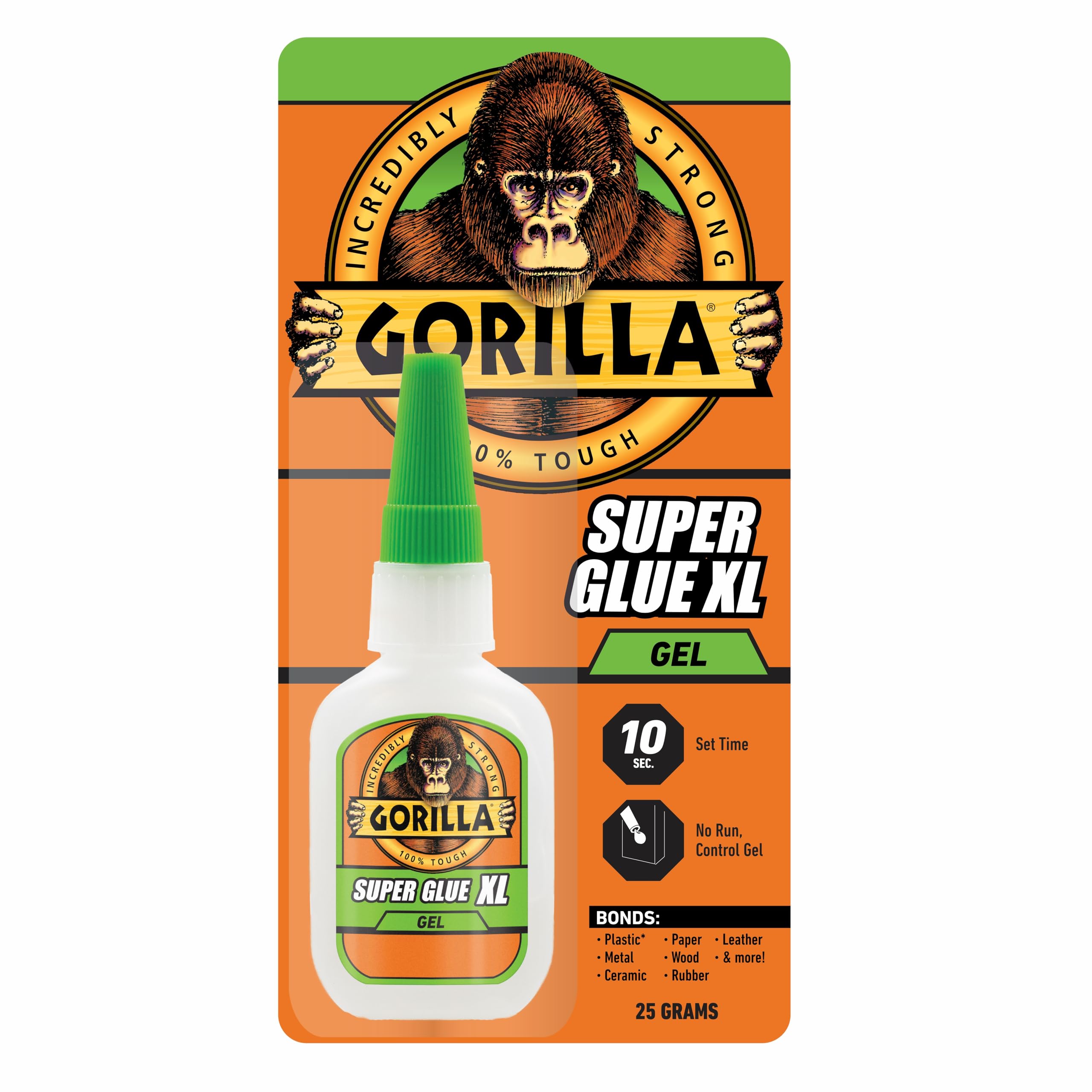
Gorilla Super Glue Gel XL

93 /100
Kirk Score Outstanding
Adhesive Type
Cyanoacrylate Gel
Set & Cure Time
10–45 sec set
Waterproof & Outdoor
Waterproof
Plastic Compatibility
Most plastics, metal
Check Details on Amazon

Pros

  • Gel stays put on vertical and overhead surfaces, perfect for precise plastic-to-metal assemblies. — 742 mentions, 80% positive on effectiveness
  • Impact-resistant bond withstands knocks and drops without cracking. — 675 mentions, 81% positive on quality
  • Waterproof and clear, suitable for indoor or outdoor repairs that need to stay invisible.
  • Fast 10–45 second grab reduces clamp time and holds awkward pieces in place quickly.

Cons

  • Tube requires firm hand strength and diligent cap sealing; otherwise, the tip clogs. — 325 mentions, 32% negative on ease of use — many reports of stiff bottles and clogged tips.
  • Adhesion may fail on polyethylene, polypropylene, and certain untreated metals. — 737 mentions, 39% negative on strength — complaints of weak bonds on certain substrates.

The Gorilla Super Glue Gel XL applies with no-drip precision, gripping plastic and metal in seconds — a sharp contrast to caulk-gun adhesives that bridge gaps but lack finesse. Its thick gel consistency stays exactly where you place it on vertical or overhead repairs, eliminating the runs common with liquid super glues. For attaching a plastic emblem to a metal surface or mending a snapped plastic clip on a metal bracket, the pinpoint control makes a tidy, instant bond.

The bond sets in 10–45 seconds and resists impact, water, and typical temperature swings. The clear finish blends in and won't discolour over time. Because the gel doesn't fill gaps, mating surfaces must be clean and close-fitting — it's not a gap-filler, so heavily pitted metal or loose-fitting plastic parts may need a different adhesive.

The gel thrives on small, clean repairs where a quick, near-invisible bond matters: reattaching a plastic badge to a metal appliance, fixing a broken retaining clip, or securing craft elements. The tube, however, demands a firm squeeze; users with limited hand strength may struggle, and the cap must be seated tightly after each use or the tip can dry out and clog. Bond strength also has limits — polyethylene, polypropylene, and some smooth metals can resist adhesion. For load-bearing plastic-to-metal joints, a steel-reinforced epoxy is the safer choice.

💡 💡 Tip: Seal the cap tightly after each use and store upright to prevent the tip from drying out; warming the tube in your pocket helps if squeezing is difficult.

Bottom line: This gel excels at fast, clean, no-drip bonds for small plastic-to-metal repairs where appearance matters and load is minimal. For structural strength or challenging plastics, choose the top pick epoxy instead.

Check Latest Price
#03

Best for Automotive Plastic Repair

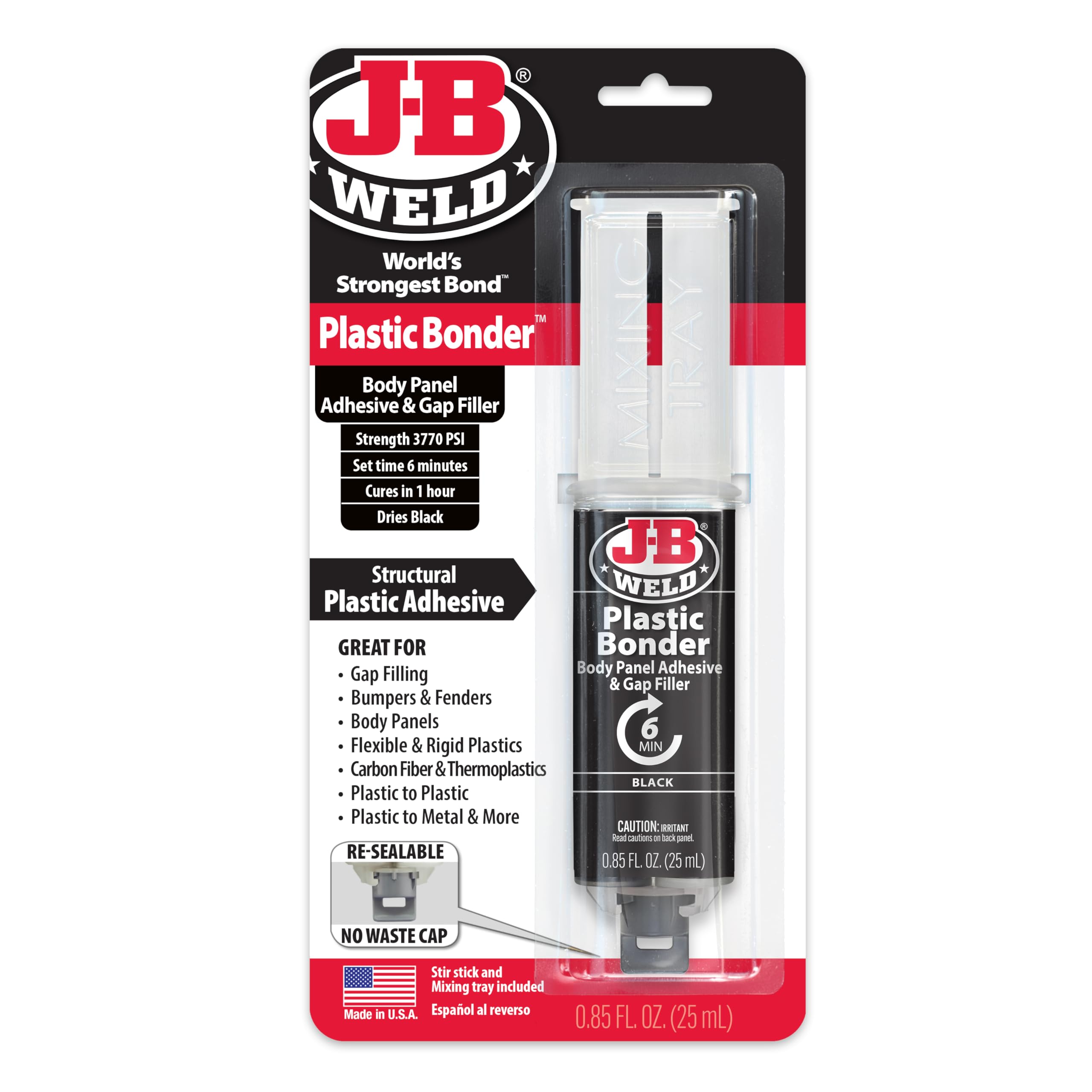
J-B Weld Plastic Bonder – Runner-Up

93 /100
Kirk Score Outstanding
Adhesive Type
Urethane
Set & Cure Time
15 min set, sandable 30 min
Waterproof & Outdoor
Plastic Compatibility
Thermoplastics, metal
Check Details on Amazon

Pros

  • Forms a durable, sandable bond on thermoplastics and painted metal for bumper and trim repairs. — 812 mentions, 86% positive
  • Dual-syringe plunger dispenses equal parts, reducing guesswork in mixing. — 243 mentions, 85% positive
  • Sets in 15 minutes and can be sanded after 30, enabling quick turnarounds for painted repairs.

Cons

  • Liquid consistency drips on vertical surfaces, requiring tape or careful positioning to avoid a mess. — 113 mentions, 65% negative
  • Adhesion may fall short on some plastics if surface prep is not thorough or if the joint endures repeated flexing. — 546 mentions, 31% negative

J-B Weld Plastic Bonder uses a urethane formula to lock thermoplastics and painted metal together with 3770 PSI strength, setting in 15 minutes so you can sand and paint the repair. Unlike fast-setting steel epoxies that prioritize speed, this product trades instant grab for deeper adhesion on low-surface-energy plastics like bumper covers and trim pieces.

On properly scuffed and cleaned surfaces, it cures to a slightly flexible joint that resists cracking from light vibration. However, bond quality hinges on meticulous prep — contaminants or a glossy finish can lead to a weak attachment. This makes it well-suited to stationary trim and bracket repairs, while high-flex areas may show separation over time.

The adhesive fits neatly into automotive repairs where bonding ABS, TPO, or polycarbonate to metal is the goal, especially for bumper tabs, grille mounts, and interior plastic brackets. The runny consistency demands care on vertical surfaces, so masking tape and a flat work angle keep drips in check. Accept that adhesion can be inconsistent on certain plastics if prep is rushed, and a test patch on a hidden spot is a smart move before tackling a structural fix.

💡 💡 Tip: Mask off surrounding areas and work on horizontal surfaces when possible to keep the liquid adhesive from migrating.

Bottom line: For a sandable, black adhesive that bonds automotive plastics to metal and accepts a bit of drippiness with the right setup, this fills a useful niche — just test on a hidden area if you’re unsure about your plastic type.

Check Latest Price
#04

Best for Emblem Reattachment

3M Plastic Emblem Adhesive Review

92 /100
Kirk Score Outstanding
Adhesive Type
Solvent-based
Set & Cure Time
15 min set, 24 hr cure
Waterproof & Outdoor
Waterproof
Plastic Compatibility
Plastic trim, painted metal
Check Details on Amazon

Pros

  • Specifically formulated for plastic emblem and trim bonding to painted automotive metal. — 150 mentions, 91% positive on effectiveness for emblems
  • Dries crystal clear, preserving the factory-installed look without visible residue. — 95 mentions, 91% positive on overall quality
  • Initial grab within 15 minutes simplifies alignment during installation.
  • Cures waterproof, suited for exterior badges and trim.

Cons

  • Application can be stringy and messy, requiring solvent for cleanup. — 11 mentions on messiness, with several describing difficult clean-up.
  • Emblem adhesion may weaken over time with repeated car washes and extreme weather. — 128 mentions, 34% negative on adhesive strength — reports of emblems falling off in car washes.

Engineered to reattach car badges and trim to painted metal, this solvent-based adhesive cures clear, avoiding the visible residue left by quick-set epoxies. Its initial grab anchors fiddly pieces without shifting, and the 15-minute set time lets you fine-tune alignment before the bond locks. Where the top pick prioritizes speed across materials, this formula delivers a near-invisible, OEM-style seam on automotive surfaces.

This tube targets automotive restorers and DIYers who refuse to compromise on the appearance of factory emblems. It is not for structural repairs or heavy loads — attempts to use it as a body panel adhesive will disappoint. The bond relies on a clean, painted surface. Emblems may loosen after prolonged sun, road salt, or automatic car washes. For a show car kept indoors, the clear, flexible hold lasts. For a daily driver in harsh climates, occasional reapplication is a known tradeoff.

Application is manageable with preparation: a thin coat on both surfaces, then a 24-hour cure window for full strength. The solvent base evaporates to a waterproof joint that matches factory thickness. Proper surface prep — a wipe-down with alcohol and light scuffing — helps maximize adhesion on aging paint. The result resists rain and heat, though the real-world limits emerge under relentless mechanical stress from car washes.

💡 💡 Tip: Mask off the surrounding paint and keep a solvent-dampened rag ready; clean up any squeeze-out before it skins over to avoid a sticky mess.

Bottom line: For badge and trim restoration where a clean, OEM-style appearance is paramount, this 3M adhesive delivers — but if the car faces frequent automatic washes or years of sun, reapplication may eventually be necessary.

Check Latest Price
#05

Best Flexible & Waterproof Bond

E6000 Contact Adhesive

89 /100
Kirk Score Excellent
Adhesive Type
Contact Adhesive
Set & Cure Time
24 hr cure
Waterproof & Outdoor
Waterproof
Plastic Compatibility
Polycarbonate, acrylic, metal
Check Details on Amazon

Pros

  • Permanent, waterproof, and highly flexible bond resists cracking under movement. — 9 mentions, 89% positive on strength (small sample)
  • Bonds an unusually wide range of materials, including difficult plastics like polycarbonate and acrylic. — 13 mentions, 100% positive on bonding quality (small sample)
  • Clear adhesive dries transparent for clean, invisible repairs on transparent or colored surfaces.

Cons

  • Strong solvent odor requires a well-ventilated workspace during application and curing. — Multiple reviews mention strong fumes.
  • Contact-adhesive process demands coating both surfaces and waiting for tackiness before joining, adding time. — Instructions and reviews confirm the contact-adhesive process.

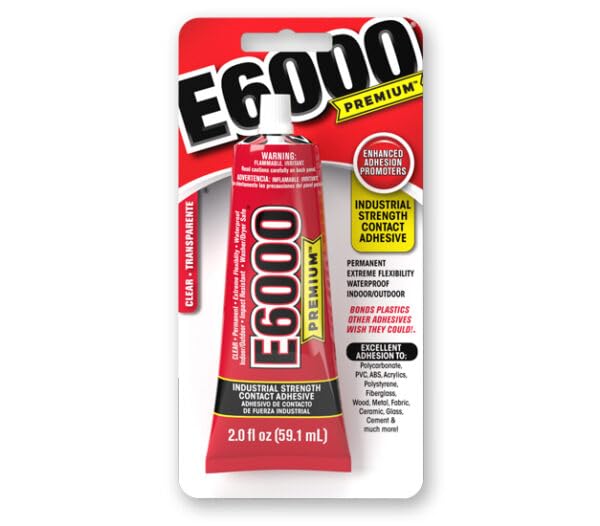
Unlike cyanoacrylates that cure hard and brittle, E6000's contact adhesive stays pliable, making it a better match for joints that flex, such as automotive trim or mixed-material outdoor decor. Where instant glues dry rigid and fracture under vibration, this adhesive remains permanently flexible, absorbing expansion and contraction. The bond dries clear and is waterproof, ideal for cosmetic repairs.

This adhesive fits crafters and repairers who prioritize durability over speed. It bonds a wide range of materials—polycarbonate, acrylic, metal, ceramic—and its waterproof nature suits outdoor items. The strong solvent odor during curing requires a well-ventilated workspace, and the contact-adhesive method (coat both sides, wait for tack, then join) adds time and planning. Those needing an instant grab will find it mismatched; the reward is a bond that won't crack from temperature swings or movement.

Once fully cured—24 hours—the clear bond line remains pliable and resistant to peeling, even on non-porous surfaces. For plastic-to-metal repairs on lawn furniture or car emblems, the adhesive withstands repeated stress where a rigid epoxy might snap. Generous application on highly flexible substrates ensures even load distribution and long-term durability.

💡 💡 Tip: Apply to both surfaces and wait until the adhesive turns from milky to clear before joining—this tack-up ensures a permanent bond.

Bottom line: When the repair demands flexibility over speed, E6000 delivers a waterproof, moving bond that rigid epoxies can't match. Just open a window and plan the tack-up.

Check Latest Price
#06

Best for Large Projects & Gap Filling

Gorilla HD Construction Adh

91 /100
Kirk Score Outstanding
Adhesive Type
Hybrid Adhesive
Set & Cure Time
30 sec grab, 24 hr cure
Waterproof & Outdoor
Waterproof
Plastic Compatibility
Wood, metal, most plastics
Check Details on Amazon

Pros

  • Bonds plastic to metal with enough strength for subfloor and landscape projects. — 243 mentions, 71% positive on strength
  • Adheres across brick, concrete, wood, metal, and some plastics. — 391 mentions, 79% positive on effectiveness
  • Waterproof cure with 30-second grab time suits outdoor and moisture-exposed repairs.

Cons

  • Dispensing requires a caulk gun and significant hand force — tiring over long bead runs. — 135 mentions, 38% negative on ease of use — complaints about hard squeezing and dried-out cartridges
  • Cartridge can dry out quickly if not fully used in one session. — 135 mentions, 38% negative on ease of use
  • Opaque white finish may clash with visible plastic-to-metal joints.

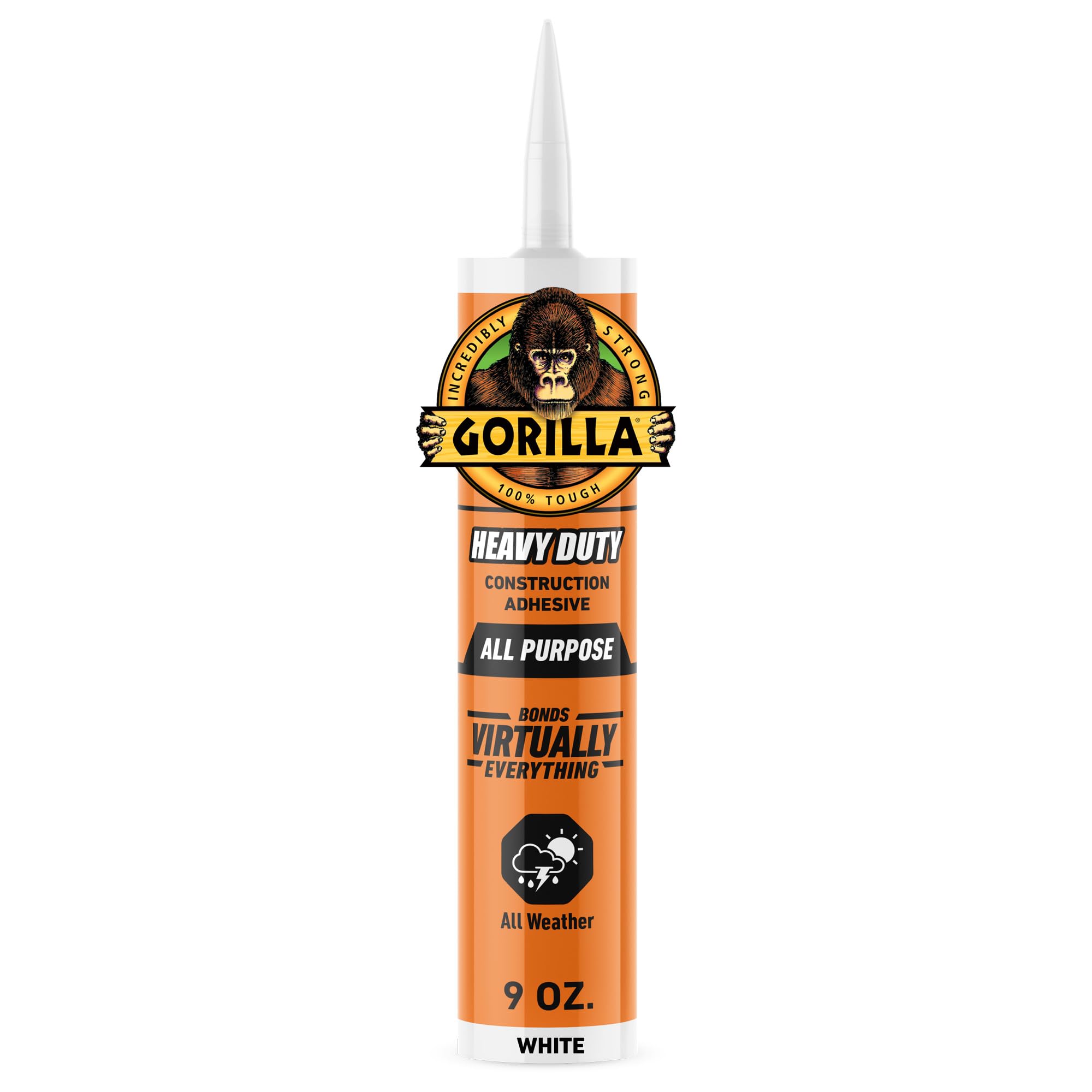
Gorilla Heavy Duty Construction Adhesive locks plastic to metal in 30 seconds with a hybrid formula that fills gaps the top pick's epoxy can't bridge. It cures into a waterproof bond across brick, concrete, wood, and primed metal — the kind of strength that suits large-scale jobs rather than fine-detail work.

The cartridge format makes it impractical for small, precise plastic-to-metal repairs like emblems or interior trim clips. This adhesive belongs on projects with long bead lines, uneven surfaces, and outdoor exposure. The white color cures to an opaque finish that stands out against black plastic and dark metals — a non-issue under paint or behind structural assemblies, but worth checking before applying to visible joints.

💡 💡 Tip: Warm the cartridge in room-temperature water for 10 minutes before loading — it reduces the squeezing force needed and helps prevent premature hand fatigue.

Bottom line: For large plastic-to-metal assemblies where gap-filling and outdoor durability matter more than a clear finish, this cartridge adhesive delivers construction-grade strength — provided you already own a sturdy caulk gun.

Check Latest Price
#07

Quick Bonding

ARKA Super Glue XXL

93 /100
Kirk Score Outstanding
Adhesive Type
Cyanoacrylate
Set & Cure Time
3 hr full cure, fast set
Waterproof & Outdoor
Waterproof
Plastic Compatibility
Most plastics, metal
Check Details on Amazon

Pros

  • Fast-acting bond on a wide range of materials, including plastics and metals. — 194 mentions, 88% positive
  • Consistently strong initial hold that matches or beats name-brand alternatives. — 188 mentions, 96% positive
  • XXL size reduces cost per use for frequent small repairs.

Cons

  • Advertised tensile strength of 25 lb is lower than typical cyanoacrylate formulas, limiting load capacity.

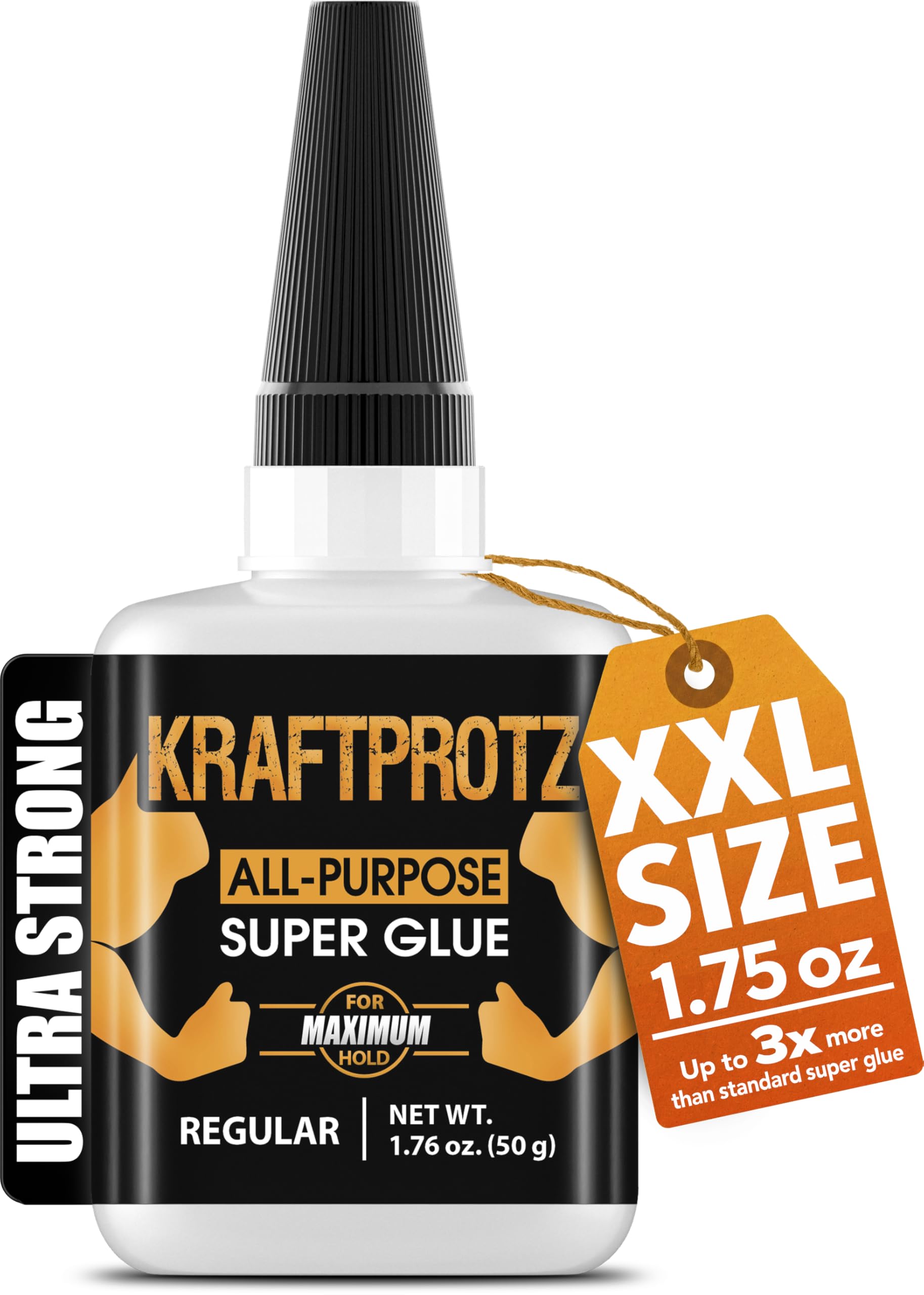
The ARKA XXL bottle bonds plastic, metal, wood, and leather in seconds with a clear, nearly invisible joint — a practical bulk buy for frequent craft and household repairs. The watery formula wicks effortlessly into tight seams but fails to fill gaps and drips on anything less than horizontal, so it's suited to small, flat, close-fitting bonds rather than vertical or structural fixes. A modest 25 lb tensile strength further limits it to light-duty uses. Yet for tinkerers who go through super glue fast, the large size offers a cost-effective option that performs reliably as long as the work stays flat and the parts mate cleanly.

💡 💡 Tip: Apply only enough to wet the surface; excess will run off. Keep a paper towel handy and brace parts quickly to avoid drips on vertical work.

Bottom line: Best for tinkerers and crafters who burn through super glue on flat, tight-fitting projects and can accept the runny formula in exchange for a large, affordable bottle. Not the choice for gap-filling, vertical surfaces, or structural weight-bearing repairs.

Check Latest Price
#08

Metal Repairs

vicpricme Metal Glue

86 /100
Kirk Score Excellent
Adhesive Type
Metal Filled Epoxy
Set & Cure Time
30 min set, 24 hr cure
Waterproof & Outdoor
Waterproof
Plastic Compatibility
Metal, rigid plastics
Check Details on Amazon

Pros

  • Forms extremely strong, machinable bonds on aluminum and cast iron after full cure. — 162 mentions, 82% positive for aluminum and rigid metal‑to‑metal bonds.
  • Cures to a waterproof, grey finish that can be drilled, tapped, and sanded. — bulletPoints and reviews confirm machine‑workability.
  • 30-minute set time provides enough open time to position and clamp parts. — Spec: 30-minute set, 24-hour cure.

Cons

  • Does not bond to polyethylene, Teflon, or flexible plastics.
  • Without aggressive sanding and degreasing, adhesion to plastic and smooth metal can peel off. — 65 mentions, 52% negative — reports of glue not bonding or peeling off.

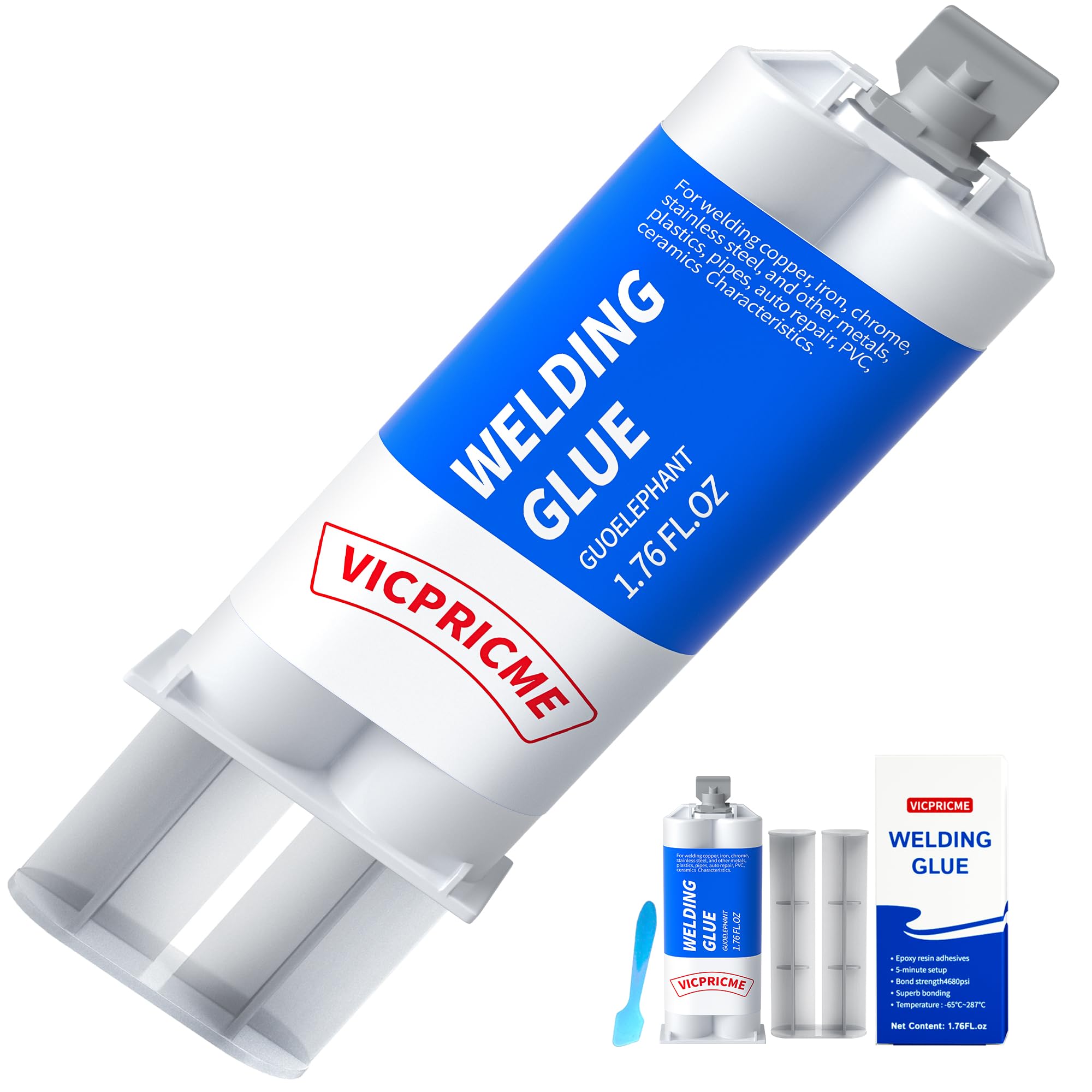
This epoxy cures to a waterproof, machinable finish — you can drill, tap, and sand it once fully set — making it a strong candidate for cracked aluminum or cast iron. For plastic-to-metal bonds, consistency dips. The adhesive can peel away from some plastics and smooth metal unless surfaces are aggressively sanded and degreased. It won’t grip polyethylene or Teflon. At a mid-range price, it’s a practical metal repair option, but bonding plastic demands real prep commitment.

Bottom line: It’s a sensible pick when your project involves aluminum or cast iron, and you’re willing to thoroughly rough up and clean the bond area before use.

Check Latest Price
#09

Auto Trim Fixes

WoldoClean Auto Super Glue

91 /100
Kirk Score Outstanding
Adhesive Type
Cyanoacrylate
Set & Cure Time
Seconds set
Waterproof & Outdoor
Waterproof
Plastic Compatibility
Automotive plastics, metal
Check Details on Amazon

Pros

  • Sets in seconds on automotive plastics, rubber, and metal trim. — 429 mentions, 82% positive
  • Versatile for interior car fixes and household repairs. — 47 mentions, 87% positive on versatility

Cons

  • Bond may not hold on hard-to-stick plastics like polypropylene or emblems. — 184 mentions, 45% negative — many complaints about glue not holding on emblems or plastic.

The WoldoClean glue sets in seconds, a real time-saver for reattaching a loose interior trim clip or emblem. Its cyanoacrylate formula bonds rubber, metal, and many plastics without clamping, and the clear finish keeps repairs discreet. Trouble arises when you target harder-to-stick plastics—adhesion can be inconsistent, and exterior emblems often loosen after repeated car washes. This isn't a structural adhesive; for plastic-to-metal bonds that face weather, a solvent-based emblem adhesive holds up better. It's a handy, fast fix for casual automotive and household tasks, but not a permanent emblem welder.

Bottom line: Best for quick interior trim and household fixes where speed matters; for exterior badges or plastic-to-metal bonds that must survive weather, step up to a solvent-based emblem adhesive.

Check Latest Price

How to Choose

Adhesive Type

Cyanoacrylate (super glue) excels on tight-fitting parts where a fast, rigid bond is acceptable, but it can't fill gaps and becomes brittle under impact. Epoxies provide gap-filling strength and structural hold, with steel-reinforced versions boosting metal adhesion; the trade-off is longer cure times and the need for mixing. Urethane bonders specifically target thermoplastics common in car panels, while construction hybrids handle large projects where a caulk-gun bead can bridge uneven surfaces. Match the chemistry to the physical stresses your repair faces.

Set & Cure Time

A 10-second grab may let you hold a piece in place instantly, but full molecular cross-linking can take 24 hours. During that window, even a slight shift weakens the final bond. Fast-setting products reduce clamping time; slow-cure epoxies allow repositioning but demand patience. If a repair needs immediate functional load—like a broken handle—opt for a 5- to 15-minute set. For overnight jobs, a 24-hour cure delivers higher ultimate strength.

Tensile Strength & Heat Resistance

Tensile ratings above 3000 PSI indicate a bond that can handle heavy loads, but the catch is that high-strength epoxies often become brittle. Heat resistance matters once you exceed 150°F; near engines or under direct sun, an adhesive rated for 230°F or 550°F prevents softening and creep. For most household repairs, 1500-3000 PSI suffices. Structural metal-to-plastic joints in machinery demand the upper tier.

Plastic Compatibility

Standard adhesives grip ABS, PVC, acrylic, and polycarbonate reliably. The real test is low-surface-energy (LSE) plastics—polyethylene, polypropylene, and some nylon blends—that repel most glues. If you can't identify the plastic, try a drop in an inconspicuous spot; if it beads up, you need a dedicated LSE adhesive or surface activation (flame-treatment or special primer). Skipping this check is the top cause of bond failure.

Waterproof & Outdoor Use

Waterproof means the cured adhesive won't dissolve, but outdoor longevity also hinges on UV resistance and thermal cycling. Rigid epoxies can crack when bonded parts expand at different rates, so flexible options like contact adhesives fare better under sun and rain. Automotive exterior repairs demand products rated for heat and repeated moisture—a car-wash hit can peel a non-waterproof emblem glue in weeks.

Frequently Asked Questions