// data-verified

11 Best Concrete Crack Filler for Large Cracks of 2026: Seal Up to 1.5 in

Find the best concrete crack filler for large cracks—which self-leveling, trowelable, or granular formulas actually seal wide gaps and withstand rain and traffic.

Manufacturers love to slap 'self-leveling' on a bottle, but pour one into a deep driveway crack and you quickly learn it's more like water than mortar—it seeps right through unless you've blocked the bottom with backer rod. Meanwhile, pastes that look thick in the tub can crumble after a hard winter. The gap between marketing and real-world use is wider than most of the cracks you're trying to fill.

This guide focuses on what actually holds up in large cracks, matching products to crack width, surface slope, and weather exposure so you don't end up redoing the job after the next rainstorm. We skip the hairline-only caulks and foundation injection kits to zero in on fillers rated for gaps starting at a quarter inch and stretching past an inch.

The biggest trade-off you'll face is between maximum crack width and surface finish—sealants that span the widest gaps often level to a smooth, paintable surface, while slightly narrower-range fillers can deliver a textured, rubber-like look that blends with broom-finished concrete. Both have their place, and the right choice depends on whether you're sealing an expansion joint or touching up a decorative patio.

#01

Best Overall

SIKA Sikaflex Self-Leveling Sealant

89 /100
Kirk Score Excellent
Form
Liquid
Durability
Waterproof, flexible
Application & Prep
Caulk gun, self-leveling
Check Details on Amazon

Pros

  • Self-levels smoothly across expansion joints and wide cracks, eliminating manual troweling. — 175 mentions, 91% positive
  • Forms a durable, waterproof seal on driveways and sidewalks that withstands weather. — 305 mentions, 89% positive
  • Applies easily with a standard caulk gun — no special tools required. — 163 mentions, 83% positive

Cons

  • Adhesion to concrete edges may weaken over time, with some sealant pulling away after months. — 166 mentions, 46% negative durability — some adhesion loss over time

Sikaflex Self-Leveling Sealant tackles the widest horizontal cracks — up to 1.5 inches — making it the go-to for large expansion joints and damaged driveways. It pours out as a thin polyurethane liquid that seeks level, filling every contour and curing to a smooth, gray finish that's paintable. A standard caulk gun dispenses it cleanly, and the self-leveling action means no troweling or tooling. The resulting seal is flexible, waterproof, and handles foot and vehicle traffic without cracking. While it forms an effective barrier against water and freeze-thaw cycles, occasional edge separation from concrete can occur over time.

It's designed for horizontal applications only — driveways, garage floors, walkways, and patios where a slick, seamless look is desired. Because of its watery consistency, any crack deeper than the surface needs a backer rod to prevent the sealant from draining out before cure. That makes it less convenient for uneven gaps, but with proper prep, the final result is a durable, low-profile repair. Skip this if you're working on vertical cracks or want a textured, rubber-like surface — Crack Flex handles those better.

💡 💡 Tip: For deep cracks, use a foam backer rod to fill the gap before applying sealant — otherwise the runny liquid may drain out and leave a sunken fill.

Bottom line: Sikaflex's 1.5-inch capacity and smooth, paintable finish make it the standard for driveway and garage floor repairs; pair it with backer rod for a durable, watertight seal.

Check Latest Price
#02

Best Textured Finish

Sikaflex Crack Flex Sealant

92 /100
Kirk Score Outstanding
Form
Liquid
Durability
Elastic, waterproof
Application & Prep
Caulk gun, self-leveling
Check Details on Amazon

Pros

  • Flows into cracks and self-levels smoothly, eliminating the need for troweling. — 87 mentions, 94% positive
  • Adheres securely to concrete, providing a lasting waterproof seal. — 60 mentions, 90% positive
  • Fast, clean application and textured finish mimic concrete so repairs blend in. — 41 mentions, 90% positive

Cons

  • Higher price per tube than bulk alternatives, making long crack runs more costly. — 22 mentions, 64% negative on value
  • In some regions, filled cracks may reopen after freeze-thaw cycles or extreme seasonal movement. — 59 mentions, 24% negative — a minority saw cracks reappear after 6 months

Sikaflex Crack Flex separates itself with a textured, rubber-like self-leveling formula that dries to match concrete's surface far better than the smooth, paintable consistency of the top pick. It flows into horizontal cracks up to 1 inch without a putty knife, leaving a finish that needs no painting or texturing to blend in.

The main appeal is for driveways and walkways where a seamless, natural look matters more than flexibility in paint color. Application is quick—no troweling required—and the cured seal stays flexible. In regions with harsh freeze-thaw cycles, some cracks may reopen after a season or two, a limitation that the paint-ready top pick shares but with a less forgiving visual outcome.

Bottom line: For horizontal repairs where a concrete-matching texture outweighs a lower initial cost, Crack Flex delivers a near-invisible seal. If paintability or wider gap coverage matters more, the top pick remains the safer default.

Check Latest Price
#03

Best Trowelable Bulk Patch

Red Devil Concrete Patch

89 /100
Kirk Score Excellent
Form
Paste
Durability
Flexible, waterproof
Application & Prep
Trowel on
Check Details on Amazon

Pros

  • Spreads and feathers easily with a trowel. — 274 mentions, 78% positive
  • Fills cracks, holes, and spalls effectively. — 231 mentions, 88% positive
  • One-gallon size covers extensive crack networks. — 139 mentions, 77% positive on quality

Cons

  • Some containers may arrive already hardened or partly dry. — 183 mentions, 46% negative drying time; 69 mentions, 67% negative texture
  • Repaired sections can crack after winter freeze-thaw cycles. — 119 mentions, 44% negative — a subset report cracking

Red Devil's pre-mixed paste spreads easily into wide cracks, deep spalls, and uneven slabs without slumping — a contrast to runnier self-leveling sealants that need a backer rod and flat surface. A single gallon covers large areas efficiently, making it a budget-friendly way to repair extensive surface damage on driveways, patios, and walkways.

This is ideal for homeowners facing multiple wide cracks or crumbled edges who want a flexible, paintable finish they can feather by hand. Check the bucket immediately; a few units may have dried out during storage. If the paste is fresh, you'll get smooth filling with minimal waste.

Bottom line: A sensible option for tackling wide spalled areas and long crack runs where troweling gives you the textured control a self-leveling sealant can't match.

Check Latest Price
#04

Strongest Epoxy for Heavy Loads

Rust-Oleum Epoxy Patch

89 /100
Kirk Score Excellent
Form
Epoxy (2-part)
Durability
Harder than concrete
Application & Prep
Mix & trowel
Check Details on Amazon

Pros

  • Creates a patch harder than the original concrete, resisting heavy vehicle wear. — 66 mentions, 83% positive on effectiveness
  • Bonds deeply into wide cracks and spalled areas to restore structural integrity. — 37 mentions, 76% positive on crack repair
  • Withstands commercial-grade traffic without crumbling or sinking. — 52 mentions, 87% positive on quality

Cons

  • On sloped or vertical surfaces, the thin consistency can sag out of the crack, limiting use to level floors. — 13 mentions, 77% negative consistency
  • Pot life is short—the mixed epoxy thickens fast, requiring a swift, practiced application. — 70 mentions, 50% negative drying time

Unlike simple trowelable patching compounds, this two-part epoxy cures to a hardness that exceeds the original concrete slab, anchoring deep spalled areas and structural cracks that see heavy vehicle traffic. It's meant for garage floors and driveways where surface-level fillers won't hold. The fast curing and thin flow demand experienced mixing and application on level surfaces—vertical repairs or leisurely work won't succeed.

💡 💡 Tip: Mix only as much as you can trowel in under 3 minutes; small batches prevent premature hardening in the pot.

Bottom line: For structural repairs in high-load horizontal concrete, this epoxy delivers unmatched durability—provided you can handle its fast, strict application demands.

Check Latest Price
#05

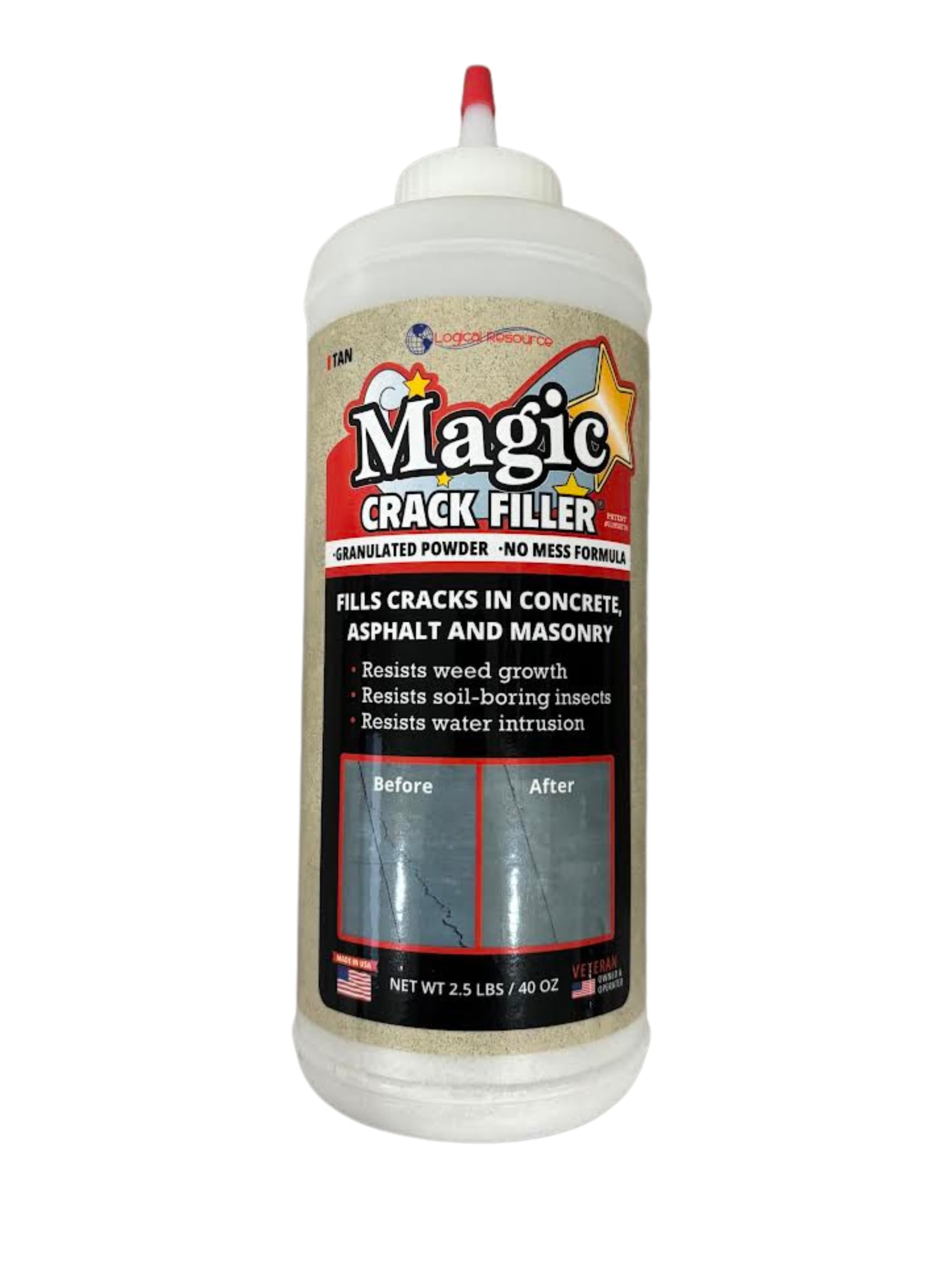
Easiest No-Mix Granular Filler

Magic Crack Filler

88 /100
Kirk Score Excellent
Form
Granular
Durability
Self-healing when wet
Application & Prep
Pour & spray
Check Details on Amazon

Pros

  • No mixing, no caulk gun — pour granules into the crack and mist with water. — 88 mentions, 99% positive
  • Fills hairline to medium cracks cleanly with minimal overflow or mess. — 149 mentions, 88% positive
  • Tan finish blends invisibly on matching concrete, leaving a clean repair. — 26 mentions, 100% positive on appearance

Cons

  • The tan color may clash with gray concrete, and the actual shade can vary from the label. — 38 mentions, 50% negative color match — received wrong shade
  • Rain before the filler fully cures can wash granules out of the crack. — 118 mentions, 35% negative crack filling — some report re-exposed cracks after rain

Where traditional fillers demand backer rods and steady hands, this granular option reduces crack repair to a pour-and-spray ritual. The dry polymer particles are simply sprinkled into the crack, then misted with a garden hose — no mixing, no tools, and no sticky residue. This makes it the go-to for DIYers in arid regions fixing hairline to medium cracks on patios, walkways, and driveways. The tan shade is designed to blend with beige or sand-colored concrete. The tradeoff is a strict weather dependency: rain before full cure can wash the granules away, and the tan color may clash with gray surfaces. If you can time the application around a dry spell, the effort savings are unmatched.

💡 💡 Tip: Apply only when dry weather is forecast for at least 24 hours after application to allow full setting.

Bottom line: For dry climates and tan concrete, this is the most effortless crack repair available — if rain threatens, switch to a self-leveling sealant that cures regardless.

Check Latest Price
#06

Budget-Friendly Liquid Pour

Quikrete Crack Seal

88 /100
Kirk Score Excellent
Form
Liquid
Durability
Water resistant
Application & Prep
Pour bottle
Check Details on Amazon

Pros

  • Effective seal on driveway cracks when applied to level surfaces — 158 mentions, 90% positive
  • Self-levels easily — just pour and spread — 106 mentions, 91% positive
  • Fast setting and strong value for the price — 80 mentions, 90% positive on quality

Cons

  • Cured color can dry lighter than surrounding concrete, leaving visible patches without sanding — 41 mentions, 53% negative on color match
  • Watery consistency leaks out of any slope or vertical gap unless backer rod or sand is used — 47 mentions, 83% negative consistency — very watery

Where the top pick handles cracks up to 1.5 inches and creates a paintable finish, Quikrete Crack Seal is the no-frills, budget alternative for horizontal gaps under 1 inch. It pours straight from the bottle, self-levels without labor, and sets quickly to a waterproof barrier — ideal for sealing an entire network of narrow driveway fissures in one go.

The cured color dries noticeably lighter than typical concrete, so visible patches won't blend without sanding or a topcoat. This sealant is meant for multiple narrow, dead-level horizontal driveway cracks where speed and cost matter more than a perfect color match.

💡 💡 Tip: Backfill deep cracks with sand or backer rod before pouring to prevent the sealant from draining away.

Bottom line: If you need a cost-effective way to seal many narrow, flat driveway cracks and don't mind a lighter finish, this pour-and-forget liquid is the wallet-friendly pick.

Check Latest Price
#07

Small vertical repairs

Sikacryl Ready-Mix Patch

89 /100
Kirk Score Excellent
Form
Paste
Durability
Waterproof
Application & Prep
Trowel/putty knife
Check Details on Amazon

Pros

  • Extremely easy to work with and clean up — 134 mentions, 94% positive
  • Effectively fills cracks and spalls on concrete and masonry — 152 mentions, 89% positive

Cons

  • May crack if applied too thick or over unprepared surfaces — 98 mentions, 40% negative crack resistance

A hassle-free, ready-to-use acrylic paste that goes on with a putty knife and cleans up with water. This is a handy patch for vertical wall cracks and spalls, but its paste form isn't suited for filling large, horizontal gaps wider than 1/4 inch. It can soften if rainwater hits before a full cure.

Bottom line: For small vertical crack fixes on steps, walls, and patios where a textured finish is desired, this budget-friendly patch is a practical choice. Not for wide driveway gaps.

Check Latest Price
#08

Light-duty driveways

DAP Liquid Cement Crack Filler

89 /100
Kirk Score Excellent
Form
Liquid
Durability
Waterproof
Application & Prep
Shake & pour
Check Details on Amazon

Pros

  • Pour-on application requires no caulk gun or mixing. — 171 mentions, 89% positive
  • Self-leveling liquid fills hairline to medium cracks quickly. — 256 mentions, 84% positive

Cons

  • Dries to a noticeably light gray that may stand out against surrounding concrete. — 59 mentions, 59% negative on color; nearly white when dry

This shake-and-pour 32oz liquid fills narrow horizontal cracks efficiently without a gun. Its watery consistency demands a backer rod to prevent drain-out in deep or sloped gaps — and it cures to a pale gray that stands out against typical concrete. For flat, shallow driveway hairline cracks where a quick, no-tool pour matters more than a perfect color match, it's a cost-conscious choice.

Bottom line: Best for flat driveway cracks up to 1 inch wide where speed and simplicity matter more than a precise concrete color match — and you're willing to use backer rod to prevent drain-out.

Check Latest Price
#09

Narrow cosmetic cracks

DAP Powder Crack Filler

87 /100
Kirk Score Excellent
Form
Powder
Durability
Waterproof
Application & Prep
Pour & mist
Check Details on Amazon

Pros

  • Pour-and-spray application eliminates mixing and caulk guns. — 99 mentions, 95% positive
  • Dries into a durable fill that holds well for narrow driveway cracks. — 125 mentions, 93% positive

Cons

  • Cannot fill cracks wider than 0.5 inches per pass, limiting it to cosmetic narrow repairs. — Product spec — maximum gap fill of 0.5 inches width x depth per pass

The no-mix powder fills hairline-to-half-inch cracks with a simple pour-and-spray routine. Hardening can be spotty if water saturation is lacking, but proper misting yields a durable, waterproof fill ready for light foot traffic in hours.

Bottom line: A fast, affordable way to touch up small driveway cracks, but the 0.5-inch width cap means it cannot replace a pourable sealant for the large gaps this search targets.

Check Latest Price
#10

Patios & walkways

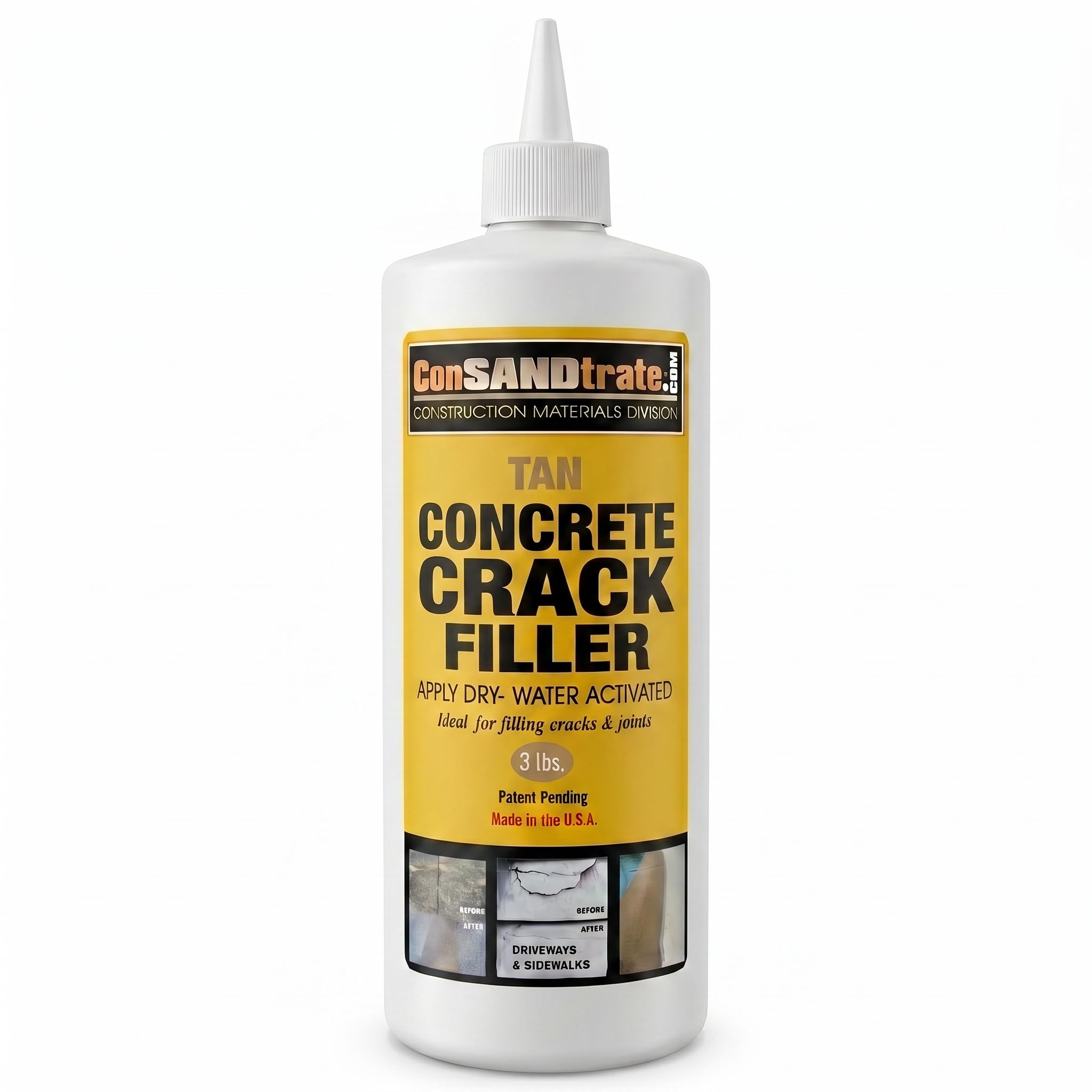
ConSandtrate Crack Filler

85 /100
Kirk Score Excellent
Form
Granular
Durability
Self-healing
Application & Prep
Pour & spray
Check Details on Amazon

Pros

  • Pour-and-mist application requires no mixing or tools — 112 mentions, 98% positive
  • Fills cracks and hides small surface flaws effectively — 122 mentions, 90% positive

Cons

  • Gray tone sometimes arrives lighter than expected, closer to tan — 53 mentions, 40% negative color match

This granular filler simplifies patio repairs with a pour-and-mist application that hardens into a sand-textured surface. The polymer reactivates when wet, keeping cracks filled through light moisture. Heavy rain before a full bond can wash it away, so it's best applied in dry weather. It's far easier than troweling patches, though not for flexible structural cracks.

Bottom line: For patios and walkways in light-rain regions, this filler is a practical, easy-to-use option that avoids the hassle of gun cartridges or mixing.

Check Latest Price
#11

Non-critical cracks

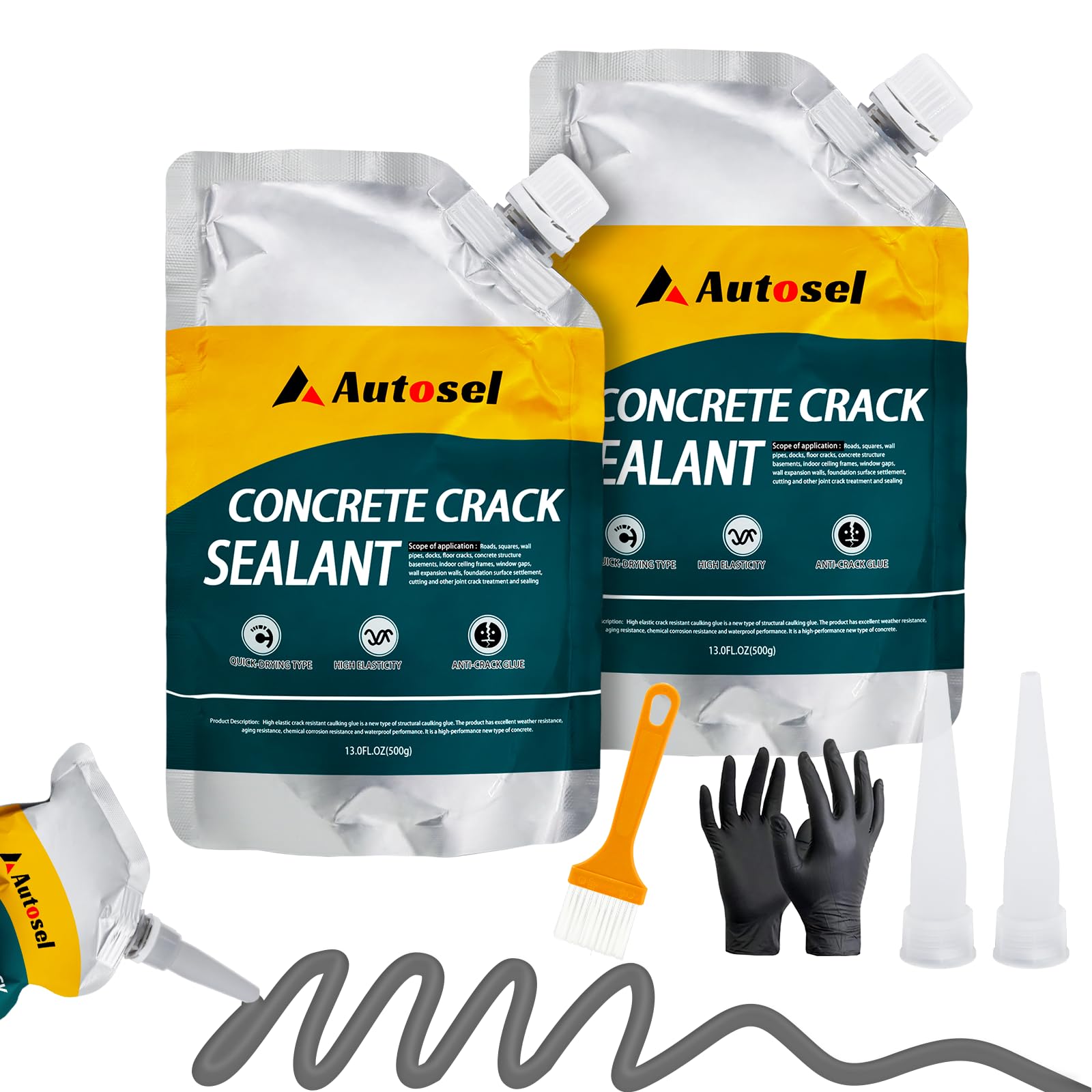
Autosel Concrete Crack Filler, 2-Pack

82 /100
Kirk Score Excellent
Form
Liquid (silane)
Durability
Waterproof
Application & Prep
Squeeze tube
Check Details on Amazon

Pros

  • Squeeze-tube application is simple and self-levels for a smooth finish. — 58 mentions, 78% positive
  • Builds deep crack fills effectively with multiple thin layers. — 53 mentions, 83% positive

Cons

  • Runny consistency can drain out of deep cracks if not fully sealed underneath. — 19 mentions, 53% negative — watery texture

The twin-tube pack offers a budget self-leveling option that applies cleanly and builds depth with multiple passes. However, thicker applications can stay tacky and may not fully cure, making it better suited for non-structural cracks where perfect curing isn't essential.

Bottom line: For DIYers patching low-risk horizontal cracks and willing to layer thin fills, this two-tube kit gets the job done without a heavy investment.

Check Latest Price

How to Choose

Form Factor: Liquid, Paste, or Granular

Liquid self-leveling sealants flow into crevices without troweling, but they're often thinner than expected. If you don't first insert a foam backer rod into deep cracks, the product can drain straight through before it sets.

Trowelable pastes give you more control on sloped or vertical surfaces and can bridge irregular spalls. Granular powders eliminate mixing entirely—just pour and mist with water—but they need a dry curing window or they re-wet and wash away.

Crack Width Capability: Why 1/4-Inch Is the Divide

Hairline fillers max out around a quarter inch because they rely on surface adhesion, not volumetric fill. For cracks larger than that, the material must span a gap while resisting sag, shrinkage, and thermal movement.

Products rated for one inch or more typically use polyurethane or epoxy chemistry that stays flexible and bonds to the crack walls. Always check the stated maximum width—if the label doesn't specify one, assume it's only for narrow cracks.

Application Ease: Backer Rod, Troweling, and No-Mix Claims

The 'no-mix' convenience of granular fillers and pre-mixed pastes often comes with a hidden trade-off: they're more susceptible to water damage during the first 48 hours. A sudden rain can turn a half-cured pour-and-wet patch back into loose sand.

Liquid sealants demand backer rod for any crack deeper than half an inch; skipping this step wastes product and creates a hollow seal that fails underload. Trowelable pastes need clean, dust-free concrete edges to achieve a lasting mechanical bond.

Curing Time and Weather Sensitivity

Water-based and granular products need a guaranteed dry window—typically 24 to 48 hours—before they reach a rain-proof state. Polyurethane and epoxy sealants cure faster and become waterproof earlier, making them safer choices in unpredictable weather.

Temperature also matters: applying epoxy below 50°F can double its set time and weaken the final bond. Always check the manufacturer's temperature range before starting.

Long-Term Durability: Freeze-Thaw, Traffic, and Reopening

Flexibility is the primary defense against seasonal movement. Rigid patches crack when the concrete expands and contracts; polyurethane and acrylic formulas that advertise 'maximum flexibility' bridge this natural motion.

For cracks under vehicle loads, hardness matters too. Epoxy patches cure harder than concrete itself, resisting wear from tires and heavy equipment. In contrast, flexible sealants may deform but stay sealed, making them better for expansion joints.

Frequently Asked Questions