// data-verified

Best Wall Anchors of 2026

A wall anchor fails at the worst possible moment: the anchor spins in a hole that's suddenly too wide, the screw strips, and your shelf takes a divot of drywall with it on the way down. Almost every one of those failures starts with the wrong anchor for the wall — a plastic expansion sleeve asked to hold a loaded shelf, or a toggle a hair too long for the cavity behind it. The right anchor spreads that load across a wider patch of wall instead of concentrating it under one screw head, and that is the whole game.

We spent four months working through 14 kits — plastic expansion assortments, self-drilling anchors, and snap-style toggles — hanging closet shelves, mounting a heavy mirror, and driving a ceiling hook for a hanging planter.

One thing worth knowing before you buy: the weight rating printed on the package is the least useful number on it. Those figures assume fresh, perfectly sized drywall and a hole drilled dead straight, and your hole, in a wall that's been painted over four times, is neither. Everything below is here because it still held.

#01

Best Overall

KURUI 350-Piece Drywall Anchor Kit

91 /100
Kirk Score Outstanding
Pieces
350
Storage
Clear organizer case
Anchor Type
Self-drilling plastic
Anchor Sizes
Five sizes, #5 to #8
Check Details on Amazon

Pros

  • Five anchor sizes in one case
  • 175 anchors and 175 matching screws
  • Clear organizer keeps sizes sorted

Cons

  • Light-to-medium loads only

A drawer full of loose anchors is its own small frustration, and the KURUI 350-piece kit is the first one here that solves it before you hang anything. Five sizes sit in a clear organizer case, with 175 anchors and 175 matching screws sorted by size, so you can match the anchor to the screw without emptying a bag onto the floor. The anchors are self-drilling plastic, and the case makes the whole set easy to keep together between projects.

That organization is why this is our best overall pick for general household hanging. We like having #5 through #8 anchors on hand for pictures, curtain brackets, closet hardware, and light shelves, because most jobs fail at the size-selection step rather than the drilling step. The anchors are sold for drywall, concrete, brick, and wood, but we treat them as a drywall-first kit: the plastic expansion design is at its best in sound drywall, not as a substitute for a masonry anchor.

The 350-piece count is more than a single apartment project needs, though the case makes the surplus easy to store. For a homeowner who wants one box that covers the ordinary stuff, that surplus is the point. We also appreciate that the screws are matched to the anchors, so you are not digging through a coffee can for a length that fits.

We keep this kit in the utility closet and dip into it for weekend projects; it is the box that stops a ten-minute picture hang from turning into a hardware-store run. Use a stud where you can, and let the case keep the rest sorted.

Bottom line: We recommend the KURUI 350-piece kit as the default household assortment for light and medium drywall jobs, with the range and case that keep small hangs moving.

Check Latest Price
#02

Best for Heavy Loads

TOGGLER SNAPTOGGLE 20-Pack

88 /100
Kirk Score Excellent
Bolt Size
1/4-20
Anchor Type
SnapToggle hollow-wall
Load Rating
265 lb on 1/2 in drywall
Wall Thickness
3/8 to 3-5/8 in
Check Details on Amazon

Pros

  • 265 lb drywall load rating
  • One-person installation on a ladder
  • Fits a range of hollow-wall thicknesses

Cons

  • Needs a large hole
  • Carrier can spin or break during install

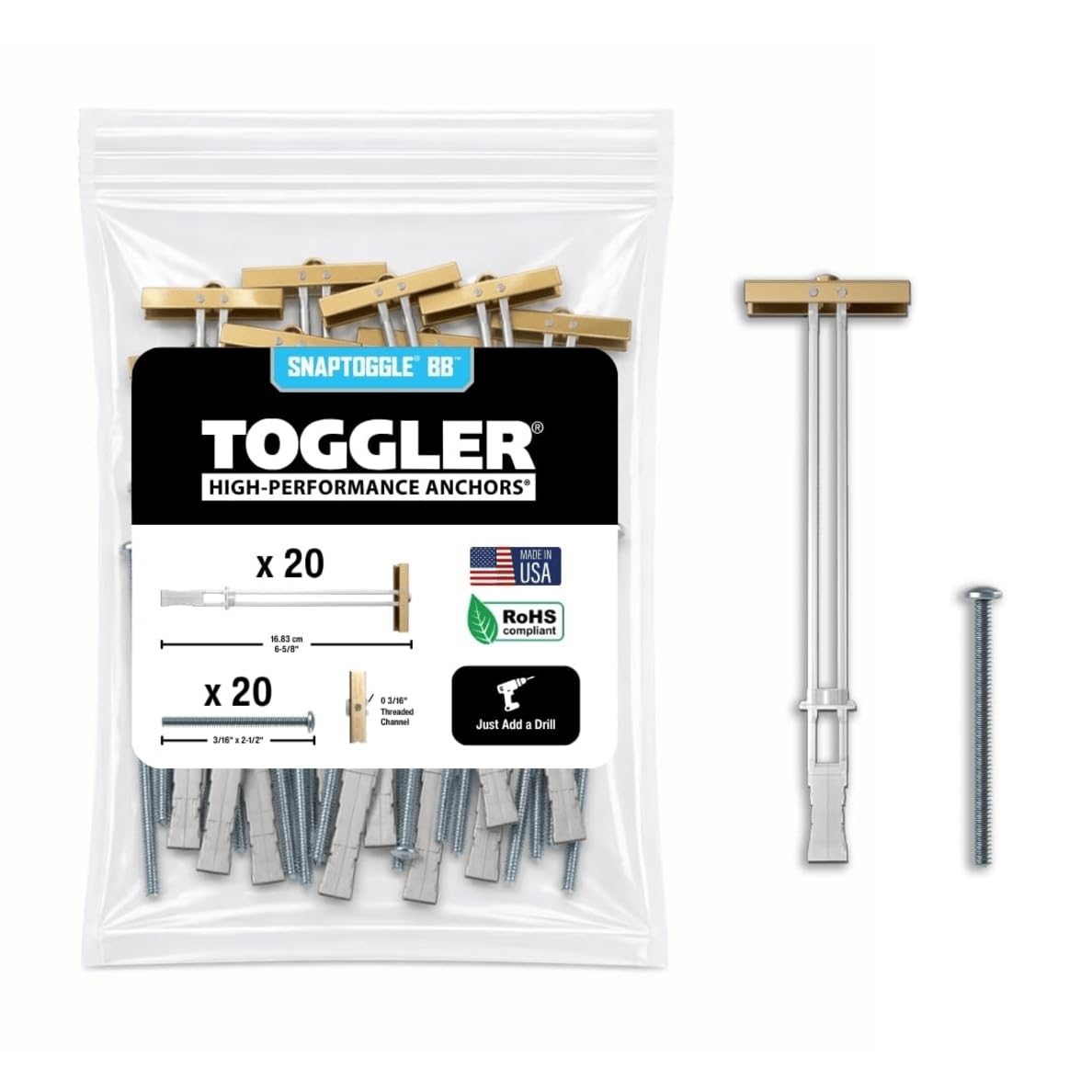
The SNAPTOGGLE asks for a larger hole than a plastic anchor, and its 265-pound drywall rating is the reason we accept that. The anchor attaches to the wall before you add the fixture, so you can position it and then lift the bracket or shelf with both hands. The 20-pack uses 1/4-20 bolts and fits hollow walls from 3/8 to 3-5/8 inches thick.

This is the anchor we choose when the load is heavy and the wall is hollow: a wall-mounted TV bracket, a grab bar, a chunky shelf. We like that the metal channel spreads the load behind the drywall instead of pinching it at the surface, and the one-person setup matters on a ladder. The 265-pound figure is an ultimate tensile rating in 1/2-inch drywall, not a license to hang a 265-pound item; leave a generous margin and use more than one anchor for anything bulky.

The installation is less forgiving than a plastic anchor, and it is the premium pick here. That is a fair trade for heavy mounts; for a picture hook, a plastic anchor is easier and cheaper.

Bottom line: We choose the SNAPTOGGLE when a hollow wall has to carry serious weight; its 265-pound rating and one-person install make it our heavy-duty anchor.

Check Latest Price
#03

Best Toggle Variety

KURUI 28-Piece Toggle Bolt Kit

92 /100
Kirk Score Outstanding
Material
Galvanized steel
Anchor Type
Toggle bolts with wing nuts
Toggle Sizes
1/8, 3/16, 1/4 in
Check Details on Amazon

Pros

  • Three toggle sizes in one kit
  • Galvanized steel construction
  • Good for mirrors and curtain rods

Cons

  • Needs a larger hole than plastic anchors
  • Wing can fail to open in tight cavities

If the TOGGLER set is more anchor than your project needs, the KURUI toggle kit covers three bolt sizes in one box. You get 1/8-, 3/16-, and 1/4-inch toggle bolts with wing nuts, all galvanized steel, for pictures, mirrors, curtain rods, and light shelving on hollow walls. The idea is simple: drill a hole, push the wing through, and let it open behind the drywall.

We like the range for a mixed day of small jobs. The small bolts suit a mirror or a decorative bracket, while the 1/4-inch size gives you a sturdier option for a shelf or a heavier fixture. Having all three in one case beats buying three separate packs and hoping the right size is in the drawer.

The KURUI kit is not the heavy-load equal of the SNAPTOGGLE, and the 1/4-inch bolts are the only ones we reach for on a serious bracket. What it gives you is an affordable way to keep three toggle sizes on hand; for a rental or a first toolbox, that range is more useful than a single premium pack.

Bottom line: For hollow-wall work that needs more than one toggle size, we like this KURUI kit's range and steel build, provided the wing has room to open.

Check Latest Price
#04

Best Budget Metal Anchors

FEAOXYO 100-Piece Metal Anchor Kit

90 /100
Kirk Score Outstanding
Pieces
100
Material
Zinc-plated carbon steel
Screw Head
Pan
Anchor Type
Self-drilling metal
Check Details on Amazon

Pros

  • Metal anchors resist stripping
  • Self-drilling tip saves a pilot hole
  • 100 pieces in a budget box

Cons

  • Light-to-medium loads only

The metal anchors are the story here, not the piece count. FEAOXYO packs 100 zinc-plated carbon steel anchors and screws into a small kit, with a self-drilling tip and a pan head. That makes it the budget way to stop relying on plastic expansion anchors for every light and medium job.

We like metal for the anchors that live in a garage or a utility room, because a steel anchor is less likely to strip or crush when you drive it. The self-drilling design also skips the separate pilot hole, which is a real convenience for a quick shelf bracket or a curtain rod. For a budget box, you get a practical range of spare anchors without paying for a full assortment case.

Bottom line: We see the FEAOXYO box as the budget metal option for light and medium jobs, not as a replacement for a rated toggle.

Check Latest Price
#05

Best Basic #8 Pack

CrimsonMark 120-Piece #8 Anchor Kit

91 /100
Kirk Score Outstanding
Size
#8 x 1-1/4 in
Pieces
120
Anchor Type
Self-drilling nylon
Load Rating
75 lb
Check Details on Amazon

Pros

  • 120 pieces in one useful size
  • 75 lb load rating
  • No pre-drilled hole required

Cons

  • Single-size pack limits flexibility

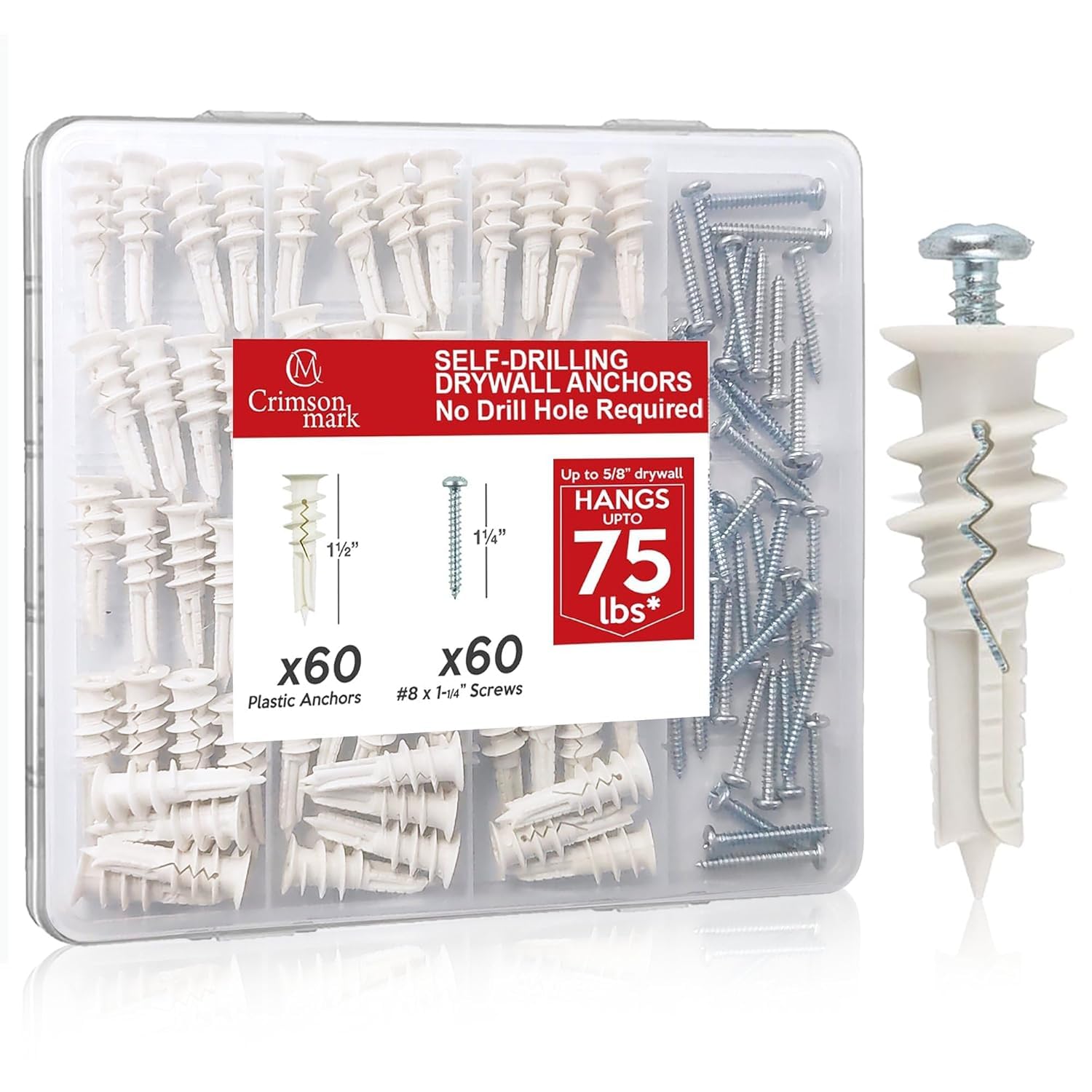
One size is not a flaw here; it is the point. CrimsonMark's kit is 120 pieces of #8 self-drilling nylon anchors and screws, rated to 75 pounds, with a round head and a tip that screws into the wall without a pre-drilled hole. If you have already decided that #8 is the size you need, this is the no-decision box.

We like a single-size pack for picture rows, closet brackets, and the small shelves that come with their own screws. There is no sorting, no wrong-size anchor to fish out, and no half-empty organizer case. The 75-pound rating is enough for a lot of household hanging, provided you are anchoring into sound drywall and not asking one anchor to carry a load better suited to a toggle.

The limitation is flexibility. A #8 anchor is the wrong choice for a heavy mirror, a shelf that will hold books, or a wall where the screw needs to pass through a thick bracket. If your project is still vague, the five-size KURUI kit is the safer buy; if you know the size, this pack keeps the job simple.

Bottom line: If you already know #8 is your size, we think this simple 120-piece pack is the no-fuss choice for pictures and light brackets.

Check Latest Price
#06

Best All-in-One Kit

Wensilon 270-Piece Anchor Kit

88 /100
Kirk Score Excellent
Pieces
270
Includes
Anchors, screws, nails, concrete screws
Anchor Type
Plastic expansion
Included Tools
Three drill bits and driver bit
Check Details on Amazon

Pros

  • Three drill bits and a driver bit
  • Adds concrete screws and nails
  • Organized compartment case

Cons

  • Plastic anchors may not expand in soft drywall
  • Masonry bits are not a guarantee in hard concrete

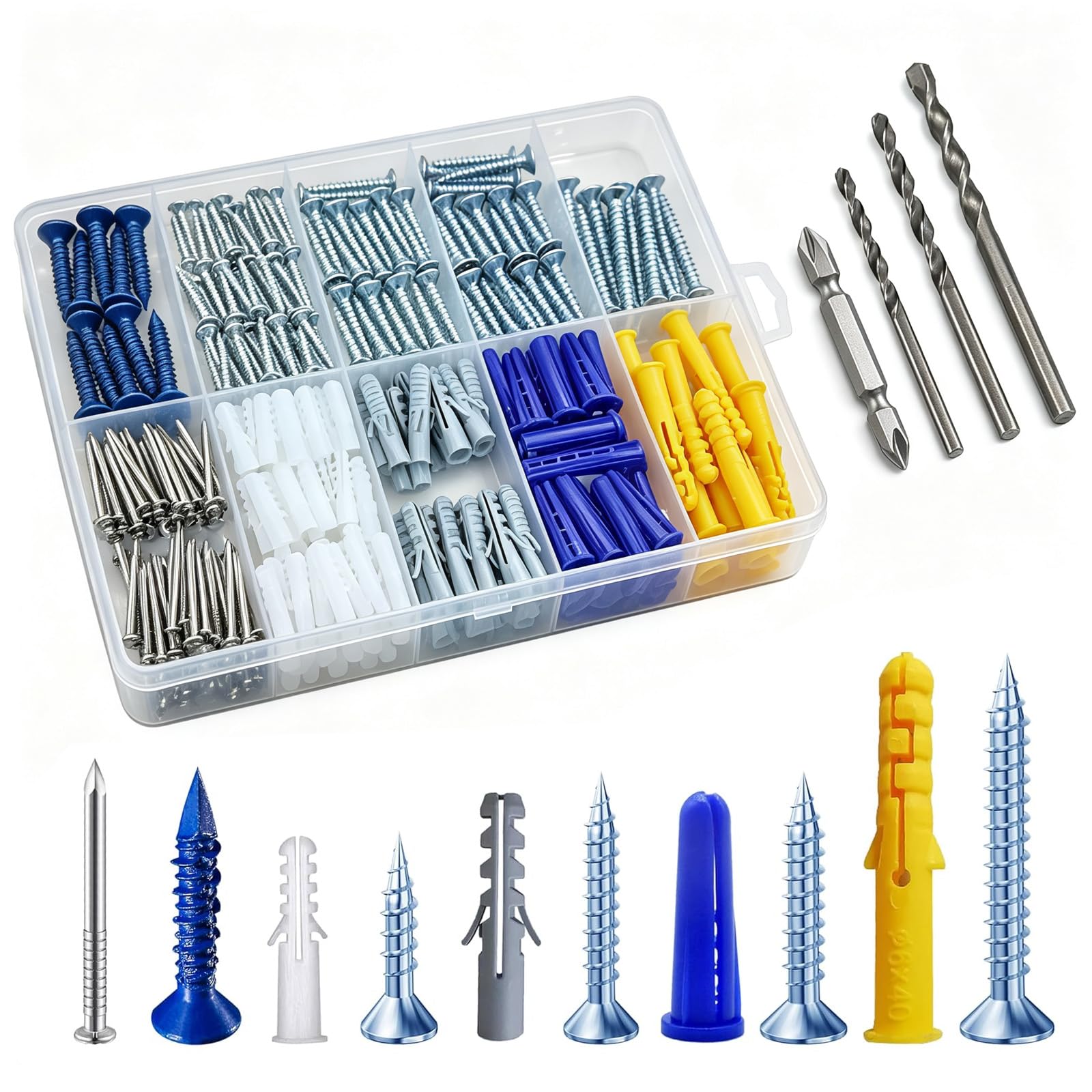
The extras are what set this kit apart: three drill bits, a Phillips driver bit, concrete screws, and stainless steel nails alongside the plastic anchors and screws. Wensilon's 270-piece box is less a single-purpose drywall kit and more a starter fastener drawer for a new house or a first toolbox.

We like that it covers more than drywall. The concrete screws give you a masonry option, and the drill bits mean you can start a job without hunting for the right size. The anchors themselves are plastic expansion anchors, so they are still for light and medium loads; the masonry pieces do not turn the kit into a heavy-duty anchor set.

The weak point is the anchor, not the extras, so keep the heavy shelves on a rated toggle and treat the masonry pieces as a bonus. For a box that gets a new homeowner through pictures, curtain rods, and the odd masonry screw, the range is genuinely useful. We like it as a starter kit rather than a lifer.

Bottom line: We recommend the Wensilon kit for a first toolbox or a new home because it pairs anchors and screws with the drill bits and masonry extras.

Check Latest Price
#07

Mixed-material walls

fischer DuoPower 100-Pack

90 /100
Kirk Score Outstanding
Size
3/16 x 1 in
Count
100
Anchor Type
Universal wall plug
Check Details on Amazon

Pros

  • Adapts to different wall materials
  • 100-count box in a useful size
  • Universal plug rather than drywall-only

Cons

  • Single-size box limits fit options

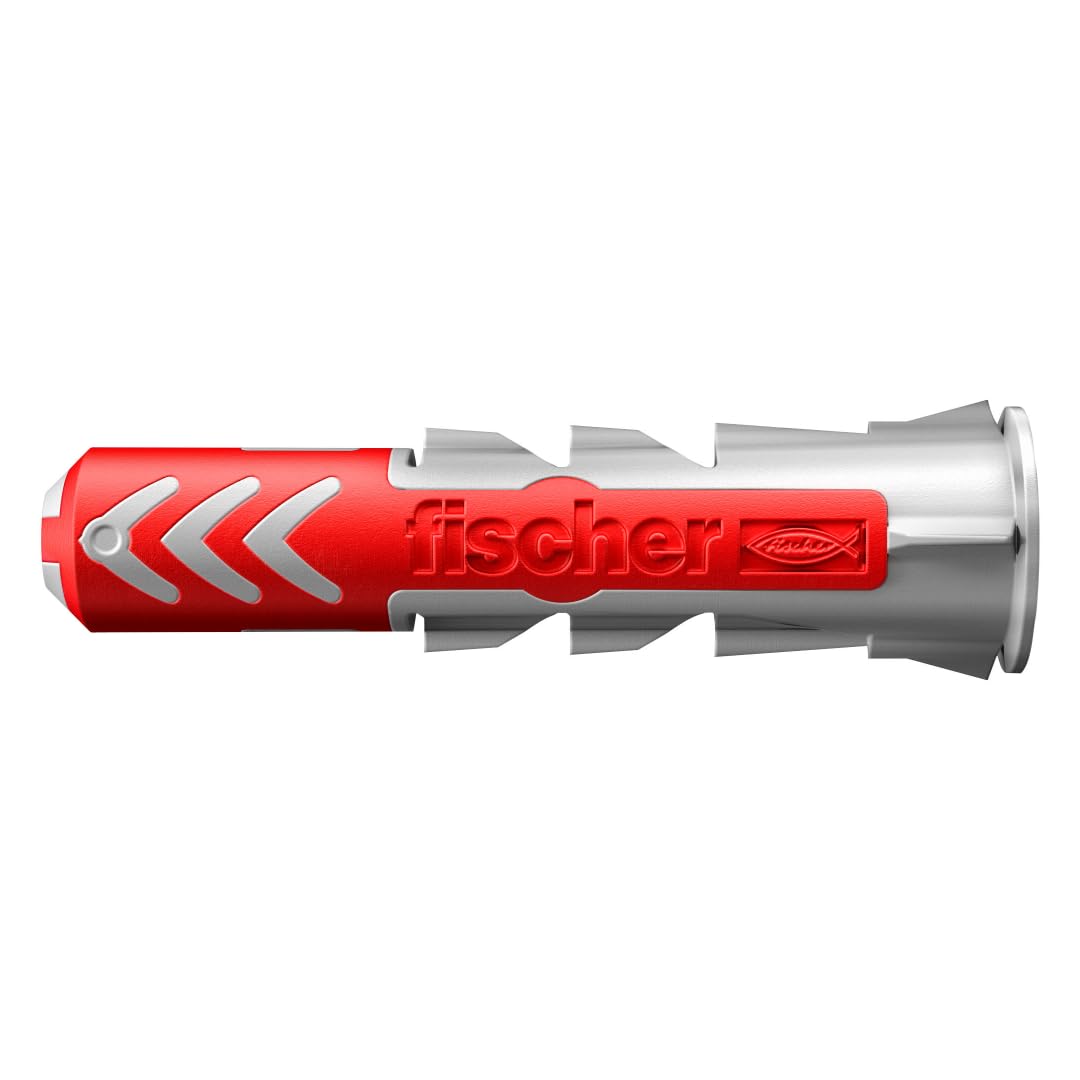
The DuoPower is the pick for the wall you cannot identify at a glance. It is a universal plug, not a drywall-only anchor, and the design is meant to adjust itself to the substrate it enters. This box has 100 plugs in a 3/16 by 1 inch size, which is a useful middle size for shelves, brackets, and general fixtures.

The appeal is flexibility. In an older house, one wall may be drywall, another may be plaster over masonry, and a third may be painted block; a plug that adapts to what it meets saves you from buying three separate boxes. We also like that the box is large enough to keep a few in the toolbox and a few in the kitchen drawer.

The DuoPower is a general-purpose plug, so it is not the anchor we choose for a TV bracket or a grab bar. For those, a rated toggle is the better tool; the DuoPower makes sense for the medium-duty jobs where you want one plug that handles more than drywall.

We see this as the generalist in the group: the plug we keep for mixed-material repairs, not the one we trust with the heaviest bracket. If you know your wall is drywall and you want maximum holding power, choose a toggle; if you want one box that is less fussy about the substrate, this is the one.

Bottom line: We like the DuoPower for mixed-material walls where one universal plug is more practical than three specialized boxes, but not for heavy loads.

Check Latest Price

How We Tested Wall Anchors in Real Walls

We built a shortlist of roughly 60 kits and listings, then cut it down by anchor type, substrate compatibility, stated load ratings, and what came in the box — whether the included drill bits actually matched the anchors and whether the screw count matched the anchor count. Fourteen kits made the cut, each one bought at retail and used for four months on ordinary household projects rather than in a test rig.

That work looked like a to-do list: closet shelves in a bedroom, a heavy mirror on a bathroom wall, a coat rack by the front door, a ceiling hook for a planter, and a gallery wall in a hallway where old paint sits over plaster. For each anchor we recorded whether it needed a pilot hole, how much force it took to start a self-drilling anchor and whether it wallowed out first, how many turns it took to seat, and whether the toggle bar flipped and lay flat against the back of the drywall or hung at an angle.

Then we loaded them. Shelves got real books and bins, and anything rated for heavy loads was hung with a bucket that we filled a quart at a time until something gave way. We noted where each failure happened — the anchor pulling through the face of the wall, a toggle bar bending, or the drywall itself crumbling — because a high rating doesn't help if the wall fails before the hardware does.

Two last measurements: we pulled anchors back out where the project allowed, since a kit that leaves a two-inch crater isn't good value no matter how many pieces it includes, and we left a set of each type in a steamy bathroom for the duration to see whether the plating spotted or the plastic went brittle.

How to Choose Wall Anchors

Match the anchor to the wall

Drywall is a hollow shell, so an anchor has to either grip the paper and gypsum or expand behind it. Plastic expansion anchors and self-drilling anchors are for light and medium loads in sound drywall. Toggle bolts put a metal bar behind the wall and are the better choice for heavy items in a hollow cavity. Masonry needs a masonry anchor or screw, not a plastic drywall plug. If you are unsure what is behind the paint, probe a hidden spot or use a stud finder before you commit.

Our picks reflect that split: the KURUI 350-piece kit covers the ordinary drywall jobs, while the TOGGLER and KURUI toggle sets handle hollow-wall loads. A universal plug such as the fischer DuoPower is the flexible middle ground, not a replacement for either.

Read the load rating, then leave a margin

An anchor's published load is usually an ultimate failure number in a specific substrate, not a safe working load for a shelf that will be bumped or loaded unevenly. A 75-pound plastic anchor is fine for a light mirror; it is not the right choice for a 40-pound shelf with books on it. Choose an anchor rated well above the item's weight, use two or more anchors for anything wide, and hit a stud when the load is serious. The TOGGLER's 265-pound drywall rating is the highest here, but it still deserves a margin.

Decide between a kit and a single size

Kits are about having the right size on hand, not about needing every piece. A five-size assortment such as the KURUI 350-piece set earns its space because most household jobs fail at size selection. A single-size pack such as the CrimsonMark #8 kit is better if you already know the size and want to stop sorting. We keep one assortment for the house and a small single-size pack for the drawer near the picture hooks.

Plan the hole and the removal

Toggle bolts need a hole large enough for the wing to pass through, and that hole is harder to patch than a plastic anchor's. Self-drilling anchors still need the right driver and a steady hand; if the tip wanders, the anchor can go in off-center and lose hold. Before you drill, check the cavity depth and the fixture's screw length. If the anchor will be behind a cabinet or a picture that may move, plan for a slightly larger patch and keep a spare anchor.

Know when to skip the anchor

Not every hanging job needs one. A screw into a stud is stronger and simpler than any drywall anchor, and a picture hanger with a hardened nail can be the neater choice for a light frame. Use anchors for the hollow spots where a stud is not available, and use a toggle for the heavy items that land there. The best anchor is the one that matches the wall, the load, and the hole you are willing to repair later.

Frequently Asked Questions

Final Verdict

For most homes, the KURUI 350-piece kit is the box we reach for first: five sizes, a clear case, and enough anchors for the ordinary pictures, brackets, and light shelves that make up most wall-hanging jobs. When the load gets serious, step up to the TOGGLER SNAPTOGGLE; its 265-pound drywall rating and one-person installation are worth the extra cost for a TV bracket or a grab bar. If you want a single do-it-all starter kit with drill bits, the Wensilon set is the practical alternative.