// data-verified

3 Best Corded Drill of 2026: Secure Chucks, Real Control

Which corded drills actually hold bits tight and balance power with comfort—so you aren't fighting a slipping chuck or arm fatigue mid-project.

Corded drills promise unlimited runtime, but the spec sheet numbers — amps, RPM — rarely tell you which one will still clamp a bit tight after a dozen holes or leave your arm shaking after a ceiling project. Too many drills ship with keyless chucks that back off under torque, forcing you to stop and retighten just when momentum matters.

This guide doesn't chase peak horsepower. It focuses on the two things that actually derail a home improvement session: chuck reliability and manageable ergonomics. A drill that can't hold a round shank solidly, or that weighs over eight pounds without a side handle, turns a simple task into a battle.

The right corded drill makes you forget the tool; the wrong one keeps reminding you to retighten the chuck or rest your arm. Our picks target that difference.

#01

Best Overall

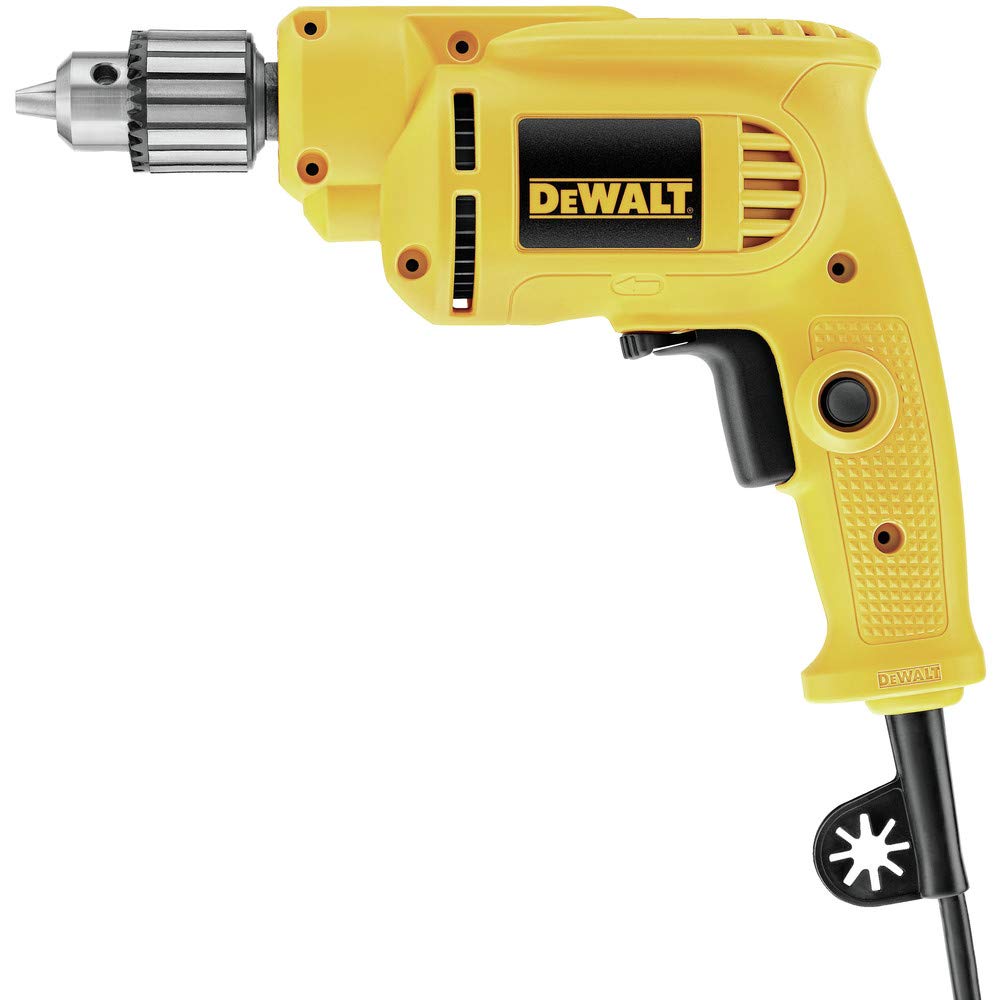
DEWALT DWE1014 Corded Drill

91 /100
Kirk Score Outstanding
Chuck
3/8-in Keyed
Weight
3.5 lbs
Max RPM
2,800
Amperage
7.0 A
Check Details on Amazon

Pros

  • Keyed chuck holds round-shank bits firmly, removing the slip common with keyless counterparts. — 36 mentions, 89% positive
  • 7-amp motor and 2,800 RPM handle everything from hardwood to metal without bogging down. — 54 mentions, 94% positive (power); 51 mentions, 94% positive (performance)
  • At 3.5 pounds, the drill stays agile overhead and during repetitive tasks, cutting fatigue. — 34 mentions, 65% positive — majority find it light, some wish it were lighter

Cons

The keyed chuck on the DWE1014 grips round-shank bits with a bolt-on tightness that keyless models can’t sustain under high torque. Backed by a 7-amp motor and 2,800 RPM no-load speed, the drill pushes through hardwoods, thin metal, and large fasteners without stalling. The chuck key takes an extra moment to stow, but the payoff is a bit that stays locked during tough extractions. At 3.5 pounds, it remains maneuverable overhead or in tight corners, and the lock-on button reduces finger fatigue during long sessions.

This drill fits homeowners and DIYers tackling general drilling and driving across wood and metal. It’s not built for mixing grout or churning through masonry — those jobs belong to specialized high-torque models. The variable-speed trigger can be sensitive, making a steady slow start a learned touch; those who require precise low-speed control for delicate drilling may want to practice that feel or consider a drill with a more forgiving trigger. Still, for the majority of general tasks the 7-amp motor and locked-in bit retention make it a straightforward choice.

💡 💡 Tip: To manage the sensitive trigger when starting holes precisely, brace a finger against the chuck guard — it steadies the pull and reduces overspeed.

Bottom line: For a corded drill that won't let bits spin or batteries quit, the DWE1014 delivers the basics at a mid-range price. It suits the homeowner who values grip security and afternoon-long usability over specialized low-speed torque.

Check Latest Price
#02

Most Powerful 1/2-Inch Drill

DEWALT DWD210G

94 /100
Kirk Score Outstanding
Chuck
1/2-in Keyed
Weight
Max RPM
1,250
Amperage
10.0 A
Check Details on Amazon

Pros

  • Immense power handles large-diameter auger bits and heavy drilling without stalling — 136 mentions, 96% positive
  • Durable construction holds up to jobsite abuse and mixing duty — 73 mentions, 75% positive
  • Pistol grip and locking side handle deliver confident control under high torque — 31 mentions, 81% positive (handle)

Cons

  • Maintaining very low RPM requires practice with the sensitive trigger — 28 mentions, 36% negative — mixed feedback on fine speed modulation
  • Arm fatigue sets in sooner during overhead or extended drilling sessions — 29 mentions, 38% negative — several reviewers found it uncomfortably heavy

Where the top pick prioritizes balanced speed and everyday versatility, the DWD210G channels its 10-amp motor into sheer low-end torque. Hole saws, large auger bits, and paddle mixing that would overheat a standard drill barely make this motor work. The 1/2-inch keyed chuck locks bits with zero slip under load, and the 360-degree locking side handle provides genuine control when the torque kicks.

Contractors drilling structural steel or mixing thin-set gain a motor that refuses to stall under sustained load. The heavy build and 1,250 RPM ceiling steer this tool away from overhead work and high-speed drilling — those tasks belong to the top pick.

💡 💡 Tip: Spend a few minutes on scrap material to develop a feel for the sensitive trigger at low RPM — the learning curve is short.

Bottom line: For large hole saws, auger bits, and mixing tasks, the torque advantage of the DWD210G outweighs its low-speed-only role.

Check Latest Price
#03

Best Budget Corded Drill

BLACK+DECKER DR260C – Ultra-Affordable Light-Duty Corded Drill

93 /100
Kirk Score Outstanding
Chuck
3/8-in Keyless
Weight
3.5 lbs
Max RPM
1,500
Amperage
5.5 A
Check Details on Amazon

Pros

  • Powerful enough for everyday household drilling and driving without bogging down. — 194 mentions, 91% positive
  • Lightweight build reduces fatigue and makes overhead or awkward-location work easier. — 121 mentions, 78% positive
  • Budget-friendly price makes it a low-cost spare drill or a risk-free first tool. — 340 mentions, 96% positive

Cons

  • Durability can be inconsistent; a unit may overheat or stop working after only light intermittent use. — 141 mentions, 40% negative — mixed long-term reliability with reports of motor burnout
  • Keyless chuck can jam or lose its grip on bits under load, requiring hand-tightening beyond finger strength or a pliers assist. — 96 mentions, 80% negative — users report the chuck sticking or loosening during use

At a budget-friendly price and just 3.5 pounds, this BLACK+DECKER corded drill sidesteps the heft and cost of the top pick. It has enough power for hanging pictures, assembling furniture, and drilling into soft materials. However, the keyless chuck can jam or slip under load, sometimes requiring extra force or a pliers-assisted tighten to hold bits securely. This drill fits occasional DIYers who need a spare tool for quick jobs and can accept that occasional fuss. It’s not designed for heavy, daily use or anyone who demands rock-solid bit grip.

💡 💡 Tip: Keep a pair of pliers nearby—if the chuck slips, a firm twist with pliers secures the bit far better than hand-tightening alone.

Bottom line: If you can accept the occasional chuck hassle, this drill’s low price and light weight make it a handy spare for quick tasks around the house.

Check Latest Price

How to Choose

Amperage

Amperage determines how hard the motor can push before stalling. For small holes in wood or driving screws, 5–7 amps is plenty. High-amp drills (8–10 amps) deliver the low-speed torque needed for large hole saws, metal plate, or mixing heavy materials, but they also pack extra weight and can be harder to control at full speed.

A 10-amp drill spinning a 3-inch hole saw won't bog down, while a 5.5-amp model will struggle and risk overheating. Yet for most household tasks, the extra power simply adds heft you'll feel after 20 minutes overhead. Match amperage to your heaviest material, not the sticker number.

Chuck Type and Size

Keyless chucks twist by hand for fast changes, but their grip relies on friction. When resistance spikes—like when a bit bites into hardwood—a keyless chuck can loosen, letting the bit spin free and round the shank. A keyed chuck uses a toothed key to tighten jaws with mechanical advantage, clamping securely even under high torque.

Chuck size (3/8 vs. 1/2 inch) sets the maximum bit shank you can grip. A 1/2-inch chuck accepts larger twist bits and hole saws, but often comes on heavier drills. If you've ever stopped mid-hole to retighten a bit, a keyed chuck is worth the extra seconds per swap.

Maximum RPM

High RPMs (over 2,500) make quick work of small-diameter bits in wood and metal but can be twitchy when driving screws without stripping. Drills with a lower max RPM (1,000–1,500) offer finer speed modulation for finish work and mixing, yet drilling a 1/4-inch hole in steel feels sluggish. Look for variable-speed triggers that let you feather the RPM smoothly, and consider a lock-on button for long runs.

Weight and Grip

A lightweight drill (under 4 lbs) keeps overhead and extended work manageable, but the lightest models often trade away power and chuck durability. Mid-handle grips center the mass for balanced drilling, while rear pistol grips provide more leverage for heavy pressure. On drills above 7 lbs, a side handle becomes essential to prevent wrist strain and bit wander.

If you plan to use the drill for more than a few minutes at a time, try to hold a display model to gauge comfort. Balance matters more than absolute weight—a well-balanced 6-lb drill can feel lighter than a nose-heavy 5-lb one.

Included Accessories

The bits bundled with budget drills are often the weakest link—cheap, brittle, and quick to dull or snap under moderate torque. Treat any included bit set as a starter pack; invest in quality bits matched to the material you drill most. A storage case is handy, but don't let a full kit sway you if the drill itself has known weaknesses.

Frequently Asked Questions