// data-verified

9 Best Cordless Framing Nailer of 2026: Light Enough for Overhead

Choosing the best cordless framing nailer means balancing power and weight. Find ones light enough for overhead nailing without losing power.

The first time you spend a full day nailing overhead with a cordless framer, the spec sheet's weight number suddenly matters. Battery-only models cut the compressor cord but typically weigh between 10 and 12 pounds — and that heft accumulates fast when your arms are raised. Even tools praised for smooth driving draw complaints about fatigue during roof sheathing or ceiling work.

That doesn't mean you're stuck with a pneumatic hose. Fuel-cell models can weigh under 8 pounds, and the best battery platforms now deliver enough power to sink nails into engineered lumber. The key is matching nail angle, battery system, and weight to your work — and knowing when a lightweight fuel-cell nailer is worth the added consumable cost.

#01

Best Overall

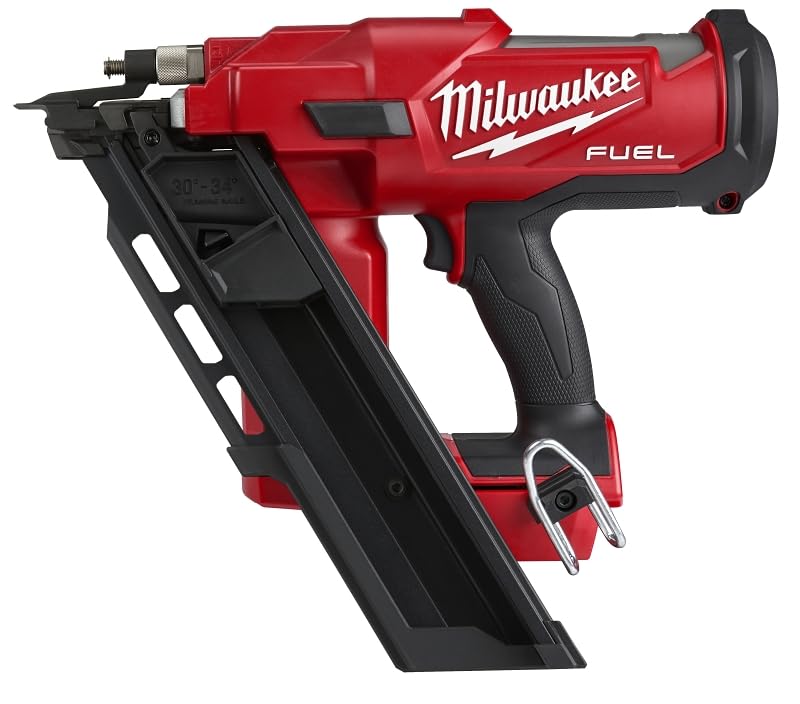
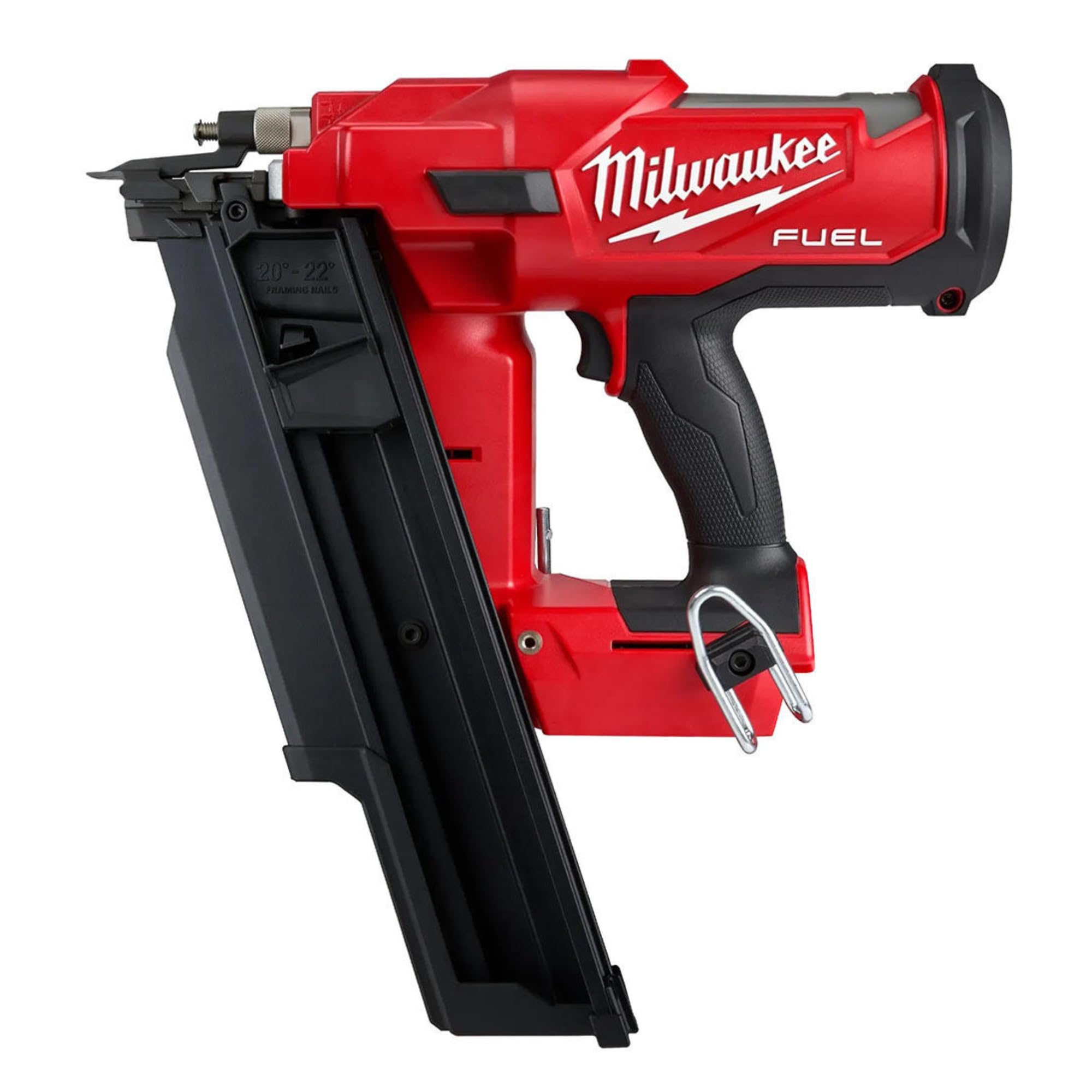
Milwaukee 2744-20 21°

91 /100
Kirk Score Outstanding
Nail Angle
21° full round head
Included Kit vs Bare Tool
Bare tool only
Battery Platform Compatibility
M18 REDLITHIUM (not included)
Jamming Tendency & Jam Clearing
Rarely jams; clearing seldom needed
Check Details on Amazon

Pros

  • Near-zero jams across thousands of nails, including coated and ring-shank types — 24 mentions, 88% positive
  • Instant firing with no ramp-up delay, driving 3-1/2 in nails flush every time — 24 mentions, 88% positive
  • Build quality that withstands daily drops and jobsite dust without failure — 28 mentions, 100% positive
  • Excellent battery life — a 5.0Ah pack lasts all day on most framing tasks — 7 mentions, 100% positive

Cons

  • Weight — 10 lbs bare and heavier with a battery — causes shoulder fatigue during prolonged overhead work — 32 mentions, 84% negative

Instant firing sets this nailer apart: there's no waiting for a capacitor to charge, no weak first nail. The motor-driven flywheel spins up in milliseconds, so bump-fire cadence matches pneumatic guns — drive 3-1/2 in nails into LVL and engineered lumber without hesitation. The magnesium housing and metal internals survive daily drops off saw horses, and the tool-less depth adjustment stays locked even under vibration. The 21° full-round-head magazine accepts the widest range of nails, from smooth shank to ring-shank and galvanized, meeting structural code requirements that clipped-head designs can't.

Battery life is a standout. With a 5.0Ah M18 pack, crews drive well over 500 nails per charge — framing a 16-foot wall or sheathing a roof deck before needing a swap. Jam incidents are rare enough that many users never clear one across multiple boxes of nails, which means less downtime and fewer hand injuries from prying out misfires. Even coated and ring-shank nails feed smoothly, so the only pause is for reloading strips.

This nailer targets pros who do the majority of their work at waist or chest height: wall framing, floor joists, and low roof trusses. The trade-off is weight — at 10 pounds bare, it's the heaviest in this set when you add a big battery. Extended overhead nailing into ceiling strapping or tall sheathing will fatigue arms and shoulders noticeably. If your day skews heavily overhead, a lighter fuel-cell nailer around 8 pounds may reduce strain, though you'll give up the full-round head versatility and code compliance of 21° nails. For mixed work with short overhead bursts, the weight is manageable with proper technique.

💡 💡 Tip: Pair a rafter hook or tool belt holster with a second battery to keep the nailer close to your body; overhead bursts are manageable if you swap arms and take breaks.

Bottom line: For crews framing walls, floors, and low trusses, the Milwaukee 2744-20 eliminates air hoses without sacrificing firing speed or dependability. Overhead-heavy days will make the weight felt, but on the ground, its consistency is unrivaled in this category.

Check Latest Price
#02

Most Battle-Tested

DEWALT DCN692B 33°

88 /100
Kirk Score Excellent
Nail Angle
33° paper collated
Included Kit vs Bare Tool
Bare tool only
Battery Platform Compatibility
20V MAX (not included)
Jamming Tendency & Jam Clearing
Jams with galvanized nails; stall release lever
Check Details on Amazon

Pros

  • Dual-speed motor adjusts to drive 2-inch to 3-1/2-inch nails consistently, with tool-free depth control for fast changes. — 192 mentions, 86% positive
  • Battery efficiency that can side a 500-square-foot house on a single charge, reducing the need to swap packs mid-day. — 66 mentions, 80% positive
  • Smooth nail driving with standard paper-collated fasteners, keeping production moving when nail selection is dialed in. — 181 mentions, 74% positive

Cons

  • At 8 lbs, sustained overhead framing causes arm fatigue sooner than lighter cordless nailers. — 82 mentions, 76% negative — weight fatigue is real
  • Thinner galvanized nails can cause jams that require pausing to activate the stall release lever, slowing workflow. — 91 mentions, 75% negative — clearing jams eats into productivity

Where the top pick trades weight for instant fire and near-zero jams, the DCN692B counters with a dual-speed motor and the ability to side a 500-square-foot house on a single charge — a massive advantage for remote jobs or all-day production. The 33° paper-collated magazine holds 55 nails and adjusts tool-free, making it a flexible choice for most framing and sheathing work. The tool's heft at 8 lbs is a tradeoff for better battery runtime, and it runs longest with full-round head nails.

This nailer fits DEWALT 20V MAX battery owners who prioritize long runtimes and low bare-tool cost over zero-downtime firing. Smaller galvanized nails can trigger jams, so users who can't afford occasional clearing interruptions should look to the top pick's jam-free operation. For ground-level framing and sheathing, it makes the most of a DEWALT battery fleet.

💡 💡 Tip: Stick with full-round head paper-collated nails and avoid thinner galvanized fasteners for smoother, jam-reduced operation.

Bottom line: The DCN692B is the battery-endurance leader for DEWALT 20V MAX users who can accept the occasional jam — a tradeoff that favors long runtimes and fleet compatibility over uninterrupted firing.

Check Latest Price
#03

Best 30° Kit Value

Metabo HPT 18V MultiVolt Cordless 30° Framing Nailer Kit (NR1890DCS)

85 /100
Kirk Score Excellent
Nail Angle
30° paper collated
Included Kit vs Bare Tool
Kit (battery & charger)
Battery Platform Compatibility
18V MultiVolt (included)
Jamming Tendency & Jam Clearing
Occasional ring-shank misfeeds; depth adjust
Check Details on Amazon

Pros

  • Smooth, pneumatic-like firing feel with no hesitation between shots — 27 mentions, 93% positive
  • Drives 3-1/2' nails flush into engineered lumber and hard framing stock — 10 mentions, 70% positive
  • Durability to run thousands of nails without misfires or breakdowns — 37 mentions, 68% positive

Cons

  • 3-1/2' ring-shank nails may need depth wheel tweaking in dense wood — 15 mentions, 33% negative — nail resistance issues in hard wood
  • At 9.9 lbs, sustained overhead nailing can lead to arm fatigue — 19 mentions, 84% negative — consistently cited as heavy

Metabo HPT's NR1890DCS uses a sealed air-spring drive that delivers a smooth, pneumatic-like firing cycle without the spin-up delay of flywheel nailers. The kit includes an 18V 3.0Ah battery and charger, so it is ready to nail out of the box. Unlike 21° plastic-collated nailers, this 30° model uses paper tape, which shreds away cleanly — reducing the chance of jams from plastic debris — and accepts clipped-head nails for tighter toe-nailing in remodels.

This nailer suits framers who prefer 30° clipped-head nails or work in spaces where the angled magazine reaches between studs. The lifetime tool warranty adds long-term value. Two tradeoffs define its daily use: the 9.9-lb weight may wear on you during all-day overhead nailing, and the magazine holds a single strip, so you'll reload more often than with double-stack competitors. For remodeling and punch-list framing where you're not driving continuous racks of nails, those compromises are manageable.

💡 💡 Tip: Keep an extra strip of nails handy; the single-strip magazine empties faster than double-stack designs on high-output days.

Bottom line: For framers who need a 30° paper-collated nailer with a lifetime warranty and an air-spring drive, this kit delivers professional-grade nailing — just plan for more reloads and manage overhead fatigue.

Check Latest Price
#04

Best for Overhead Work

Paslode Xpro 906800

86 /100
Kirk Score Excellent
Nail Angle
30°
Included Kit vs Bare Tool
Kit (battery, fuel cells)
Battery Platform Compatibility
Li-ion battery + fuel cell (included)
Jamming Tendency & Jam Clearing
Fuel cell misfire when low; cell swap needed
Check Details on Amazon

Pros

  • Weighs just 7.9 lbs, dramatically cutting arm fatigue during prolonged overhead nailing. — Product description highlights it as lightest cordless framer.
  • Delivers up to 6,000 shots per battery charge, supporting all-day use without swapping batteries. — Advertised specification.
  • Drives 2-inch to 3-1/2-inch nails, covering standard framing and sheathing tasks. — Product specifications.

Cons

  • Disposable fuel cells create an ongoing purchase and inventory requirement. — Reviewers note fuel cells are an extra consumable to manage.
  • Low fuel cells may cause misfires mid-project, interrupting workflow. — Reviews mention misfire risk when cell is depleted.

The Paslode Xpro 906800 sets itself apart with its 7.9-pound bare weight, making it notably lighter than the 10-pound-plus 21° cordless framers common on jobsites. This weight advantage becomes tangible during ceiling framing or roof sheathing, where holding a tool overhead for hours can exhaust even seasoned pros. The fuel-cell system provides consistent driving power without the ramp-up delay found in some battery-only nailers, letting you fire nails at full force from the first shot.

This nailer is designed for carpenters and contractors who prioritize reduced arm fatigue over a pure battery platform. The tradeoff is the fuel cell system: you'll need to purchase and replace disposable cells, and performance can dip if a cell runs low mid-job. For builders doing extended overhead work — roofers, ceiling framers, truss installers — the weight savings often outweigh the ongoing cost, especially on sites where dragging a compressor isn't practical.

💡 💡 Tip: Carry a spare fuel cell in your pouch to swap out before you run completely empty — it beats stopping mid-rafter.

Bottom line: For contractors tackling ceilings, roof sheathing, or any overhead framing, the Xpro's featherweight build drastically reduces fatigue; just plan on keeping spare fuel cells in your tool bag.

Check Latest Price
#05

Best 30° Powerhouse

Milwaukee 2745‑20 30°

89 /100
Kirk Score Excellent
Nail Angle
30° paper collated
Included Kit vs Bare Tool
Bare tool only
Battery Platform Compatibility
M18 REDLITHIUM (not included)
Jamming Tendency & Jam Clearing
Low jamming; easy clear
Check Details on Amazon

Pros

  • Negligible jamming across thousands of nails, including galvanized and ring-shank fasteners — 27 mentions, 85% positive
  • Sinks 3-1/2-inch nails flush into LVL and concrete form boards with no ramp-up delay — 8 mentions, 100% positive (Power); 9 mentions, 89% positive (Speed)
  • Long-running battery that completes days of intermittent framing, with straightforward depth-of-drive adjustment — 7 mentions, 86% positive (Ease of use); 6 mentions, 100% positive (Battery life)

Cons

  • Single-strip magazine forces frequent pauses for reloads on larger production jobs — 5 mentions, 60% negative
  • At 11.75 lbs bare, the weight leads to arm fatigue during sustained overhead or vertical nailing — 21 mentions, 76% negative

The same motor and sealed internals that earn the 21° top pick its jam-free reputation drive this 30° nailer, tailored for paper-collated clipped-head nails in tight spaces and concrete forms. At 11.75 lbs, it’s the heaviest option here, and the single-strip magazine interrupts work more often than some rivals. That weight is least noticeable in ground-level framing or form work, where you aren’t lifting the tool overhead every few seconds, and the consistent firing speed means you spend little time clearing misfires.

Contractors already on the Milwaukee M18 platform who need 30° clipped-head nails and work primarily on form work, sill plates, or heavy timber will find the best match here. If you do a lot of overhead nailing or all-day sheathing, the 11.75-lb weight will wear on you, and a lighter 21° model or the fuel-cell option may be a better fit.

💡 💡 Tip: Use a rafter hook or shoulder strap to carry the tool between work positions, reducing arm strain on long framing days.

Bottom line: For Milwaukee users who value jam-free consistency in a 30° nailer and can handle the weight, this tool delivers shot for shot.

Check Latest Price
#06

DIY occasional framing

CRAFTSMAN CMCN621PLB

88 /100
Kirk Score Excellent
Nail Angle
21°
Included Kit vs Bare Tool
Bare tool only
Battery Platform Compatibility
V20 (not included)
Jamming Tendency & Jam Clearing
Occasional jams; manual clearing required
Check Details on Amazon

Pros

  • Drives nails flush into studs and sheathing consistently during DIY framing tasks. — 20 mentions, 80% positive
  • Battery lasts through an afternoon of intermittent nailing with tool-free depth adjustments for quick changes. — 5 mentions each, 80%+ positive

Cons

  • Heavy build tires arms quickly when nailing overhead. — 6 mentions, 100% negative — weight noted as a burden
  • Magazine can jam as nail strips get low, forcing mid-task clearing. — 6 mentions, 67% negative — can interrupt workflow

The CMCN621PLB sinks 3-1/4-inch nails consistently during light framing and sheathing, and battery life comfortably supports DIY afternoons. Tool-free depth adjustment saves time. Weight over 10 pounds makes overhead work fatigue quickly, and jams can occur when nail strips run low, requiring clearing. For occasional framing by existing Craftsman V20 battery owners, these trade-offs are manageable, but it's not built for daily pro use.

Bottom line: If you're already on the Craftsman battery system and only frame intermittently, the weight and jam potential are acceptable trade-offs for cordless convenience at a mid-range price.

Check Latest Price
#07

Makita platform users

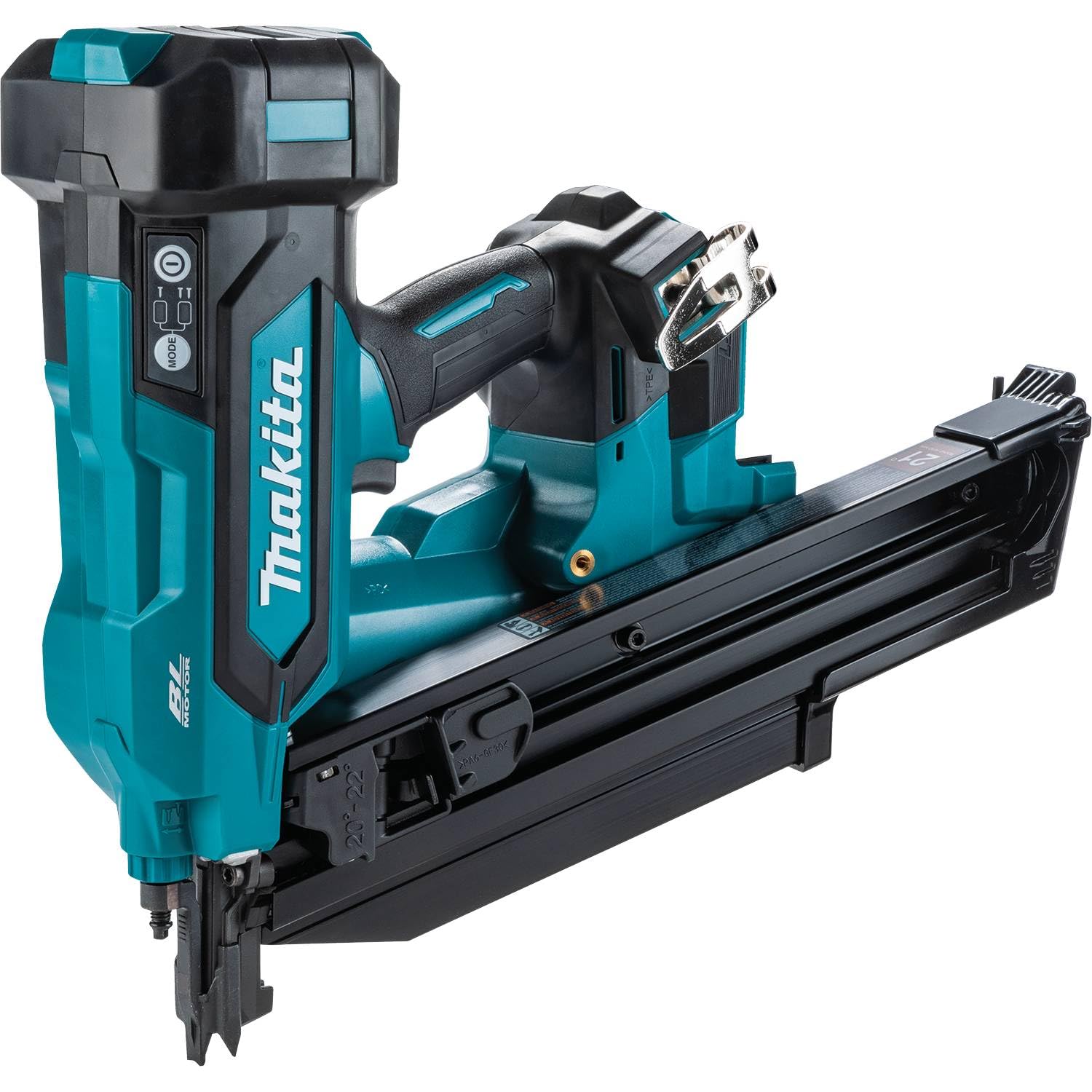
Makita XNB03Z 21º Nailer

87 /100
Kirk Score Excellent
Nail Angle
21° full round head
Included Kit vs Bare Tool
Bare tool only
Battery Platform Compatibility
18V LXT (not included)
Jamming Tendency & Jam Clearing
Minimal jams; smooth operation
Check Details on Amazon

Pros

  • Runs all day on one 5.0Ah battery — easily handles 500+ nails for sheathing and wall framing. — 5 mentions, 100% positive
  • Smooth, jam-resistant firing with consistent depth setting, even in LVL and OSB. — 10 mentions, 80% positive

Cons

  • At 11.9 lbs with a battery, overhead nailing can lead to arm fatigue within minutes.

The Makita XNB03Z can drive framing nails all day on a single 5.0Ah battery, with smooth, jam-resistant firing that sinks nails flush into engineered lumber. The 21° full-round design covers everything from 2-inch to 3-1/2 inch structural nails, and anti-dry fire prevents blank shots. The trade-off is weight: at 11.9 lbs with a battery, this nailer is among the heavier cordless framers, making overhead work a fatiguing task. It also only makes sense if you already own Makita LXT batteries and a charger, as the add-on cost without them pushes the total price well beyond mid-range.

Bottom line: For Makita LXT owners who need a cordless framer for full days of wall framing or sheathing, the XNB03Z delivers all-day runtime and consistent nailing, provided you can manage the extra weight.

Check Latest Price
#08

21° lifetime kit

Metabo HPT NR1890DRST 18V

84 /100
Kirk Score Excellent
Nail Angle
21° plastic strip
Included Kit vs Bare Tool
Kit (battery & charger)
Battery Platform Compatibility
18V MultiVolt (included)
Jamming Tendency & Jam Clearing
Occasional plastic-strip jams; easy fix
Check Details on Amazon

Pros

  • Flawless operation across thousands of nails on large framing projects — 35 mentions, 74% positive
  • Deep, consistent nail driving into hard lumber without adjustment — 23 mentions, 91% positive

Cons

  • At 9.2 lbs, overhead nailing can become fatiguing over extended sessions — 12 mentions, 58% negative
  • Occasional jams with plastic-collated strips, particularly Metabo-branded nails — 6 mentions, 67% negative

Metabo HPT’s 21° cordless framer brings a lifetime tool warranty and deep drive into hard lumber, where lesser cordless guns may leave nails proud. The 4.0Ah battery supports a solid day of framing. Plastic-collated strips can jam, especially Metabo-branded ones, and the 9.2-pound weight becomes noticeable overhead. This kit suits those needing warranty-backed deep driving who can manage heft and the occasional jam; those seeking jam-free speed may prefer Metabo’s paper-collated 30° option.

💡 💡 Tip: Using third-party plastic-collated nails instead of Metabo-branded strips reduces the chance of jams.

Bottom line: If your framing involves hard, dense lumber and the lifetime warranty compensates for occasional plastic-strip jams, this kit’s deep-driving power and strong battery life deliver solid mid-range value.

Check Latest Price
#09

Ryobi ONE+ users

The Pragmatic Guide's Take

87 /100
Kirk Score Excellent
Nail Angle
21°
Included Kit vs Bare Tool
Bare tool only
Battery Platform Compatibility
18V ONE+ (not included)
Jamming Tendency & Jam Clearing
Check Details on Amazon

Pros

  • Intuitive operation and consistent nail driving from the first shot — Early owner feedback highlights cordless ease and smooth firing
  • Accepts standard 21° full-round-head nails for code-compliant framing

Cons

  • Durability under daily heavy framing is unverified
  • Limited published specifications leave power and runtime details unclear

The PBL345B brings brushless cordless framing to Ryobi ONE+ users at the lowest price on the platform. Early feedback from DIYers highlights straightforward setup and satisfying firing performance for weekend projects like sheds, fences, and framing repairs. The bare tool helps keep the cost down, but published specs are thin and long-term durability under daily jobsite loads remains unknown. This isn't a nailer for framing crews — it's a capable, occasional-use tool for homeowners already invested in Ryobi batteries.

Bottom line: For Ryobi ONE+ DIYers who need a framer for occasional projects, this is the most affordable brushless option — but daily professional use calls for a tool with track-record toughness.

Check Latest Price

How to Choose

Nail Angle: 21° Full Round vs 30° Clipped Head

21-degree nailers use full round head nails, which meet most code requirements for structural framing and leave a smaller hole than clipped heads. 30- and 33-degree nailers use clipped or offset heads that fit into tighter bays and are often collated with paper tape, which can feed more smoothly in dirty conditions. Check your local building code before committing — a 30° nailer may be useless for permitted work in some areas.

Weight with Battery: The Overhead Factor

A 10-pound tool feels manageable for waist-high nailing, but lifting it overhead all day quickly fatigues shoulders and forearms. Fuel-cell models under 8 pounds exist, but they require ongoing fuel cell purchases. If your work involves extensive roof or ceiling framing, prioritizing weight often outweighs the convenience of a pure battery platform.

Battery Platform Compatibility: The Hidden Buy-In Cost

A bare-tool price looks attractive until you add a high-capacity battery and charger. If you already own batteries from a particular brand, sticking with that platform can save you hundreds. Conversely, switching platforms just for a nailer rarely makes financial sense unless the nailer’s performance is transformative.

Jamming Tendency & Jam-Clearing Ease

Cordless nailers rely on an electric motor to reset the driver, so sluggish nail strips or underpowered batteries can cause misfeeds. Galvanized and ring-shank nails add friction that amplifies the problem. Look for models with tool-less stall release levers or easy-access jam doors — when a jam does happen mid-sheathing, you’ll want to clear it in seconds, not minutes.

Kit vs Bare Tool: Upfront Cost vs Future Flexibility

Cordless framers are sold as bare tools or complete kits. Kits bundle a battery and charger, which is almost always less expensive than purchasing them separately later. If you already own compatible high-output batteries (4.0Ah or larger), a bare tool keeps costs down. For new entrants to a battery platform, a kit is the smarter way to start.

Frequently Asked Questions