// data-verified

10 Best Electric Hand Planers of 2026: Cut Flat Right Out of the Box

Which electric hand planers actually plane flat without hours of blade calibration — and which work best for occasional door trimming vs. daily shop use.

A new electric hand planer should make quick work of a sticking door or a twisted 2x4. Instead, many DIYers find their first pass leaves a deeper groove on one side, turning a five-minute fix into an hour of head-scratching blade adjustment. That frustration is common enough that uneven planing is the category's most-reported complaint.

This guide focuses on the detail that matters most after you pull the tool out of the box: how consistently it cuts flat and how much calibration it actually needs. Every pick here was chosen for real-world cut quality and long-term usability, whether you're shaving an occasional door or surfacing wide stock daily.

You won't just find a list of specs — you'll see which trade-offs in power source, width, and weight actually show up in your shop, and how to avoid the first-project letdown that catches so many buyers off guard.

#01

Best Overall Hand Planer

DEWALT 20V MAX Brushless Planer (Bare Tool) DCP580B

94 /100
Kirk Score Outstanding
Weight
7.4 lbs
Power Source
Cordless (20V, bare tool)
Cutting Width
3.25 in.
Max Planing Depth
2 mm (5/64 in.)
Check Details on Amazon

Pros

  • Strong, consistent planing performance — 137 mentions, 89% positive
  • Excellent build quality with machined aluminum base — 158 mentions, 93% positive
  • Easy to handle and control with ergonomic grip — 66 mentions, 85% positive

Cons

  • Cut quality may be uneven out of the box, requiring blade height calibration — 37 mentions, 38% negative

The brushless motor spins at 30,000 cuts per minute, planing hardwoods and framing lumber with consistent chip removal. A machined aluminum base stays flat for accurate results, and the depth knob adjusts up to 2mm per pass. On site, the cordless design excels at door edge trimming, cabinet scribing, and rough-sawn lumber cleanup, where a cord would tangle. The 7.4-lb body balances well for one-handed use, and the kickstand protects blades between cuts. Tool-free blade swaps and a chamfering groove for edge bevels keep work moving.

Best for contractors and woodworkers already in the DeWalt 20V ecosystem who need cordless portability for door hanging, scribing, and light stock removal. It's not a corded replacement; runtime can shorten during sustained, full-depth passes, making it ideal for intermittent tasks rather than all-day heavy planing. Given its premium price, the tool delivers its best value to those with existing batteries and chargers; buyers without DeWalt batteries will find corded alternatives more economical. Heavy daily planing of large volumes is better handled by a corded planer.

Bottom line: For DeWalt 20V battery owners who plane doors and scribe cabinets on the move, the DCP580B combines cordless speed with build quality that justifies its premium price.

Check Latest Price
#02

Best Budget Corded Planer

WEN 6530

93 /100
Kirk Score Outstanding
Weight
6.5 lbs
Power Source
Corded (6A)
Cutting Width
3.25 in.
Max Planing Depth
1/8 in.
Check Details on Amazon

Pros

  • Smooth, flat surfaces on softwoods and hardwoods with consistent cutting. — 798 mentions, 93% positive
  • Remarkable value: planing performance well above its budget price point. — 554 mentions, 96% positive
  • Plug-and-play simplicity — no battery charging or complex calibration needed. — 300 mentions, 85% positive

Cons

  • Dust collection bag fills rapidly and clogs, reducing effectiveness. — Consistently mentioned in reviews; bag fills in seconds
  • Blades can shatter on hidden nails or hard knots; internal components may fail early under heavy use. — 153 mentions, 69% negative — reports of broken blades and mechanical failure

The WEN 6530 pairs a 6-amp corded motor with a 34,000 cuts/min blade speed, delivering smooth and consistent planing on softwoods and hardwoods. Setup is immediate — no batteries to charge, no complex calibration needed for basic door trimming. Despite its low cost, it produces flat, uniform surfaces that rival pricier corded models.

It suits budget-conscious DIYers shaving down sticking doors or flattening 2x4s occasionally. The trade-off: durability is a gamble. Blades can shatter on hidden nails or hard knots, and internal components may give out within a few hours of heavy use. Treat it gently and factor in spare blades.

💡 💡 Tip: Use a shop vacuum connection for effective dust collection instead of the rapid-clogging bag.

Bottom line: For occasional door trimming and light planing where every dollar counts, the WEN 6530 is a capable ally — provided you accept the risk of early blade failure and treat it with care.

Check Latest Price
#03

Best Cordless for Smooth Finishes

Makita XPK01Z 18V LXT Cordless 3-1/4-Inch Planer (Tool Only)

94 /100
Kirk Score Outstanding
Weight
7.2 lbs
Power Source
Cordless (18V, bare tool)
Cutting Width
3.25 in.
Max Planing Depth
5/64 in.
Check Details on Amazon

Pros

  • Double-edge carbide blades deliver a glass-smooth surface without chatter, even on figured grain. — 53 mentions, 96% positive
  • Precision-machined aluminum base and robust build instill confidence during delicate trim work. — 86 mentions, 98% positive
  • 7.2-lb weight minimizes arm strain during long planing sessions on vertical surfaces. — 24 mentions, 100% positive

Cons

  • Maximum cut depth of 5/64 inch limits the tool to light smoothing and edge-jointing tasks.

The XPK01Z separates itself from corded shop planers by trading raw stock removal for a flawless surface right off the blade. Double-edge carbide knives spin at 14,000 RPM to leave a glass-smooth finish without chatter, ideal for finish carpenters and furniture builders who demand precise edge-jointing and door fitting. At 7.2 lbs, the tool is light enough for overhead use without fatigue. However, this performance comes in a bare-tool package, so it only makes sense for tradespeople already on the Makita 18V platform. The shallow 5/64-inch maximum depth reinforces its role as a precision finisher, not a material hog.

💡 💡 Tip: This is a bare tool — a compatible Makita 18V LXT battery and charger must be purchased separately for operation.

Bottom line: For Makita battery users who prioritize surface finish over material removal, the XPK01Z delivers cordless convenience with the smoothest, chatter-free planing results available.

Check Latest Price
#04

Best Wide-Cut Planer

WEN 6534 8-Amp 4-3/8-Inch Electric Hand Planer

92 /100
Kirk Score Outstanding
Weight
9.5 lbs
Power Source
Corded (8A)
Cutting Width
4.38 in.
Max Planing Depth
1/8 in.
Check Details on Amazon

Pros

  • Plenty of power for deep passes through knotty wood. — 49 mentions, 98% positive
  • Works great on 4x4s and wide boards, reducing the number of passes. — 161 mentions, 93% positive
  • Click-depth dial makes repeatable adjustments quick. — 78 mentions, 87% positive

Cons

  • At 9.5 lbs, the tool becomes tiring during extended overhead or vertical planing. — 44 mentions weight mixed — some find it heavy
  • Blade parallelism may be off out of the box; left-side cuts deeper and can leave ridges without adjustment. — 35 mentions alignment with 69% negative — parallel cuts require user adjustment

The WEN 6534 earns its spot by stretching cut width to 4-3/8 inches — a meaningful jump over a standard 3-1/4-inch planer. That extra capacity means surfacing a 4x4 post in one clean pass or flattening wide fence boards without shingling overlaps. The 8-amp motor pushes through knotty pine without bogging, and the cast-metal base resists flex under load.

This planer suits DIYers tackling broad stock removal — deck boards, laminated slabs, heavy 4x4 framing lumber — who can accept a quick alignment session. Out of the box, the blade position can leave deeper cuts on the left side and faint ridges; a few minutes with the included wrench lets you dial it in. At 9.5 lbs, it's a heavy tool for overhead work, but for bench-level or upright planing the mass adds stability.

💡 💡 Tip: Run a test pass and adjust the blade alignment until both sides cut evenly — out-of-box parallelism varies.

Bottom line: A wide-capacity planer for DIYers willing to spend a few minutes calibrating the blades and who don’t mind the heft — the extra width saves real time on 4x4s and heavy stock.

Check Latest Price
#05

Best for Heavy Stock Removal

Runner-Up

91 /100
Kirk Score Outstanding
Weight
10.1 lbs (est.)
Power Source
Corded (7.5A)
Cutting Width
3.25 in.
Max Planing Depth
5/32 in.
Check Details on Amazon

Pros

  • Powerful 7.5-amp motor planes a full 5/32 inch per pass, speeding up rough sizing. — 15 mentions, 100% positive
  • Build quality rivals stationary tools, with a rigid magnesium shoe that stays flat after heavy use. — 51 mentions quality, 100% positive
  • Click-stop depth knob adjusts in 0.1mm increments, making repeatable joinery cuts straightforward. — 10 mentions depth adjustment, 90% positive

Cons

  • Blade replacement is finicky and less intuitive than expected, adding downtime during a project. — 20 mentions durability mixed — blade shattering and frustration with blade changes

The 7.5-amp motor pulls a full 5/32 inch of material in one pass, making fast work of rough lumber dimensioning. Furniture makers and carpenters who work primarily in the shop will value the repeatable 0.1mm depth increments over cord-free convenience. The magnesium base and solid build shrug off daily abuse, keeping alignment consistent. The standard blades are aggressive but can chip on hidden knots — budget for replacements.

💡 💡 Tip: Practice blade changes before you need to — alignment is key and takes a few tries to master.

Bottom line: A shop-bound workhorse for rough sizing and deep cuts, but factor blade replacements into the cost of ownership.

Check Latest Price
#06

Best Compact for Trim Carpentry

Bosch GHO12V-08N

91 /100
Kirk Score Outstanding
Weight
3.3 lbs
Power Source
Cordless (12V, bare tool)
Cutting Width
2.2 in.
Max Planing Depth
0.08 in.
Check Details on Amazon

Pros

  • Ultra-light 3.3-lb body enables precise one-handed overhead planing. — 32 mentions size, 100% positive
  • Brushless motor surprises with smooth, chatter-free cuts on door edges and scribing. — 17 mentions performance, 82% positive
  • Ambidextrous lock-off switch and depth knob work comfortably for lefties and righties. — 7 mentions ergonomics, 71% positive

Cons

  • 2.2-inch width and 0.08-inch max depth restrict it to edge planing; cannot handle heavy stock removal or wide boards. — Inherent size limitation — max depth 2 mm, width 2.2″

At 3.3 pounds with a 2.2-inch cutting width, the Bosch GHO12V-08N operates like a power chisel, letting you plane overhead or with one hand without fatigue. The brushless motor spins at 14,500 RPM, delivering unexpectedly smooth results on door edges, cabinet scribes, and hinge mortises.

This is a specialized tool for finish carpenters, cabinet installers, and door hangers. It supplements a larger planer, not replaces it — the narrow 2.2-inch width and 0.08-inch depth confine it to light-duty edge work. Bosch 12V battery owners get a lightweight addition that shares their existing packs.

Bottom line: For Bosch 12V owners doing trim carpentry, this planer quickly earns its keep as a go-to for fine adjustments — but keep a full-size planer nearby for the heavy lifting.

Check Latest Price
#07

Semi-pro door trimming

PORTER-CABLE PC60THP Hand Planer

92 /100
Kirk Score Outstanding
Weight
8.2 lbs
Power Source
Corded (6A)
Cutting Width
3.25 in.
Max Planing Depth
5/64 in.
Check Details on Amazon

Pros

  • Fine depth adjustment dial lets you dial in precise shavings on doors. — 69 mentions, 96% positive
  • Chatter-free planing leaves surfaces smooth enough for final fitting. — 42 mentions, 79% positive

Cons

  • Blades may chip if they hit a nail or hard knot; blade-holding screws can loosen. — 37 mentions, 62% negative — blade durability vulnerabilities reported

The PC60THP planes doors smoothly, its cast-aluminum base glides effortlessly, and the depth knob adjusts in fine increments. It feels far more premium than its price. The tradeoff: blades can chip on nails or hard knots, so budget for spare carbide blades. It’s a refined mid-tier corded planer for controlled woodworking, not jobsites with hidden fasteners.

Bottom line: For woodworkers who can avoid nails and want a planer with precise depth control and a smooth base, the PC60THP is a strong mid-tier value — just keep spare blades on hand.

Check Latest Price
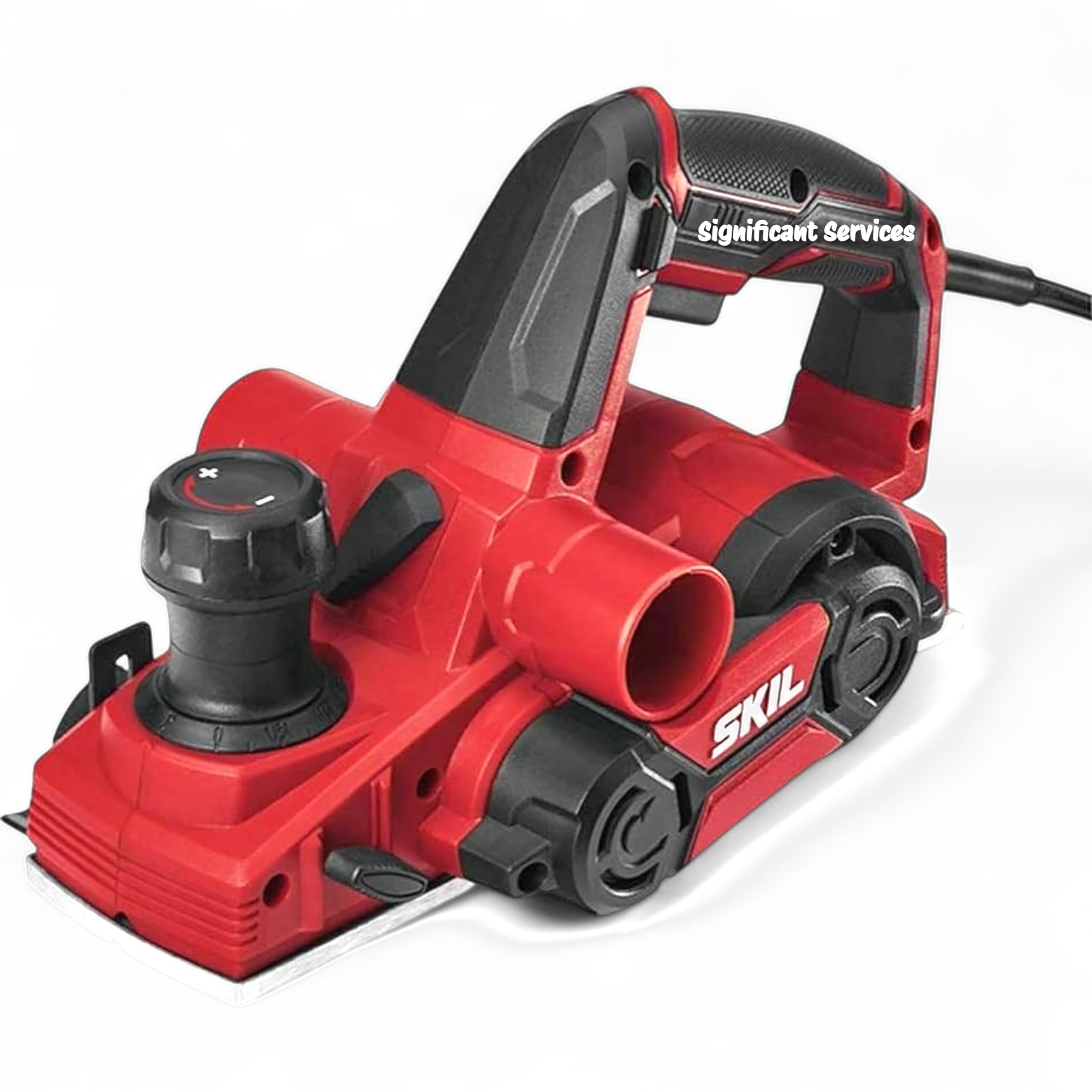
#08

Lightweight general use

SKIL PL201201

90 /100
Kirk Score Outstanding
Weight
6 lbs
Power Source
Corded (6.5A)
Cutting Width
3.25 in.
Max Planing Depth
2 mm
Check Details on Amazon

Pros

  • Offers strong stock removal at a price that feels like a bargain for occasional DIY. — 21 mentions, 100% positive
  • Weighs just 6 lbs, making vertical and overhead planing less fatiguing. — Reviews praise ease of use and portability

Cons

  • Plastic depth adjustment knob can drift from the set depth during use. — 9 mentions depth adjustment mixed — some find it lacks crisp detents

The Skil PL201201 planes framing lumber and deck boards with power that feels on par with pricier corded models, and its 6-lb body eases overhead passes. The depth knob is plastic and lacks the crisp detents of cast-aluminum competitors, making it better for rough-out work than micro-adjustments. For weekend DIY where you measure depth by eye, the tradeoff is negligible.

Bottom line: For weekend woodworkers who plane door edges or flatten a few deck boards at a time, the Skil PL201201 delivers capable planing without the weight or price of premium models. The depth knob's lack of crisp detents is a tolerable tradeoff for those who check settings by eye.

Check Latest Price
#09

High-RPM corded speed

DEWALT D26676 Hand Planer

89 /100
Kirk Score Excellent
Weight
8.9 lbs
Power Source
Corded (5.5A)
Cutting Width
3.25 in.
Max Planing Depth
1.5 mm
Check Details on Amazon

Pros

  • 34,000 RPM motor slices through stock quickly — 5 mentions speed, 100% positive
  • Smooth depth adjustment delivers consistent planing results — 24 mentions performance, 87% positive

Cons

The D26676’s 34,000 RPM motor flattens boards fast and the aluminum base stays rigid. Depth adjustment is smooth, and there’s no battery to drain. Its corded design keeps it tied to the bench; DeWalt’s cordless planer has largely eclipsed it for portability.

Bottom line: If you work at a bench and want a no-fuss corded planer, the D26676 delivers predictable speed without battery anxiety — but those who need mobility should skip straight to the cordless option.

Check Latest Price
#10

Rough material removal

DNTI 58218

87 /100
Kirk Score Excellent
Weight
Power Source
Corded (6.6A)
Cutting Width
3.25 in.
Max Planing Depth
2 mm
Check Details on Amazon

Pros

  • Includes extra blades, adding value for a budget-priced planer. — 21 mentions, 95% positive
  • Dust extraction works effectively when paired with a shop vac, minimizing mess. — 7 mentions dust removal, 86% positive

Cons

The 6.6-amp motor provides ample power for fast material removal, and the included extra blades add value for a budget tool. Dust collection is effective when hooked to a shop vac, keeping the workspace clear. Cut quality can be unpredictable — the planer may occasionally leave deep grooves in the surface, making it unsuitable for fine woodworking. This tool works best for rough carpentry tasks such as door trimming or framing lumber, where sanding or a finish pass is part of the workflow.

Bottom line: If you're willing to trade absolute surface flatness for low cost and plan to finish by sanding, this DNTI planer covers rough stock removal acceptably.

Check Latest Price

How to Choose

Power Source: Corded vs. Cordless

Corded planers deliver unlimited runtime for continuous heavy planing, but tether you to an outlet. Cordless models free you for on-site door scribing and overhead work, yet they demand an existing battery ecosystem and spare high-capacity packs (4Ah or larger) to avoid frequent stops.

If you already own a brand's 18V/20V batteries, the cordless planer becomes a sensible addition. Otherwise, the cost of a charger and two batteries can double the tool price, making corded a better value for stationary shop use.

Cutting Width

Standard planers cut 3-1/4 inches wide, which covers most door edges, 2x4s, and general boards in a single pass. A narrower 2-inch width is great for detail work and edge scribing, but forces multiple overlapping passes on wider stock.

Maximum Planing Depth per Pass

Depth of cut determines how aggressively you can remove wood. Finishing planers often max out around 5/64 inch, which leaves a smooth surface but is slow for sizing rough lumber. Heavy-duty corded models can go up to 5/32 inch per pass, hogging off material quickly, though they're less forgiving if you hit a hidden knot.

Deeper passes also drain cordless batteries faster, so match the depth capability to your typical stock and desired finish quality.

Weight and Handling

A heavier planer (9-10 lbs) stays planted on flat horizontal surfaces, reducing chatter even if it causes arm fatigue when planing vertically or overhead. Lighter tools (under 7 lbs) are easier to lift but require more manual pressure to prevent skidding, which can lead to uneven cuts on hardwoods.

Consider where you'll be planing most: bench-top work favors mass, while climbing a ladder to trim a door head casing demands a lighter tool.

Blade Quality and Replacement

Factory blades on many entry-level planers dull quickly or can shatter against hard knots, which is why frequent users often budget for a spare set of quality carbide or high-speed steel blades from day one. Check how the blades are secured — some models use simple hex screws, while others require a proprietary gauge and more patience to align properly.

Two-blade systems and double-edge carbide inserts tend to leave fewer ridges and last longer, paying for themselves over a few projects if you plane hardwoods or laminated stock.

Frequently Asked Questions