// data-verified

8 Best Glass Cutters of 2026: Which Actually Score Clean Breaks

Find glass cutters that score clean, predictable breaks for mirrors, tiles, and stained glass — without shattering or hand strain.

Glass cutting seems simple — score a line, snap, and you have a clean edge. But anyone who's tried it knows the reality: shattered glass, jagged breaks, and oil leaking from a self-oiling handle onto your workbench. The tool itself often gets blamed, though improper technique and mismatched grip are just as common.

This guide focuses on the cutters that actually deliver consistent, predictable breaks across common DIY projects — mirrors, shelves, tiles, and stained glass. Whether you need a forgiving pistol grip for comfort, a precision brass pencil for fine work, or a budget kit that covers multiple thicknesses, the picks here match the tool to the task.

We also address the category's dirty secret: oil leakage. Even premium cutters can weep, but storing them tip-up or switching to manual oil dipping keeps the mess at bay. Pair any recommended cutter with a straightedge and running pliers, and you'll transform your results.

#01

Best Overall

Top Pick: IMT Pistol Grip Glass Cutter

87 /100
Kirk Score Excellent
Grip Style
Pistol Grip
Build Quality
Oil-Feed System
Self-Oiling (Reservoir)
Cutting Wheel Material
Tungsten Carbide
Check Details on Amazon

Pros

  • Angled pistol grip noticeably reduces wrist fatigue and improves score-line control. — Grip 9 mentions, 100% positive
  • Cuts cleanly from 2mm stained glass up to 12mm tiles with minimal effort. — Cutting performance 40 mentions, 85% positive; Ease of use 21 mentions, 95.2% positive
  • Two long-life carbide heads cover most DIY and craft thicknesses at a mid-range price. — Value 16 mentions, 81.3% positive

Cons

  • Oil reservoir can leak when stored, causing drips onto hands or surfaces. — Oil leakage 41 mentions, 78% negative

The IMT's angled pistol grip reduces wrist strain and makes it easier to maintain a consistent score line, while the tungsten carbide wheel delivers clean scores on glass from thin 2mm stained sheets up to 12mm mirrors and tiles. The built-in oil reservoir lubricates the wheel automatically during cutting, so you don't need to stop and dip. Two carbide heads are included: a 2–6mm and a 6–12mm, each rated for approximately 20,000 meters of cutting. At just 3.2 oz, the cutter feels light and the natural wrist position significantly reduces fatigue during longer sessions—a clear advantage over pencil cutters for multi-piece stained glass projects.

This makes it a practical choice for DIYers cutting mirrors, shelves, or accent tiles, and for stained glass hobbyists who want comfort without a steep learning curve. Beginners moving beyond pencil cutters will find the grip forgiving. It isn't suited for glass over 12mm, and it's not for someone who insists on a totally leak-proof oil reservoir—though storing the tool upright eliminates the issue.

💡 💡 Tip: Store the cutter upright or empty the oil reservoir after use to avoid drips.

Bottom line: A comfortable and affordable upgrade from pencil cutters that makes scoring glass less punishing—just plan to store it upright or empty the oil reservoir.

Check Latest Price
#02

Best for Precision Thin Glass

Toyo TC17B Brass Cutter

88 /100
Kirk Score Excellent
Grip Style
Pencil (Brass)
Build Quality
Brass
Oil-Feed System
Self-Oiling
Cutting Wheel Material
Tungsten Carbide
Check Details on Amazon

Pros

  • Superb build quality with a satisfying heft, widely regarded as a top-tier tool — Quality 21 mentions, 90.5% positive
  • Effortless cutting on thin glass; works right out of the box — Functionality 16 mentions, 93.8% positive

Cons

Self-oiling brass pencil scores flawless 2–6mm glass with a direct tactile connection that bulky grips mute. The brass barrel's weight and straight design let you feel every bit of the score, making precise breaks more predictable. It is not designed for glass over 6mm, tiles, or thick mirrors. For stained glass artists and discerning DIYers working within that range, the Toyo offers heirloom-grade construction and a direct, unfiltered cutting experience that justifies the price.

Bottom line: For stained glass artists who want traditional feedback and don't need to cut beyond 6mm, the Toyo TC17B is the precision instrument that justifies its price.

Check Latest Price
#03

Best for Comfort & Small Hands

Toyo Thomas Grip Supercutter

89 /100
Kirk Score Excellent
Grip Style
Thomas (3-Point)
Build Quality
Plastic
Oil-Feed System
Manual Dip
Cutting Wheel Material
Carbide
Check Details on Amazon

Pros

  • Compact grip reduces hand fatigue and enables tight curve control for small hands. — Cutting quality 19 mentions, 94.7% positive; Control 13 mentions, 92.3% positive; Comfort 11 mentions, 81.8% positive.
  • Extremely lightweight (0.04 lbs) minimizes strain during long cutting sessions.

Cons

  • Handle too short for medium-large hands, leading to an awkward grip. — Size 7 mentions, 42.9% negative — several users found it too short for their hand.

The Toyo Thomas Grip Supercutter's compact three-point grip brings glass cutting within reach for those with small hands, arthritis, or hand pain. Unlike a traditional brass pencil cutter that relies on finger strength and a longer barrel, this tool's short, contoured hold relaxes the hand and gives precise control on tight curves. It's the right pick for stained glass artists with hand limitations, but its short length can feel awkward if your palm is wide — a pistol-grip or adjustable cutter may fit you better.

💡 💡 Tip: Dip the wheel in cutting oil before each score — this tool has no built-in reservoir.

Bottom line: A niche cutter that wins on comfort for small-handed or arthritic users; if the short handle fits you, it's worth the premium.

Check Latest Price
#04

Best Value Kit

Mudder 9-Piece Glass Cutter Kit

88 /100
Kirk Score Excellent
Grip Style
Pencil (Aluminum)
Build Quality
Aluminum Alloy
Oil-Feed System
Manual (Dropper Included)
Cutting Wheel Material
Alloy Steel
Check Details on Amazon

Pros

  • Comprehensive kit with 6 heads for 2–20mm, oil dropper, and gloves — Quality mentions are 85.7% positive across 14 reviews
  • Covers a wide thickness range for DIY mirror, tile, and craft cutting
  • Mid-range price for the included accessories and multiple heads

Cons

The Mudder kit bundles two aluminum handles, six alloy steel cutting heads, an oil dropper, and gloves in one box. Where the top pick delivers a single pistol-grip handle for 2–12mm comfort, this set spans thin, medium, and thick glass up to 20mm. It suits beginners and DIYers who need to cut various thicknesses occasionally without buying separate tools. Screws may loosen over time; tighten them before each session.

💡 💡 Tip: Tighten all screws before each session – occasional loosening has been reported.

Bottom line: For the DIYer who cuts a few different thicknesses and wants a complete box, this kit is a sensible pick—just check the screws regularly.

Check Latest Price
#05

Best Budget Pencil Style

B BLOOMOAK Glass Cutter

87 /100
Kirk Score Excellent
Grip Style
Pencil with Finger Stop
Build Quality
Stainless Steel
Oil-Feed System
Self-Oiling
Cutting Wheel Material
Tungsten Carbide
Check Details on Amazon

Pros

  • Sturdy metal body feels well-made for a low-cost tool. — 33 mentions, 81.8% positive
  • Finger stop improves grip control during scoring.
  • Carbide wheel with oil feed handles glass up to 20mm thick.

Cons

  • Swiveling head can wander, complicating straight cuts. — Swivel 12 mentions, 66.7% negative
  • Head may loosen from body over time, causing oil leaks. — Durability 22 mentions, 72.7% negative

The B BLOOMOAK glass cutter wraps a self-oiling carbide wheel into a stainless steel pencil body with a pronounced finger stop — a design that feels substantial in hand for the cost. Compared to the precision-focused brass pencil in this set, it covers a broader 2–20mm range and includes an integrated oil feed. The swiveling head can make scoring straight lines less predictable, and some users find the head loosens over time, allowing oil to escape. That tradeoff suits DIYers who want the classic grip and are comfortable adding oil separately and reseating the head when needed.

💡 💡 Tip: Keep the head snug and store the cutter standing up to reduce oil leaks.

Bottom line: If the pencil shape and finger stop matter more to you than maintenance-free straight cuts, this metal-bodied cutter offers a budget-conscious entry into oil-fed glass scoring.

Check Latest Price
#06

Best Ready-to-Use Kit with Oil

Camdios Oil-Inclusive Cutter

85 /100
Kirk Score Excellent
Grip Style
Pencil
Build Quality
Alloy (Anti-Skid)
Oil-Feed System
Automatic, Oil Included
Cutting Wheel Material
Carbide
Check Details on Amazon

Pros

  • Ready-to-use kit with oil eliminates the need to buy extra supplies — Functionality 18 mentions, 88.9% positive; Quality 11 mentions, 81.8% positive.
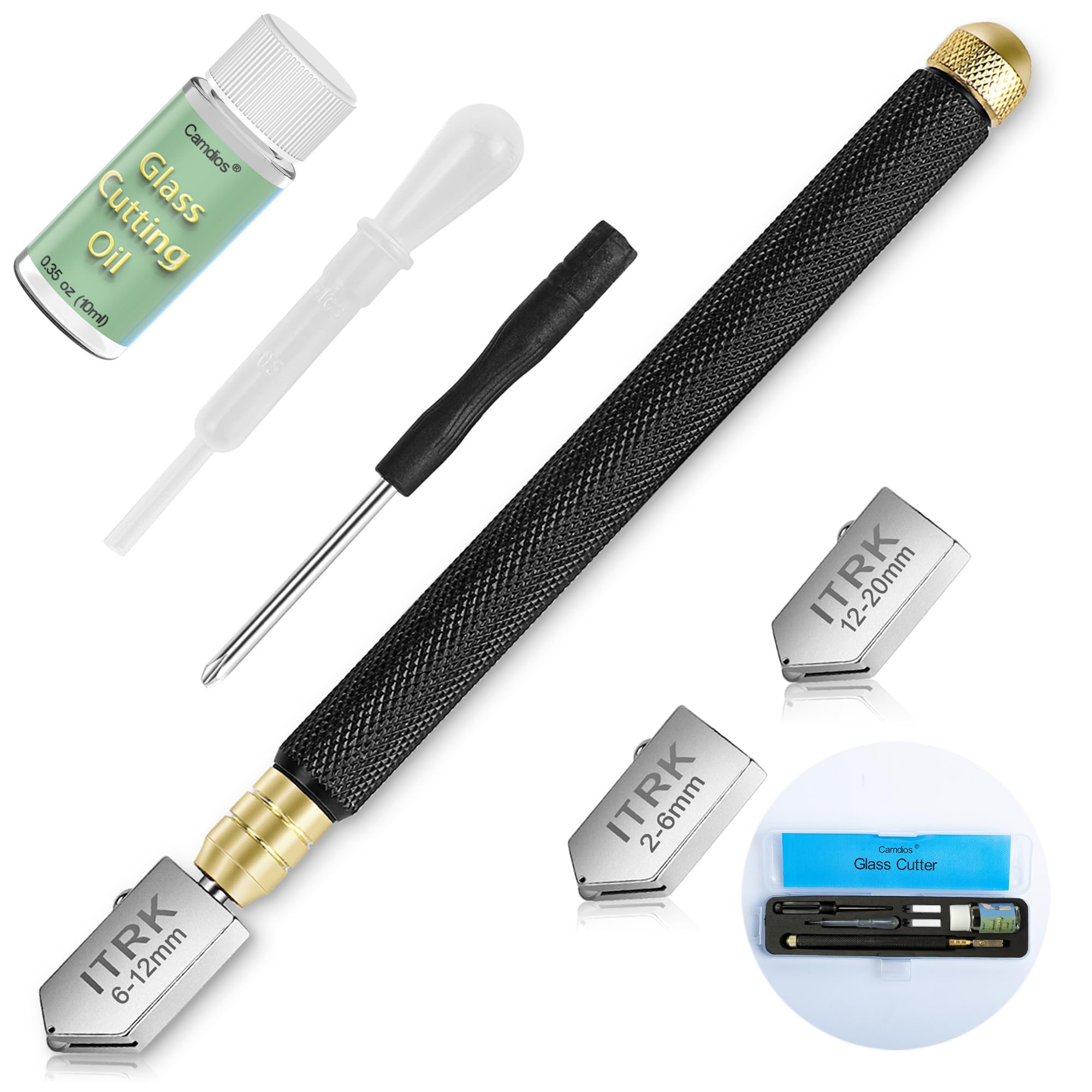
  • Three included carbide heads cover 2-20mm glass, tile, and mirror thicknesses — Includes 3 heads: 2-6mm, 6-12mm, 12-20mm.
  • Lightweight pencil-style handle with anti-skid grip stays comfortable during short cuts

Cons

  • Oil feed can be inconsistent; tool may need tilting to restart dispensing — Oil flow inconsistency noted in user feedback.

Unlike budget kits that arrive as a tinkerer's project, this Camdios set bundles cutting oil and three carbide heads so you can start scoring right away. A simple pencil grip and anti-skid alloy handle make the tool easy to hold for short-cut sessions.

It fits occasional DIY mirror, tile, and glass tasks where grabbing one box and going is the priority. Be prepared to tilt the tool if oil flow hesitates, and treat the first few cuts as practice — some glass may shatter before you find the right pressure.

💡 💡 Tip: Tilt the cutter upward when oil flow stops; practice on scrap pieces before your main project to avoid wasted glass.

Bottom line: A convenient all-in-one starter kit for casual DIYers who want to try glass cutting without extra shopping — just keep the cutter tilted for consistent oil flow and expect a learning curve on break pressure.

Check Latest Price
#07

One-Off Cuts

Fletcher Terry Steel Wheel Cutter

84 /100
Kirk Score Excellent
Grip Style
Basic Die-Cast
Build Quality
Die-Cast Metal
Oil-Feed System
None
Cutting Wheel Material
Steel
Check Details on Amazon

Pros

  • Effective for simple straight cuts on picture frame glass and thin mirrors. — Cutting performance 31 mentions, 71% positive

Cons

  • Steel wheel can dull quickly and may separate from the handle after limited use. — Durability 14 mentions, 71.4% negative — multiple reports of wheel breaking or falling out after few uses

The Fletcher Steel Wheel Cutter scores picture frame glass and thin mirrors effectively enough for a single replacement job. The steel wheel, however, wears quickly and the tool may come apart after only a handful of cuts, so it's best reserved for low-stakes, one-off tasks.

Bottom line: For a single emergency picture frame glass replacement, this cutter can get the job done; for any project requiring multiple scores, look elsewhere.

Check Latest Price
#08

Scrap Practice

TAMUFU Glass Cutter

83 /100
Kirk Score Excellent
Grip Style
Pencil
Build Quality
Oil-Feed System
Automatic
Cutting Wheel Material
Carbide (Claimed)
Check Details on Amazon

Pros

  • Compact, easy-grip design helps reduce hand strain during short scoring tasks. — Ease of use 5 mentions, 80% positive (limited data)
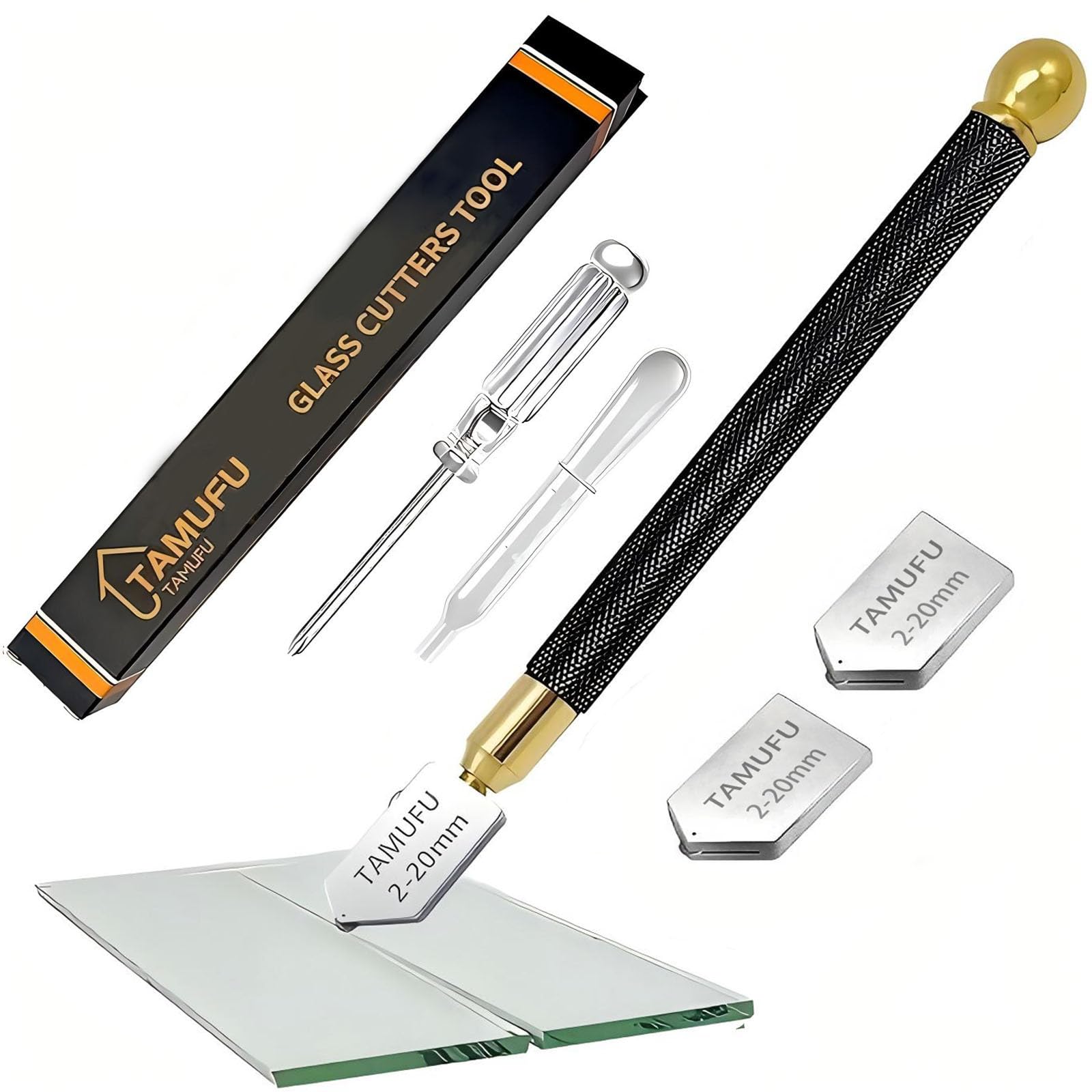
  • Three carbide tips included to handle glass from 2mm up to 20mm.

Cons

  • Scoring consistency varies — a clean break is not assured, so glass may be ruined in some attempts. — Functionality 14 mentions, 50% negative; Cutting performance 6 mentions, 50% negative

Compact and comfortable in hand, the TAMUFU pencil cutter offers automatic oil feed and three carbide tips that cover 2–20mm — convenient for quick setups. However, its scoring can be unpredictable; a clean break is never guaranteed, and glass may shatter outside the score line. This is a tool for patient experimenters working on scrap material where failure is acceptable, not for projects that demand a flawless edge.

Bottom line: This low-cost cutter is viable only for low-pressure practice on scrap glass where failed breaks won't matter. For any project requiring a clean, predictable break, a more dependable cutter is the better choice.

Check Latest Price

How to Choose

Cutting Wheel Material

The wheel scores the glass surface; carbide wheels stay sharp for thousands of linear feet, while steel wheels dull after a few sheets and tend to chip the edge rather than create a clean fissure. For any project beyond a one-time picture frame repair, choose carbide. The trade-off: carbide wheels cannot be resharpened and must be replaced when worn, but they last so much longer that it's rarely a concern.

Oil-Feed System

Self-oiling handles automatically lubricate the wheel as you score, which reduces friction and extends wheel life. However, built-in reservoirs often leak, especially when stored horizontally.

Many experienced cutters bypass the reservoir entirely and dip the wheel in a small cup of cutting oil before each score — a reliable, mess-free method. If you opt for a self-oiling cutter, store it tip-up or empty the reservoir after use.

Grip Style

Pencil grips give you a direct, traditional feel with fine control for curves and delicate work, but they demand more hand strength and can cause fatigue during long sessions. Pistol grips angle your wrist naturally, reducing strain and offering a forgiving pressure for straight cuts, making them ideal for beginners and those with arthritis.

For those with hand pain or small hands, the Thomas grip's compact three-point design relieves pressure and allows precise cuts, though its short handle may feel awkward for larger palms.

Replaceable Heads and Thickness Range

A single fixed head cutter handles one thickness range, typically 2–6mm or 2–12mm. Multi-head kits include interchangeable heads for different ranges, often covering 2–20mm. The hidden trade-off: swapping heads introduces adjustment errors if not seated precisely, and cheaper kits may have loose heads that wobble. For most DIYers, a single-head cutter covering 2–12mm covers mirrors, shelves, and tiles without extra fuss; multi-head kits are best if you regularly cut both thin glass and thick tiles.

Build Quality

Metal bodies — brass or aluminum — resist cracking under pressure and offer better balance, but they add weight. Plastic handles are lightweight and common in budget tools, but they can snap under hand pressure. The premium feel of brass comes at a higher cost, yet a well-made brass cutter can last years without failure.

Frequently Asked Questions