// data-verified

8 Best Nail Gun for Fencing of 2026: Smooth Drives, Less Jamming

Find the best nail gun for fencing that drives 2-3.5 inch nails without jamming or tiring you out, whether you prefer a stick framer or a lightweight coil nailer.

Building a wood fence means driving thousands of nails—often overhead, into dense pressure-treated lumber. A heavy, jam-prone nail gun can turn a weekend project into a grueling slog.

The real friction isn't power; it's finding a tool that stays smooth and predictable when the coil runs low or when you're firing rapidly. Stick framers tend to be lighter and more forgiving, while coil nailers hold more fasteners but introduce more complexity.

The picks that follow prioritize all-day usability—tools under 8 lbs, with jam-clearing features and proven reliability—so you spend more time building and less time clearing misfires.

#01

Best Overall

Metabo HPT NR90AES1

94 /100
Kirk Score Outstanding
Weight
7.5 lbs
Nailer Type
Stick Framing
Max Nail Length
2" – 3-1/2"
Check Details on Amazon

Pros

  • Build quality withstands daily contractor cycles on fence sites. — 145 mentions, 96% positive
  • 7.5 lb weight cuts fatigue when nailing overhead pickets all day. — 88 mentions, 92% positive
  • Packs professional-level driving power and longevity at a mid-range price. — 70 mentions, 99% positive

Cons

  • Occasional jams with longer nails may interrupt workflow. — 38 mentions, 29% negative — some users report infrequent but frustrating jams

Weighing just 7.5 pounds, the Metabo HPT NR90AES1 is among the lightest full-size framing nailers, with a selective trigger that switches between single-fire and bump-fire modes. It drives 2- to 3-1/2-inch nails into dense pressure-treated lumber with authority, including 3-1/2-inch ring-shank nails into posts without bogging down. The magazine reloads smoothly, and the well-balanced body keeps arm fatigue in check during long fence runs. The build quality withstands daily contractor cycles on fence sites.

Fence builders who need a dependable pneumatic nailer for 2x4 rails and pickets will value the quick mode switching when moving from stringers to pickets. Because it uses plastic-collated stick nails, standard eye protection is advisable — a routine PPE choice on outdoor jobs. The NR90AES1 delivers premium reliability at a mid-range price, making it a practical choice for anyone tackling a full fence project.

💡 💡 Tip: Wear safety glasses or a face shield when firing plastic-collated nails — the collation can throw small fragments.

Bottom line: The NR90AES1 strikes the right balance between weight, power, and cost for fence construction that demands all-day comfort.

Check Latest Price
#02

Best Budget Framing Nailer

NuMax SFR2190

93 /100
Kirk Score Outstanding
Weight
8.6 lbs
Nailer Type
Stick Framing
Max Nail Length
2" – 3-1/2"
Check Details on Amazon

Pros

  • Drives nails consistently through dense lumber for framing and fencing. — 899 mentions, 93% positive
  • Lower cost than top-tier framers with same nail capacity and dual-mode fire. — 702 mentions, 95% positive
  • Handles small construction projects like decks and sheds beyond fencing. — 167 mentions, 92% positive

Cons

  • Heavier than many alternatives at 8.6 lbs — arm fatigue may set in during overhead fence nailing. — 312 mentions, 69% negative
  • Loading two full strips can cause occasional jams that take time to clear. — 216 mentions, 31% negative

The NuMax SFR2190 delivers the nail-driving punch of pricier framers at a notably lower cost, accepting full-size 3-1/2-inch fasteners for fencing. It contrasts with the top pick's lighter design, but for a one-time fence or shed project, the savings are hard to ignore. Its 8.6-pound weight may fatigue arms during overhead work, and loading two full nail strips can introduce occasional jams. DIYers building a single perimeter fence will find the tradeoff acceptable; daily builders should look elsewhere.

💡 💡 Tip: Load only a single strip of nails instead of two full strips to reduce the chance of a jam.

Bottom line: For a single fence or shed, the SFR2190 drives nails consistently and saves money — just plan for the weight and occasional jam.

Check Latest Price
#03

Best Lightweight Coil Nailer

Bostitch N66C

91 /100
Kirk Score Outstanding
Weight
4.1 lbs
Nailer Type
Coil
Max Nail Length
1-1/4" – 2-1/2"
Check Details on Amazon

Pros

  • Weighs just 4.1 lbs, reducing fatigue during overhead picket nailing. — 64 mentions, 95% positive
  • Consistent drive performance into Hardie siding and fence boards. — 238 mentions, 92% positive
  • Coil loads quickly for fast picket attachment. — 79 mentions, 99% positive

Cons

  • Depth adjustment may need tweaking between materials to keep nails flush. — 35 mentions, 37% negative
  • Jams can occur when the coil is low, especially with off-brand nails. — 91 mentions, 42% negative

At 4.1 lbs, this nailer is the lightest option for overhead picket nailing, letting you work all day without fatigue. The 15-degree coil magazine holds plenty of fasteners, and it drives reliably into Hardie siding and fence boards.

Depth control can wander across materials, and jams can happen when the coil is low — especially with off-brand nails. It's a good fit for DIYers driving 2-1/2-inch or shorter nails into fence pickets or siding, where a heavier stick framer feels overbuilt. If your fence calls for 3-inch nails, look elsewhere.

💡 💡 Tip: Stick with Bostitch-branded or high-quality coil nails, and clear jams when the magazine runs low to keep work flowing.

Bottom line: If all-day picket nailing with 2-1/2-inch nails is the goal, the Bostitch N66C's featherweight design makes it easy to handle — just be prepared to tweak depth and clear an occasional jam.

Check Latest Price
#04

Versatile Framing & Metal Connector

Bostitch F21PL

91 /100
Kirk Score Outstanding
Weight
8.15 lbs
Nailer Type
Stick Framing
Max Nail Length
1-1/2" – 3-1/2"
Check Details on Amazon

Pros

  • Drives framing nails and metal connectors with consistent depth — 170 mentions, 95% positive
  • Dual nosepieces let you switch between framing and metal connector mode without a second gun

Cons

  • Weight can feel more tiring than advertised on all-day fence builds — 58 mentions, 53% negative
  • Occasional jams or double-fires may slow pace on high-volume jobs — 48 mentions, 52% negative

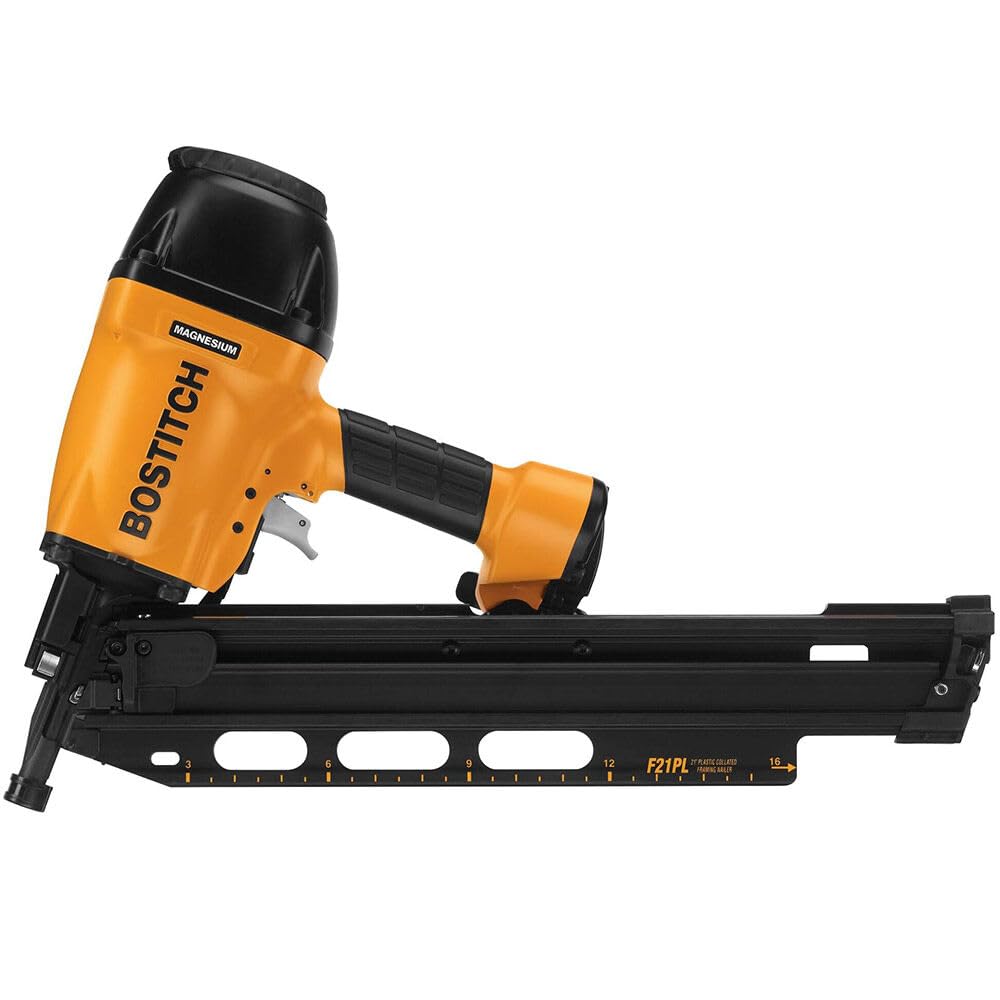
Swapping between the framing nose and metal connector nose lets you drive nails up to 3-1/2 inches and attach joist hangers with one tool — a real space-saver on deck and framing projects. For fence construction, the 8.15-pound weight can feel heavier than the magnesium body suggests, and occasional jams or double-fires may interrupt workflow. This suits builders who need both nailer types and can accept the extra heft in short bursts, but dedicated fence crews will notice the fatigue difference against the top pick.

💡 💡 Tip: Use clean, quality collated nails and keep the magazine free of debris to reduce jams.

Bottom line: When the job demands both framing and metal connector nailing, the dual nosepiece saves a tool — but for fencing alone, the 7.5-lb top pick runs lighter and with fewer interruptions.

Check Latest Price
#05

Versatile Light Framing Coil Nailer

Metabo HPT NV75A5

85 /100
Kirk Score Excellent
Weight
5.7 lbs
Nailer Type
Coil
Max Nail Length
1-3/4" – 3"
Check Details on Amazon

Pros

  • At 5.7 lbs, among the lighter coil nailers, reducing arm strain during fence picket work. — 12 mentions, 75% positive
  • Accepts both 16° wire and 15° plastic coil nails up to 3 inches, covering siding and light framing in one tool. — 8 mentions, 100% positive

Cons

  • Wire collation and off-brand nails can cause jams, particularly when the magazine runs low. — 12 mentions, 42% negative — some users report frequent jams

The NV75A5 trades the top pick's stick-fed reliability for a coiled magazine that holds more fasteners, cutting reloads when nailing long runs of fence pickets or siding. It drives up to 3-inch nails in both wire and plastic collation, bridging light framing and siding duties in one tool. This works for fence builders who want a single nailer for pickets and lighter-duty framing, and who accept that wire collation or non-Metabo nails can cause jams, particularly as the coil empties. If your fence demands 3-1/2-inch nails for structural posts, the stick framer option delivers that without the jam risk.

💡 💡 Tip: Metabo-branded nails and avoiding the last few fasteners in a coil help keep jams to a minimum.

Bottom line: For picket and sheathing runs, the NV75A5 cuts downtime between reloads; plan on using Metabo nails and clearing the occasional jam to keep it productive.

Check Latest Price
#06

Occasional Light Use

PneuTools SN2283H

89 /100
Kirk Score Excellent
Weight
10.53 lbs
Nailer Type
Stick Framing
Max Nail Length
2" – 3-1/2"
Check Details on Amazon

Pros

  • Rafter hook hangs on ladder rungs or top rails for quick access.
  • Fires 2-inch to 3-1/2-inch plastic collated nails, covering pickets and structural rails.

Cons

  • At 10.53 lbs, arm fatigue sets in quickly during prolonged overhead nailing.

This nailer handles the nail range needed for fence pickets and rails, and the rafter hook keeps it accessible on a ladder. At 10.53 lbs, it's the heaviest stick framer in this group — overhead fence work will wear on the arms. It also arrives without the track record of more established models, so it's best suited for PneuTools fans willing to put it through its paces.

Bottom line: If you're committed to the PneuTools brand and can manage the weight, the SN2283H covers the required nail sizes for fence building — just be prepared to evaluate its long-term reliability on your own job site.

Check Latest Price
#07

Quick Small Jobs

3PLUS H2190SP

88 /100
Kirk Score Excellent
Weight
10.69 lbs
Nailer Type
Stick Framing
Max Nail Length
2" – 3-1/2"
Check Details on Amazon

Pros

  • Lowest entry price among comparable framing nailers, adequate for brief fence repairs. — 45 mentions, 84% positive — acceptable for its price

Cons

  • Early durability is uncertain; occasional firing pin breakage or tool stoppage has been noted. — 10 mentions, 60% negative — reports of firing pins breaking or gun quitting

The 3PLUS H2190SP is the lowest-priced framing nailer here, firing 2 to 3-1/2-inch nails in selective mode for ground-level fence repairs. At nearly 11 pounds, it's best kept off ladders. Durability is unpredictable, with occasional nailers stopping after minimal use — a calculated risk only for one-off, low-stakes jobs.

Bottom line: Only worth the gamble for a single, ground-level fence repair where early stoppage won't upend your project.

Check Latest Price
#08

Makita System Users

Makita AN613

87 /100
Kirk Score Excellent
Weight
7.48 lbs
Nailer Type
Coil
Max Nail Length
1-1/4" – 2-1/2"
Check Details on Amazon

Pros

  • Clean integration with Makita compressors and quick-connect fittings for users already in that ecosystem.
  • Consistent driving power for 2-1/2-inch nails with smooth depth adjustment via the 9-detent dial. — 16 mentions, 88% positive

Cons

  • Safety foot can stick down, leading to misfires and jams during repetitive firing. — 7 mentions, 71% negative — a recurring mechanical issue

Makita's construction quality shows in the AN613, which drives 2-1/2-inch nails into pickets cleanly and integrates with existing Makita compressor couplers. The safety foot mechanism can stick down, causing misfires and jams that hinder efficiency on fast fencing jobs, so this nailer rewards a more deliberate pace.

Bottom line: For measured-speed fencing within a Makita tool set, the AN613 works; on high-volume jobs, the foot-sticking frustration will steer you to a stick framer.

Check Latest Price

How to Choose

Maximum Nail Length

Fence rails and posts demand 3-inch or even 3-1/2-inch ring-shank nails to anchor securely into dense pressure-treated lumber. Pickets and siding, however, only need 2-1/2-inch fasteners. If you plan to build the entire fence, choose a nailer that can fire the longest nail your project requires; a tool limited to 2-1/2 inches forces you to buy a second nailer for structural connections.

The physical consequence of using too-short nails is a weak fence that can loosen over years of wind and soil movement. Look for a maximum nail length of at least 3 inches on a framing nailer, or a versatile coil nailer that reaches 3 inches for lighter structural work.

Stick vs. Coil Nailers

Stick framing nailers use plastic- or paper-collated strips of nails, holding 20-30 fasteners per load. They are mechanically simpler, lighter, and less prone to jamming because the magazine feeds straight. Coil nailers pack 200-300 nails in a round magazine, reducing reloads for large jobs but adding complexity: as the coil unwinds near empty, the remaining strip can twist and cause feed failures.

Wire-collated coils often feed less smoothly than plastic-collated ones, and outdoor humidity can swell paper-collated strips in stick nailers, leading to sticky feeds. For fencing, especially in dirty or damp conditions, a stick framer with plastic collation is the most forgiving choice, while a coil nailer suits fast picket attachment if you stay on top of coil tension.

Tool Weight

A nail gun's weight becomes critical when you're holding it overhead to attach top rails or nailing hundreds of pickets horizontally. Tools under 8 lbs allow a pace that doesn't require breaks every 15 minutes. Heavier models—above 8.5 lbs—amplify arm and shoulder fatigue, slowing the job and raising the risk of mishandling.

The trade-off is that some heavy-duty framers achieve more driving force with a heavier piston, but for fence work using pneumatic power, mid-weight 7-8 lb nailers sink 3-1/2-inch nails without issue. Prioritize weight under 8 lbs unless the tool offers an offsetting advantage like metal connector nosepieces.

Jam Clearing Features

Jams in fencing nailers often happen when nails misalign due to debris, low-coil twist, or poor-quality collation. Tools with an open nose or a quick-clear latch let you remove a stuck nail in seconds without disassembling the magazine. Coil nailers that rely on gravity feed are more sensitive to nail orientation; keeping the coil at least one-third full reduces twist-induced jams.

If you frequently work in dusty or wet yards, a stick framer's simpler track is easier to blow out and inspect, while a coil's internal corridors can trap grime. Look for a nailer with tool-less jam clearing and a reputation for consistent feeding.

Frequently Asked Questions