// data-verified

4 Best Pressure Washer for Painting Prep 2026: No Gas, No Fuss

Which pressure washers for painting prep skip the gas restart headaches and short hoses that slow you down, so you can clean siding and decks confidently before painting.

Many painters and DIYers assume a gas pressure washer is the only way to get serious cleaning power for exterior prep. But a noisy engine that refuses to restart after a warm-up break—or a 20-foot hose that forces you to drag the unit every few feet—can turn a simple prep job into an all-day ordeal. Real-world use reveals that a reliable electric model often cleans siding and decks just as effectively, without the starting hassles and maintenance.

This article identifies pressure washers that prioritize dependability, useful hose length, and the kind of cleaning force that strips grime without damaging surfaces. You’ll learn which specs actually predict a smoother paint prep experience, and which premium features rarely pay off. The right machine gets out of your way and lets you focus on the painting, not the equipment.

#01

Best Overall

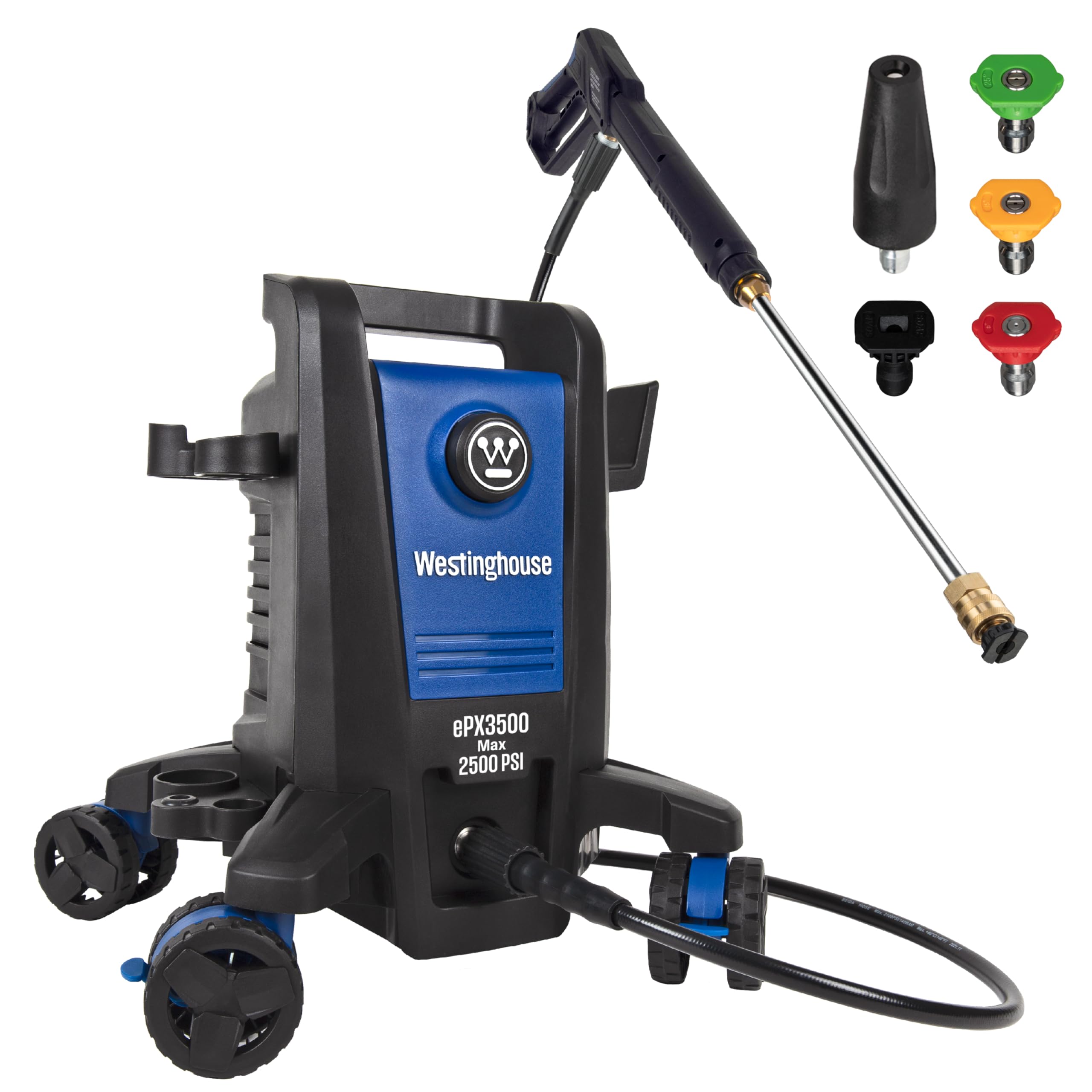
Westinghouse ePX3500 Electric Pressure Washer
Kirk Score 93/100

Westinghouse ePX3500 Electric Pressure Washer

4.6
Weight
19 lbs
PSI & GPM
2,500 / 1.2 GPM
Hose Length
25 ft
Power Source
Electric
Check Details on Amazon

Pros

  • Compact and lightweight 19-lb design that moves and stores without bulk — 2,441 mentions, 94.3% positive
  • Strong cleaning power for paint prep on decks, siding, and driveways — 2,110 mentions on power, 94.8% positive
  • Tool-free assembly gets you spraying in minutes — 2,777 mentions, 97.3% positive
  • Impressive value for the performance and features — 1,383 mentions, 97.5% positive
  • Beginner-friendly operation with intuitive controls — 1,929 mentions, 97.1% positive

Cons

  • On very large surfaces, the rated 1.2 GPM flow can extend rinse times compared to the 1.76 max output
  • The 25-ft hose can force repositioning the unit several times to cover all sides of a large house

The ePX3500’s 2500 max PSI blasts through embedded grime on wooden decks, vinyl siding, and fences without gouging the surface—exactly what you need before painting. The electric motor starts with a button, runs quietly enough for early-morning work, and eliminates fuel mixing and pull-start frustration. Five quick-connect nozzles, including a turbo nozzle that concentrates the spray into a rotating 0-degree pattern, let you shift from broad rinsing to focused stain removal without changing guns.

Assembly is tool-free: snap the handle into the base, connect the high-pressure hose and garden hose, plug in the GFCI cord, and you’re ready. The 25-foot hose covers a typical single-story wall when you position the unit near the center, but reaching eaves or far corners on larger homes will require moving the machine. The 20-ounce onboard soap tank dispenses cleaner through the low-pressure soap nozzle, useful for mildew and chalk removal prior to painting. At 19 pounds with a fold-down handle, the unit rolls over grass and pavement without fighting you, and lifting it into a car trunk is one-handed.

This model fits homeowners preparing siding, decks, or fences for a fresh coat of paint who want a machine that won’t dominate the garage. The rated flow of 1.2 GPM is below the 1.76 max rating, so rinsing suds and loosened paint chips off a very large deck or long driveway takes slightly longer. For most single-family home prep, that extra minute or two is a fair trade for the ePX3500's light weight and quiet operation—especially if you’re moving from a pull-start gas washer that might balk when warm. And when the job’s done, the 19-lb unit folds down and tucks onto a garage shelf without dominating floor space.

If your projects demand continuous all-day use with a larger onboard soap supply, the heavier induction-motor electric in this lineup provides a 0.45-gallon tank and a more durable pump intended for frequent duty cycles. That unit weighs nearly twice as much and requires a different lifting strategy. The ePX3500 prioritizes quick weekend jobs and easy storage, leaving the commercial-scale endurance to its bigger counterpart.

💡 💡 Tip: For houses with large footprints, a 50-ft extension hose reduces the need to carry the unit around.

Bottom line: For homeowners preparing siding, decks, or fences for paint, the ePX3500 delivers the cleaning muscle needed in a lightweight, storable design that won't demand a gas engine's upkeep.

Check Latest Price
#02

Best Heavy-Duty Electric

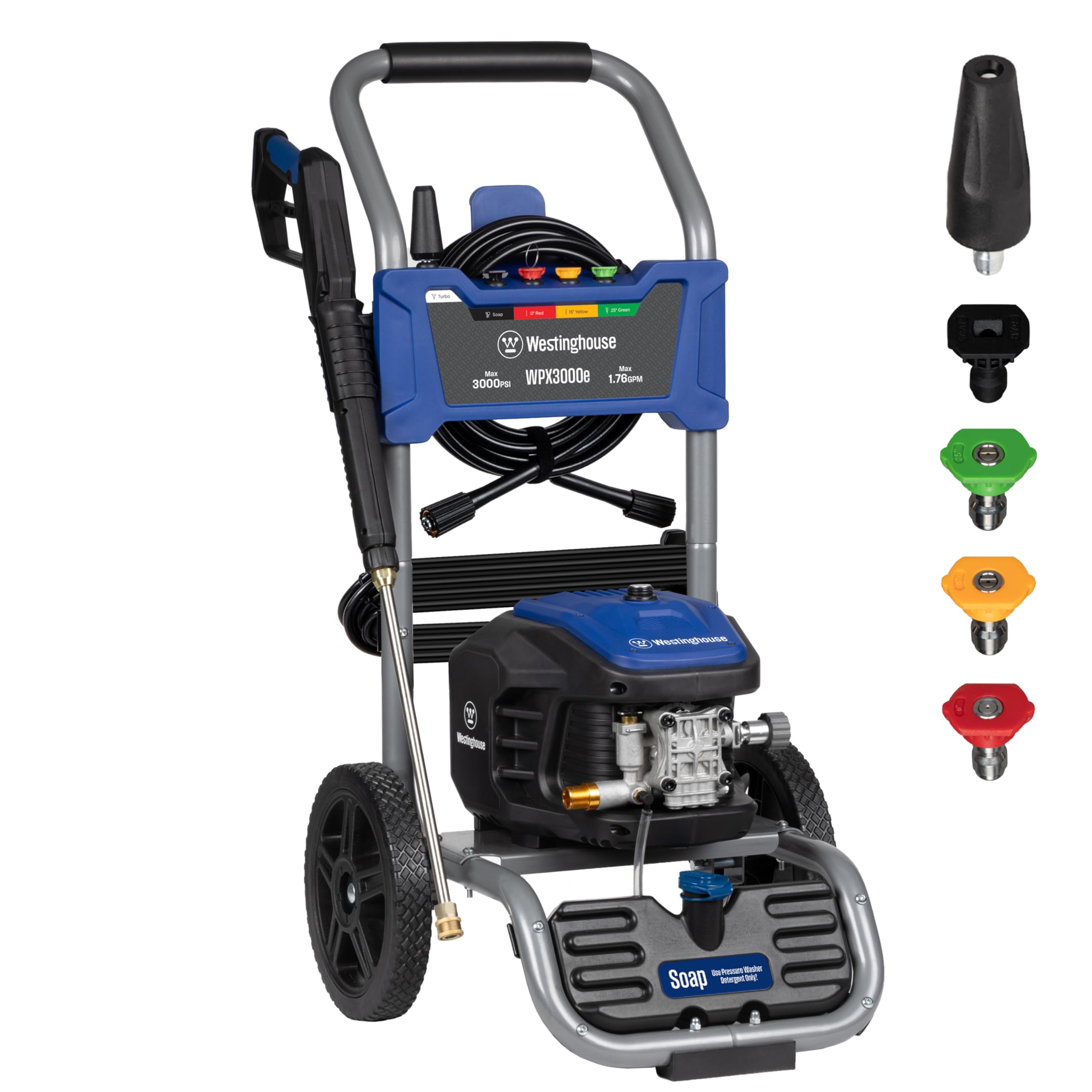
Westinghouse WPX3000e Electric Pressure Washer
Kirk Score 94/100

Westinghouse WPX3000e Electric Pressure Washer

4.7
Weight
36.8 lbs
PSI & GPM
3,000 / 1.1 GPM
Hose Length
25 ft
Power Source
Electric
Check Details on Amazon

Pros

  • High 3000 max PSI paired with an induction motor that runs cooler and lasts longer than universal motors. — 551 mentions on power; induction motor praised for durability
  • Tool-free assembly gets you washing in minutes without hunting for wrenches. — 1,051 mentions, 99.2% positive
  • Rigid steel frame and never-flat wheels keep the unit stable on gravel, grass, or uneven paving. — 320 mentions on build quality, 97.5% positive
  • Removes mildew, grime, and loose paint from siding and driveways quickly. — 295 mentions on cleaning performance, 99% positive

Cons

  • The mid-range price may not pay off for buyers who pressure wash only a handful of times a year.
  • At 36.8 lbs, lifting the unit into a truck bed or up a flight of stairs requires deliberate care.

The Westinghouse WPX3000e steps up where lighter electrics leave off: it delivers 3000 max PSI through an induction motor built for repeated, heavy use. Where the portable Westinghouse ePX3500 favors easy carrying, this machine grounds itself with a full steel frame and never-flat wheels, trading effortless lifting for jobsite stability.

Actual cleaning performance matches the build heft. The induction motor sustains pressure without bogging, and the 5-nozzle set—including a turbo nozzle—makes fast work of large flat surfaces. The 0.45-gallon onboard soap tank supplies enough detergent for a sizable wall before refilling, and the washer strips away mildew, grime, and loose paint from siding and driveways efficiently.

Homeowners tackling a multistory exterior paint prep who work primarily from the ground or a garage will find the WPX3000e’s durability reassuring. The 3-year limited warranty and steel frame signal a tool meant for seasons of use. If you need to climb stairs regularly with the machine, though, the 36.8-lb weight becomes a real consideration—this is a basement-to-driveway unit, not a stair-climber.

💡 💡 Tip: Park the washer on a rolling cart or keep it near the work area to minimize lifting between jobs.

Bottom line: For large-scale surface preparation where electric convenience and long-term motor reliability outweigh light portability, this Westinghouse matches heavy-duty expectations without gas engine noise or fumes.

Check Latest Price
#03

Best Budget Gas Power

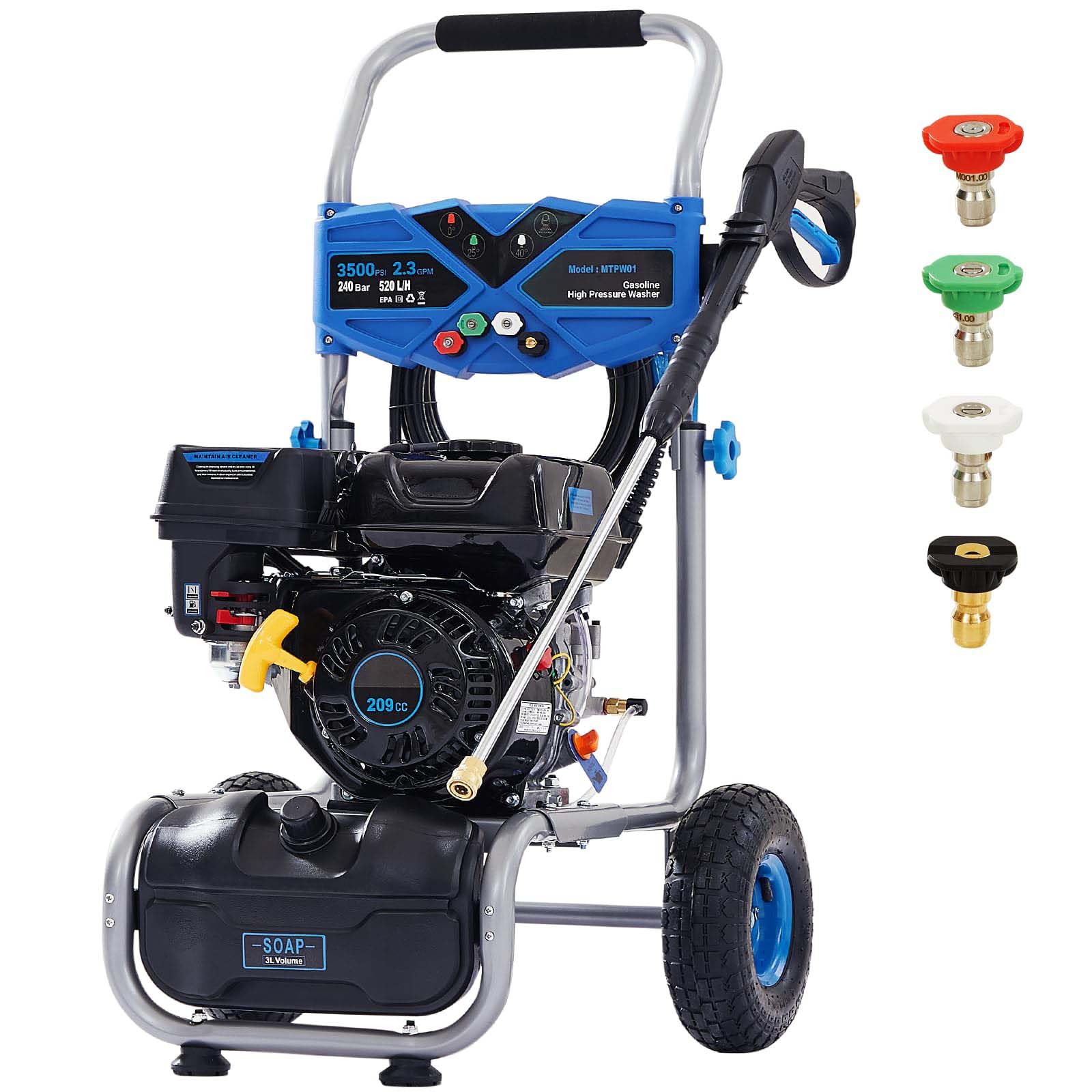
Ezasin 3500 PSI
Kirk Score 88/100

Ezasin 3500 PSI

4.6
Weight
63 lbs
PSI & GPM
3,500 / 2.3 GPM
Hose Length
25 ft
Power Source
Gas
Check Details on Amazon

Pros

  • 3500 max PSI blasts through caked-on dirt and old paint with enough force for fast surface prep. — 18 mentions on power, 83.3% positive; reviews call it a 'beast'
  • Unit assembles quickly and the engine starts on the first pull, reducing setup time. — 16 mentions on ease of assembly, 100% positive; 7 mentions engine start, 100% positive
  • Four quick-connect nozzles and an onboard soap tank let you switch from high-pressure stripping to detergent application without extra tools.
  • 2.3 GPM flow rate provides efficient rinsing and covers large areas without frequent passes.

Cons

  • A unit may arrive with a leak that requires replacement before use. — 1 out of ~165 reviews reported a leak upon arrival; resolved by replacement

Ezasin’s 3500 PSI gas pressure washer strips old paint and grime at a flow rate that matches machines costing twice as much. Where the premium gas model leans on a Honda GX200 engine and aluminum frame for longevity, this unit trades the badge for raw output—the 209cc OHV motor and basic frame keep the price low while the 2.3 GPM output and cold-start pull cord put you right into large paint-prep jobs without delay.

DIYers who value cleaning muscle over brand pedigree and don’t mind a brief QC check will find the Ezasin a compelling budget workhorse. A small number of units have arrived with leaks, but the replacement process is straightforward—if yours needs a swap, you’ll still end up with a powerful washer for far less than the top-tier alternative. For paint prep that demands a steady rhythm of stripping and rinsing on siding, decks, or driveways, this flow rate keeps the work moving.

Once it’s running, pressure remains consistent under load, and the four quick-connect nozzles switch without fuss. The onboard soap tank holds enough detergent for a full siding wash, and the engine fires up on a single pull even after a short break. Assembly is simple, with most setups finishing in under 30 minutes.

Bottom line: With a quick arrival check and a potential easy exchange, the Ezasin delivers paint-stripping force that budget-focused DIYers won’t find elsewhere at this price.

Check Latest Price
#04

Best Premium Gas for Longevity

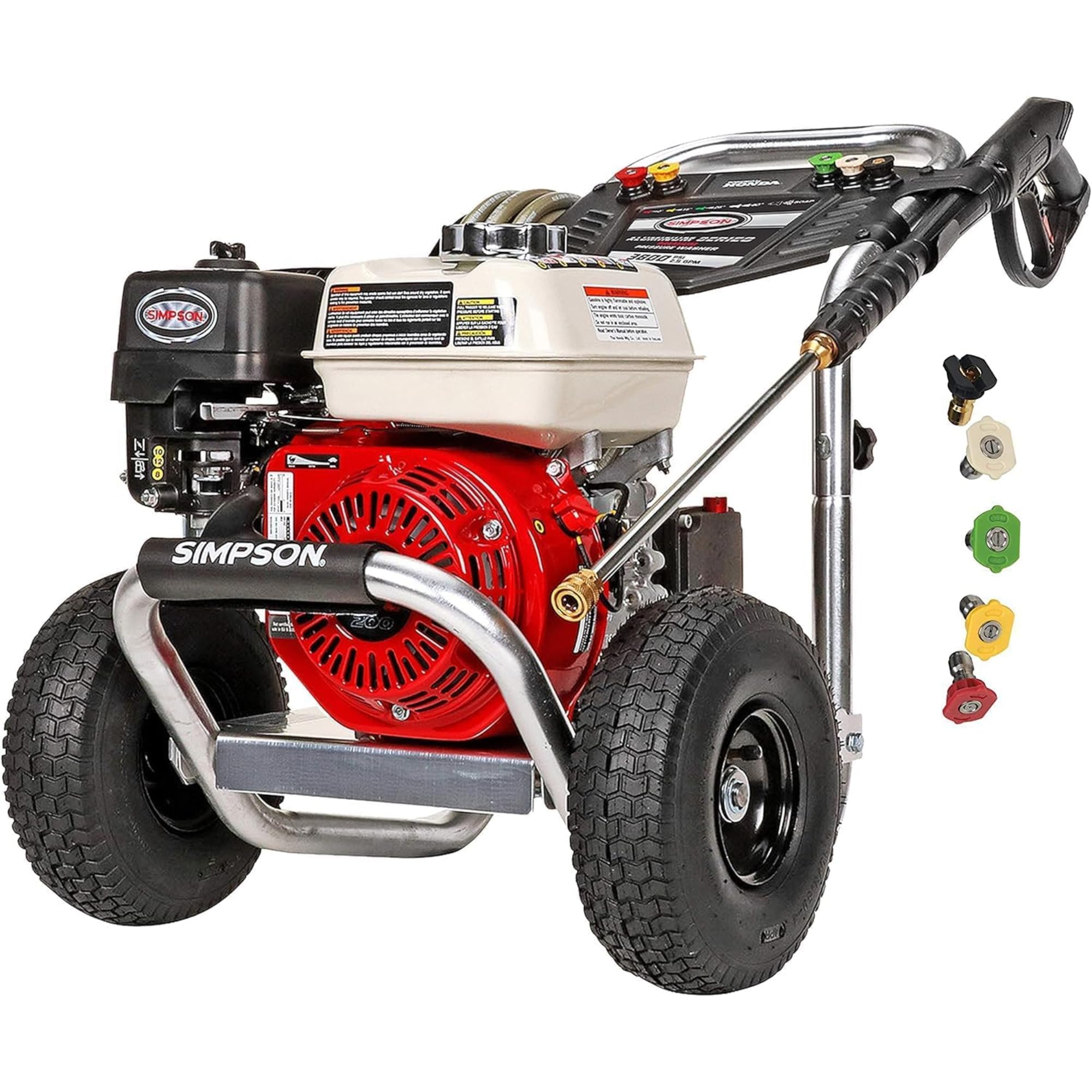
Simpson ALH3425
Kirk Score 83/100

Simpson ALH3425

4.2
Weight
78 lbs
PSI & GPM
3,600 / 2.5 GPM
Hose Length
35 ft
Power Source
Gas
Check Details on Amazon

Pros

  • Honda GX200 engine starts on the first pull and includes low-oil shutdown for protection. — 23 mentions on starting, described as 'first pull' out of the box.
  • 2.5 GPM and 3600 PSI enable fast cleaning of large exterior surfaces for paint prep. — 28 mentions on pressure, high cleaning efficiency noted.
  • Aluminum frame resists corrosion and keeps the unit lighter than comparable steel-frame gas washers. — 10 mentions on build quality, positive on lightweight and durability.
  • Comprehensive warranty covers the engine (3 years), pump (5 years), and frame (10 years).

Cons

  • Some units may arrive with cosmetic scuffs or slight misalignment of non-critical parts. — 24 durability mentions, some reports of dings or misaligned parts on delivery.
  • At idle, the engine vibration can cause the unit to creep across pavement, requiring wheel chocks or soft ground. — 11 mentions on vibration, several users note the unit walks when idling.

Where the top pick runs on electric and weighs under 20 lbs, the Simpson ALH3425 commits to gas with a Honda GX200 engine and triplex pump that sustain 2.5 GPM for hours of paint-stripping work. Its aluminum frame resists corrosion and shaves weight compared to steel gas units, and the 35-foot hose gives you more reach than the 25-foot lines found on many competing gas models.

The Honda engine fires up on the first pull out of the box and includes a low-oil shutdown to protect the motor. The 2.5 GPM flow strips mildew and old paint from siding and decks efficiently, cutting down prep time on large surfaces. With five quick-connect nozzles and 3600 PSI, you can adjust from high-impact stripping to wider fan rinsing without swapping tips mid-job.

This washer fits serious DIYers and semi-professionals tackling frequent paint prep on large properties, especially with rough ground where the pneumatic tires and aluminum frame roll easily. The Honda engine gives you the stamina to work all day without cord restrictions. The trade-off is that excessive vibration at idle makes the unit inch across hard surfaces; parking it on grass or chocking the wheels solves it, but it's something to plan for.

💡 💡 Tip: Place the washer on grass or brace the wheels with a chock to prevent the idle vibration from inching it across hard surfaces.

Bottom line: If your paint prep demands a gas machine with sustained flow and Honda engine stamina, the ALH3425 justifies its premium with a triplex pump and corrosion-resistant frame. Just budget a pair of wheel chocks if you'll be on pavement.

Check Latest Price

How to Choose

PSI & GPM: Cleaning Power vs. Speed

Maximum PSI gets the marketing attention, but rated GPM (gallons per minute) determines how fast you rinse away loosened grime. A 2500 PSI washer with 1.2 GPM may take a few extra passes on stubborn mildew compared to a 3000 PSI unit with 2.5 GPM, but it’s often gentler on aging wood and older paint. For most siding and deck prep, anything above 2000 PSI with 1.2 GPM works, provided you use the right nozzle and keep the wand moving.

The hidden trade-off: high-flow gas models clean faster but can peel up splinters or etch concrete if you linger. An electric with lower GPM forces a more methodical pace, which is actually safer for painted surfaces you’re not stripping completely.

Hose Length and Flexibility

A 25-foot hose is the industry default, but it barely reaches the eaves of a single-story home without moving the machine. For two-story painting prep, a 35-foot hose or longer cuts repositioning time in half. Flexibility matters too: stiff PVC hoses kink easily, while rubber or hybrid hoses snake around corners without choking flow.

If you’re stuck with a short hose, a swivel connector and a lightweight power cord extension (for electrics) can mimic some of that extra reach, but nothing replaces a generous length when you’re circling the house.

Power Source: Electric vs. Gas Trade-offs

Electric pressure washers start instantly with the push of a button, require no fuel or oil, and run quietly enough for early-morning work. Their limitation is the cord—you’ll need an outlet within 25–50 feet and a heavy-duty extension. Induction-motor electrics (like the Westinghouse WPX3000e) offer 3–5 times the life expectancy of universal motors, making them the better long-term bet.

Gas washers eliminate the cord and deliver brute force, but they come with carburetor choke rituals, warm-restart stumbles, and annual oil changes. For a homeowner who preps once or twice a year, electric is almost always the less frustrating choice.

Weight and Portability

A 19-lb electric can be carried up a ladder or stored on a shelf, while a 78-lb gas unit with a steel frame and pneumatic tires is designed to stay on the ground. If you have multiple levels to clean or a basement utility sink as your water hookup, portability isn’t a luxury—it determines whether you finish in hours or days. Electric models with a suitcase handle or folding design make moving between faucets far more practical.

Nozzle Selection and Soap Tank

The 0° nozzle is a pinpoint jet that can gouge wood; save it for concrete cracks. For paint prep, a 15° or 25° fan is your workhorse, while a turbo nozzle rotates a zero-degree stream into a rapid cone that blasts mildew without the same digging risk. An onboard soap tank that holds at least 20 ounces lets you apply a gentle degreaser or mildewcide before pressure rinsing—essential if you’re dealing with mold behind gutters or stair risers.

Frequently Asked Questions