Can You Paint Over Wallpaper? When It's OK (and When to Strip It)
Sometimes painting over wallpaper is the smart move — and sometimes it's a mistake you'll regret. Here's how to tell which, and the one primer rule that makes or breaks it.
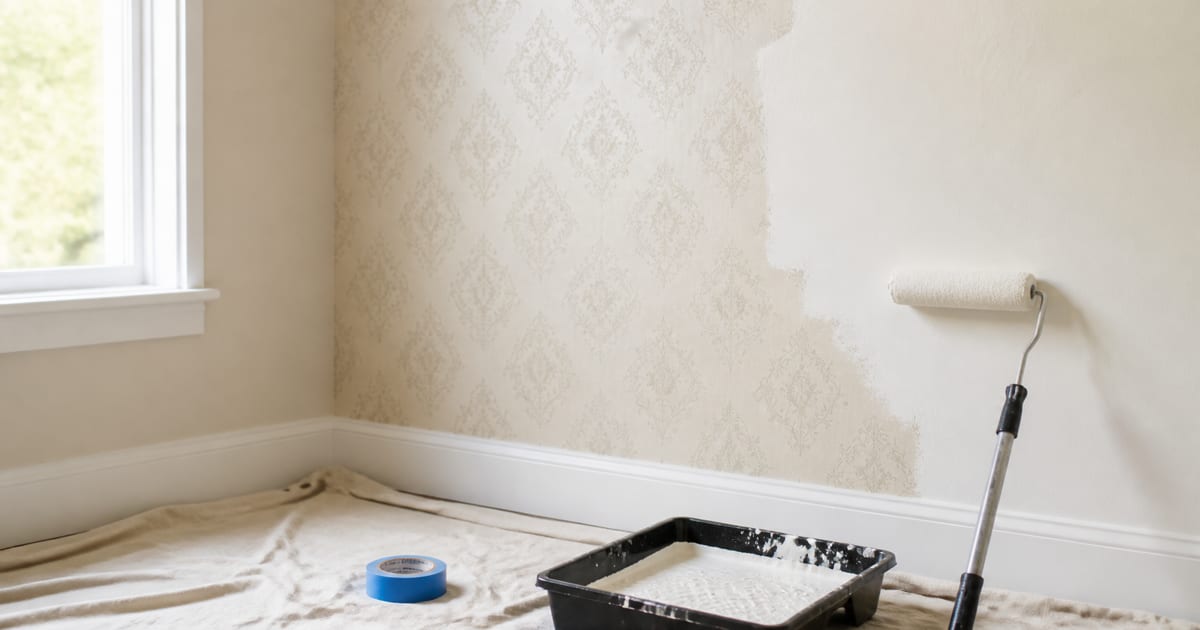
Stripping wallpaper can be a miserable, all-weekend job — so the temptation to just paint over it is real. The good news: it's often perfectly fine. The catch: only in the right conditions, and only if you prime correctly.
When painting over it is OK
Painting over wallpaper makes sense when the paper is well-adhered (no lifting edges or bubbles), smooth (no heavy texture or fabric weave), and when there's a real risk that stripping it would tear up the drywall underneath — common in older homes where paper was hung directly on unprimed walls. In those cases, a careful paint job beats gouging the wall and re-skimming it.
When to strip it instead
Pull the paper off first if it's peeling, bubbling, or coming loose at the seams, if it's a heavily textured or vinyl paper, or if there are multiple layers. Painting over loose or textured paper just locks in the problem — the paint adds moisture that can loosen it further, and every flaw telegraphs through. Also know that painting over wallpaper makes it much harder to remove later, so it's a bit of a one-way door.
Step-by-step (if you paint over it)
- Glue down loose spots. Re-stick any lifting edges or seams with seam adhesive and let them dry.
- Clean the surface. Wipe away dust and grease so primer bonds.
- Smooth the seams. For a near-invisible finish, skim a thin layer of joint compound over the seams, let it dry, and sand smooth.
- Prime — this is the key step. Use an oil- or shellac-based primer. It seals the paper without soaking it. (A water-based primer can reactivate the wallpaper paste, causing bubbles and lifting.)
- Paint as normal. Once primed and dry, apply your topcoat in two coats.
The bottom line
If the paper is solid and smooth, prime it with oil-based primer and paint with confidence. If it's loose, textured, or layered, bite the bullet and strip it — you'll get a better, longer-lasting result.
Frequently Asked Questions
-
An oil-based or shellac-based stain-blocking primer. These seal the wallpaper without adding the water that loosens the paste underneath. Avoid water-based primers directly over wallpaper — they're the main cause of bubbling and lifting.
-
They can, slightly. To minimize it, skim a thin coat of joint compound over each seam, sand it smooth, then prime and paint. For heavily textured paper, this is a lot of work — stripping is usually the better call.