// data-verified

10 Best Driveway Sealer of 2026: Sealers That Repel Water and Resist Clouding

Which driveway sealer won't peel, cloud, or fail after one season? Our guide helps you pick between penetrating and wet-look formulas for real protection.

Sealing a driveway sounds simple—sweep, spray, and forget. But within months, a white haze, oily residue, or patchy wet spots can appear, leaving the surface looking worse than before. These failures almost always trace back to one root cause: the sealer type didn’t match the concrete’s porosity or it was applied while moisture was still trapped below.

The driveway sealer aisle forces a decision: a penetrating silane/siloxane that vanishes into the concrete, or an acrylic that forms a thin film and gives the surface a subtle wet sheen. Both can deliver years of protection when chosen correctly, but each demands a specific set of conditions—porous concrete for penetration, bone-dry slabs for film formers. This guide sorts the sealers that consistently handle real-world weather and traffic, so you can stop worrying about peeling and start enjoying a driveway that actually repels water.

#01

Best Overall Driveway Sealer

Armor AR350 Wet Look

92 /100
Kirk Score Outstanding
Finish Type
Low-gloss wet look, color-enhancing
Base Material
Solvent-based acrylic
Suitable Surfaces
Concrete, pavers
Coverage (per gal)
175-225 sq ft
Check Details on Amazon

Pros

  • Enriches concrete color with a low-gloss wet look that stays subtle
  • Self-priming formula rolls on smoothly, saving time on big areas
  • Guards against water, UV fading, deicing salts, and foot/vehicle wear

Cons

  • On pavers, a white haze may develop after 6–12 months if moisture was trapped underneath

The solvent-based acrylic formula deepens concrete color with a low-gloss sheen that resists yellowing and holds up to UV exposure. Roller application goes quickly — the sealer self-levels and doesn’t require a separate primer, covering 175-225 square feet per gallon. A 5-gallon pail easily handles a two-car driveway with a second coat.

This sealer fits homeowners seeking a subtle wet look that enhances the stone rather than coating it in plastic. It bonds best to bare concrete or previous solvent-based sealers. One condition: on paver surfaces, a white haze can appear after 6–12 months if moisture was present during application or if the slab wasn’t completely dry. Driveways tend to fare better than intricate paver patios. If you prefer zero sheen and invisible protection, the penetrating sealers in this set are a more natural-looking alternative. For those willing to prep thoroughly, the AR350 gives consistent color enhancement and weather protection.

💡 Tip: Don’t apply over existing water-based acrylic sealers; strip the old coating first to ensure proper bonding.

Bottom line: For driveway owners who want that just-washed depth without high gloss, the AR350 delivers — as long as the concrete is thoroughly dry before you start.

Check Latest Price
#02

Best Natural-Look Penetrating Sealer

Armor SX5000 WB Natural

91 /100
Kirk Score Outstanding
Finish Type
Natural matte, invisible
Base Material
Water-based silane/siloxane
Suitable Surfaces
Concrete, brick, pavers, stone
Coverage (per gal)
175-225 sq ft
Check Details on Amazon

Pros

  • Sprayer-friendly application dries quickly to an invisible, matte finish with no sticky residue.
  • Water beads on contact and sheds without altering concrete's raw, unsealed appearance.
  • Penetrates deeply for years-long defense against moisture intrusion with no peeling or surface film.

Cons

  • On very smooth, dense concrete, water beading may be less pronounced and minor darkening or unevenness can occur.

For those who want a driveway that looks completely untouched by sealer, Armor SX5000 WB is the answer. Unlike the low-gloss wet-look top pick, this water-based silane/siloxane penetrant dries to a completely matte, film-free finish that doesn't alter concrete's natural character. Applying with a pump sprayer is clean and quick, and the sealer penetrates deeply to shed water on contact — beading and runoff happen without any visible residue or sheen.

This suits homeowners who prize their concrete's raw, unsealed appearance and need a low-odor, 0 VOC option. On very smooth or dense concrete, the sealer may not penetrate as evenly and slight darkening or patchiness can appear — less of a concern on textured broom-finished driveways or porous pavers where absorption is more uniform.

Bottom line: If you want your driveway to look like you never sealed it — while still repelling water and salt — Armor SX5000 WB delivers that invisible barrier. The 5-gallon size covers large areas and suits the purist who values raw concrete's character over any cosmetic enhancement.

Check Latest Price
#03

Best Commercial-Grade Penetrating Protection

Siloxa-Tek 8500 Clear

89 /100
Kirk Score Excellent
Finish Type
Invisible matte
Base Material
Water-based silane/siloxane
Suitable Surfaces
Concrete, brick, pavers, stone
Coverage (per gal)
Up to 250 sq ft
Check Details on Amazon

Pros

  • Exceptional sealing on driveways, patios, and walkways.
  • Quick-drying application with a pump sprayer.
  • Strong water beading persists after heavy rain.

Cons

  • May not fully repel water on smooth, non-porous concrete; blotchy appearance possible.

The DOT-approved water and salt repellency sets this apart from the natural-look penetrant in the roundup. The high-actives formula soaks into porous concrete quickly, making pump-sprayer application fast and leaving behind no sheen — raw concrete stays unchanged.

DIYers in regions that see heavy de-icing salt and freeze-thaw cycles will feel the high-actives difference. It needs absorption: porous driveways, brick, and pavers let it work as intended. Smooth or polished concrete can struggle to take it in, so skip this if your slab has a tight surface.

Bottom line: For driveways exposed to salt and freeze-thaw cycles, this penetrant delivers dependable protection where concrete is absorbent enough to let it in.

Check Latest Price
#04

Best Concrete Densifier & Sealer Combo

Lithi-Tek 9500 Concentrate

88 /100
Kirk Score Excellent
Finish Type
Invisible, strengthens concrete
Base Material
Proprietary water-based densifier & waterproofer
Suitable Surfaces
Concrete driveways, garages
Coverage (per gal)
1,000 sq ft (concentrate)
Check Details on Amazon

Pros

  • Hardens and densifies new concrete while sealing in one application
  • Mix with water and spray using a garden sprayer
  • Water beads on contact, reducing moisture ingress

Cons

Lithi-Tek 9500 hardens and waterproofs new concrete in a single step — treating both surface and substrate without leaving a film. Unlike industrial-strength silane/siloxane treatments that focus strictly on repellency, this concentrate densifies the slab, cutting dusting and raising surface hardness. The water-based formula mixes easily and sprays with a garden sprayer, soaking in to make water bead on contact.

It fits new driveways, basement floors, and garage slabs where dusting is a concern. Avoid decorative stone or pavers where any color change would be unacceptable, and skip smooth, non-absorbent finished concrete that won’t absorb the product. White spots can appear if over-applied, so test a small section and avoid pooling.

💡 Tip: Test a small area first and never let it pool — white spots come from over-application, not the chemistry itself.

Bottom line: For fresh slabs that need hardening plus invisible water protection, this concentrate delivers strong densifying performance at a mid-range spend — just take the time to apply evenly.

Check Latest Price
#05

Best Budget-Friendly Spray-On Sealer

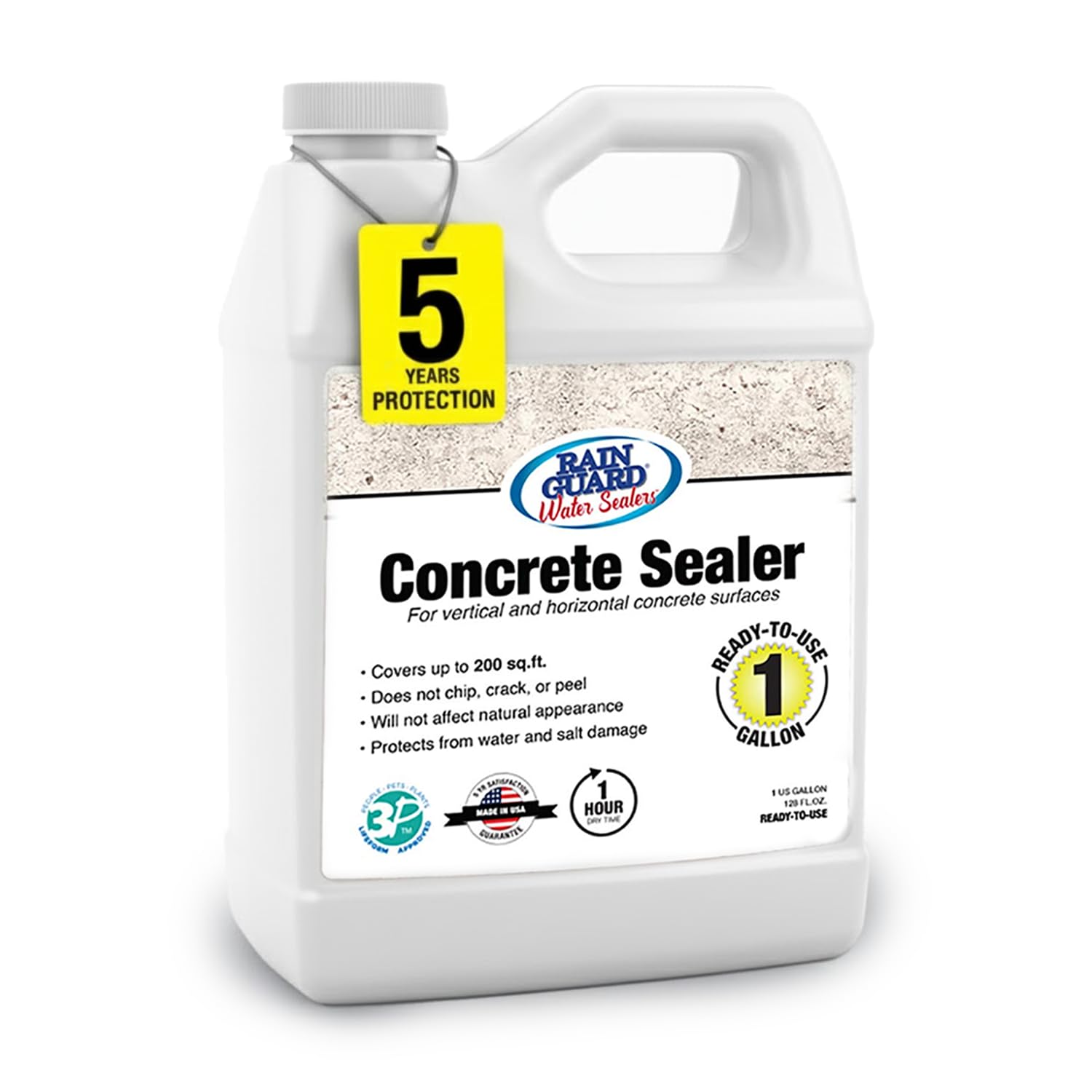
Rain Guard Concrete Sealer

86 /100
Kirk Score Excellent
Finish Type
Clear, natural matte
Base Material
Water-based silane/siloxane
Suitable Surfaces
All concrete
Coverage (per gal)
Check Details on Amazon

Pros

  • Very easy to apply with a pump sprayer, even for beginners.
  • Creates visible water beading after the first rain or rinse.
  • Preserves the raw concrete look with a clear, matte finish

Cons

  • Organic stains from leaves and dirt may still penetrate, leaving markings that don't easily wash off.
  • Water repellency can fade after one season, requiring reapplication in areas with harsh weather or road salt.

Rain Guard's spray-on application is a standout for DIYers, soaking into concrete quickly and leaving no visible film. Its low-odor, water-based formula cleans up with soap and water. Water beads up nicely after curing, but a single coat won't hold up more than a season in high-salt or freeze-thaw environments.

It's ideal for homeowners in mild climates looking for a budget-friendly way to protect a driveway from occasional rain — not for heavily salted winter roads. Stains from leaves or dirt may still appear, so minimal cosmetic expectations fit best. This sealer is a pragmatic choice for first-time users willing to reapply annually.

Bottom line: For first-time sealers in mild climates, this budget-friendly spray delivers a natural look and simple application, though annual reapplication is needed to maintain water repellency.

Check Latest Price
#06

Best High-Gloss Wet Look

Cryli-Tek 5505 Hi-Gloss

89 /100
Kirk Score Excellent
Finish Type
High-gloss wet look
Base Material
Solvent-based acrylic
Suitable Surfaces
Concrete, pavers, stone
Coverage (per gal)
200-250 sq ft (typical)
Check Details on Amazon

Pros

  • Deep wet-look gloss intensifies decorative concrete and paver colors
  • Seals out water and stains effectively on porous surfaces
  • Quick-drying solvent formula allows same-day recoating and fast turnaround

Cons

  • Direct sun exposure can cause gloss to fade or turn hazy, requiring recoating every 1-2 years

Cryli-Tek 5505 applies a glossy acrylic film that amplifies color and hides surface flaws on stamped concrete and pavers. The solvent-based formula dries quickly and goes down with a roller or sprayer, outperforming penetrating sealers that leave the appearance untouched. However, that mirror-like finish is vulnerable to sun—gloss can fade or haze within weeks on an uncovered driveway. This makes it a fit for covered entryways, shaded patios, and garage floors where the wet-look payoff outweighs the need to recoat every year or two.

Bottom line: For covered patios or shaded driveways where maximum shine is the priority and periodic recoating is acceptable, this sealer delivers a glassy wet look that no penetrant can match.

Check Latest Price
#07

High-Gloss Alternative

Armor AR500 High Gloss

87 /100
Kirk Score Excellent
Finish Type
High-gloss wet look
Base Material
Solvent-based acrylic
Suitable Surfaces
Concrete, pavers
Coverage (per gal)
175-225 sq ft
Check Details on Amazon

Pros

  • Glassy finish deepens color on stamped concrete for a showroom-wet look.
  • Rolls on smoothly and dries quickly, simplifying application.

Cons

  • Gloss can fade or wear within one summer in intense sun.

The Armor AR500's solvent-based acrylic creates a glassy depth on stamped concrete that no penetrating sealer can match. It rolls on easily and dries quickly, leaving a showroom-wet finish that makes colors look deeper. For decorative concrete that won't see constant vehicle traffic or hot tires, the effect is striking. On sun-baked driveways, plan to recoat annually to maintain the wet look, and reserve it for covered or shaded areas where the gloss lasts longer.

Bottom line: For stamped concrete walkways and covered patios where maximum gloss is worth an annual recoat, this delivers a glassy depth that penetrants can't match.

Check Latest Price
#08

Careful Application

MasonryDefender Concrete

87 /100
Kirk Score Excellent
Finish Type
Clear, invisible
Base Material
Silane/siloxane
Suitable Surfaces
Concrete
Coverage (per gal)
90-150 sq ft
Check Details on Amazon

Pros

  • Spray-on application dries quickly with minimal downtime.
  • Effective water repellency shows visible beading after rain.

Cons

  • May cause blotchy dark streaks or staining if coverage is uneven.

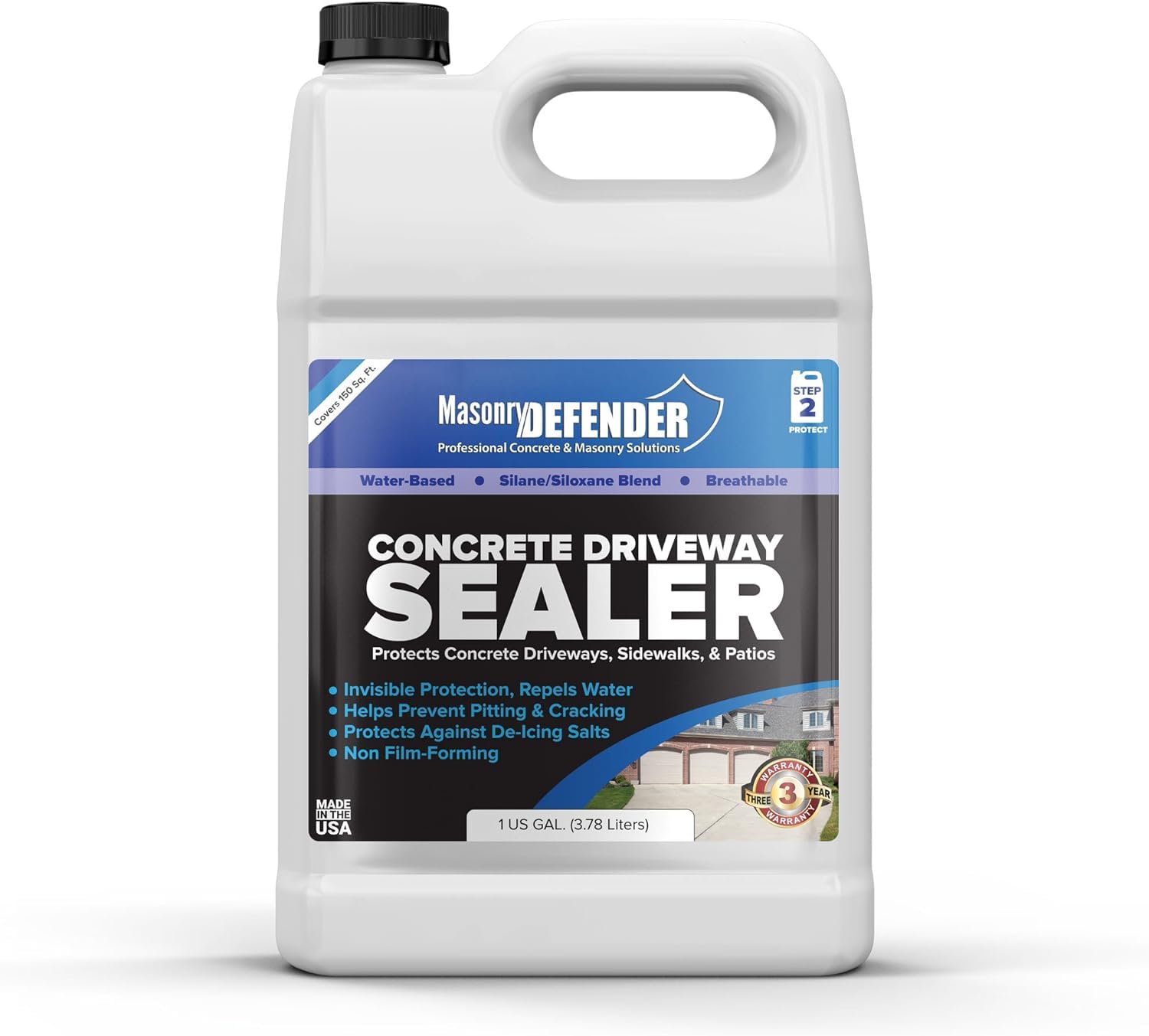
MasonryDefender's silane/siloxane formula dries quickly after spray-on application and delivers visible water beading. However, uneven coverage can leave blotchy dark streaks on some concrete finishes, so a meticulous hand works best on grey, broom-finished driveways that mask these minor variations.

Bottom line: A cost-effective choice for grey, broom-finished driveways where careful, even spraying can keep the surface looking uniform.

Check Latest Price
#09

Multi-Surface

Thompson's WaterSeal Clear

91 /100
Kirk Score Outstanding
Finish Type
Clear, smooth (no gloss)
Base Material
Water-based polyester
Suitable Surfaces
Concrete, brick, wood
Coverage (per gal)
375 sq ft
Check Details on Amazon

Pros

  • Applies easily with spray, roller, or brush on vertical and horizontal surfaces.
  • Provides consistent water repellency on wood decks, furniture, and porous stone.

Cons

  • On dense concrete, the finish can turn sticky or milky if over-applied.

On wood and porous stone, the water-based formula repels water well and goes on quickly with spray or roller. Concrete driveways can see unpredictable dry times and finish inconsistencies. It's better used on brick or stone accents than the main slab.

Bottom line: For wood decks, outdoor furniture, or porous stone accents, this waterproofer delivers good value. For concrete driveways, look for a dedicated sealer unless you can tolerate possible long dry times and finish inconsistencies.

Check Latest Price
#10

Eco-Friendly

Nanoprotect Stone Sealer

89 /100
Kirk Score Excellent
Finish Type
Invisible, natural
Base Material
Water-based silane-siloxane
Suitable Surfaces
Absorbent concrete, pavers, stone
Coverage (per gal)
Up to 200 sq ft
Check Details on Amazon

Pros

  • Deep-penetrating water repellency tested to last 32+ months.
  • PFAS-free, ultra-low-VOC formula won't harm nearby plants and is safer to apply around homes.

Cons

  • Little independent verification of the 32-month durability claim under actual vehicle traffic and freeze-thaw cycles.

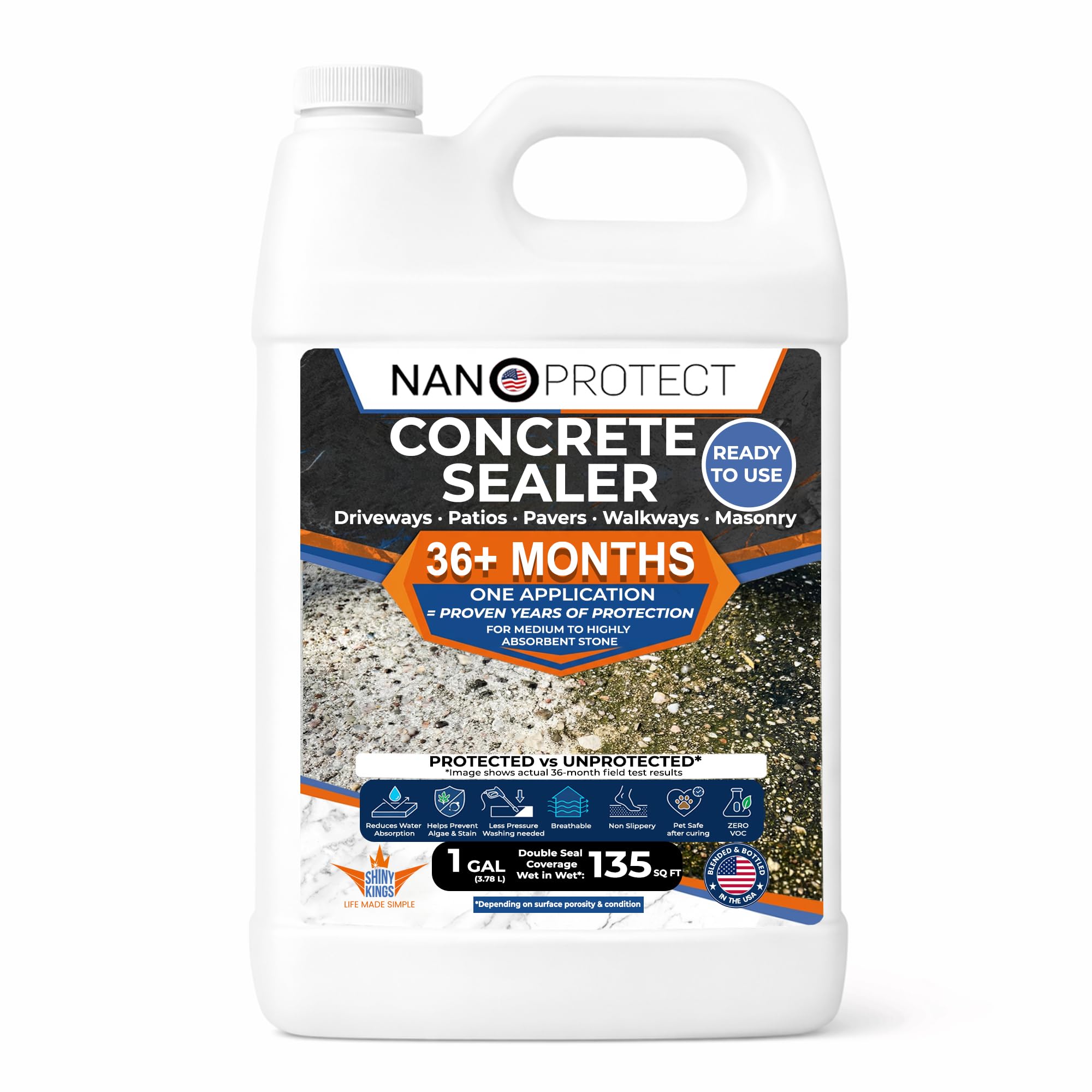
Nanoprotect's PFAS-free, ultra-low-VOC penetrating sealer preserves raw concrete's natural look and repels water. Coverage is up to 200 sq ft per gallon, and the company cites 32+ months of durability. Yet real-world longevity under vehicle traffic and variable weather hasn't been widely documented, leaving its long-term performance less predictable.

Bottom line: Eco-conscious buyers who want a natural-matte driveway and accept some uncertainty about long-term real-world performance will find this a sensible penetrant.

Check Latest Price

How to Choose

Base Material: Water-Based vs. Solvent-Based

Water-based silane/siloxane sealers soak into porous concrete and chemically bond below the surface, leaving no film to peel or cloud. This mechanism works beautifully on broom-finished or aged driveways, but on dense, polished concrete the liquid sits on top and fails to provide deep repellency. Solvent-based acrylics, by contrast, form a durable film that can enhance color and gloss, yet they trap any moisture still present in the slab, turning white or lifting within months.

If your driveway has a rough, absorbent texture, a water-based penetrant is the safer, low-odor choice. For smooth or decorative concrete where you want a distinct wet look, a solvent acrylic can work—provided you’re certain the slab is completely dry and you’re willing to handle strong fumes during application.

Finish Type: Invisible vs. Wet Look

Penetrating sealers dry to a natural matte finish that preserves exactly how the concrete looks now—no shine, no color change. Acrylic film-forming sealers add a gloss ranging from low sheen to a glass-like wet look that deepens colors and makes patterns pop. The hidden trade-off: glossy finishes amplify every crack and tire mark, and they can become slippery when wet. The shine also fades faster under direct sun, requiring more frequent recoating than a matte penetrant.

Choose a matte, penetrating sealer if you value low maintenance and want the driveway to look untouched. Opt for a low-gloss wet look if you want color enhancement without the upkeep of a high-gloss surface; reserve high-gloss for stamped or colored concrete that sees light traffic and some shade.

Coverage Per Gallon

Coverage numbers on the label assume a smooth, sealed surface—reality is often half that. Rough broom-finished concrete can soak up 40-50% more product, and porous pavers may drink a gallon in half the expected area. Always buy at least 10-15% extra for the first coat, and never stretch a single coat to cover more than the manufacturer’s maximum spread rate, or you’ll compromise the barrier.

Suitable Surfaces

Not every driveway sealer works on every masonry material. Some formulas are engineered exclusively for concrete; applying them to brick or natural stone can cause efflorescence-like white staining or poor adhesion. Check the manufacturer’s approved surfaces list, and if your driveway includes mixed materials, test a small hidden patch first. For pavers or flagstone, look for a sealer explicitly rated for that stone type.

Real-World Durability vs. Claims

Labels may promise 5-10 years of protection, but actual longevity depends heavily on surface prep, UV exposure, vehicle traffic, and de-icing salts. Film-forming acrylics typically need a refresh coat every 2-3 years, or even annually in sunny climates. High-quality penetrating silane/siloxanes can reach 5-7 years on a well-prepped, porous surface, but even they lose effectiveness faster on smooth concrete. Budget for reapplication based on your local conditions, not the marketing claim.

Frequently Asked Questions