// data-verified

5 Best Paint for Fiberglass of 2026: Match Type to Project

Choosing the best paint for fiberglass means matching the project—topside, gelcoat, or antifouling—for a lasting finish on tubs, boats, and RVs.

If you've typed 'fiberglass paint' into a search bar, you've likely seen marine topside enamel, gelcoat paste, and antifouling bottom paint all jumbled together. That mix creates a predictable problem: a homeowner refinishing a bathtub might accidentally order a copper-based coating meant for submerged boat hulls.

This guide separates the categories so you can match the paint type to your project and surface—above or below the waterline, cosmetic or protective. The difference between a lasting finish and peeling comes down to choosing the right product and respecting surface prep, not just brand.

Fiberglass is unforgiving if you skip sanding, cleaning, or priming, no matter which paint you use. Many of the products here require techniques like 'roll and tip' or catalyst mixing that typical home improvement projects may not need, but understanding them prevents sticky, soft-cure disasters and ensures a hard, enduring finish on any fiberglass surface.

#01

Best Overall

Rust-Oleum 207004 Topside

93 /100
Kirk Score Outstanding
Application & Prep
Brush/roller, self-leveling; needs sanded surface
Coverage per Quart
Up to 100 sq ft
Drying & Curing Time
Touch dry 1–2 hrs; recoat 24+ hrs
Durability & Resistance
UV-resistant, resists flaking, cracking
Check Details on Amazon

Pros

  • High-quality, durable finish that stands up to sun and use across multiple seasons. — 502 mentions, 96% positive
  • Semi-gloss appearance that keeps its shine without dulling over time. — 363 mentions, 94% positive
  • Smooth leveling with a brush or roller, hiding brush marks without extra thinning. — 182 mentions, 92% positive

Cons

  • Paint may remain tacky for 24 hours or more between coats in damp or cool weather, so recoat windows need planning. — 191 mentions, 37% negative — inconsistent drying behavior noted
  • Adhesion can suffer on bare metal without a proper primer, leading to chips and flaking in high-wear spots. — 245 mentions, 24% negative — some chipping on metal without primer

Rolling or brushing on this oil-based enamel yields a semi-gloss that resists flaking and cracking, often with only one or two coats. Coverage is generous, and the paint self-levels well enough to hide brush strokes without thinning. In humid or cool conditions, drying can lag — paint may stay tacky for over 24 hours between coats, so patient DIYers who can schedule around a slower recoat window will see the best results.

This paint is designed for above-waterline use on fiberglass, wood, and primed metal — ideal for refinishing showers, bathtubs, outdoor furniture, and boat decks. It is not an antifouling coating and shouldn't be used on hulls that stay submerged. Those requiring a flawless, factory-grade finish without thorough surface prep may be disappointed. However, home improvement and boating users who accept the drying rhythm will get a tough, attractive finish that punches above its price.

💡 💡 Tip: In damp conditions, wait a full 24 hours and test tackiness with a fingertip before recoating to avoid a sticky, uneven finish.

Bottom line: For DIYers refinishing fiberglass bathtubs, outdoor furniture, or boat decks above the waterline, this paint delivers impressive looks and durability at a budget-friendly price — just plan for generous drying time between coats.

Check Latest Price
#02

Best High-Gloss Topside Finish

TotalBoat Wet Edge Topside

89 /100
Kirk Score Excellent
Application & Prep
Foam roller/spray, self-leveling; sanded surface
Coverage per Quart
87–100 sq ft
Drying & Curing Time
Full cure 72 hrs; tacky for days
Durability & Resistance
Scratch/UV resistant, multi-season
Check Details on Amazon

Pros

  • Mirror-like gloss that resists scratches, chemicals, and fading for lasting showroom shine — 174 mentions, 94% positive
  • Great coverage with minimal brushing — a quart covers 87–100 sq ft — 84 mentions, 92% positive
  • Self-leveling 1-part formula applies easily with foam roller or spray, no catalyst needed — 113 mentions, 83% positive

Cons

  • Drying is notoriously slow; a tack-free surface can take days in cool or humid conditions, and recoating too soon can ruin the gloss — 115 mentions, 59% negative
  • Surface prep must be meticulous — skipping steps can cause peeling in large sheets, compromising durability — 86 mentions, 35% negative

Unlike two-part gelcoat repairs, TotalBoat Wet Edge is a ready-to-use 1-part polyurethane that self-levels to a deep, scratch-resistant gloss without catalyst mixing. The mirror-like finish holds up through multiple seasons on decks, hull sides, and RV exteriors, with a quart covering roughly 87–100 sq ft for trim and detail work.

It's aimed at perfectionists refreshing fiberglass, metal, or wood above the waterline who can schedule long dry times in warm, dry weather. Rushing recoats or cutting corners on prep risks a compromised finish.

💡 💡 Tip: Apply extremely thin coats with a foam roller in warm, dry weather — rushing recoats before full cure is the most common cause of tacky, ruined finishes.

Bottom line: TotalBoat Wet Edge is the right choice for fiberglass boat and RV owners willing to trade speed for a deep, durable gloss that rivals spray-applied finishes. If patience and meticulous prep are part of your workflow, the mirror-like result pays off.

Check Latest Price
#03

Best for Gelcoat Repair

TotalBoat Gelcoat (White)

90 /100
Kirk Score Outstanding
Application & Prep
Mixing, sanding, buffing; MEKP catalyst
Coverage per Quart
Drying & Curing Time
Pot life 8–12 min; cure temp-dependent
Durability & Resistance
Hard, polishable; durable gelcoat
Check Details on Amazon

Pros

  • High-quality gelcoat that adheres well to fiberglass for professional-grade repairs. — 119 mentions, 91% positive
  • Builds a durable, thick surface that can be sanded and polished to a factory-like gloss. — 78 mentions, 87% positive
  • Thixotropic formula spreads smoothly and is forgiving to work with in warm temperatures. — 47 mentions, 98% positive

Cons

  • Bright white base may require careful tinting to match aged gelcoat; not a plug-and-play color match. — 24 mentions, 42% negative — color accuracy complaints
  • Cure success is temperature-sensitive; batches can remain soft if MEKP catalyst ratio is off or ambient temperatures are low. — 56 mentions, 48% negative — hardening failures reported

TotalBoat Gelcoat is a thixotropic paste with wax additive that cures tack-free and polishes to a high-gloss, durable surface matching original gelcoat. Unlike a one-part polyurethane paint, it builds thickness, so you can fill gouges, sand back to level, and achieve a structural repair rather than a thin cosmetic layer.

This suits boat owners and experienced DIYers comfortable with MEKP catalyst mixing, wet sanding, and buffing. The bright white base can be tinted, though perfect color matching with aged gelcoat often takes trial and error. Cure success depends on precise catalyst ratio and ambient warmth; batches can remain soft if either is off.

💡 💡 Tip: Pre-warm the gelcoat, work above 70°F, and measure MEKP catalyst precisely with the included guide to avoid soft cures.

Bottom line: For structural fiberglass repairs where a paintable coating won't suffice, this gelcoat delivers a robust, polishable finish — as long as you're comfortable dialing in the catalyst ratio and temperature.

Check Latest Price
#04

Best Antifouling Bottom Paint

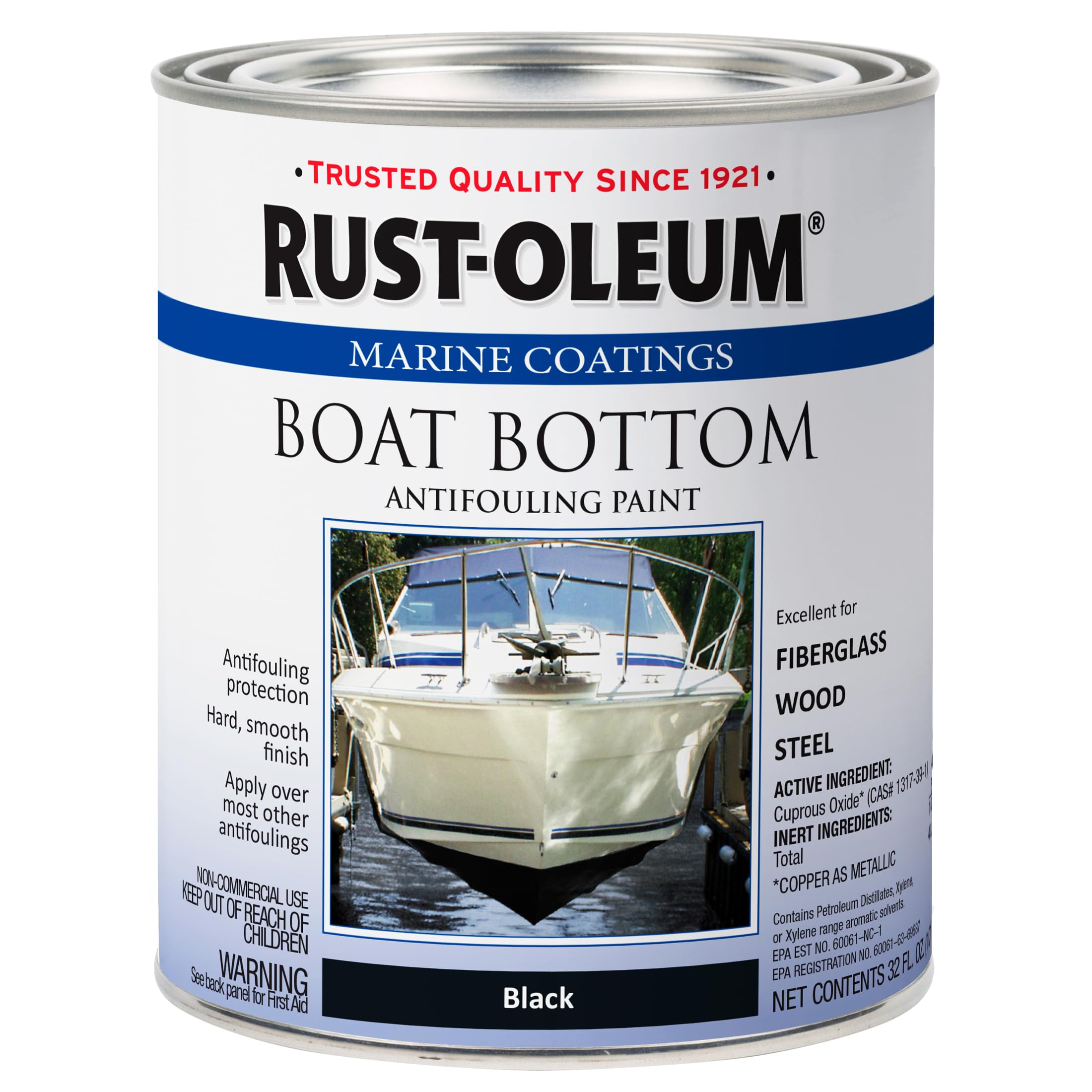
Rust-Oleum Antifouling Paint

88 /100
Kirk Score Excellent
Application & Prep
Brush/roller, no sanding on clean surface
Coverage per Quart
Up to 110 sq ft
Drying & Curing Time
Recoat 4 hrs; launch in 16 hrs
Durability & Resistance
Prevents barnacles, slime; flat black
Check Details on Amazon

Pros

  • Effective at preventing barnacles and marine growth below the waterline. — 67 mentions, 93% positive for quality; 29 mentions, 93% positive for effectiveness
  • Goes on smoothly with a roller or brush, with a quick 4-hour recoat time. — 35 mentions, 97% positive
  • Strong value compared to premium antifouling brands. — 24 mentions, 92% positive

Cons

  • Adhesion may weaken on flexible surfaces like inflatable dinghies, leading to peeling after hard use. — 16 mentions, 44% negative — peeling reported on dinghies

A copper-based formula keeps hulls clean below the waterline, applying smoothly with a roller or brush and recoating in just 4 hours — ready to launch in 16. Unlike topside paint, this flat black coating is designed solely for submerged surfaces and won't deliver a glossy, cosmetic finish.

This paint suits rigid fiberglass, wood, or steel hulls on sailboats and powerboats in high-fouling waters. Adhesion can weaken on inflatable dinghies or high-flex areas, where peeling may occur after hard use. If your boat sits on a hard, inflexible bottom, this antifouling offers strong seasonal protection.

Bottom line: For rigid-hulled sailboats and powerboats needing seasonal bottom protection without the premium price tag, this paint delivers. Skip it if you have a flexible inflatable dinghy or need an above-waterline finish.

Check Latest Price
#05

Small gelcoat repairs

Marine Coat One Gel Coat Kit

87 /100
Kirk Score Excellent
Application & Prep
Mixing, tinting, sanding; no instructions
Coverage per Quart
Drying & Curing Time
Cure variable; catalyst ratio critical
Durability & Resistance
UV/blister resistant; polishable
Check Details on Amazon

Pros

  • Gelcoat cures to a hard, sandable finish when mixed with correct catalyst ratio — 38 mentions, 95% positive
  • Effective for small scratch and chip repairs on fiberglass — 33 mentions, 82% positive

Cons

  • Included pigments can arrive dried out or in short supply, undermining color accuracy for tinting — 32 mentions, 56% negative — pigment quality and quantity complaints

The base ISO/NPG gelcoat cures hard when mixed at the right catalyst ratio, making it effective for small chip repairs. The kit includes six tinting pigments for color blending, but those pigments can arrive dried out or prove insufficient for an accurate match, and no printed instructions are included, so achieving a clean result requires prior experience with MEKP ratios and tinting. This suits DIYers who are comfortable experimenting and already have a digital scale for precision.

Bottom line: For experienced fiberglass repairers who own a scale and can source their own pigments if needed, this kit provides a durable gelcoat base for small touch-ups.

Check Latest Price

How to Choose

Paint Type: Topside, Gelcoat, or Antifouling

Topside paints—either oil-based enamels or polyurethanes—are formulated for surfaces above the waterline, resisting UV and weather but not constant immersion. Gelcoat is a thick polyester paste that chemically bonds with fiberglass for structural repairs and can be sanded and polished to match original surfaces.

Antifouling paint contains biocides like copper and is strictly for submerged hull sections; using it above the waterline leaves a dull, toxic film that won't protect against sun damage.

Durability and Resistance

Antifouling paints sacrifice cosmetic durability for biocide release; they are designed to ablate slowly, not to hold a shine. Polyurethane topside finishes offer multi-season scratch and UV resistance that keeps a gloss for years.

Gelcoat's durability depends entirely on accurate MEKP catalyst ratio. A slightly off mix can leave it soft and prone to chalking within a season, while a correctly cured gelcoat becomes as hard as the original fiberglass.

Application and Surface Prep

Topside paints need a surface sanded to at least 80–120 grit, wiped with solvent to remove waxy mold release, and primed if going over bare fiberglass. Skipping this leads to adhesion failure and large sheets peeling off.

Gelcoat adds a critical timer: after adding MEKP catalyst, you have only 8–12 minutes before the paste gels. That requires swift, confident application and immediate cleanup. Antifouling bottom paint is comparatively simple—brush or roll over a clean, dry hull without the same sanding mandate.

Drying and Curing Time

Topside polyurethanes often need 72 hours for a full cure, and high humidity or thick coats can extend tackiness to several days. Oil-based enamels require at least 24 hours between coats to avoid lifting the previous layer.

Gelcoat's cure is temperature-dependent: below 60°F, the chemical reaction stalls, leaving a soft surface that never hardens. Antifouling paints, in contrast, recoat in 4 hours and can be launched after just 16 hours, making them the quickest for pre-season prep.

Coverage and Coat Needs

Manufacturers' coverage estimates assume a smooth, sealed surface; rough or aged fiberglass can absorb more material and cut coverage by 25% or more. For topside paints and antifouling, two coats are the norm to achieve even color and protection. Gelcoat coverage is far lower: a quart is meant for localized cracks and gouges, not full recoats, because the material is sanded down after application.

Frequently Asked Questions