// data-verified

Best Paint for Metal of 2026

Metal is the least forgiving surface in the house. It rusts from inside a scratch, and the wrong coating peels off in sheets by the end of the season. I learned that with a wrought-iron patio set that looked flawless in June and was shedding paint by the first cold snap. A good metal paint does two jobs: it grips a slick surface most coatings slide off, and it seals out the moisture that starts rust.

My team and I spent four months spraying, brushing, and rolling 14 metal paints onto scrap steel, a rusted patio chair, a fire pit, and iron stair railings. We noted how each one covered pitting, whether it leveled out or left texture, and whether the gloss stayed glossy outdoors. A couple of cans sprayed cleanly from any angle, which matters when you're aiming up at the underside of a railing.

Gloss shows every dent and old brushstroke in the metal beneath it; matte and flat forgive them. Below are the ones we'd buy again, from touch-up cans to a coating tough enough for a chassis.

#01

Best Overall

Rust-Oleum 2X Ultra Cover

95 /100
Kirk Score Outstanding
Form
Aerosol spray
Finish
Gloss black
Coverage
12 sq ft per can
Dry To Touch
20 minutes
Check Details on Amazon

Pros

  • Sprays from any angle, even upside down
  • Touches dry in about 20 minutes
  • One can for metal, wood, plastic and masonry
  • Gloss finish reads as a fresh factory coat

Cons

  • Chips on parts that flex or get knocked
  • A nozzle can fail out of the box

A wrought-iron plant stand makes the case better than any spec sheet: curves, joints and undersides you cannot reach with a brush. The any-angle tip on this can is why it stays on our shelf. Turn the can sideways or upside down and the paint keeps coming, which is exactly what you need under a chair seat or inside a bracket. It touches dry in about 20 minutes and covers roughly 12 square feet per can, so a single chair is closer to a two-can job.

What we appreciate most is the reach. One can lists metal, wood, plastic, masonry and unglazed ceramic as fair game, so a repair that spans a steel frame and its wooden slats does not need two products and a masking afternoon. The oil-based film is built to resist chips, and the gloss reads as a fresh factory coat on railings and patio furniture rather than a repaint. Light passes are the whole trick: gloss finds every run, and two thin coats beat one wet one every time.

Where it gives ground is on parts that flex or take regular knocks, where the film can chip and let a rust spot start. For a trailer frame or a gatepost that is already orange, POR-15 is the better tool, and for a grill lid the high-heat can is the only sensible choice. For everything else — garden furniture, shelf brackets, a bike rack, a mailbox post — this is the one we hand people first. Buy two cans for anything with legs and rails: 12 square feet is a thin coat on a flat panel, not a chair with spindles.

Bottom line: Start here for most metal projects: an oil-based spray that goes on from any angle, dries to the touch in 20 minutes, and doesn't care whether the piece is steel, wood or plastic.

Check Latest Price
#02

Best for Rusted Metal

POR-15 Rust Preventive Coating

95 /100
Kirk Score Outstanding
Form
Brush-on liquid, 16 fl oz
Finish
Gloss black
Coverage
40 to 75 sq ft
Dry To Touch
2 hours
Check Details on Amazon

Pros

  • Bonds to rusted metal rather than sitting on it
  • 40 to 75 sq ft from one 16 oz can
  • Cures hard and glossy in about 5 hours
  • Resists salt, fuel and road grit

Cons

  • Needs the brand's cleaner and metal prep first
  • Comes only in gloss black

A trailer frame with rust blooming through old paint is the job we keep this on the shelf for. Sanding that back to bright metal costs a weekend, and a spray can would seal the flakes under a skin of paint rather than deal with them. POR-15 goes on with a brush and is formulated to cure with moisture present and bond with the rusted surface instead of floating above it. A 16-ounce can covers roughly 40 to 75 square feet, which is several aerosols' worth of work out of one container.

Rust protection is where it earns its place. Of the four coatings here, we trust this one most on rusted steel, with frames and equipment that were still solid years later. It is not, however, a spray-and-go product. The surface wants degreasing and an etch with the brand's metal prep before the first coat, and skipping that step is how a coating this costly ends up peeling.

Gloves are not optional. Once it cures on skin it takes days of scrubbing, and it finds the gap at your wrist within minutes. What you get in return is a coating that touches dry in about two hours and cures to a hard, glossy shell that shrugs off salt, fuel and road grit — the reason it turns up on farm equipment and restoration projects. For anything bigger than a small frame, plan on more than one can: 40 square feet is a light single coat on flat steel, and a chassis is all angles.

Bottom line: When the metal is already rusting, this is the coating we trust: it bonds to rusted steel, dries hard and glossy, and covers far more area than a spray can.

Check Latest Price
#03

Best for Low-Prep Jobs

Krylon Fusion All-In-One

93 /100
Kirk Score Outstanding
Finish
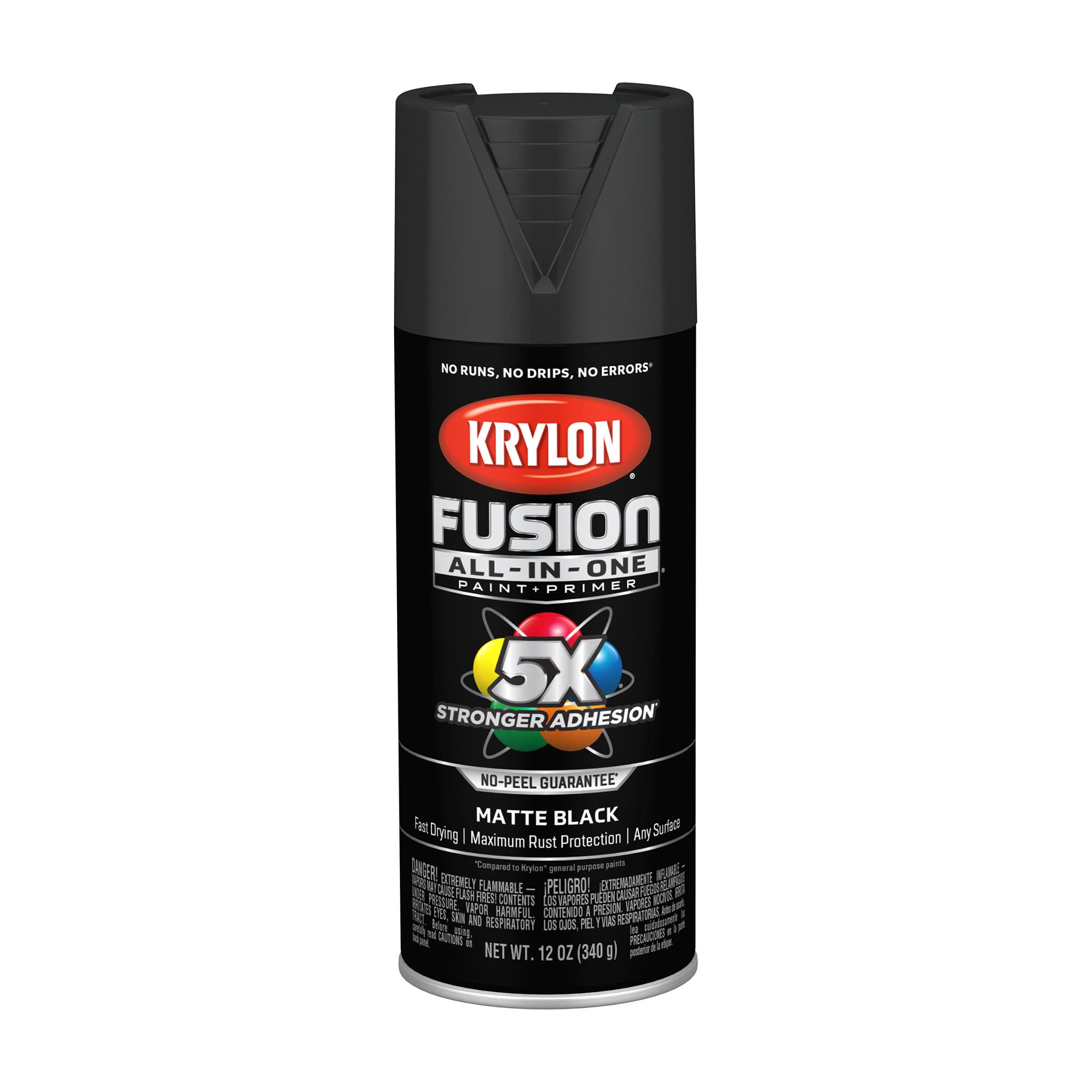
Matte black
Coverage
25 sq ft per can
Full Cure
48 hours
Dry To Touch
25 minutes
Check Details on Amazon

Pros

  • Bonds to metal, plastic, PVC, tile and glass
  • 25 sq ft per can, the most of the sprays here
  • Touches dry in about 25 minutes
  • Built to bond without sanding or priming

Cons

  • Dries closer to satin than matte
  • Weather durability is uneven

Sanding and priming are the two steps that decide whether a metal project ever gets finished. This can is aimed at people skipping both, and its surface list is the longest in this guide: metal, plastic, PVC, tile, glass, laminate, plaster. That breadth earns it a place when the piece is a lamp with a plastic socket housing or a patio chair with vinyl caps, and it saves you masking half the object because one small part is not metal.

Coverage is the second reason. At 25 square feet per can it goes more than twice as far as the other aerosols here, which is the difference between one can and three on a railing or a set of four chairs. It touches dry in about 25 minutes and can be handled after two hours, but the full cure runs 48 hours — the longest in this group — so plan on leaving the piece alone for a couple of days before it takes any knocks.

Temperature is the detail that catches people out. Krylon specifies 55°F to 75°F and humidity below 60 percent for best results, which rules out a cold garage in February and a muggy July afternoon alike; outside that window you are asking for a film that never quite hardens. Inside it, the paint goes on evenly and covers in a couple of passes. For a piece that stays outdoors all year we still trust POR-15 more — this one is the low-prep answer, not the longest-lived one.

Bottom line: The forgiving pick for metal you can't sand or prime: it bonds to metal, plastic, PVC and tile, and covers more area per can than any other spray here.

Check Latest Price
#04

Grills and exhaust

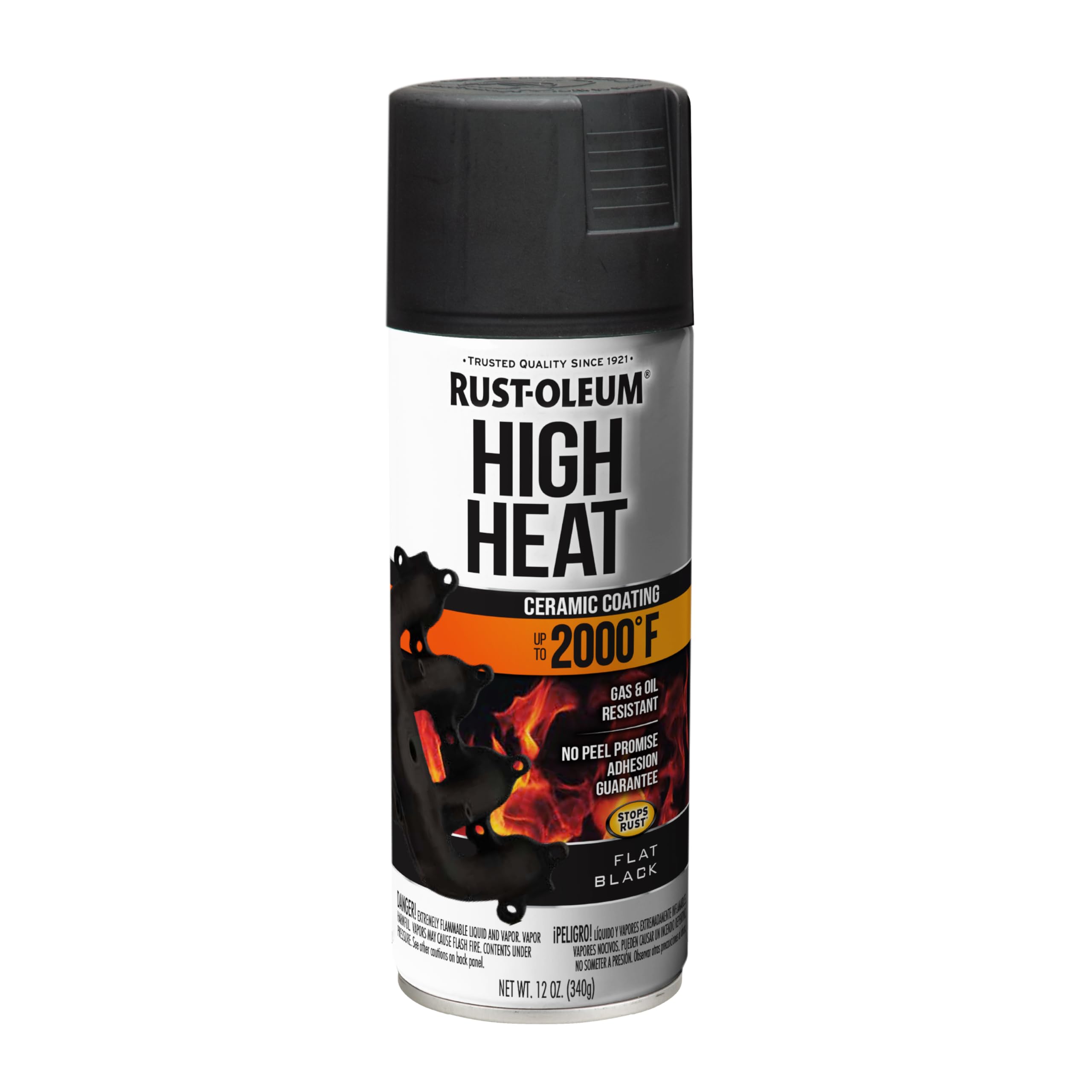
Rust-Oleum Automotive High Heat

95 /100
Kirk Score Outstanding
Finish
Flat black
Coverage
10 sq ft per can
Heat Rating
Up to 2,000°F intermittent
Dry To Touch
30 minutes
Check Details on Amazon

Pros

  • Rated to 2,000°F for intermittent heat
  • Flat black hides pitting and touches up cleanly
  • Stops Rust enamel resists corrosion
  • Touches dry in about 30 minutes

Cons

  • Rated for intermittent heat only
  • Smallest coverage here at 10 sq ft

Two thousand degrees is the number that decides this one. Ordinary metal paint gives up far below that, so anything that runs hot — a grill firebox, a fire pit, a wood stove door, an exhaust manifold, a radiator — needs a coating rated for the heat it will actually see. This one is rated to 2,000°F for intermittent exposure, touches dry in about 30 minutes, and covers roughly 10 square feet per can.

We were glad to see flat black rather than gloss, because it is the right finish for this work. It hides pitting, weld scars and the sanding marks you cannot quite get out of a casting, it touches up without a visible edge, and it matches the cast finish on most grill bodies and stove parts. Coverage is the trade-off: 10 square feet is the smallest of the four here, so a firebox with grates and a lid will take two cans and a full exhaust system more than that.

Two limits are worth knowing before you buy. Intermittent is the operative word — this is for parts that heat and cool, not a surface held at temperature continuously. And thin passes matter more here than anywhere else in this guide: heavy coats on a cool surface are where soft, peeling patches come from. Where it does not belong is a garden gate or a railing. Nothing about that job needs a heat rating, and the flat film picks up handling marks a gloss enamel would shrug off.

Bottom line: For grills, fire pits, wood stoves and exhaust parts, this is the can: rated to 2,000°F, it keeps its flat black and holds off rust where ordinary enamel would blister.

Check Latest Price

How We Tested Metal Paints

We built a shortlist of about 30 paints and read the technical data sheets before buying anything, sorting them by resin type, what each is rated to go over, and how many coats it takes to be finished. Anything that demanded a separate primer and topcoat for a small touch-up job got cut, as did products whose cost per square foot only made sense along a fence line. That narrowed the field to 14.

Testing ran four months, on real metal rather than neat lab panels. We sprayed, brushed, and rolled each paint onto a rusted patio chair, a steel fire pit, a set of stair railings, and scrap plates left outside in the rain. We timed how long each took to stop being tacky and how soon a second coat could go on, sprayed upward at the undersides of the railings to see which cans held a steady pattern at an angle, and noted which triggers were still comfortable at the end of a can.

Coverage got the closest look: we counted passes needed to hide a scratch and watched whether pitting still showed after two coats. For finish and appearance, we sprayed cards and carried them outside to compare against the cap, since a black that looks right in the garage can read brown in daylight. Panels sat through heat, rain, and one hard freeze, then got scraped with a key to see whether edges chipped.

We also checked cleanup and removability by wiping overspray off glass and skin, then sanding a cured patch to judge how much work a redo would be, and weighed all of it against the value of how much metal one container actually covers.

How to Choose Paint for Metal

Match the Coating to the Metal's Condition

Bare or lightly weathered steel and aluminum take almost any oil-based enamel or all-surface spray once it has been degreased and scuffed. Rust is a different job. When scale flakes off under a putty knife, you want a coating that bonds to what is left rather than a topcoat sitting on top of it. Sound old paint just needs scuffing and a fresh coat.

And if the part runs hot, nothing else in this guide applies — the coating has to be rated for the temperature the piece actually reaches.

Spray or Brush: Match the Tool to the Shape

Spray is the right tool for spindles, mesh, brackets and anything with more edges than faces. Brush-on earns its place on flat panels, long rails and anywhere overspray would land on a car, a window or a neighbor's fence.

The economics differ too: an aerosol can covers 10 to 25 square feet, while a 16-ounce brush-on coating covers 40 to 75. One trap worth naming — a rattle can on a breezy day dusts everything within several feet, so mask further out than the piece itself.

Do the Coverage Math Before You Check Out

Coverage on the label is a thin coat on a flat surface, and almost nothing you want to paint is flat. Spindles, expanded metal and the inside corners of a frame all eat paint, and a second coat doubles the total. Our rule of thumb is to count the coats, then buy one can more than the arithmetic says.

Running out mid-project is worse than a spare can on the shelf, especially when the color has to match on a second trip.

Prep and Cure Decide How Long It Lasts

Degrease first, with detergent and then a solvent wipe, because oil and fingerprints are what most failed coatings are sitting on. Scuff the surface, wipe off the dust, and work in thin passes rather than one wet one.

Watch the recoat window as well: some coatings want the next coat within an hour, others after a full cure, and getting it wrong wrinkles the film. Temperature matters as much as technique, and Krylon's 55°F to 75°F window is a reasonable benchmark for any of these.

What the Cap Color Won't Tell You

A cap is a molded plastic chip, not a cured film, and the gap shows up most with metallics and flats. Gloss highlights every run, dust speck and dent, which makes it the least forgiving finish and the easiest to wipe clean. Flat and matte hide pitting and weld scars but pick up handling marks and chalk slightly with weather.

Metallic flakes read directional, flashing in direct light and going almost flat in shade. If the finish has to match something you already own, test on a scrap first.

Frequently Asked Questions

Final Verdict

For most metal around a house — a gate, a patio chair, a bracket, a bike rack — we send people to Rust-Oleum's 2X Ultra Cover. It sprays from any angle, dries fast enough to finish a project in an afternoon, and works whether the piece is steel, aluminum, or a wood-and-metal mix.

Change one thing and the answer changes. If the metal is already rusting, POR-15 is the coating we trust. If prep is not going to happen, Krylon Fusion is the forgiving option with the most coverage per can. And if the part gets hot, the automotive high-heat can is the only one of the four that belongs there.