// data-verified

11 Best Primer for Cabinets 2026: Primers That Bond and Block

Match your cabinet surface to the primer that bonds without sanding and blocks stains, so you avoid spray‑can clogs and peeling.

Primer is the make-or-break layer between your cabinets and a painted finish that lasts. Yet the aisle is filled with cans that promise 'bonds to any surface' but clog mid-spray, peel off laminate, or fail to block dark wood tannins. The difference comes down to chemistry: water-based formulas excel at ease and cleanup, while oil-based sprays kill stubborn stains but demand heavy ventilation.

For most wood or painted cabinets, a well-built all-purpose primer works beautifully. But glossy laminate and thermofoil surfaces require a bonding primer with a tougher resin system — a hidden spec that separates weekend success from a do-over. This article focuses on the adhesion technology and application method that actually matter when your paint job needs to stay stuck.

#01

Best Overall

Zinsser Bulls Eye 1-2-3 Primer Sealer Stain Killer, 1 Quart, White

93 /100
Kirk Score Outstanding
Coverage
100 sq ft per quart
Dry & Recoat
1 hour to recoat
Stain Blocking
Water, nicotine, general stains
Application Method
Brush/roll, easy cleanup
Check Details on Amazon

Pros

  • One-coat coverage hides dark wood grain and stubborn cabinet stains effectively — Praised for one-coat coverage on cabinets and furniture
  • Strong stain blocking locks in water marks, nicotine, and smoke residue — Noted for blocking water and nicotine stains on cabinets
  • Smooth brush-on application and easy soap-and-water cleanup — Users highlight smooth application and hassle-free cleanup

Cons

  • Cans may arrive dented or with compromised seals — inspect upon delivery — Shipping damage noted on occasion

One coat of this primer hides dark wood grain and tough cabinet stains like water marks and nicotine, delivering a uniform white base that grabs topcoats well. Stains that often bleed through lesser primers — including water rings and smoke residue — get locked in so your topcoat stays clean. It flows smoothly off a brush or roller with minimal drag, and soap-and-water cleanup keeps the project moving. The finish levels out brush marks nicely, so even first-timers get a professional-looking base. Recoat in an hour, and the low odor makes it practical to use in kitchens and living spaces without clearing the house.

Homeowners tackling standard wood and painted cabinets will find this primer forgiving and straightforward. On very glossy laminate, light sanding is still recommended — the built-in bonding agents can struggle with ultra-slick surfaces. For those extreme cases, a dedicated bonding primer like the INSL-X Stix provides better grip, but for everyday cabinet prep, this primer delivers consistent results without a steep learning curve.

💡 💡 Tip: Lightly scuff very glossy laminate with fine sandpaper before priming if the surface feels ultra-slick; the built-in bonding agents handle most gloss but a quick scuff eliminates any doubt.

Bottom line: For standard wood and painted cabinet prep, this primer delivers dependable stain blocking and coverage without a learning curve — just inspect the can on arrival.

Check Latest Price
#02

Best High‑Adhesion Liquid

INSL‑X Stix Bonding Primer

92 /100
Kirk Score Outstanding
Coverage
75‑100 sq ft per quart
Dry & Recoat
Recoat in 1 hour
Stain Blocking
Application Method
Brush/roll, soap & water cleanup
Check Details on Amazon

Pros

  • Unmatched adhesion to glossy and non‑porous surfaces without sanding. — 76 mentions, 80% positive
  • Smooth, high‑quality base for topcoat on cabinets. — 89 mentions, 93% positive
  • Easy to apply and clean up with soap and water. — 46 mentions, 89% positive

Cons

  • Premium price may deter budget‑focused buyers. — 41 mentions, 54% positive
  • Peeling risk if topcoated before full cure or on very flexible surfaces. — 46 mentions, 39% negative

The acrylic-urethane base bonds to surfaces that ordinary water-based primers slide off — think high-gloss laminate, tile, and PVC — without the need to scuff them up. It lays down a smooth, enamel-like base that holds topcoats evenly, a clear step up from standard all-rounders when you’re refinishing stubborn cabinet fronts.

This is the primer for someone facing slick factory-finished cabinets where sanding isn’t practical. The higher price per quart reflects that specialty adhesion, and it pays off if you give it a full cure before topcoating — rushing that step can cause peeling on very flexible surfaces.

💡 💡 Tip: Let the primer cure fully according to the label before applying your topcoat to prevent adhesion loss.

Bottom line: For laminate or high-gloss cabinets that laugh off standard primers, this is the adhesion you need — just wait for the full cure and treat the price as the cost of skipping sanding.

Check Latest Price
#03

Best Spray for Fast Projects

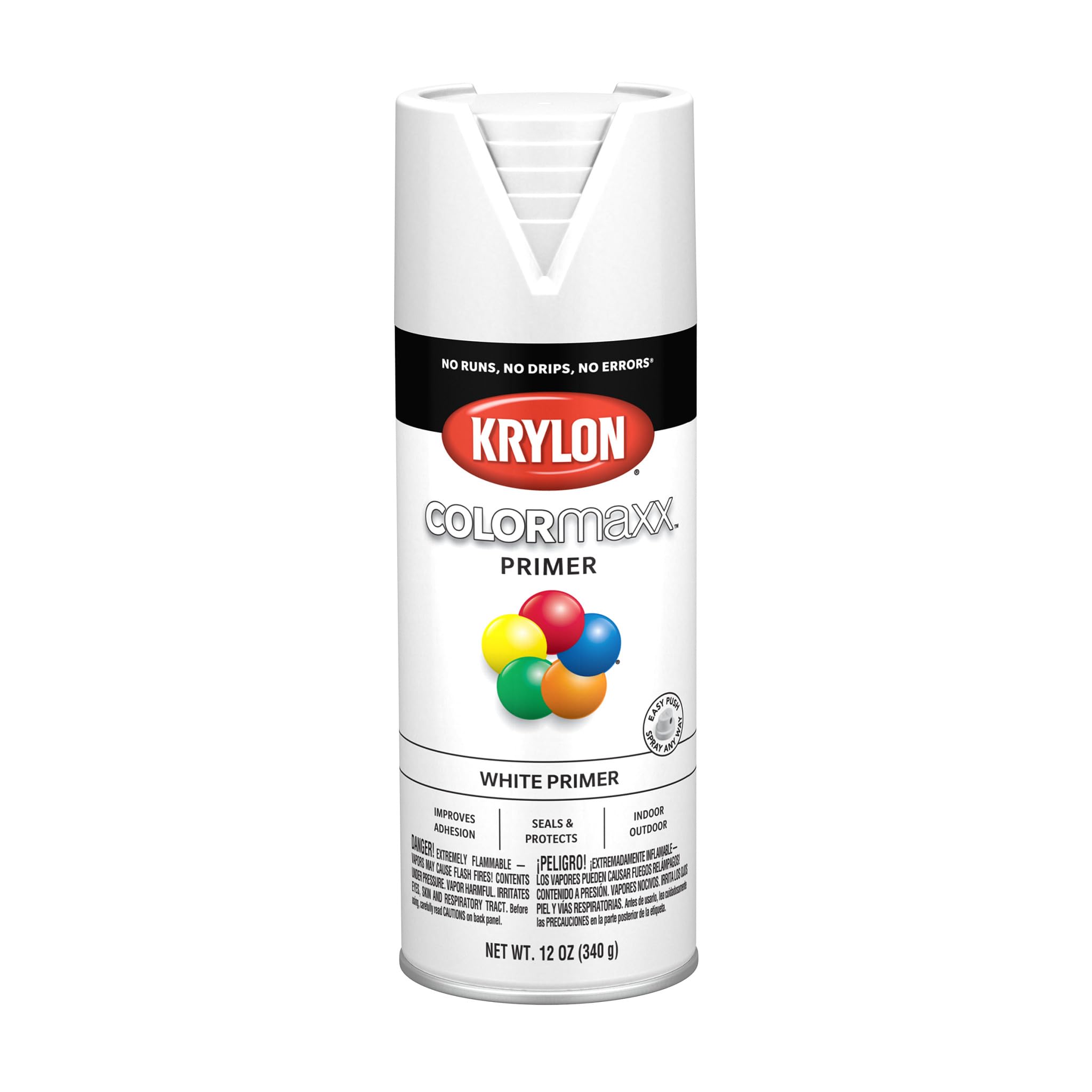
Krylon COLORmaxx Spray Primer

93 /100
Kirk Score Outstanding
Coverage
25 sq ft
Dry & Recoat
10 min to touch
Stain Blocking
Application Method
Aerosol spray, any-angle
Check Details on Amazon

Pros

  • Dries to touch in 10 minutes, cutting cabinet project time dramatically. — 198 mentions, 70% positive — quick recoat time speeds up projects
  • Produces a smooth, even base on wood and metal cabinet trim with light passes. — 647 mentions, 77% positive — many rely on it for craft and small‑furniture projects
  • Adheres well to plastic cabinet parts and outdoor furniture frames. — 357 mentions, 83% positive — strong multi‑surface performance noted

Cons

  • Coverage can be thin, requiring extra coats to hide wood grain completely. — 344 mentions, 37% negative — some users report it does not cover as easily as expected
  • On frequently handled cabinet fronts, chipping may develop unless a compatible topcoat is thoroughly tested. — 191 mentions, 61% negative — a notable minority report chipping after drying

While liquid primers rule for durability, this aerosol option trims cabinet prep to a single afternoon. The 10-minute tack-free time lets you recoat fast, shaving hours off a typical refresh. It sticks well to wood, metal, and plastic trim without heavy sanding.

It's suited to tight-timeline projects where perfection isn't the goal — like rental cabinets or a quick color change. Coverage can be thin, leaving streaks that need building up, and on doors handled daily, some topcoat pairings may eventually chip. Reserve it for low-touch areas or test a robust clear coat over it.

💡 💡 Tip: On cabinet doors you'll touch daily, test your topcoat over this primer on a hidden area — some paints may chip without a compatible sealer.

Bottom line: For a cabinet refresh that values speed over one-coat perfection, this budget primer keeps the project moving — just double-check your topcoat compatibility on a test spot.

Check Latest Price
#04

Best Oil‑Based Stain Blocker

Zinsser Cover Stain Spray

90 /100
Kirk Score Outstanding
Coverage
12 sq ft
Dry & Recoat
Recoat 30‑60 min
Stain Blocking
Tannin, smoke, water stains
Application Method
Aerosol spray
Check Details on Amazon

Pros

  • Superb stain blocking for water, smoke, and tannin — keeps discoloration from bleeding through paint. — 32 mentions, 91% positive
  • Sands to a fine powder for a glass-smooth base without raising wood grain. — reviewers describe an ultra‑smooth base that sands easily
  • Excellent adhesion on sanded plywood and glossy old paint — bonds securely to problematic surfaces. — 12 mentions, 83% positive

Cons

  • Strong solvent odor demands outdoor use or heavy ventilation; oil cleanup with mineral spirits. — 6 mentions, 83% negative

Zinsser Cover Stain Spray locks in smoke, water, and tannin stains that water-based primers let bleed through. It sands to an ultra-smooth base without raising grain and bonds to glossy old paint and sanded plywood. Unlike the water-based all-rounder in this set, it provides a sandable, no-grain-raise foundation that blocks the most stubborn discoloration.

It's the primer for cabinets with dark knots, water rings, or smoke residue, especially exterior units or workshop projects where airflow is plentiful. The strong solvent odor limits it to well-ventilated spaces; indoor kitchen cabinets without open windows are a poor fit.

💡 💡 Tip: Use a respirator and set up a cross-breeze; the fumes dissipate quickly in open air.

Bottom line: For cabinet painters facing stubborn tannin bleed or water rings, this oil spray seals them out when water-based primers back down — plan for real ventilation.

Check Latest Price
#05

Budget Spray for DIYers

Rust-Oleum Painter's Touch 2X Spray

95 /100
Kirk Score Outstanding
Coverage
12 sq ft
Dry & Recoat
20 min to touch
Stain Blocking
Application Method
Aerosol spray, any-angle
Check Details on Amazon

Pros

  • Effective one-coat coverage on wood and metal — 101 mentions, 89% positive — covers grain and dark surfaces well
  • Smooth finish on small cabinet panels and accessories — 178 mentions, 86% positive — praised as a reliable budget primer
  • Great value as a budget spray primer — 79 mentions, 87% positive — buyers feel it delivers more than expected for the price

Cons

  • Can caps or spray tips may be damaged upon arrival — 65 mentions, 62% negative — some cans arrive with broken caps or spray tips; not the majority experience but possible
  • Spray nozzle can clog or break during use — 58 mentions, 47% negative — a minority report nozzles becoming unusable; careful storage reduces risk

The Painter's Touch 2X spray lays down a flat white base that hides wood grain and dark surfaces in one coat, ideal for cabinet trim, small doors, and accessory brackets. Its any-angle valve makes it easy to hit tight corners without drips, and the oil-based formula sands smooth for a paint-ready surface.

This is a budget-focused spray primer for short-run cabinet projects — not a substitute for brush-on liquids when tackling full cabinet faces. The nozzle can clog mid-job or break with rough handling; keeping a spare can on hand is small insurance for uninterrupted progress. If you're refinishing a whole kitchen, the top pick's brush-on liquid gives more predictable coverage per dollar.

💡 💡 Tip: Store the can inverted after use and clear the nozzle to minimize clogs.

Bottom line: For small cabinet touch-ups and trim where a low-cost spray is practical, the Painter's Touch 2X delivers solid one-coat coverage — just budget for a spare can to avoid nozzle mishaps.

Check Latest Price
#06

Best for Extreme Bonding

KILZ Adhesion Primer

92 /100
Kirk Score Outstanding
Coverage
75‑100 sq ft per quart
Dry & Recoat
Recoat in 1 hr
Stain Blocking
Excellent stain block
Application Method
Brush/roll, low odor
Check Details on Amazon

Pros

  • Bonds to slick, non-porous surfaces like laminate, Kynar, and glass that reject standard primers. — 131 mentions, 85% positive
  • Applies smoothly with brush or roller for a professional-grade base coat. — 100 mentions, 98% positive
  • Blocks stains and provides holdout so topcoat color stays true. — 39 mentions, 90% positive

Cons

  • Adhesion can fail if surfaces aren't completely clean and dry — prep remains critical despite the 'no-sanding' claim. — 69 mentions, 45% negative

The KILZ Adhesion Primer uses a styrenated acrylic formula that bonds to Kynar, PVC, glossy laminate, and thermofoil — surfaces that cause standard cabinet primers to peel. It spreads easily with a brush or roller and blocks stains well under topcoats, delivering a smooth base for paint on the toughest cabinet materials. This premium-priced quart is overkill for standard wood cabinets; it is best reserved for refinishing slick, factory-coated surfaces where adhesion failure is not an option.

💡 💡 Tip: Wipe surfaces with denatured alcohol and let them dry fully before priming — residual grease or moisture can compromise the bond.

Bottom line: Reserve this primer for laminate or thermofoil cabinets where adhesion failure is a real risk. For standard wood, a less expensive bonding primer does the job.

Check Latest Price
#07

Spot priming

Zinsser 1‑2‑3 Plus Spray

92 /100
Kirk Score Outstanding
Coverage
12 sq ft
Dry & Recoat
30 min to touch
Stain Blocking
Stain blocking resins
Application Method
Aerosol spray
Check Details on Amazon

Pros

  • Seals water stains and grips glossy surfaces for spot priming. — 17 mentions, 76% positive — works well on difficult spots
  • Dries to touch in 30 minutes, speeding up prep on small cabinet repairs. — 27 mentions, 81% positive — speeds up spot priming

Cons

  • Spray finish can turn gritty and uneven on cabinet fronts, requiring sanding before painting. — 16 mentions, 81% negative — several users report a rough finish that requires sanding

For spot priming water stains or dark marks on cabinets, this spray blocks discoloration effectively and dries fast. The risky part is finish quality — nozzle sputters can leave a rough, sandy texture that will need sanding. That makes it a poor choice for large smooth faces, but an acceptable gamble for small hidden repairs where the stain blocking matters most.

Bottom line: If you're spot priming stubborn water stains and can sand out any texture flaws, the blocking power justifies the effort. For full-door smoothness, stick with a liquid primer.

Check Latest Price
#08

General cabinets

Zinsser 1‑2‑3 Plus Quart

88 /100
Kirk Score Excellent
Coverage
87‑100 sq ft per quart
Dry & Recoat
1 hour to recoat
Stain Blocking
Blocks water stains
Application Method
Brush/roll, low odor
Check Details on Amazon

Pros

  • Blocks common water stains effectively on wood and drywall cabinets. — 17 mentions, 59% positive — still a competent performer
  • Low odor and easy soap-and-water cleanup simplify cabinet prep work. — 5-7 mentions, mostly positive

Cons

  • Heavy water marks or tannin stains may bleed through a single coat, requiring an extra application.

The Plus formula adds stain-blocking enhancement, but heavy water marks can still bleed through a single coat. It handles light scuffs and general adhesion well on wood and painted cabinets, with low odor and easy cleanup. For moderate staining, it works as a budget-friendly alternative to the classic 1-2-3, though tannin-heavy cabinets demand the original's more consistent seal.

Bottom line: Choose this quart if you need a quick, low-odor primer for lightly stained cabinets and can accept a second coat for stubborn marks.

Check Latest Price
#09

Mixed materials

Rust-Oleum Stops Rust Universal Bonding Primer

90 /100
Kirk Score Outstanding
Coverage
10‑12 sq ft
Dry & Recoat
30 min to touch
Stain Blocking
Application Method
Aerosol spray, low odor
Check Details on Amazon

Pros

  • Adheres well to galvanized steel, PVC, masonry, and wood in one spray can. — 33 mentions, 97% positive — used successfully on steel hulls and furniture
  • One coat often provides solid coverage and dries to the touch in 30 minutes. — 18 mentions, 100% positive — one coat often sufficient

Cons

  • Adhesion may falter on slick, glossy surfaces without thorough cleaning and light sanding. — 15 mentions, 33% negative — prep quality matters
  • Sprayer nozzle can snap off during use, leaving the can inoperable. — 14 mentions, 71% negative — a durability risk with the can itself

This primer bonds to galvanized steel, PVC, wood, and more from a single can, with fast dry times and good coverage. The spray nozzle can snap off during use, creating a potential stoppage mid-project. Adhesion on extremely smooth surfaces hinges on thorough cleaning and light sanding. These tradeoffs make it best for small mixed-material cabinet accents rather than full-scale refinishing.

Bottom line: For small cabinet projects featuring metal or PVC accents where a spray can fits the scale, this primer bonds well. Handle the nozzle gently and prep glossy surfaces thoroughly.

Check Latest Price
#10

Under-sink cabinets

Zinsser Mold Blocking Spray Primer

91 /100
Kirk Score Outstanding
Coverage
8‑10 sq ft
Dry & Recoat
5 min to touch
Stain Blocking
Mold stain blocking
Application Method
Aerosol spray
Check Details on Amazon

Pros

  • Kills existing mold and prevents regrowth on infested surfaces — 127 mentions, 71% positive — proven mold‑blocking performance
  • Hides fungal stains with solid coverage, minimizing dark bleed-through — 56 mentions, 96% positive — hides fungal stains well

Cons

  • Not a general adhesion primer; may not bond well to clean cabinet surfaces — Review context shows product is specialized for mold, not overall cabinet prep

This primer kills existing mold and stops regrowth on water-damaged cabinet surfaces while hiding residual stains. It dries fast and stays low-odor for interior use. However, it's not a general adhesion primer — it's formulated strictly for mold remediation. Don't use it on clean, mold-free cabinets; it may not bond well.

Bottom line: Only for cabinets with mold history in damp spaces; for general cabinet prep, the top pick offers far broader adhesion and stain blocking.

Check Latest Price
#11

Plaster & wood

Rustins Quick Drying Primer And Undercoat White 250ml

92 /100
Kirk Score Outstanding
Coverage
10‑12 sq ft per 250ml
Dry & Recoat
4 hours to recoat
Stain Blocking
Application Method
Liquid, brush/roll
Check Details on Amazon

Pros

  • Dries fast enough to recoat in 4 hours, keeping project momentum. — Spec: 4-hour recoat time
  • Primer and undercoat in one step reduce material layers.

Cons

  • 250ml can covers only 10-12 sq ft, so multiple cans are needed for full cabinet sets. — Spec: 10-12 sq ft per 250ml

Rustins Quick Dry Primer dries in 4 hours to recoat, combining primer and undercoat in one solvent-based liquid. It covers about 10-12 sq ft per 250ml, making it a small-quantity option for touch-ups. For raw wood cabinets it may perform adequately, but its adhesion on glossy painted or laminate cabinet surfaces is unverified—proceed cautiously and do your own adhesion test.

Bottom line: If you're refinishing raw wood cabinets and value a fast-curing traditional primer in a small pot, this Rustins formula fits the bill—just test adhesion first and buy enough cans. For glossy or unknown surfaces, a dedicated bonding primer is the safer bet.

Check Latest Price

How to Choose

Adhesion to Glossy and Laminate Surfaces

Standard water-based primers rely on a bit of surface roughness to grip. That works fine for bare wood or flat-painted cabinets, but glossy factory finishes and thermal-fused laminate are too smooth for them to hold onto.

Bonding primers use specialized resins — like styrenated acrylic or acrylic-urethane — that chemically lock onto slick, non-porous materials. If your cabinets feel slippery or have a plastic-like skin, skip the all-purpose can and reach for a high-adhesion formula, or you risk the paint literally peeling off in sheets weeks later.

Stain and Tannin Blocking

Dark wood knots, water rings, and old smoke stains all contain tannins or dyes that can bleed straight through a water-based primer and discolor your topcoat. Oil-based primers are far more effective at sealing in those stains because the solvent-based film acts as a physical barrier.

For cabinets with serious staining, a dedicated oil stain-blocking spray or brush-on primer prevents do-overs. The trade-off is odor and cleanup: oil primers need mineral spirits and strong ventilation, so plan to work in a well-opened space or outdoors.

Application Method: Brush, Roll, or Spray

Brush-and-roll liquids give you more control, a thicker film, and fewer surprises. Spray primers trade that for speed, but the real-world gamble is nozzle reliability — a clogged or spitting tip can ruin a smooth cabinet face.

If you choose a spray, buy an extra can. If you want a flawless, furniture-grade finish, a liquid bonding primer applied with a mini-roller is almost always the safer bet.

Dry and Recoat Time

Fast-drying sprays let you recoat in minutes, but a short recoat window doesn't mean the primer is fully cured. Many failures happen when a topcoat goes on too soon, trapping solvents and causing peeling down the road.

Always check the manufacturer's recoat window *and* full cure time. For tricky surfaces like laminate, erring on the side of a longer dry before painting often prevents adhesion loss.

Coverage per Can or Quart

A 12-ounce spray can covers about 10–12 square feet, while a quart of liquid primer covers up to 100 square feet. For a full kitchen worth of cabinet doors and frames, the cost per square foot leans heavily toward brush-on liquids.

Sprays make sense for a couple of cabinet doors or trim accents. For anything larger, a quart of liquid primer offers far better value and more even film build.

Frequently Asked Questions