// data-verified

Best Dryer Vent Cleaning Kits of 2026

The first sign is usually towels that come out damp at the corners. Then the laundry room feels like a sauna, cycles stretch to two, and the lint screen fills faster than it used to. Somewhere in the duct between the dryer and the outside wall, lint has packed itself into a blanket, and that blanket is what dryer fires feed on. A cleaning kit clears it in an afternoon for less than a service call, as long as it reaches the clog and fits your vacuum.

I've pulled my dryer away from the wall for years, first with a shop vac and a taped-together wand, then with real kits, and the good ones turn a miserable chore into a twenty-minute one. We spent four months putting 14 kits through actual vents — short vacuum-hose attachments, long rod sets, drill-driven brushes — and reach and fit separated the keepers from the junk. The footage on the box counts the whole rod, and every elbow eats into it, so measure your run first. Below are the kits that earned their place.

#01

Best Overall

Gardus RLE202 LintEater

93 /100
Kirk Score Outstanding
Drive
Drill-driven rotary auger
Reach
12 ft
Weight
2 lb
Included
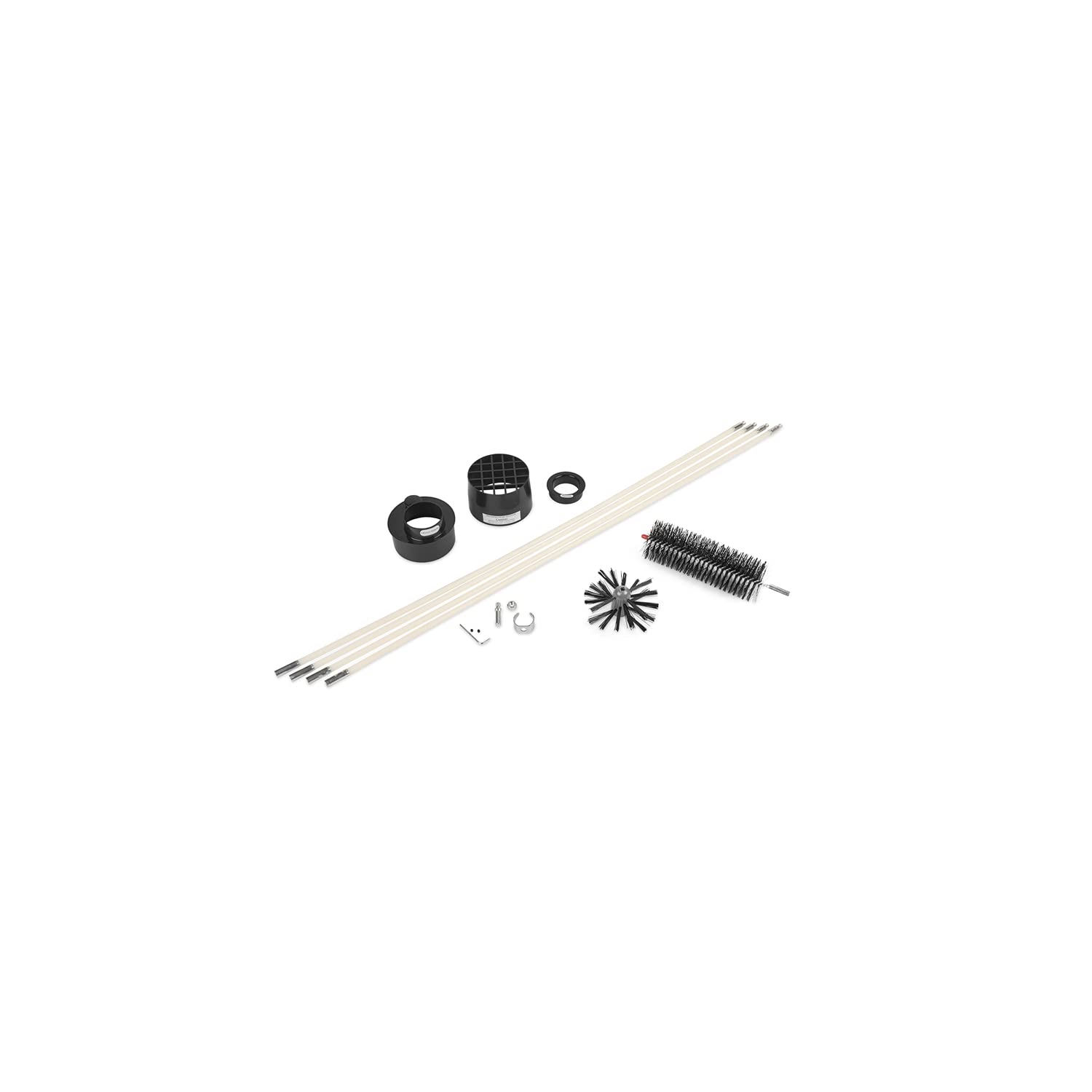
4 rods, auger brush, lint trap brush, 2 adapters
Check Details on Amazon

Pros

  • Rotary auger scrubs lint off the duct wall
  • Sections stay tight when drilled clockwise
  • Vacuum and dryer adapters plus lint trap brush included
  • Holds together better than the cheaper rod kits

Cons

  • Reach stops at 12 feet

Four screw-together rods, a self-feeding four-inch auger brush and a drill chuck are the whole idea here, and it's why this is the kit we recommend to most people. The rotating brush pulls itself along the duct instead of being shoved, so it scrubs packed lint off the pipe walls rather than skating over the top of it. Twelve feet of rod, a blockage removal tool, a vacuum adapter, a dryer adapter and a 2½-inch lint trap brush come in the box.

What earns it the top spot is how little goes wrong. Spin the drill clockwise as the instructions direct and the sections tighten instead of unscrewing themselves five feet inside the wall — the failure that turns a twenty-minute job into an evening with a coat hanger. Against the cheaper rod kits here, this is the one we trust to come back out with the brush still attached.

The adapters are more useful than they look. The dryer adapter lets the dryer's own air push loosened lint toward the outside cap while you work, and the vacuum adapter does the same job with a shop vac behind it. The lint trap brush gets into the slot under the screen, which is where a good share of the lint that ends up in the duct starts.

Where it asks for patience is at a hard elbow. The rods will take a 90-degree turn, but feed them slowly and let the brush cut; force the rod and it flexes, and the brush stops doing the work. For a straight shot out the wall, or a run with one or two gentle bends, the rest of the kit holds up.

Bottom line: The one we hand to anyone with a duct under a dozen feet: a drill-driven auger, adapters and a lint trap brush in one box, built to come back out in one piece.

Check Latest Price
#02

Best Budget

Holikme 2-Pack Vacuum Attachment

89 /100
Kirk Score Excellent
Type
Hose attachment and lint brush
Pieces
2
Weight
10.6 oz
Hose Fit
Most vacuums, not Dyson or cordless
Check Details on Amazon

Pros

  • Handles the lint trap and the reachable gap
  • Long brush also cleans fridge coils
  • Slips onto a standard hose in seconds

Cons

  • Shrieks on high suction
  • Will not fit Dyson or cordless vacuums

Narrow the airflow on a strong vacuum and a tip like this one sings. With a shop vac behind it, the Holikme hose is closer to a shriek, and that's the one thing we flag before anyone buys it. Ear protection isn't an overreaction here.

Set the noise aside and there's a lot of tool for very little money. The hose slips over a standard hose end in seconds and reaches the lint trap, the slot beneath it, and the gap behind the dryer — the three places where most of the lint that reaches the duct begins. The long wooden-handled brush handles the rest: the trap, the refrigerator coils, the fins at the back.

Two caveats come attached. Holikme says plainly that the adapter doesn't fit Dyson or cordless vacuums, and the connector is a friction joint, so hoses at the far ends of the size range may need tape to hold. For the maintenance most people actually do between duct cleanings, that's a fair trade for a two-piece set that asks nothing of you.

Bottom line: Buy this pair for the lint trap and the first foot behind the dryer, not for the duct itself — quick, inexpensive, and loud on a strong vacuum.

Check Latest Price
#03

Best for Odd-Sized Hoses

PetOde 2-Piece Vacuum Hose Kit

91 /100
Kirk Score Outstanding
Weight
8.82 oz
Connector
Stretch silicone cuff
Hose Length
31.5 in
Outside Diameter
0.73 in
Check Details on Amazon

Pros

  • Stretchy cuff spans more hose sizes
  • Longer, narrower nose reaches tight gaps
  • Includes a long wooden-handled brush

Cons

  • Fit is not guaranteed on every hose

Every vacuum hose end is a slightly different size, and the rigid collars on most of these adapters only fit the ones they were molded for. PetOde uses a stretchy silicone cuff instead, which grips a wider spread of hose ends before you reach for tape — and of the two-piece vacuum attachments here, it's the one we point to when someone's hose doesn't match anything in the cupboard.

The hose runs 31.5 inches, longer than the stubby adapter that came with your vacuum, and it measures 0.73 inches across the outside, which is what lets it drop into the lint trap slot and the gap under the drum. PetOde shapes the bore to cut the whistling these attachments are known for; how quiet it stays depends on how hard your vacuum pulls. Fit remains the real risk, because a stretch cuff is not a guarantee, and a very large or very small hose end will still want tape. The wooden-handled brush is the surprise of the pair — the trap, the coils and the gap beside the washer all fall to it.

Bottom line: The one to try when your hose end fits nothing else — a stretch cuff, a longer nose, and a brush, for the trap and the first few feet.

Check Latest Price
#04

Best for Long Ducts

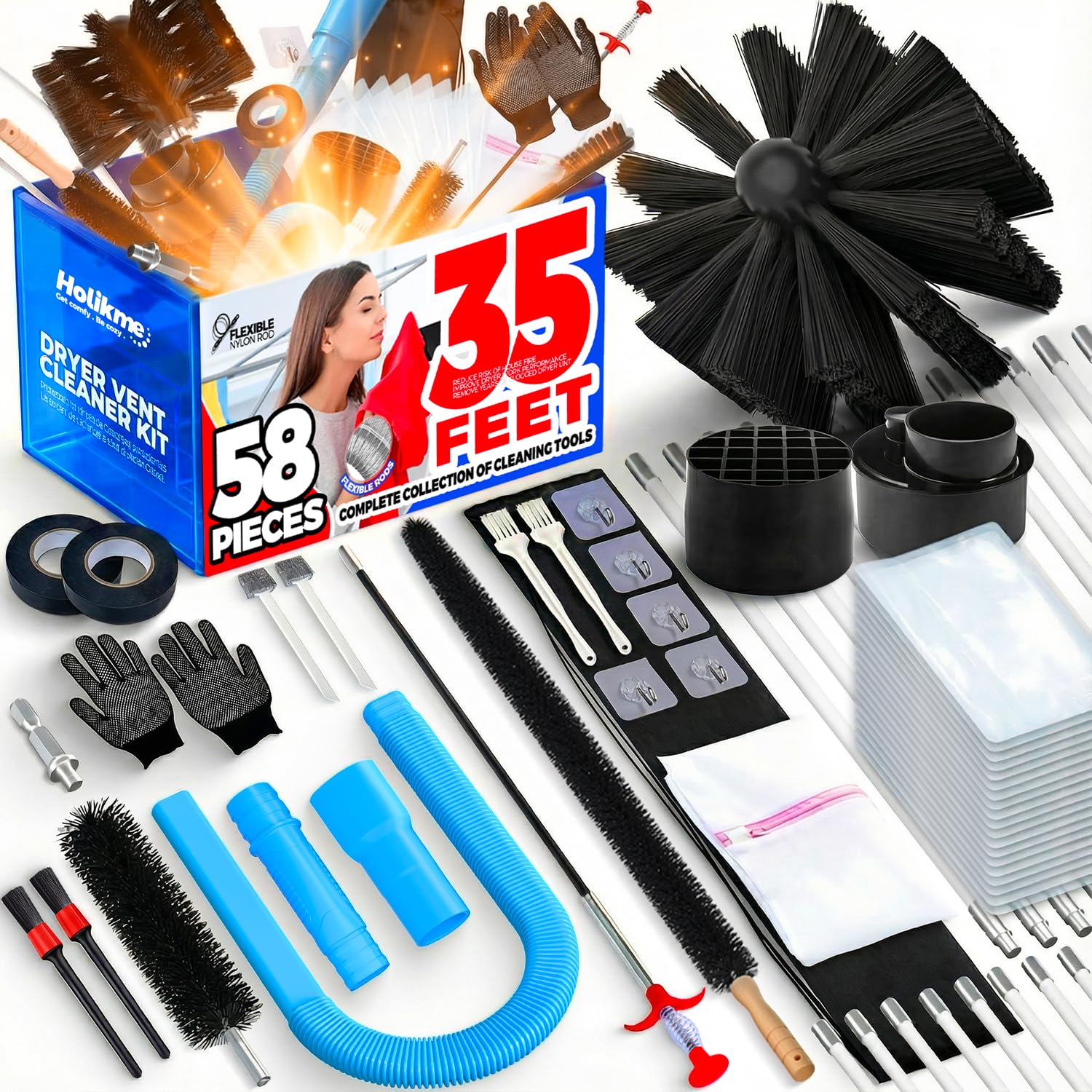
Holikme 35-Foot Dryer Vent Kit

91 /100
Kirk Score Outstanding
Drive
Drill or hand
Reach
35 ft
Weight
3.3 lb
Vacuum Hose
3.5 ft
Check Details on Amazon

Pros

  • 35 feet covers basement and attic runs
  • Includes a 3.5-foot vacuum hose attachment
  • Works with a drill or by hand

Cons

  • Rods fight hard 90-degree elbows

Thirty-five feet against the Gardus's twelve is the entire argument for this kit. If the duct leaves the back of the dryer, crosses a basement and exits through a wall on the far side, the extra rod isn't a luxury — it's the difference between cleaning the run and cleaning the first third of it.

You screw sections together as you feed, and the kit adds a 3.5-foot vacuum hose attachment so you can pull out what the brush loosens, plus a lint trap brush and a drill attachment. Tape the joints before the rod goes in; two minutes with electrical tape is the cheapest insurance in this whole job, and it also stops the sections from welding themselves together for next year.

The joints are also where it gives ground. Screw-together rods can work loose under drill torque, and a brush head that lets go inside a duct is the failure that turns a chore into a service call. Feed it slowly, keep the drill on its lowest setting, and stop pushing the moment a section stops turning freely. We rank it below the Gardus for exactly that reason, and above everything else here for reach.

Bottom line: The long-run pick: 35 feet of rod and a vacuum hose attachment, as long as you tape the joints and feed it in slowly.

Check Latest Price
#05

Best for Very Long Runs

Sealegend 60-Foot Quick-Snap Kit

90 /100
Kirk Score Outstanding
Reach
60 ft
Weight
4.59 lb
Included
44 rods, 2 brush heads, drill bit, collection bag
Connection
Quick-snap rods
Check Details on Amazon

Pros

  • Snap joints hold in either drill direction
  • Reaches 60 feet with 44 rods
  • Collection bag contains the debris

Cons

  • Snap joints can pop loose mid-run

Sixty feet is more duct than nearly any house contains, and it's worth saying plainly: the length isn't the interesting part of this kit. The connections are.

Sealegend's rods snap together with a locking button instead of screwing, and that changes the job. You're not threading a rod back on at arm's length every three feet, and the joints don't tighten or loosen with the drill's direction — spin it either way and the sections stay put. A disassembly helper comes in the box for taking the stack apart at the end, which is the moment screw-together kits usually test your patience.

Forty-four rods, two brush heads, a drill bit and a collection bag come with it, and the bag is the piece people underestimate: a rotary brush throws a lot of lint, and catching it at the vent beats vacuuming the laundry room afterward. The stack weighs about 4.6 pounds, so work in stages rather than feeding all sixty feet in one go. This is the kit we reach for when the run is long and awkward and the job needs to finish in one pass.

Bottom line: Worth the premium for a long, awkward run: snap joints that hold in either drill direction, 60 feet of rod, and a bag to catch the mess.

Check Latest Price
#06

Shorter straight ducts

SP Home Goods 20-Foot Vent Kit

89 /100
Kirk Score Excellent
Rods
Flexible nylon
Drive
Drill-powered, clockwise only
Reach
20 ft
Weight
1.34 lb
Check Details on Amazon

Pros

  • 20 feet covers a typical short run
  • Light and simple to assemble
  • Drill-driven with clear direction markings

Cons

  • Stalls at hard 90-degree bends

Twenty feet of rod without the outlay of the long-run kits is the pitch, and it's the calculation we make for most houses: residential runs are usually shorter than the internet suggests, and a kit that matches your duct beats one with forty feet you'll never feed. Out of the box it's simple — screw the nylon sections together, chuck the end in a drill, and turn it clockwise only, which is printed on the tool for good reason.

The rods are the plainest in this group. They'll cross a gentle offset and a soft bend, but a hard 90 at the top of a riser is where they stall, and a rod that kinks stays kinked. If your run is short and fairly straight, that's a fair trade for a lighter, simpler kit; if it isn't, the better joints on the Gardus or the extra length on the Holikme are worth the step up.

Bottom line: A sensible buy for a short, fairly straight duct — 20 feet of drill-driven rod for less than the long-run kits, with joints that won't forgive a hard elbow.

Check Latest Price
#07

Cheap 30-foot reach

Bluesea 30-Foot Vent Kit

89 /100
Kirk Score Excellent
Rods
22 flexible nylon
Reach
30 ft
Weight
2.9 lb
Included
Brush head, lint trap brush, drill attachment, blockage tool
Check Details on Amazon

Pros

  • 30 feet for the lowest outlay among rod kits
  • Adapters for dryer air, shop vac or blower
  • Complete set with trap brush and blockage tool

Cons

  • Brush can detach inside the duct

Thirty feet of reach for the least money in this group is the honest headline, and on a simple run the Bluesea kit does what it promises: the nylon rods feed into a 4-inch pipe, the brush head drags lint off the walls, and the adapters let you push air from the dryer, a shop vac or a blower through afterward.

The set is complete in the way that matters — a multi-use brush head, a lint trap brush, a metal drill attachment and a blockage removal tool, plus 22 rod sections that screw together to the full 30 feet. Assembly is quick and the parts are light enough to hold overhead if your duct runs up a wall.

The rods are where the money went. They twist under load, and a joint that jams is a joint you're fighting instead of cleaning with. Low drill speed, one section added at a time, and a hand on the rod so you feel the moment it stops turning freely — that's how you keep this one out of trouble.

Our read: this is a second kit, not a first one. If you clean a short vent once a year and want to spend as little as possible, it will do the job. If the duct is long, has tight turns, or you plan to keep at this every spring, the Gardus and the Sealegend are the ones that hold up to repeat use.

Bottom line: A low-cost way to reach 30 feet, and fine for a short, gentle run — go slowly, and don't force it through an elbow.

Check Latest Price

How We Tested Dryer Vent Cleaning Kits

We started by gathering kits in three formats — vacuum-hose attachments, flexible rods you feed by hand, and rod sets that chuck into a drill — across a wide spread of prices and rated reaches, then cut anything that didn't state its adapter size or that came with rods in one fixed length only. Fourteen kits made it through, and we ran them for four months in our own laundry rooms, including a second-floor setup with two tight elbows and a long run to an exterior wall.

Every kit got the same first job: a full clean of a duct we'd deliberately let go for a season. We timed the assembly, counted how many rod sections it took to span the run, and noted where a brush bogged down or a rod kinked at a corner. We checked each vacuum adapter against a standard shop vac hose and a household canister hose, marking whether it seated firmly or needed tape. Then we listened — a loose connection whistles — and watched the lint trap over the next few loads.

The proof came afterward: whether towels dried in a single cycle again, and how much lint we scraped off the screen in the week that followed. We also handled every rod and brush repeatedly to see what loosened, frayed, or snapped, and worked the quick-snap and twist connections until we knew which ones we'd trust overhead. Length was weighed against real reach, and price against the parts we'd genuinely use.

How to Choose a Dryer Vent Cleaning Kit

Measure the run before you pick a length

Everything follows from how far the lint is. A dryer backed against an outside wall may have three feet of duct; a laundry room in the middle of a basement can push 25 feet through a riser and two elbows. Kits here run from 12 feet of rod to 60, and length you never feed is just weight in the box.

Estimate the run, add a few feet for each elbow, and buy the kit that covers it with a section to spare. On a six-foot run, a 60-foot kit is awkward rather than thorough; on a 25-foot run, a 12-foot kit cleans the first third and leaves the rest.

A vacuum attachment is not a duct cleaner

The two-piece sets are vacuum adapters: a narrow hose and a long brush. They're excellent at the lint trap, the slot beneath it and the first foot or two behind the dryer, and they ask nothing of you — no drill, no assembly, no rods to feed.

What they can't do is scrub the walls of a 20-foot pipe, because suction alone won't lift lint that has packed and baked onto metal. That takes a rotating brush on rods. Buy the attachment for the maintenance between cleanings; buy the rod kit when the duct itself is the problem.

Joints, elbows and the thing that goes wrong

Screw-together rods are both the standard and the weak point. Spin them the wrong way, or run the drill hard, and the sections back apart inside the duct. Turn clockwise as the kits specify, tape the joints if tape comes in the box, and keep the drill on its slowest setting.

Hard 90-degree elbows are the second limit. A flexible rod takes a gentle sweep but fights a tight turn, and forcing one is how brush heads get left behind in the pipe. If your run has two or more sharp elbows, pay for the better-built kit rather than the longest one.

Fit, suction and the whistle nobody warns you about

Two-piece adapters are push-fit or stretch-fit, and neither is universal. Holikme states outright that its adapter won't fit Dyson or cordless vacuums, and the slim wand-style hose is the usual mismatch. Check your hose end before you plan the job, and tape a loose joint instead of fighting it.

Then there's the sound. A narrow tip on a strong vacuum whistles, and behind a shop vac it shrieks — that's airflow through a small opening, not a defect, and it's why some people do this job with ear protection within reach.

Frequently Asked Questions

Final Verdict

The Gardus LintEater is the kit we recommend first, and the reason is simple: it scrubs the duct, it comes with the adapters and lint trap brush to finish the job, and it stays in one piece while you use it. Its limit is 12 feet of reach, so measure the run before you order.

If the duct is longer than that, the Holikme 35-foot kit gets you to the far end for less money, and the Sealegend's snap joints earn their premium on a long, awkward run with tight turns.