// data-verified

7 Best Exterior Wood Filler 2026: Paint-Ready vs. Stain-Ready Picks

Find the right exterior wood filler for your outdoor repair — whether painting over it, matching stain, or enduring coastal weather.

Wood fillers labeled 'exterior' and 'stainable' often create more frustration than solid repairs. The stain either sits on top or leaves visible patches, and some 'water-resistant' fillers crack after one wet season. If you’ve ever sanded off a failed patch and started over, you know how much time this gamble costs.

This guide cuts through the marketing haze: it groups the best options by how you really finish your project — painting, staining, or facing severe coastal weather. You’ll find picks that cure fast for painted trim, professional epoxies that survive salt and sun, and the one small-tube favorite that actually signals when it’s dry.

Every recommendation here earns its spot because it does what its label promises: bonds to rotten wood, sands smooth, and holds up where it matters — outside your house, not in a lab.

#01

Best Overall

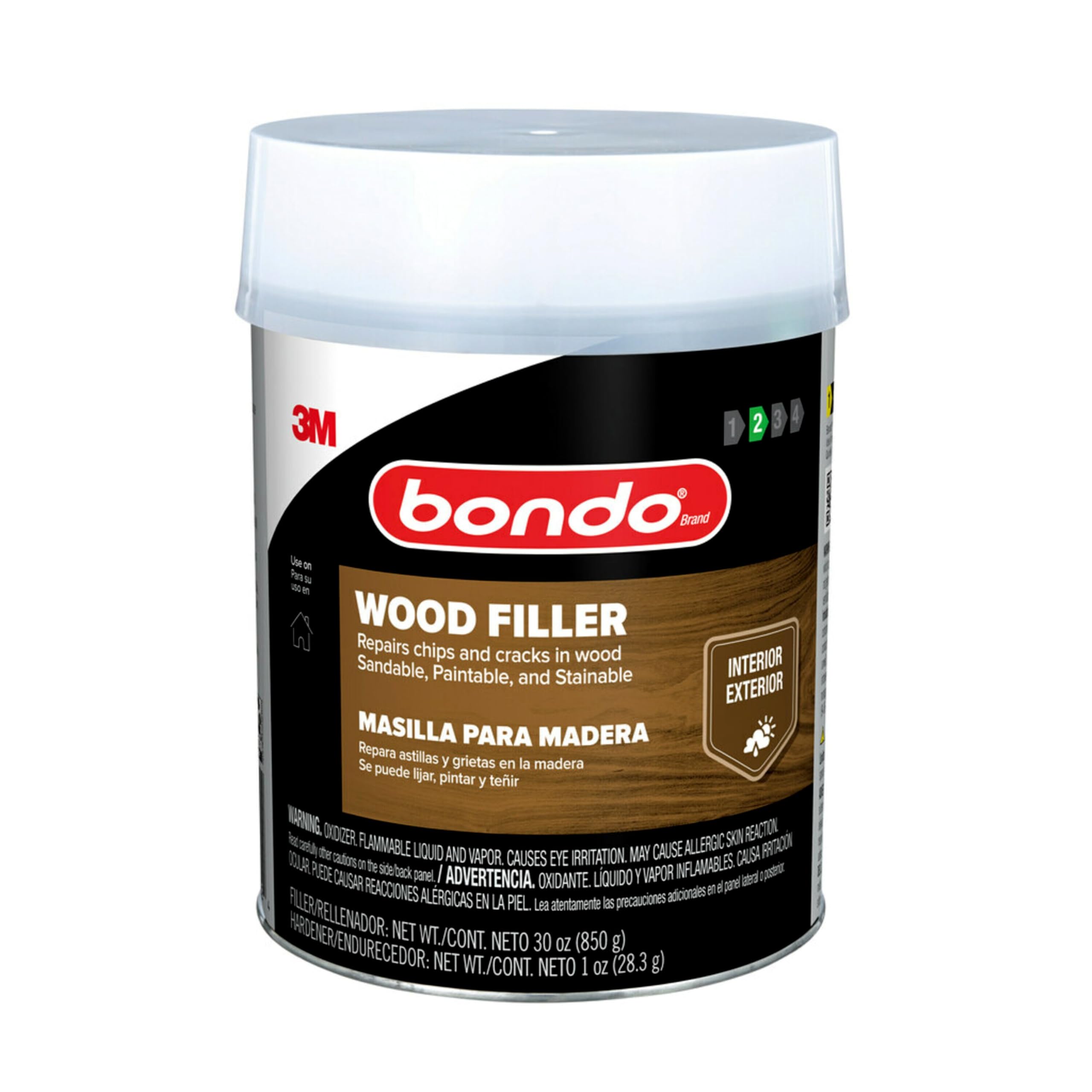
Bondo Wood Filler

92 /100
Kirk Score Outstanding
Formulation Type
Two-part resin
Cure Time & Workability
Sandable in 15 min
Sandability & Paintability
Sands smoothly; paintable
Water & Weather Resistance
Water resistant
Check Details on Amazon

Pros

  • Seals deep rotted spots and large holes with structural strength that holds up outdoors — 270 mentions, 88% positive
  • Sands to a smooth, paint-ready surface in about 15 minutes — 85 mentions, 89% positive
  • Two-part formula cures to a permanent, non-shrinking repair that won't crack or pull away — 163 mentions of overall quality, 92% positive

Cons

  • The resin's short working window forces small-batch mixing; any mixed filler left unused can set up in the tray, wasting material — 183 mentions of curing speed, 43% negative

This two-part filler builds structural integrity into rotted wood, not just a cosmetic patch. The resin bonds deep into spongy fibers and hardens to a sandable surface in about 15 minutes — faster than most one-part fillers. The fast cure demands small-batch mixing and a quick hand; any pause after adding the hardener can leave you scraping hardened filler from the mixing board. But for those comfortable working in increments, the speed keeps a siding or trim repair on a lunch-break schedule.

This filler is right for homeowners tackling rotted window sills, door frames, and exterior trim that will be painted after repair. The strong, non-shrinking bond holds up outdoors for years under a paint film. Where it falls short is stain-grade work: the material absorbs stain unevenly, leaving visible patches that can show through a clear finish. If you need to match natural wood grain, look to a filler built for staining, such as the extreme-weather epoxy paste in this comparison. For painted exterior patches, however, no filler in this list gets you from rot to ready-to-paint faster.

💡 💡 Tip: Mix only a golf-ball-sized amount at a time and keep your spreader moving — the hardener accelerates quickly, and any pause can leave you scraping hardened filler out of the mixing board.

Bottom line: For painted exterior rot repair, the 15-minute sanding and durable bond push this filler ahead of slower-drying alternatives. Staining is off the table, but under a coat of paint, it disappears completely.

Check Latest Price
#02

Best for Harsh Weather Conditions

PC-Woody Epoxy Paste

92 /100
Kirk Score Outstanding
Formulation Type
Two-part epoxy paste
Cure Time & Workability
24-hr cure
Sandability & Paintability
Sands & paints after cure
Water & Weather Resistance
UV & saltwater resistant
Check Details on Amazon

Pros

  • Weather-resistant formula withstands UV and salt water, ideal for coastal repairs. — Product claims highlight UV and salt water resistance.
  • Cures harder than wood, restoring structural integrity to rotted members. — User reports confirm cured epoxy exceeds original wood strength.
  • High tack prevents sag and dripping on vertical surfaces during curing. — Product details note high tack to reduce drips.

Cons

  • Extremely sticky consistency makes smoothing and shaping difficult; adheres to tools. — User feedback describes a tar-like stickiness that complicates application.

PC-Woody epoxy paste leaves typical fillers behind when exterior exposure includes harsh UV, salt water, or persistent rot. Where the top pick prioritizes speed with a 15-minute sanding window for painted surfaces, this two-part formula is built for endurance—its 850 PSI tensile strength and waterproof cure make it the choice for structural wood that must survive coastal or high-UV environments.

The tradeoff is a famously sticky texture that clings aggressively to gloves and tools, requiring patience during shaping. The payoff suits dock posts, deck beams, and railings where extreme weatherproofing and post-cure hardness are non-negotiable. If quick-touch ease isn't the priority and you're willing to learn its handling quirks, this epoxy earns its place in challenging outdoor repairs.

💡 💡 Tip: Wet your gloves and tools slightly to tame the stickiness, and work in small batches before the epoxy sets.

Bottom line: For a deck post battered by salt air or a dock cleat that needs to resist rot, the PC-Woody's weatherproofing and hardness make the steep application learning curve worth it.

Check Latest Price
#03

Best for Professional Restoration

Abatron WoodEpox Kit

90 /100
Kirk Score Outstanding
Formulation Type
Two-part structural epoxy
Cure Time & Workability
Workable 20-30 min
Sandability & Paintability
Sandable; paintable
Water & Weather Resistance
Shrink-free, water resistant
Check Details on Amazon

Pros

  • Cures to 2,500 PSI — strong enough to be drilled, carved, and sanded like original wood. — Effectiveness: 434 mentions, 94% positive; Durability: 304 mentions, 70% positive
  • Shrink-free and permanently resistant to moisture, pests, and UV — built for exterior rot repair. — Quality: 388 mentions, 95% positive
  • Near-zero VOCs and low odor; safe to use in occupied homes during restoration. — GREENGUARD certified; reviews praise lack of fumes

Cons

  • Cured epoxy can become harder than wood — sanding is most effective within a few hours of application. — Hardness: 180 mentions, 38% negative — mixed feedback on workability after full cure

Where many structural fillers rush you through a 15-minute window, the Abatron WoodEpox stays workable for 30 minutes, letting you hand-mold exact profiles on rotted columns and sills. It cures to a 2,500 PSI solid that resists moisture, UV, and pests without shrinking. Near-zero VOCs and no solvents mean you can use it indoors without evacuating the family. This is the filler for restoration specialists and serious DIYers who value precision and air quality over speed, and who plan to sand within a few hours—the epoxy can become harder than wood after a full cure, making late-stage sanding more labor-intensive.

💡 💡 Tip: Do your final shaping and sanding within the first hour while the epoxy is still slightly soft — after a full 24-hour cure it can be harder than the surrounding wood.

Bottom line: If your project demands structural integrity and low chemical exposure in an occupied home, this epoxy justifies its premium with professional results. You just need to shape and sand before the final cure.

Check Latest Price
#04

Best for Small Touch-Ups

DAP Plastic Wood-X DryDex

91 /100
Kirk Score Outstanding
Formulation Type
Latex one-part
Cure Time & Workability
3-6 hr shallow
Sandability & Paintability
Sands easily; paintable
Water & Weather Resistance
Exterior suitable
Check Details on Amazon

Pros

  • Pink-to-natural indicator signals exact sanding readiness—no guessing. — Ease of use 35 mentions, 97% positive; Sandability 34 mentions, 97% positive
  • Cures to a workable surface that can be planed, drilled, or nailed after drying. — functionality topic 63 positive out of 66 mentions
  • Water-cleanup formula is low-odor and safe for indoors, no harsh solvents needed. — Positive comments about no horrible smell; latex-based formula

Cons

  • Deep fills over 1/4 inch can need up to 36 hours to fully cure, potentially slowing paint schedules.
  • The 5.5 oz container is too small for more than a handful of small repairs, raising cost per ounce.

The DryDex color-change indicator turns from pink to natural when the filler is ready to sand, removing the guesswork that plagues other latex fillers. Unlike faster-curing solvent-based options, this latex formula cleans up with water, has low odor, and cures to a wood-like consistency that can be planed or drilled.

Novice DIYers doing small exterior touch-ups will appreciate the foolproof color cue for nail holes, screw holes, and trim cracks. The 5.5 oz container is small—so larger rot patches are out—and deep fills over 1/4 inch can need up to 36 hours to fully cure.

💡 💡 Tip: For holes deeper than 1/4 inch, apply the filler in thin layers and wait the full 36 hours to avoid shrinkage.

Bottom line: If you need a forgiving filler for small exterior nail holes and trim work, the color-change indicator saves you from the most common sanding mistake. For larger patches, the tiny container and long deep-fill cure time push you toward a bulkier option.

Check Latest Price
#05

Light outdoor fills

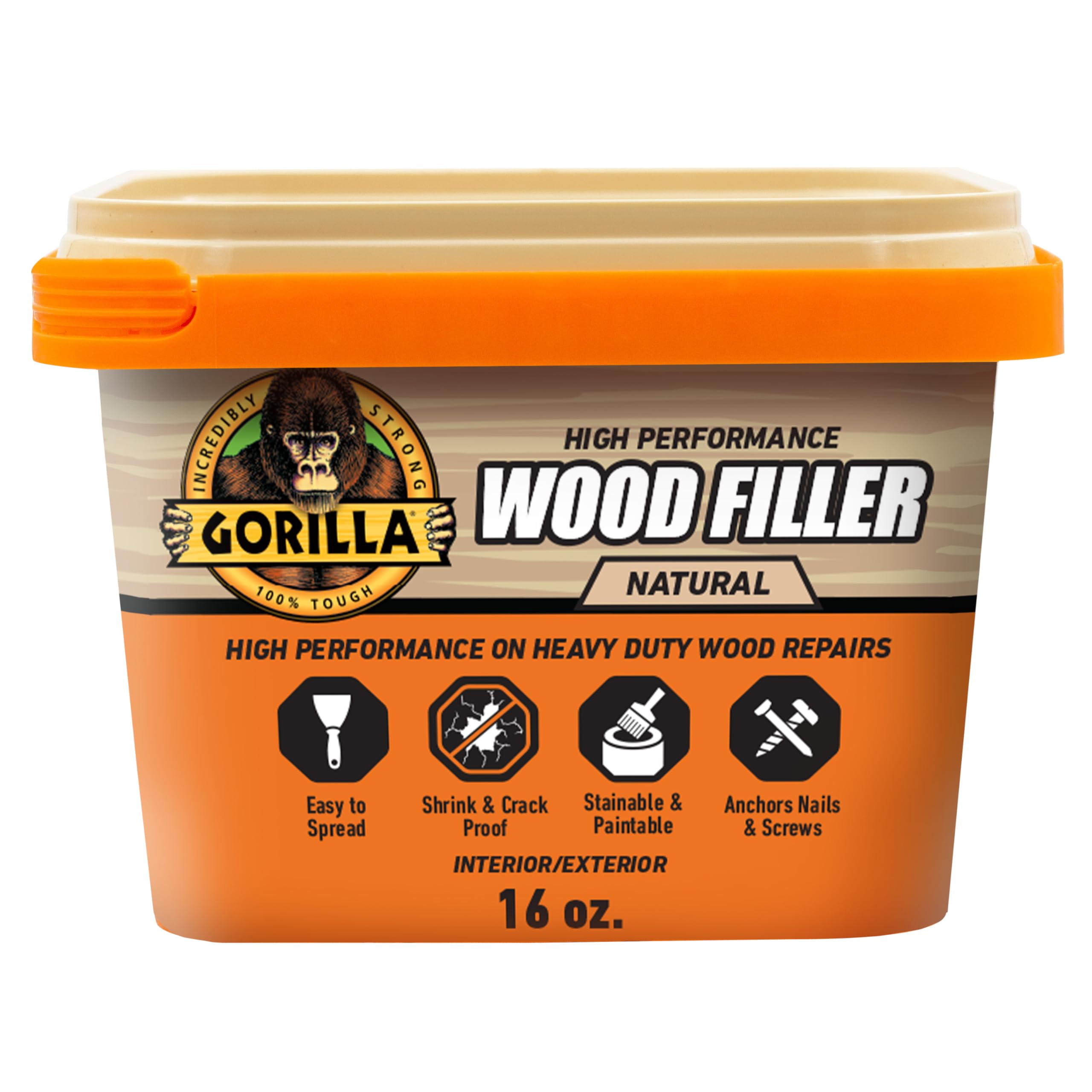
Gorilla Wood Filler

89 /100
Kirk Score Excellent
Formulation Type
One-part acrylic
Cure Time & Workability
6-hr cure
Sandability & Paintability
Sands smoothly; paintable
Water & Weather Resistance
Water resistant
Check Details on Amazon

Pros

  • Sands to a clean, smooth surface that takes paint well. — Users note it sands easily and leaves a smooth, paintable finish.
  • Ready to use straight from the tub with no mixing required. — Pre-mixed consistency praised for spreading effortlessly.

Cons

  • Filler may shrink or crack under weather exposure, limiting it to painted, covered areas. — Durability concerns noted in outdoor applications.

The filler spreads easily and sands smooth for small painted trim repairs. However, tubs may occasionally arrive dried out or crumbly, and the cured material can crack over time in exposed outdoor spots. This makes it a budget-friendly roll of the dice for purely cosmetic touch-ups where failure isn't structural.

Bottom line: A budget gamble for quick cosmetic patches on painted trim and low-stakes indoor repairs — best when you can check the tub's consistency at purchase and don't need long-term weather endurance.

Check Latest Price
#06

Kit with tools

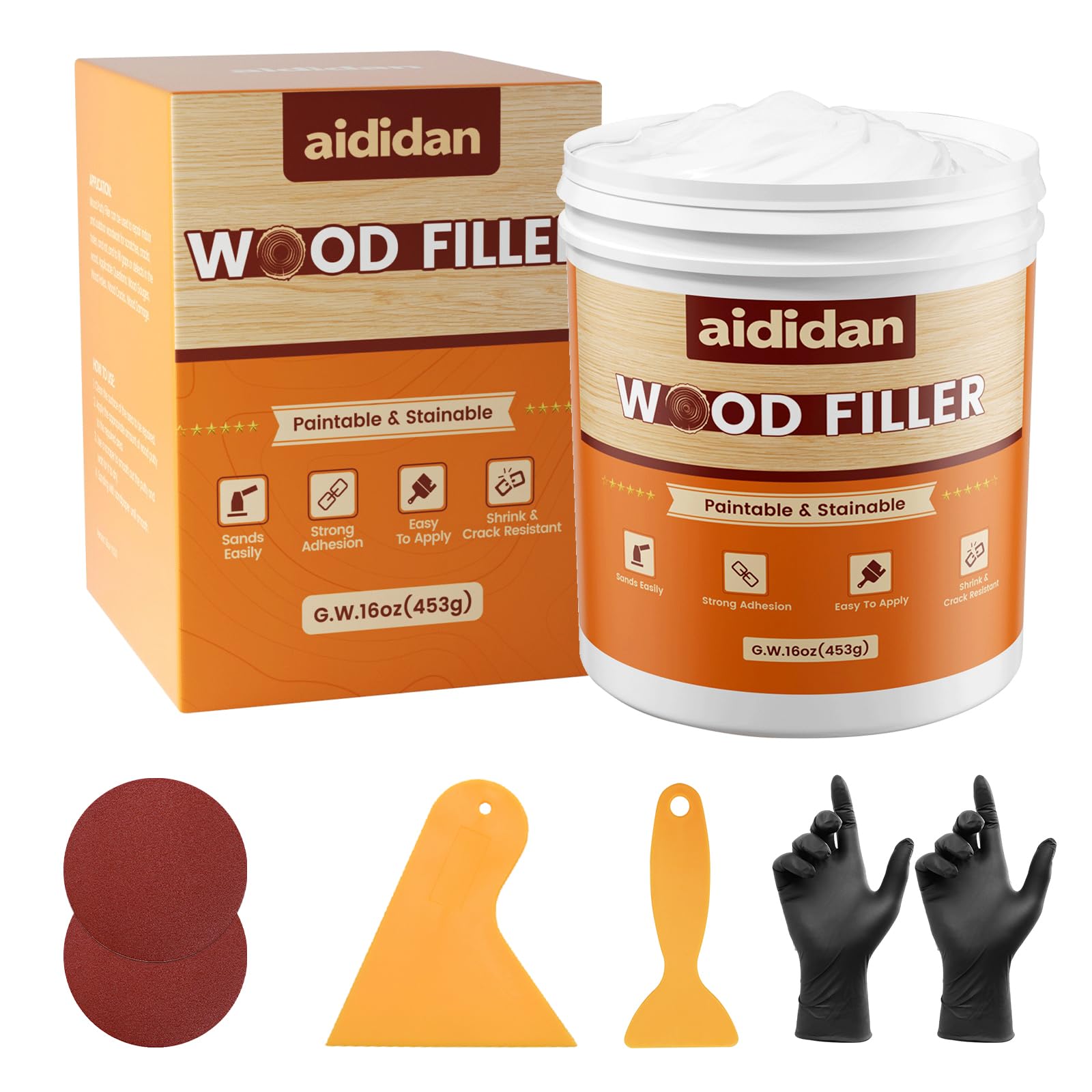
aididan Wood Filler Kit

87 /100
Kirk Score Excellent
Formulation Type
Water-based one-part
Cure Time & Workability
15-30 min thin
Sandability & Paintability
Sands easily; paintable
Water & Weather Resistance
Exterior water resistant
Check Details on Amazon

Pros

  • Sands easily and fills shallow holes smoothly for painted repairs. — 48 mentions of functionality, 90% positive; sanding 13 mentions, 92% positive
  • Ready-to-use kit with scrapers, sandpaper, and gloves—no extra purchases needed to start. — Included components praised in reviews; ease of use 33 mentions, 91% positive

Cons

  • Fully exposed exterior repairs can crack or bulge over time. — 24 mentions of durability, 42% negative — patches may bulge or fall out outdoors

The kit convenience and smooth sanding make it appealing for quick painted fixes. However, its water resistance holds up best in covered areas—direct weather exposure can lead to cracking or bulging—and stain absorption is iffy, so expect to paint over it.

Bottom line: Pick this for painted fixes in sheltered areas like covered porches or indoors; look elsewhere if the patch faces direct rain or sun.

Check Latest Price
#07

Flat surfaces only

RISETEX Wood Filler

88 /100
Kirk Score Excellent
Formulation Type
One-part epoxy putty
Cure Time & Workability
15-30 min thin
Sandability & Paintability
Sands smoothly; paintable
Water & Weather Resistance
Water resistant
Check Details on Amazon

Pros

  • Very easy to use with a soft, pliable texture that presses into crevices without effort. — 31 mentions of ease of use, 97% positive
  • Sands smoothly without crumbling, leaving a clean finish. — Effectiveness 48 mentions, 92% positive

Cons

  • Drying time can be unpredictably long, with fills sometimes staying gummy for hours beyond the stated time. — 37 mentions of drying time, 41% negative — reports of hours-long delays

The no-mix putty has a soft, pliable feel that presses easily into flat cracks and sands smoothly without crumbling. Its thin consistency can sag on vertical surfaces, so it's better for horizontal wood fills like decks and tabletops where drips aren't a problem. Light cosmetic touch-ups are its sweet spot.

Bottom line: For flat horizontal cosmetic fills where time isn't critical, this no-mix filler offers a fuss-free solution — just keep it off vertical surfaces.

Check Latest Price

How to Choose

One-Part vs. Two-Part Fillers

Ready-to-use one-part fillers spread straight from the tub and clean up with water, making them convenient for small, shallow repairs like nail holes. But the same solvents that keep them soft in the can also mean they shrink slightly as they cure, which can break adhesion on deep rot repairs. Two-part epoxies and resins cure through a chemical reaction, filling voids without shrinking and bonding with structural strength that resists moisture and movement. The trade-off is a short working window—once mixed, you may have only 15 to 20 minutes to shape the filler before it sets, so plan your batches carefully.

Speed Kills (Your Window to Work)

A filler that sands in 15 minutes sounds ideal until you realize you need to mix, apply, and shape a batch within two minutes. Fast-cure products like Bondo’s resin force you to work in small, deliberate scoops, which is fine for filling a rotted sill but frustrating if you’re covering a wide area. Slower epoxies give you 20 to 30 minutes of open time, letting you pack deep voids and tool the surface without panic—but they may require overnight curing before sanding. Match the working time to the size and complexity of the repair: small, quick spots love speed; large, structural rebuilds demand patience.

Water Resistant Isn’t Waterproof

Most fillers claim ‘water resistant,’ which means they can handle rain and humidity but not standing water or constant saturation. For a window sill that occasionally gets wet, that’s usually enough. But for deck posts, dock pilings, or horizontal surfaces that hold puddles, you need a filler rated for salt water, UV, and long-term submersion. Epoxies like PC-Woody and Abatron go beyond the standard by incorporating UV inhibitors and salt-resistant chemistry, preventing the filler from turning chalky or delaminating after a single coastal winter. If your repair will sit in direct sun or near salt spray, choose a filler that explicitly lists those resistances.

Sanding Ease and Paint Adhesion

A filler that sands too hard becomes a workout, while one that gums up the paper frustrates every step. Two-part fillers bond tightly and often sand to a powder at the exact cure window—sanding too late can turn some epoxies into rock, requiring power sanding. Paint adhesion is rarely an issue if the filler is clean and dry, but some one-part fillers have a waxy or soapy surface that repels paint; a quick scuff-sand and primer solve that. The real secret: check whether the filler shrinks as it cures, because any dip you can feel after painting means you’ll see it under gloss paint.

The Stainability Gamble

Manufacturers love to print ‘stainable’ on the label, but the chemical reality is that most wood fillers—especially two-part epoxies—are essentially plastic once cured, and they cannot absorb wood stain the way real grain does. Even fillers that technically take stain often end up looking blotchy or too light because the binder resists penetration. If you absolutely must stain your repair, test on a scrap piece first, or consider a gel stain that sits on the surface rather than penetrating. For the most invisible stained repairs, you’ll have better luck using a tinted wood filler or a two-step approach: fill, sand, then apply a tinted clear topcoat over the entire surface to unify color.

Frequently Asked Questions