The phrase 'stainable' on a wood filler label doesn't always mean what you'd hope. Many fillers dry blotchy, refuse to absorb stain at all, or deliver a color that's lighter or darker than the surrounding wood. That mismatch can turn a simple repair into an eyesore.
This article cuts through the claims to highlight the fillers that actually take stain well—and explains when a pre-colored filler might be the smarter fix. Whether you're restoring furniture, filling nail holes in trim, or rebuilding rotted wood, understanding the limits of each formula is the key to a clean, professional result.
Every stainable filler involves a trade-off: water-based formulas dry quickly and sand easily but may crack in deep fills, while two-part epoxies deliver strength at the cost of a tight working window. Pre-colored fillers eliminate the staining step entirely but limit you to a single shade. Knowing these limits upfront will keep your project from turning into a disappointing re-do.
92 /100
Kirk Score Outstanding
- Drying Time
- 15 min thin layer
- Ease of Use
- Spreads smoothly, no mix
- Sandability
- Smooth, easy feathering
- Stain Absorption
- Varied, test first
Check Details on Amazon
Pros
- Dries fast and sands to a smooth, paintable surface.
- Spreads smoothly with no mixing, and cleans up with water.
- Sands feather-edges of repairs with minimal effort, leaving a professional finish.
Cons
- Stain uptake can be uneven on some woods, leading to blotchy or darker spots
- Thick applications can crack as they dry; deep fills need layering.
This latex filler spreads easily and dries quickly — about 15 minutes in a thin coat — so you can sand and stain the same afternoon. Water cleanup and no mixing make it one of the least fussy options. Sanding is where it really stands out; the filler feathers to a near-invisible edge and creates a surface that accepts stain more consistently than most water-based fillers.
It works best on furniture, trim, and interior woodwork where a stain finish will follow. The natural color blends reasonably well with bare wood, reducing the need for heavy tinting. Always test stain on a scrap piece first, since wood species and application method influence the final color. This is not a heavy-duty rot filler — deep gouges or exterior structural repairs call for a two-part epoxy. For everyday cosmetic repairs that need to vanish under stain, it's the most practical all-around choice.
💡 Tip: Build up deep fills in thin layers, allowing each to dry, to prevent cracking and ensure even stain absorption.
Bottom line: For DIYers who want a stainable filler that sands quickly and cleans up easily, this is the most balanced option — just keep fills thin and always test your stain first.
Check Latest Price 91 /100
Kirk Score Outstanding
- Drying Time
- 15-25 min set, 1h cure
- Ease of Use
- Knead by hand, fast set
- Sandability
- Sands smooth after cure
- Stain Absorption
- Can be stained after cure
Check Details on Amazon
Pros
- Bonds structurally to wood
- Kneads by hand without tools
- Sands smooth and accepts stain after full cure
Cons
- Thin sections can become brittle after hardening
- 25‑minute set time limits batch size and shaping complexity
Unlike softer latex and solvent-based fillers, J-B Weld KwikWood is a two-part epoxy putty that hardens to 900 PSI and can be drilled, tapped, or machined after curing. It bonds tenaciously to wood and accepts stain once sanded. The stick format kneads by hand without metering or tools, and it cures in just 25 minutes.
This speed makes it ideal for structural fixes like stripped screw holes, rot pockets, and load-bearing cracks in furniture and millwork where standard fillers would fail. The rapid set time demands working in very small batches — larger areas and detailed shaping are a race against the clock. Thin applications can become brittle after hardening, so feathering is not recommended.
💡 Tip: Knead only as much as you can apply in 5 minutes, and shape loosely before the 25‑minute set locks it in.
Bottom line: If your repair needs to hold a screw or withstand stress, this epoxy putty delivers bond strength that standard fillers can't — just keep projects small and work fast.
Check Latest Price 89 /100
Kirk Score Excellent
- Drying Time
- —
- Ease of Use
- Squeeze-and-fill
- Sandability
- No sanding required
- Stain Absorption
- No staining needed
Check Details on Amazon
Pros
- Applies with a finger, dries fast, and requires no sanding.
- Blends well with many Golden Oak surfaces, making the filler nearly invisible without extra stain.
Cons
- Dried color can appear too light or off-tone on some Golden Oak variations; test in an inconspicuous spot first.
Unlike traditional stainable fillers that require staining after application, the Minwax Color-Matched Filler in Golden Oak eliminates that step entirely — the color is already mixed in. It dries quickly and blends with common oak finishes, making it a convenient option for pre-finished surfaces.
It's built for quick, no-sand repairs on pre-finished Golden Oak floors, cabinets, and furniture, where you want the repair to blend without adding stain. The color match is close enough on many surfaces to go unnoticed, but not all Golden Oak finishes age or oxidize the same way — so test a small hidden area to see if the dried tone lines up with your specific project.
💡 Tip: Test on a small hidden area first — the color match varies by wood age and finishing technique.
Bottom line: For quick fixes on Golden Oak where slight color variation is acceptable, this pre-colored filler cuts out staining entirely.
Check Latest Price 91 /100
Kirk Score Outstanding
- Drying Time
- 3-6 hr thin, 36 hr deep
- Ease of Use
- Color-change indicator, easy
- Sandability
- Sands smoothly
- Stain Absorption
- Stainable (test first)
Check Details on Amazon
Pros
- Pink-to-natural color change shows exactly when filler is dry enough to sand, no guesswork.
- Applies and sands smoothly, forgiving for beginners tackling small repairs.
Cons
- Container size suits only minor touch-ups; not adequate for large holes or widespread crack filling.
- Drying time can extend well past expectations in humid conditions, especially with deeper fills.
The star feature is the DryDex indicator: the filler goes on pink and turns natural when fully dry, so you never sand too early. Compared to solvent-based fillers that lean on real wood fibers for deeper stain penetration, this latex option trades some stain depth for a foolproof visual cue. The formula sands easily and accepts stain adequately on lighter wood species, though darker stains may reveal the repair.
It's best for nail holes in trim, small furniture dings, and any job where you want absolute certainty the patch is ready for sanding. The 5.5-ounce tub is small, so don't plan on filling large cracks; deep fills in humid conditions can take over a day to fully cure. Stain uptake is acceptable for light-toned woods, but test on scrap to set expectations.
💡 Tip: For holes deeper than 1/4 inch, apply in thin layers, letting each dry to lighten, to speed overall curing and avoid extended dry times in humid weather.
Bottom line: Beginners who want a clear signal that the patch is ready will find this a helpful first filler — just keep expectations in check for anything beyond small repairs.
Check Latest Price 89 /100
Kirk Score Excellent
- Drying Time
- —
- Ease of Use
- Rehydratable, water cleanup
- Sandability
- Sands beautifully, fine finish
- Stain Absorption
- Needs pre-tinting often
Check Details on Amazon
Pros
- Rehydratable formula never expires
- Sands to a smooth finish and accepts custom tints for near-invisible repairs.
Cons
- Stain uptake directly from the can may be inconsistent; pre-tinting gives more predictable results.
- Thick applications can shrink and crack during drying, so repairs must be built up gradually.
Unlike the top pick's convenient squeeze-and-stain approach, Goodfilla arrives as a water-based, zero-VOC polymer putty that never expires — it can be revived with water even if dried out. That longevity comes with a responsibility: the filler must be applied in thin layers to prevent cracking, and stain absorption may require pre-tinting with pigments for an even match. This makes it best for eco-conscious woodworkers who don't mind mixing their own color and building up fills gradually, rather than those wanting a fast, one-step repair.
💡 Tip: For best stain matching, tint the wet filler with a dash of universal pigment before application, and never exceed 1/8-inch layers — rehydrated filler works as well as fresh.
Bottom line: For those who prioritize a reusable, non-toxic filler and are willing to invest the extra time in layering and tinting, Goodfilla delivers color-matched results that single-use fillers can't match.
Check Latest Price 90 /100
Kirk Score Outstanding
- Drying Time
- —
- Ease of Use
- Complete kit, smooth
- Sandability
- Sands like compound
- Stain Absorption
- Stainable if tested
Check Details on Amazon
Pros
- All-in-one kit with scrapers and sandpaper
- Dries fast and sands like drywall compound, reducing prep time between coats.
- Low-odor, water-based formula safe for indoor use without heavy ventilation.
Cons
- Thicker fills may not harden fully, leading to crumbling
The BONCART kit includes putty, two scrapers, and sandpaper, cutting out extra purchases for first-timers filling nail holes and surface scratches. The water-based filler dries quickly and sands like drywall compound, streamlining repainting or staining prep. This kit is a practical choice for shallow cosmetic touch-ups; deeper voids or structural fills demand the heightened durability found in the top pick.
💡 Tip: Build up deeper fills in thin layers to improve hardness and prevent crumbling.
Bottom line: For small cosmetic repairs like nail holes and surface scratches, this kit provides everything in one box. If deeper fills are on your list, the more durable top pick is a safer bet.
Check Latest Price 89 /100
Kirk Score Excellent
- Drying Time
- 6 hours
- Ease of Use
- May arrive dry/gritty
- Sandability
- Sands easily
- Stain Absorption
- Inconsistent stain uptake
Check Details on Amazon
Pros
- Sands easily to a smooth, paintable surface
- Fills shallow cracks and nail holes effectively
Cons
- Gritty consistency may crumble after drying, especially in fine details
- Tub can arrive dry or become crumbly quickly, making it difficult to spread
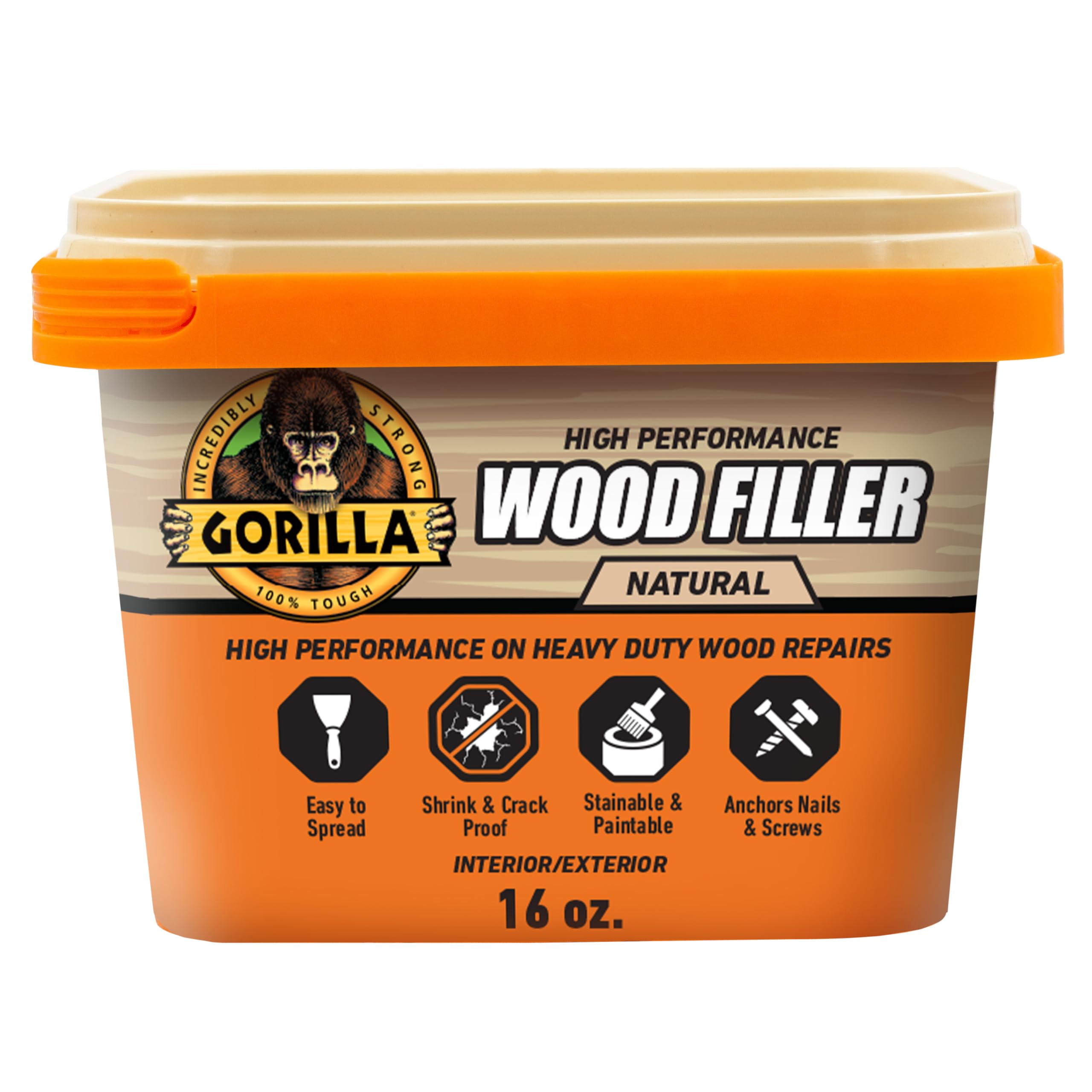
Where the top pick focuses on stain acceptance and fast drying, this Gorilla filler delivers a 16-ounce tub for whole-room crack and nail hole filling before painting. The acrylic paste sands to a smooth surface and handles shallow patches effectively, making paint prep straightforward.
It’s not meant for staining—stain absorption is inconsistent, so plan to paint over filled areas. DIYers tackling baseboard gaps, trim nail holes, and drywall cracks will find the large quantity cost-effective for projects where stain isn’t part of the finish plan.
💡 Tip: If the filler feels dry or crumbly, mixing in a small amount of water can sometimes restore spreadability, but test on scrap first.
Bottom line: For paint-prep projects where stain isn't a concern and an occasional dry tub is an acceptable risk, this filler provides budget-friendly bulk for whole-room fills.
Check Latest Price 91 /100
Kirk Score Outstanding
- Drying Time
- ~30 min thin
- Ease of Use
- Tube hard to squeeze
- Sandability
- Sands smoothly
- Stain Absorption
- Solvent-based, takes stain
Check Details on Amazon
Pros
- Real wood fibers improve stain uptake on nail holes and fine cracks.
- Sands to a smooth finish that blends with surrounding wood.
Cons
- Tube can be hard to squeeze and thicker fills may crack upon drying.
DAP Plastic Wood Latex contains real wood fibers that help it accept stain better than many latex fillers on small nail holes and gaps. It sands smoothly. The tube can be hard to squeeze, and deeper fills may crack, so it's best reserved for shallow, cosmetic repairs where staining is the goal. It's a budget alternative to the more convenient DryDex version.
Bottom line: A budget-friendly option for shallow, stainable touch-ups on trim and furniture, as long as you can manage the stiff tube and avoid deep fills.
Check Latest Price 89 /100
Kirk Score Excellent
- Drying Time
- 2-6 hours
- Ease of Use
- Often arrives dried out
- Sandability
- Sands reasonably
- Stain Absorption
- Does not stain well
Check Details on Amazon
Pros
- Widely available and recognized brand; easy to find for budget-friendly spot repairs.
- Sands smoothly after drying with minimal paper clogging.
Cons
- Stain absorption is inconsistent
Minwax's filler sands with little clogging after a couple hours' dry time and costs budget-friendly money, making it an easy grab for patch-ups. The 'stainable' claim doesn't hold up—expect uneven absorption and blotchy spots on bare wood. The tube may also arrive partially hardened. For paint-only repairs, these are manageable quirks; those needing a true stain match should step up to the top pick.
Bottom line: If your repair will be painted over and you want a widely available filler that sands well, this tube gets the job done—just avoid relying on it for stain-matched work.
Check Latest Price 88 /100
Kirk Score Excellent
- Drying Time
- —
- Ease of Use
- Thin, needs layers
- Sandability
- Easy to sand
- Stain Absorption
- Color mismatch common
Check Details on Amazon
Pros
- Simple application and sanding make it approachable for beginners.
- Fills small knots and cracks in walnut-toned surfaces cleanly.
Cons
- Thin consistency can require multiple coats for deeper fills, extending project time.
The kit includes putty, two scrapers, and sandpaper—enough to fill small knots and cracks on walnut-toned furniture without extra trips to the store. The putty is thin, so deeper fills need multiple thin layers and longer drying times; color may skew too dark or too light depending on your specific wood shade.
Bottom line: For budget-conscious touch-ups on dark-stained walnut furniture where you don't mind applying a few thin layers, this kit gets the job done without overspend.
Check Latest Price 87 /100
Kirk Score Excellent
- Drying Time
- —
- Ease of Use
- Kit with accessories
- Sandability
- Sands easily
- Stain Absorption
- Disputed stainability
Check Details on Amazon
Pros
- Complete kit with gloves and tools; good value
- Sands easily and dries to a paintable surface
Cons
- Stain uptake is highly inconsistent, producing blotchy or barely visible results
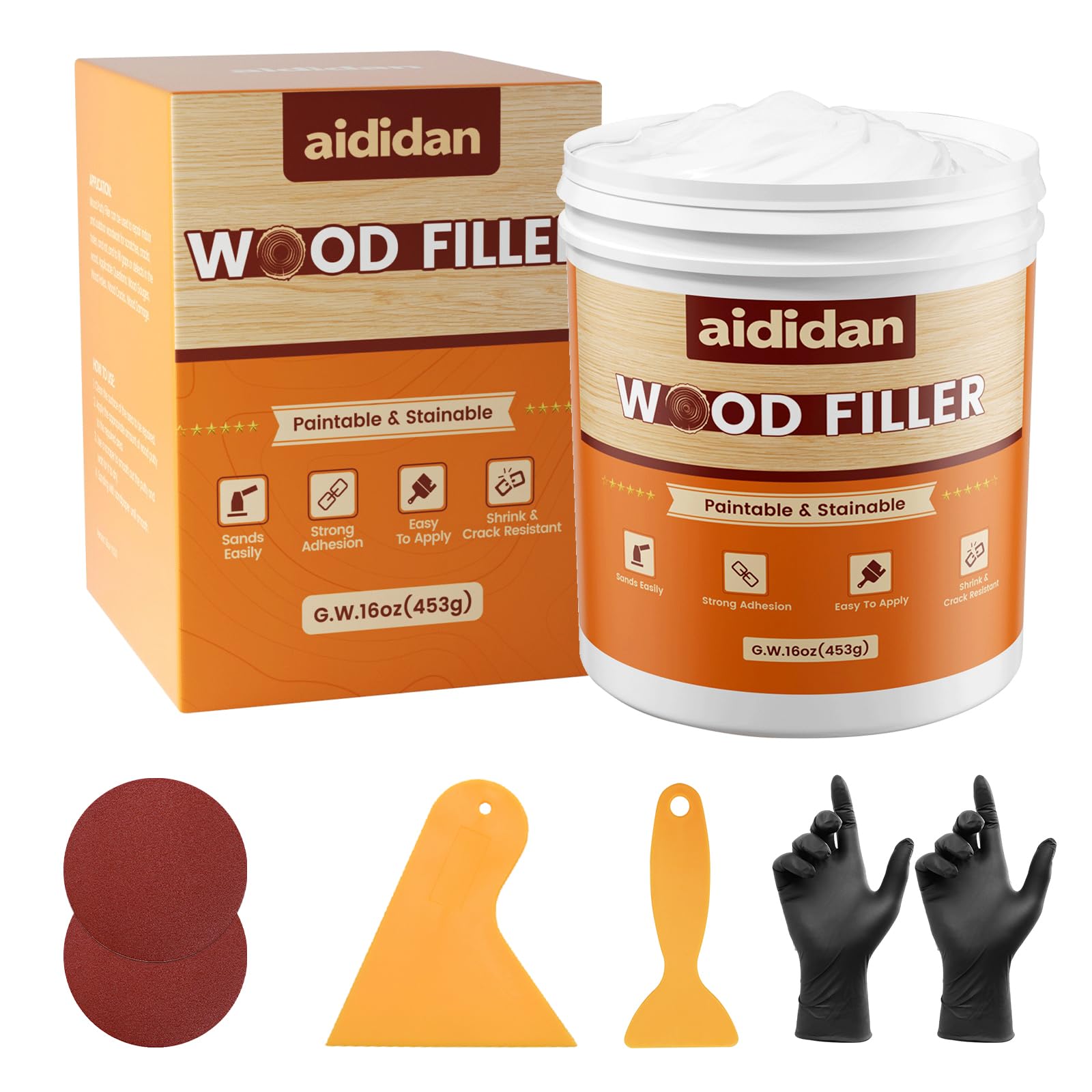
The kit arrives with everything needed to start filling — gloves, two scrapers, and sandpaper — and the putty sands to a smooth, paint-ready surface. Its stain absorption, however, is unreliable, often leaving blotchy or barely visible results, and filled areas may bulge or crack after painting. This makes it a better match for exterior painted repairs than any project where stain needs to match bare wood.
Bottom line: A practical kit for exterior wood repairs that will be painted, not stained.
Check Latest Price