Best Overall
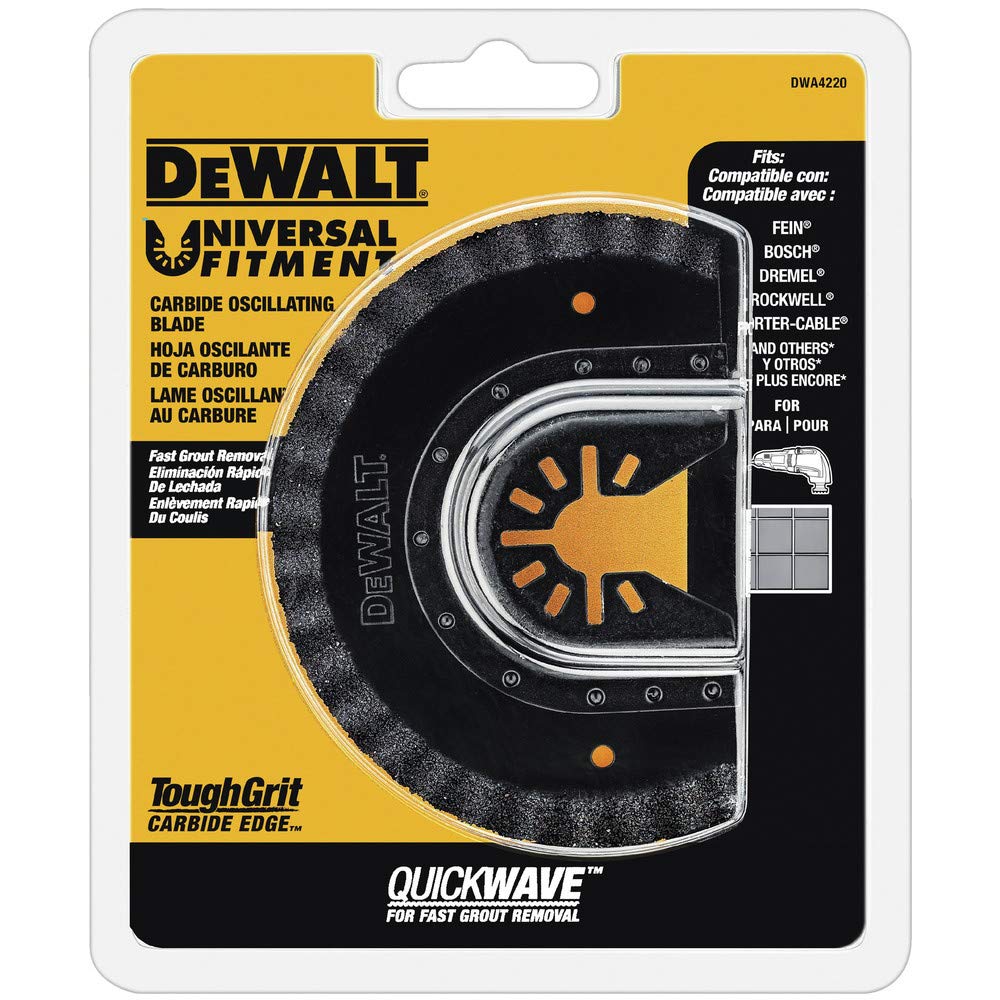
DEWALT DWA4220 Grout Blade
- Grit Type
- Carbide
- Compatibility
- Universal (no adapter needed)
- Blades Included
- 1
- Blade Thickness/Kerf
- —
Pros
- Fast, effective grout removal, especially on sanded grout and stucco
- High user satisfaction with work speed and time saved vs. manual methods
- Universal fit for major-brand oscillating tools, no adapter required
Cons
- Weld point can fail under heavy load; blade may wobble or detach after moderate use
The carbide grit chews through sanded grout and stucco significantly faster than oscillating diamond blades or hand saws, turning an all-day manual job into a session that often fits within an hour or two. Its near-universal mount snaps into DeWalt, Milwaukee, Makita, and most other oscillating tools without an adapter, so delays from hunting for proprietary fittings are eliminated. The open body clears debris quickly, and the edge stays effective through a typical shower surround or backsplash project, though it is a consumable — coarse grout will gradually wear the grit.
This is a speed-first blade for contractors and experienced DIYers who value clean, rapid cuts on moderate-sized regrouts — one bathtub enclosure, a single backsplash, or a few linear feet of floor. If the project spans a whole house with hard, brittle mortar or nail heads, the blade's body-to-carbide weld can let go under extreme stress; treat it as a disposable and keep a spare ready. The budget 9-piece diamond blade kit offers more physical backups, but none matches this blade's initial cutting aggressiveness.
Bottom line: For a one-tub regrout where speed determines whether you'll finish before dinner, this is the blade to load — just keep a backup for unexpected hard spots.
Check Latest Price


