// data-verified

10 Best Brad Nailers of 2026: Light & Won't Dent Your Trim

Which brad nailers balance light weight, jam resistance, and clean finish for DIY trim work—without breaking the bank.

Trim carpentry is unforgiving. A nailer that leaves deep indentations or jams every few shots turns a satisfying project into a frustrating one. Shoppers quickly learn that star ratings alone don't guarantee a tool that sinks brads cleanly and keeps firing all day.

The category now splits sharply between pneumatic nailers — lighter, cheaper, tethered to a compressor — and cordless models offering freedom at the cost of extra weight and money. Both types have models that earn rave reviews, but real-world use reveals that even top-rated tools can jam, and cheap 2-in-1 designs often mar the surface you're trying to protect.

This guide cuts through the conflicting feedback to give you clear, specific picks that balance weight, jam resistance, and finish quality for the work you actually do — whether that's hanging baseboards with a featherlight pneumatic or going cordless for quick punch-list repairs.

#01

Best Overall

Pros

  • Tool-free depth adjustment and jam release eliminate fumbling with hex keys on the job. — 94 mentions, 100% positive
  • At only 2.65 lbs, it’s radically lighter than cordless alternatives, reducing shoulder fatigue during overhead work. — 72 mentions, 97% positive
  • Delivers clean, consistent nail placement across door casings, baseboards, and crown moulding. — 245 mentions, 87% positive

Cons

  • Occasional jams can occur with low-quality fasteners or when air pressure drifts; the toolless release clears them instantly. — 81 mentions, 35% negative
  • Plastic internal components may wear more quickly under daily high-volume production use, making it less suited to full-time framing crews. — 54 mentions, 52% positive

At 2.65 pounds, the DWFP12231 is among the lightest pneumatic brad nailers, and that weight advantage keeps your arm steady through long runs of baseboard or door casing. Tool-free depth and jam release adjustments let you dial in the right nail set without reaching for a tool, and the oil-free motor eliminates the mess of daily lubrication. Occasional jams can surface with budget fasteners or when air pressure wanders outside the sweet spot, but the quick-release nose clears them in a few seconds.

This nailer is aimed at DIY homeowners and semi-pros who want a comfortable, affordable pneumatic for finish carpentry. It thrives on trim, moulding, and cabinet work where precision matters more than raw speed. Pro trim carpenters running hundreds of nails daily on job sites should note the internal components include some plastic parts, which may wear sooner than an all-metal build under relentless heavy use. For the rest of us, the DWFP12231 offers a fatigue-free day and drives 5/8-inch to 2-inch brads with enough consistency to make every joint look clean.

Bottom line: If weekend trim projects and a light tool bag are your reality, the DWFP12231’s weight and price strike a balance that heavy cordless nailers simply can’t match — just keep a quality fastener brand and it’ll cruise through your next renovation.

Check Latest Price
#02

Best for Precision & Oil‑Free

Pros

  • Tool-free depth adjustment and jam release speed up task changes.
  • Oil-free operation reduces maintenance and protects finishes.
  • Smart Point nose ensures precise nail placement in tight corners.

Cons

  • At 5.16 pounds, the tool is heavier than many pneumatic nailers, which can add fatigue on extended vertical work.
  • Occasional jams may require stopping to clear the magazine, interrupting flow.

The Smart Point nose and tool-free depth adjustment deliver brads exactly where you aim, cutting down on missed placements in detailed trim work. An oil-free design keeps maintenance minimal and reduces the risk of staining work surfaces. The magazine accepts brads up to 2-1/8 inches, a length many compact pneumatics cannot handle. At 5.16 pounds, the weight is noticeable during overhead nailing or all-day use, but those who prize accuracy over lightness will accept the trade. Jamming can occur from time to time, so clearing a nailer may be part of the workflow. This model suits finish carpenters and DIYers who need precise nail control and longer brad capacity, and who don’t mind a heavier tool in exchange.

Bottom line: If nailing longer brads with precision matters more than saving a pound, the BOSTITCH BTFP12233 is a solid match — just expect to clear a jam now and then.

Check Latest Price
#03

Best Lightweight Aluminum Build

Pros

  • Aluminum body and magazine stand up to job site drops — 48 mentions, 90% positive
  • Fires consistently with minimal misfires — 43 mentions, 88% positive
  • Light 2.86-lb design is easy to maneuver in tight spaces — 14 mentions, 86% positive

Cons

  • Depth adjustment can yield inconsistent counter-sink results between shots — 10 mentions, 30% negative
  • Nail length caps at 2 inches, excluding 2-1/8” projects

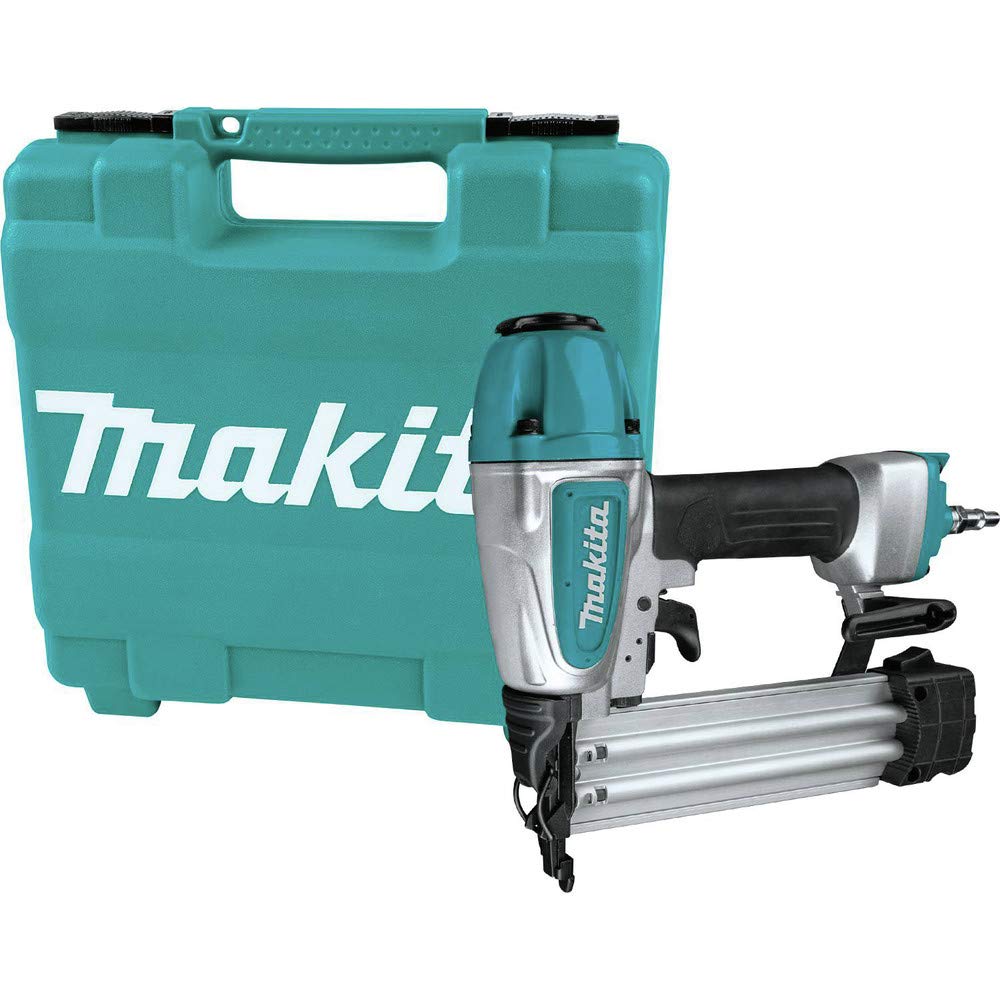
The Makita AF506 pairs an all-aluminum body, magazine, and cylinder with a 2.86-lb weight, giving it the rugged build to absorb job-site drops without the bulk of heavier nailers. Unlike lighter plastic-bodied options, the metal construction adds long-term toughness for trim carpenters who prioritize durability. The built-in air duster clears dust from work surfaces, a handy convenience for finish work. Depth setting consistency can vary between units, so users who require uniformly flush nail heads on every shot may prefer the top pick's oil-free precision. Those needing 2-1/8” fasteners will find the 2-inch max length a firm boundary.

Bottom line: If your finish work stays within 2-inch brads and you'll trade off a bit of depth precision for metal construction that laughs off drops, the Makita AF506 fits the bill.

Check Latest Price
#04

Best Cordless Value

Pros

  • Drives 1-inch to 2-inch brads cleanly and consistently — 79 mentions, 94% positive
  • Battery and charger included at a price well below premium cordless options — 50 mentions, 98% positive
  • Battery handles up to 700 nails per charge for multi-room trim sessions — 48 mentions, 88% positive

Cons

  • At 5.5 pounds, weight can become noticeable during extended overhead trim work — 32 mentions, 37% negative

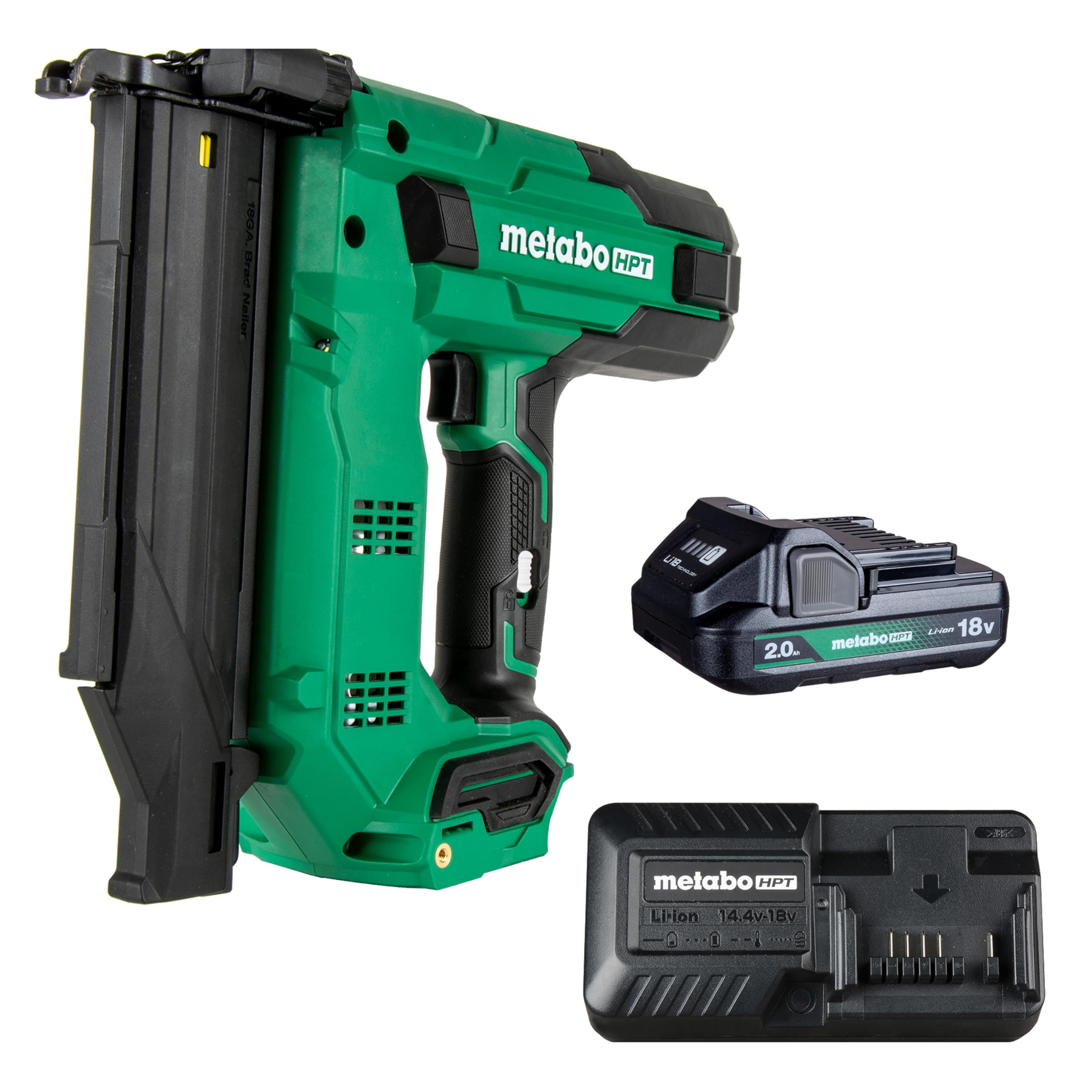
The NT1850DG eliminates the split-second delay some cordless nailers bring to finish work, sinking 5/8-inch to 2-inch brads cleanly in pine, poplar, and MDF without ramp-up. The kit includes battery and charger at a mid-range price, and 700 nails per charge is routine — enough to trim out several rooms on one pack.

Finish carpenters who work mostly in soft to medium-density woods gain cordless freedom without the premium that brushless competitors demand. Power can be marginal when driving brads into dense hardwoods like oak or maple, so those tackling hardwood-heavy trim will want a nail set nearby for the occasional follow-up tap.

💡 💡 Tip: For long overhead trim sessions, pace the work to manage the 5.5-pound weight — a fair trade for skipping the compressor and hose.

Bottom line: For trim carpenters working mostly in pine, poplar, or MDF, this kit delivers cordless convenience and strong battery endurance at a price well below brushless competitors.

Check Latest Price
#05

Best Pro Cordless

Pros

  • Consistent brad driving with minimal downtime on trim and finish work. — 146 mentions, 86% positive
  • Intuitive tool-free depth control and fast nail loading. — 77 mentions, 96% positive
  • Rugged construction that withstands daily job-site use. — 164 mentions, 97% positive

Cons

  • Heft can become tiring during extended overhead nailing. — 60 mentions, 42% positive — weight is a tradeoff for cordless power
  • Occasional jams may require clearing, despite tool-free release. — 29 mentions, 41% negative — some units experience jams despite tool‑free release

The DCN680D1 cuts the air hose, pairing a brushless motor with DEWALT's 20V battery to deliver consistent brad driving for trim and finish work. Tool-free depth and jam release, plus an LED, make adjustments fast in dim spaces. It weighs a noticeable 5 pounds — heavier than a pneumatic, but the cordless freedom pays off on multi-room jobs and for pros already on the DEWALT 20V platform. Premium pricing and the heft limit its appeal for occasional household use, but finish carpenters who need hose-less mobility will find the trade-off acceptable.

💡 💡 Tip: For all-day overhead trim, swap to a lightweight pneumatic to reduce fatigue.

Bottom line: A hose-free brad nailer for the DEWALT 20V crowd that rarely compromises on driving consistency — a professional cordless solution that trades a pound for portability.

Check Latest Price
#06

Best for Craftsman Battery Owners

Pros

  • Durable construction that feels solid for the price. — 120 mentions, 92% positive
  • Straightforward operation simplifies trim and molding tasks. — 75 mentions, 100% positive
  • Battery lasts through typical household projects without recharging mid-task. — 40 mentions, 70% positive

Cons

  • At 7.64 lbs, the tool feels heavy quickly, limiting overhead or all-day use. — 43 mentions, 49% negative — 7.64 lbs is heavier than most cordless rivals
  • Jamming may interrupt work, particularly when driving shorter brads. — 43 mentions, 42% negative — many users report clearing jams often

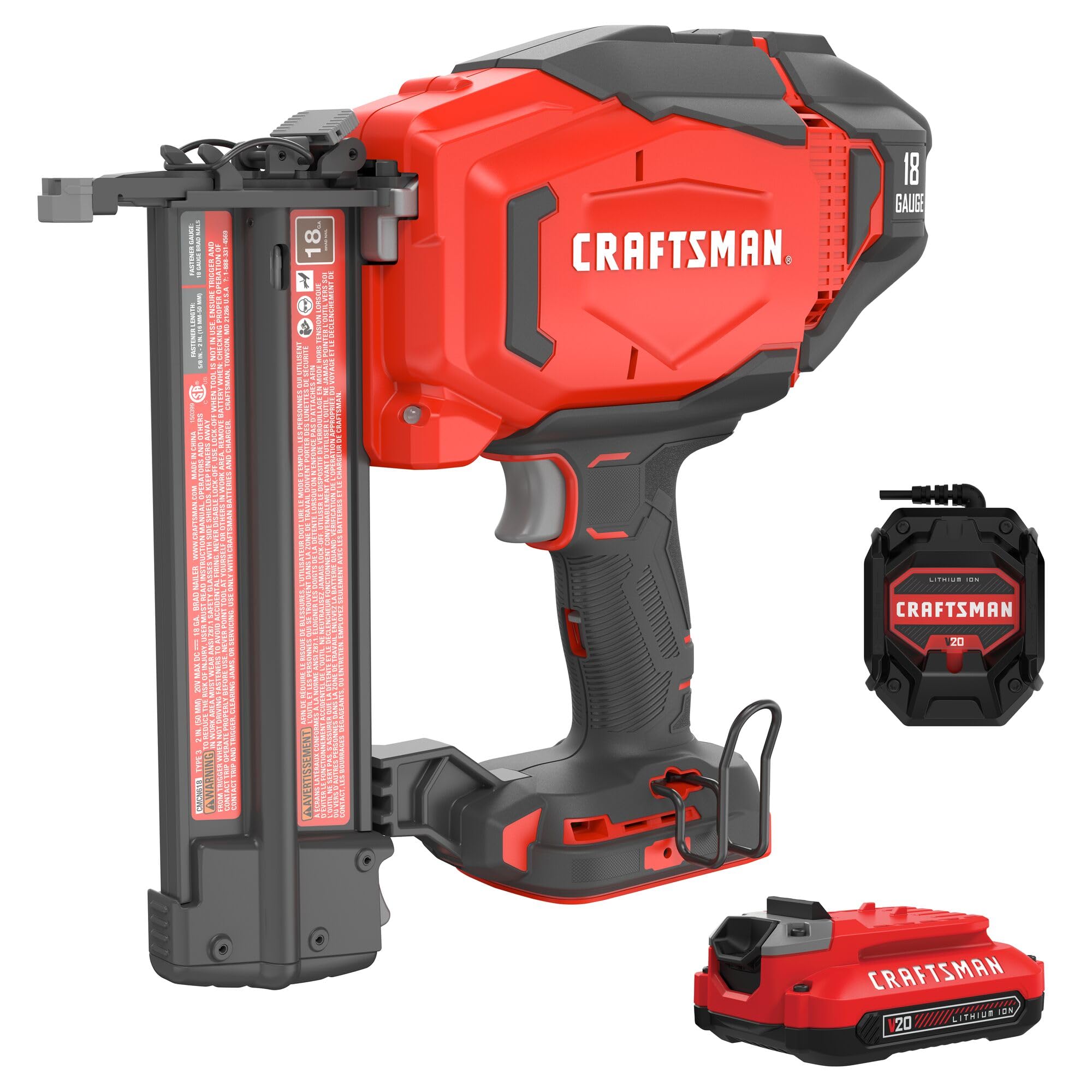
For Craftsman V20 battery owners who want a cordless brad nailer without the premium price of DEWALT’s offering, this kit includes a battery and charger, ready to go. The brushless motor drives brads consistently through trim and molding, and tool-free depth adjustment keeps setup simple.

The 7.64-pound weight is a trade-off; it’s heavier than most pneumatic nailers and even some cordless rivals, causing fatigue during overhead or long sessions. Jamming can occur with shorter brads, so this nailer fits occasional household projects rather than all-day finish work, but within the Craftsman V20 system, it’s a solid option.

💡 💡 Tip: For overhead work or extended trim sessions, a lightweight pneumatic nailer reduces fatigue.

Bottom line: If you're already on the Craftsman V20 platform and doing occasional trim work, this brad nailer saves the hassle of a compressor, but the weight and jamming favor short, low-volume jobs.

Check Latest Price
#07

Best for Ryobi ONE+ Owners

Pros

  • Consistent driving in trim and small wood projects. — 167 mentions, 81% positive
  • Simple, tool-free loading and depth adjustment. — 98 mentions, 98% positive
  • Long runtime on a single 18V charge. — 37 mentions, 81% positive

Cons

  • The 6-lb body becomes taxing during extended overhead nailing. — 65 mentions, 58% negative — many users mention it feels too heavy

This cordless brad nailer fires up to 1,700 nails on a single 18V ONE+ charge, cutting the compressor hose out of door casing, baseboard, and furniture assembly. Loading brads and adjusting air pressure takes seconds, and the low-nail indicator prevents dry-fire guesswork.

Existing Ryobi battery owners get a tool-only nailer that slots into their current chargers and packs, avoiding extra cost. The trade-off is weight — at 6 lbs it's noticeably heavier than even the heavier pneumatic brad nailers, and overhead crown molding work can become fatiguing. If you're starting fresh without ONE+ batteries, the combined investment often erases the cordless convenience advantage.

💡 💡 Tip: For long runs of crown molding, swap to a lightweight pneumatic nailer — this tool's best role is quick cordless jobs below shoulder height.

Bottom line: A cordless trim nailer that removes the hose, but only for those already invested in Ryobi ONE+ batteries and willing to trade some handling comfort for portability.

Check Latest Price
#08

Milwaukee platform

Pros

  • Consistent firing with no ramp-up leaves clean nail holes — 43 mentions, 81% positive
  • M18 battery delivers exceptional runtime — 11 mentions, 100% positive

Cons

  • At 6.53 lbs, noticeably heavier than many pneumatic and cordless rivals — 14 mentions, 57% negative

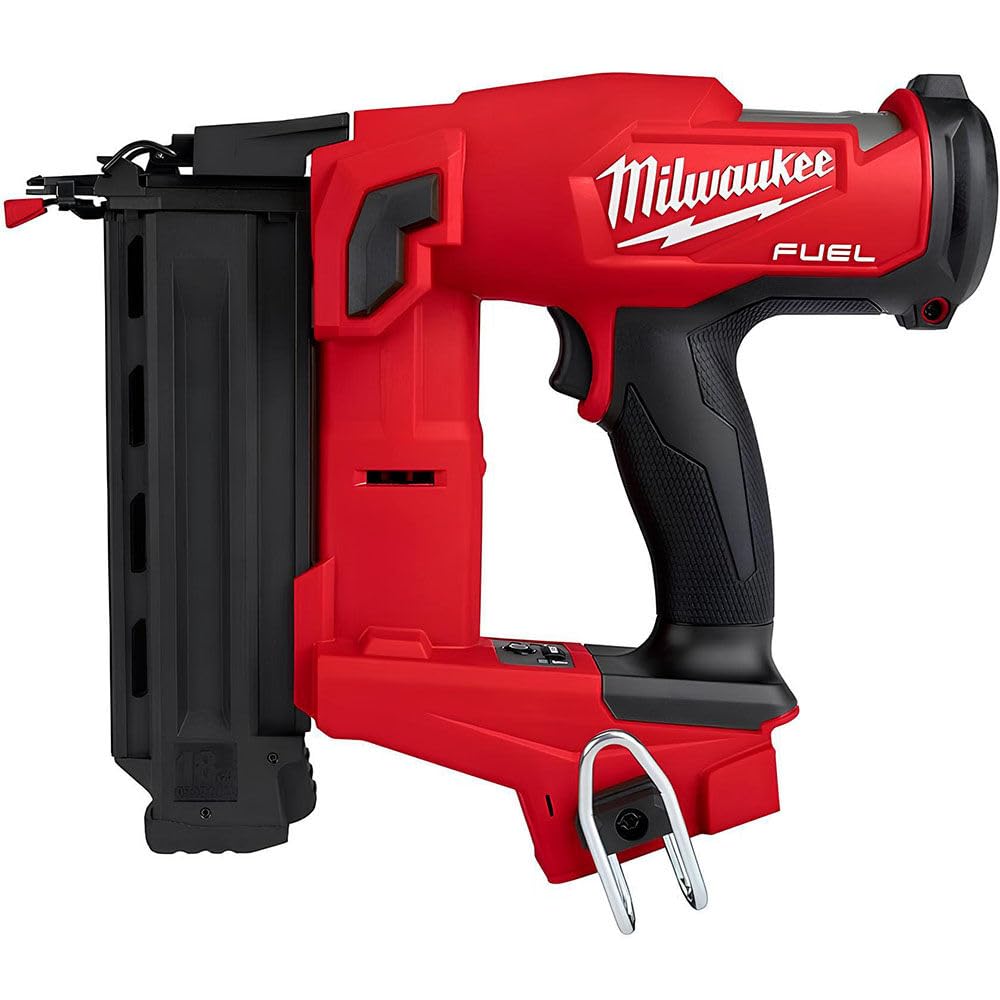
Zero ramp‑up and a nitrogen air spring produce clean, consistent nail holes in finish carpentry. That precision comes at a weight cost: 6.53 pounds, noticeably heavier than many pneumatics and cordless competitors. The tool-only kit expects a M18 battery investment, making it a natural pick for existing Milwaukee users but a premium expense otherwise.

Bottom line: For Milwaukee M18 owners who value cordless consistency and spotless finish over lighter weight, this nailer’s precision earns its spot in the truck.

Check Latest Price
#09

Pro lightweight

Pros

  • Clean, consistent nail placement for furniture-grade trim. — 125 mentions, 92% positive
  • Magnesium body keeps weight to just 4 lbs, reducing fatigue on long installs. — 57 mentions, 98% positive

Cons

  • Jams can still occur, requiring clearing mid-task. — 34 mentions, 29% negative

At just 4 pounds, this magnesium nailer handles 2-1/8-inch brads and its swivel exhaust directs air away from you. It delivers precise, clean fastener placement for fine trim. Durability under relentless production nailing can be a concern, and the premium price pushes it out of reach for budget-minded users.

Bottom line: A smart pick if the lightest possible nailer that shoots 2-1/8-inch brads matters more than absolute long-term toughness, and you’re comfortable with a premium price.

Check Latest Price
#10

Starter kit

Pros

  • Includes 4,000 fasteners out of the box, covering both brads and staples so you can start immediately.
  • Tool-free depth adjustment and a 360-degree exhaust add convenience for quick setup and comfortable use.

Cons

  • Performance in sustained trim work has not been documented, so consistency is unverified.

The NuMax S2118GWN merges brad nailing and stapling into one tool and ships with 4,000 fasteners, lowering the barrier to entry for occasional trim and finish work. No verified customer feedback exists to gauge its consistency or durability under repeated use. This kit fits hobbyists who want a ready-to-use setup and accept some uncertainty about how the tool will perform over time.

Bottom line: For a hobbyist needing an affordable, ready-to-fire kit for light trim and stapling jobs where flawless consistency isn't critical, the NuMax S2118GWN lowers the entry cost.

Check Latest Price

How to Choose

Power Source: Pneumatic vs. Cordless

Pneumatic nailers are inherently lighter and cheaper because they use compressed air to drive brads. You'll need a compressor and hose, but the tool itself stays under 3 lbs, making overhead work far less tiring. The mechanism is simple, so fewer things can go wrong, and you never worry about a dead battery.

Cordless models eliminate the hose and compressor, but the battery and motor add serious weight—often 5 lbs or more. They drive nails via a flywheel, nitrogen spring, or mechanical spring, which can struggle in dense hardwoods where pneumatic power punches through. Choose cordless only if mobility is worth the extra heft and cost.

Weight: Why Every Ounce Counts

A few extra ounces amplify into real fatigue when you're holding the tool at shoulder height for minutes at a time. Pneumatic nailers as light as 2.2 lbs let you work crown molding and door casings without constant breaks. Even thick-gripped cordless guns feel heavier as the day wears on.

If you must go cordless, look for models with a belt hook and good balance so you can rest the tool between shots. Accept that you'll likely move slower and take more pauses compared to a pneumatic rig.

Nail Length Range: When 2‑1/8" Matters

Most 18-gauge nailers handle 5/8" to 2" brads, which covers the vast majority of baseboard, casing, and shoe molding tasks. The extra 1/8" to 2‑1/8" becomes valuable only when fastening thicker stock, like built-up jamb extensions or heavy crown in old homes.

Guns with 2‑1/8" capacity tend to be slightly heavier and may cost more. Unless you know you need that extra bite, focus on balance and ergonomics over raw nail length.

Jam Resistance & Clearing: The Real Story

Every brad nailer will jam occasionally, regardless of marketing claims. What matters is how easily you can clear it. Tool-free jam release lets you pop open the nose quickly, but the root cause is usually poor fasteners or wrong air pressure, not the tool's design.

Use high-quality nails with a consistent collation angle (often 20° or 21°) and verify that your pressure setting matches the wood you're nailing. A drop of oil in the air inlet for pneumatic models reduces friction and cuts jams more than any 'jam-free' label.

Construction Durability: Metal vs. Plastic

Aluminum or magnesium bodies shrug off drops and job-site abuse far better than plastic. A metal magazine and cylinder also resist wear over thousands of firings. For pros, a durable build pays for itself in fewer replacements.

DIYers who use a nailer a few times a year can safely choose a plastic-bodied model and pocket the savings. Just know that plastic internals may eventually crack under heavy recoil, so treat the tool gently and store it in its case.

Frequently Asked Questions