// data-verified

9 Best Drywall Sander of 2026: Clean Dust, Light Tool, No Strain

Which drywall sanders actually keep dust in check and won't fatigue on ceilings — picks for DIYers and pros who need true dust control.

The drywall sander aisle overflows with promises of dust-free sanding and effortless overhead reach. Yet anyone who’s spent ten minutes on a textured ceiling with a heavy, underpowered dust bag knows the gap between marketing and real life. Dust billows, arms burn, and you wonder why you didn’t just pay a pro.

This guide accepts that no drywall sander—no matter the price—magically captures every speck of compound dust on its own. The real secret is pairing a capable, lightweight sander with a high-quality shop vacuum and understanding where each model’s strengths truly lie. From corded workhorses that keep weight under nine pounds to a cordless pick for jobs without outlets, we focused on tools that tilt the balance toward cleaner air and less shoulder strain.

You’ll also notice a recurring trade-off: some sanders float through ceilings with ease but leave you tethered to a vacuum for dust control, while others give you a longer hose or cordless freedom but demand more muscle. The right pick isn’t universal—it depends on whether you’re stripping a popcorn ceiling all weekend or touching up a patch in a corner.

#01

Best Overall

KUPERIA 8.5A Sander

85 /100
Kirk Score Excellent
Weight
8.5 lbs
Motor Power
8.5 Amp
Variable Speed
800-1800 RPM, 7 speeds
Dust Collection
Dual-channel auto vacuum, hose, bag
Check Details on Amazon

Pros

  • Dust collection is outstanding, often leaving the workspace nearly clean — 69 mentions, 91% positive
  • Powerful 8.5 Amp motor handles drywall, joint compound, and popcorn ceilings efficiently — 63 mentions, 87% positive
  • Setup and operation are simple, letting you start sanding within minutes — 50 mentions, 98% positive

Cons

  • In very dry environments, static electricity can build up, causing mild shocks through the handle — Product note and a few user reports mention static; normal and harmless but surprising

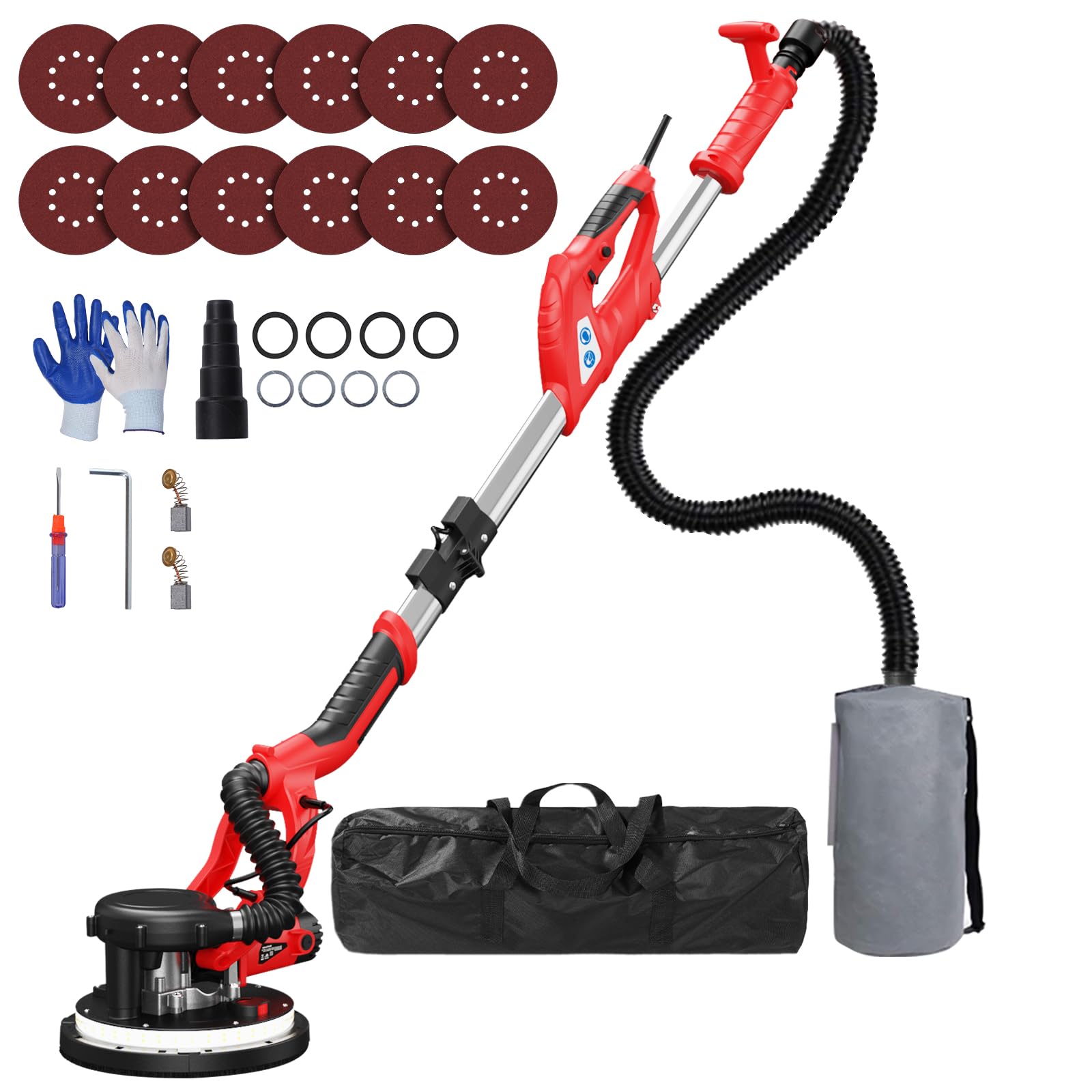
At 8.5 lbs, the KUPERIA is the lightest motorized drywall sander in this set, cutting overhead fatigue dramatically when sanding ceilings. The dual-channel dust system collects debris at the disc, and many users report a nearly dust-free room even without a dedicated shop vac — a standout for an integrated system. Its 8.5-amp motor handles drywall joint compound and popcorn ceilings efficiently across seven speed settings, and an LED light illuminates wall imperfections for better precision.

This kit arrives ready to work with 12 sanding discs, a carry bag, gloves, and a flexible dust hose. The dust collection works best with the disc kept flat against the surface, and the hose length is modest — covering large rooms may require repositioning the vacuum or cord. The sander is ideal for ceiling-focused DIYers and pros who prioritize light weight and minimal cleanup over maximum reach.

💡 💡 Tip: For maximum dust capture, keep the sanding disc fully flat against the surface — tilting reduces suction.

Bottom line: If ceiling work is a priority, the KUPERIA's 8.5-lb weight and strong dust control make it the best all-around drywall sander for the price.

Check Latest Price
#02

Proven Track Record

WEN 6369 Electric Drywall Sander

89 /100
Kirk Score Excellent
Weight
9.2 lbs
Motor Power
5 Amp
Variable Speed
600-1500 RPM
Dust Collection
External vac via 15 ft hose
Check Details on Amazon

Pros

  • Smooths drywall joints and textured ceilings effectively — 320 mentions, 90% positive
  • Cuts sanding time far below manual pole sanders — 112 mentions, 93% positive
  • Delivers strong value with hose length and capable motor — 181 mentions, 93% positive

Cons

  • At 9.2 pounds, extended ceiling sanding can tire arms faster than lighter alternatives — 191 mentions, 80% negative
  • Dust collection relies on connecting a strong external vacuum—without it, fine airborne dust can accumulate — 244 mentions, 30% negative

The WEN 6369’s defining advantage is its 15-foot dust hose, which lets you sand entire ceilings and tall walls without repositioning your vacuum. The motor and build quality hold up under the demands of multi-room drywall jobs. While the lighter top pick in this category cuts weight and integrates a superior dust channel, the WEN is a durable option for those who value extended reach and don’t mind carrying a few extra pounds. It’s a natural fit for DIYers and semi-pros who already own a high-powered shop vac—expect ceiling passes to feel heavier, and plan on connecting that vac to keep airborne dust minimal.

💡 💡 Tip: Use a high-CFM shop vacuum and align sandpaper holes carefully to maximize dust capture.

Bottom line: If you have a capable shop vacuum and plan to sand whole rooms, the WEN 6369’s long hose and speed are a practical investment; just budget for the extra arm effort on ceilings.

Check Latest Price
#03

Best Cordless Option

DEWALT DCE800B Sander

86 /100
Kirk Score Excellent
Weight
8.59 lbs
Motor Power
Brushless 20V
Variable Speed
Dust Collection
Airlock dust extractor connection
Check Details on Amazon

Pros

  • Brushless motor delivers controlled, swirl-free passes on drywall compound. — 18 mentions, 94% positive
  • Airlock dust extractor connection pairs with Dewalt or third-party shop vacs to capture dust at the source. — 16 mentions, 75% positive
  • Cordless design eliminates cord snags and tangles, making ceiling and ladder work far less frustrating. — Reviewers praise the lack of cord tangling during overhead work

Cons

  • Dust pickup suffers without a high-flow external vacuum and a tight hose connection — the onboard port is not a standalone system. — 16 mentions, 25% negative; some reviewers report poor pickup
  • Runtime maxes out at 30-45 minutes per 4Ah pack, so a full room job will require at least two spare high-capacity batteries. — 10 mentions, 40% negative — short runtime is a common pain point

Where corded sanders force you to wrestle a power cord around ladders and scaffolding, the DCE800B’s cordless design trades runtime for pure maneuverability. The brushless motor provides consistent, swirl-free passes on joint compound, and the onboard Airlock dust port pairs with a shop vac to keep airborne dust low.

This sanding system is for Dewalt 20V users who already own several 4Ah or larger batteries and tackle touch-ups, final passes, or smaller rooms away from power. Without spare packs, you’ll be swapping batteries every 30-45 minutes — an impractical rhythm for whole-home jobs.

💡 💡 Tip: Connect a high-flow shop vac with a secure dust hose - the Airlock port alone cannot maintain clean air during sustained sanding.

Bottom line: Cordless maneuverability at a premium price — only practical for Dewalt 20V owners who keep a stable of 4Ah+ batteries on hand.

Check Latest Price
#04

Feature-Packed Value

IMQUALI 8A Sander

84 /100
Kirk Score Excellent
Weight
8.6 lbs
Motor Power
8 Amp
Variable Speed
800-1800 RPM, 7 speeds
Dust Collection
10-hole disc, built-in vacuum, bag
Check Details on Amazon

Pros

  • 7-speed dial for fine-tuning to different grits and surfaces — 54 mentions, 96% positive
  • 8-amp motor powers through knockdown texture and joint compound — 64 mentions, 97% positive
  • Excellent value, including 12 sanding discs, carry bag, and more — 54 mentions, 96% positive

Cons

  • Weight can become burdensome during prolonged overhead sanding — 88 mentions, 34% negative — mixed opinions on heft
  • Dust collection may disappoint without a strong external vacuum — 133 mentions, 25% negative — some users report dust escaping

Where 'the top pick' excels at lightweight dust control, the IMQUALI counters with a feature-packed value: an 8-amp motor, 7 distinct speeds, and a generous 12-disc starter kit at a mid-range price. This suits DIYers tackling walls and moderate ceiling work who appreciate speed adjustability for different surfaces and grits. Keep in mind that built-in dust collection performs best when paired with a strong external vacuum; without one, some drywall dust may escape.

💡 💡 Tip: Pair with a strong shop vacuum and make sure disc holes line up with the pad for best dust extraction.

Bottom line: For DIYers who already own a capable shop vac and want speed versatility without spending top-tier money, this IMQUALI offers a compelling balance of muscle and control.

Check Latest Price
#05

Power Performer

Runner-Up

80 /100
Kirk Score Excellent
Weight
8.9 lbs
Motor Power
9 Amp (1000W)
Variable Speed
800-2200 RPM, 6 speeds
Dust Collection
6-hole disc, built-in vacuum, bag
Check Details on Amazon

Pros

  • 1000W motor tears through thick texture and popcorn ceilings quickly — 148 mentions, 82% positive
  • Bright LED and 6-speed dial (800–2200 RPM) give fine control for different surfaces — 62 mentions, 90% positive
  • Kit includes safety gear, 15 discs, and a carry bag — useful for DIYers starting from scratch — 51 mentions, 92% positive

Cons

  • At 8.9 pounds, prolonged overhead use may lead to arm fatigue — 62 mentions, 68% negative
  • Dust collection relies on a high-flow shop vac; the built-in system alone may not contain fine dust — 104 mentions, 39% negative

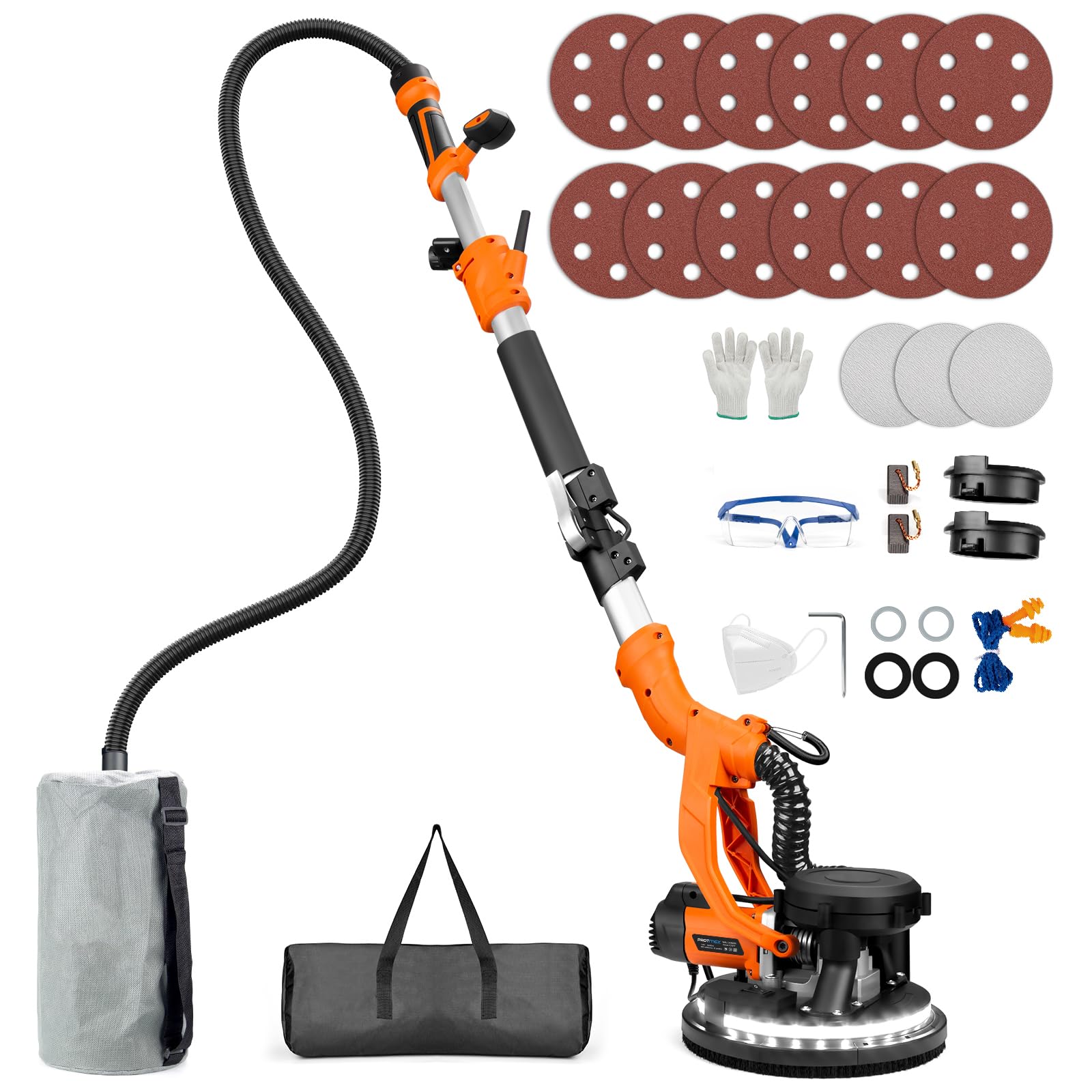
Where the top pick prioritizes dust containment and light weight, the Protmex delivers brute force for heavy removal jobs. Its 1000W motor and 2200 RPM top speed make fast work of stubborn popcorn ceilings and thick joint compound, and the included safety gear and 15 discs add value for a first-timer kit. The trade-off is weight: at 8.9 pounds, overhead sessions can fatigue arms sooner than with an 8.5-pound competitor. Dust collection is adequate only when paired with a strong shop vacuum; the built-in dust bag system tends to leak without that assist. This sander suits DIYers tackling major texture removal who don't mind hooking up a vac and can handle the heft for ceilings.

💡 💡 Tip: Pair with a high-CFM shop vacuum and ensure disc holes are aligned; the built-in bag alone won't contain fine dust.

Bottom line: For scraping a popcorn ceiling or leveling thick compound, this tool's raw power is hard to match at this price, provided you already own a capable shop vac.

Check Latest Price
#06

Fatigue-Fighting Design

GEVEELIFE 880W Sander

81 /100
Kirk Score Excellent
Weight
Motor Power
7.33 Amp (880W)
Variable Speed
1000-2100 RPM, 5 speeds
Dust Collection
10-hole disc, built-in vacuum, bag
Check Details on Amazon

Pros

  • Back belt redistributes weight to the shoulders, reducing arm strain during overhead work. — 20 mentions, 95% positive; belt praised for reducing strain
  • Five speed settings let you dial in the right aggression for joint compound or popcorn removal. — 9 mentions of good adjustability
  • Simple assembly and intuitive controls mean you start sanding quickly. — 14 mentions, 86% positive

Cons

  • Even with the back belt, the tool's weight can still fatigue arms during very long ceiling sessions. — 13 mentions, mix of positive and negative on weight
  • The included dust bag can't contain enough fine drywall dust; a shop vac is necessary for a reasonably clean workspace. — 27 mentions, 33% negative — dust escapes without external vacuum

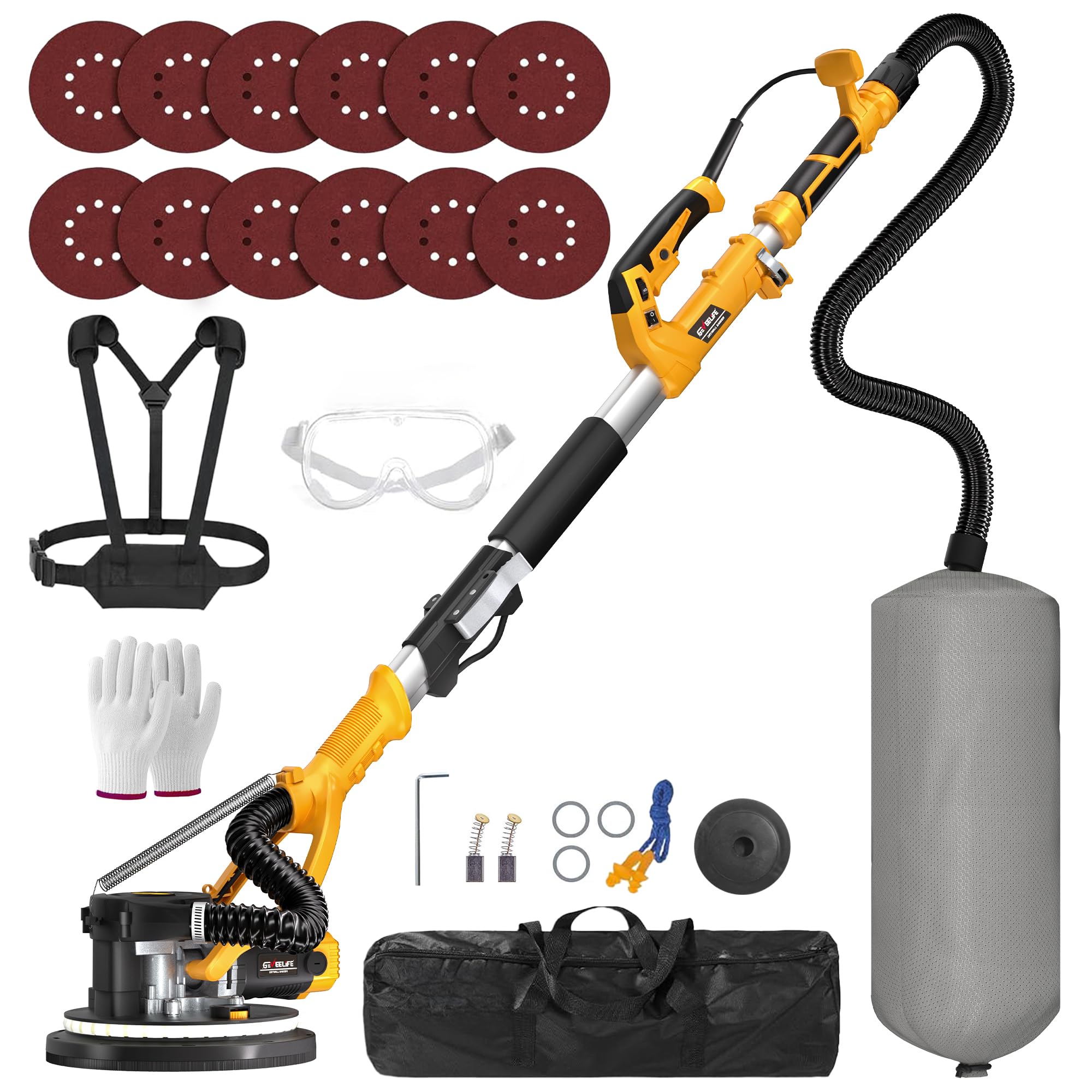
The back belt is the defining feature — it redistributes weight onto the shoulders, directly fighting the arm fatigue that makes ceiling sanding punishing. Combined with an extendable handle for overhead reach, this sander sacrifices sheer lightness for a smarter ergonomic solution. The included 12-disc kit and safety gear add out-of-box value.

DIYers tackling lengthy ceiling projects will notice the difference the belt makes, even though the dust bag alone won't contain the mess; connecting a strong shop vac is necessary for acceptable dust control, matching the reality of every mid-range sander. The belt doesn't eliminate all strain — the tool remains substantial — but it shifts the burden to larger muscle groups.

💡 💡 Tip: Connect a high-quality shop vac to the dust hose; the built-in bag alone won't keep dust at bay.

Bottom line: If you're facing extensive ceiling sanding and want an ergonomic edge without paying a premium, this is the sander that spares your arms — just be ready to hook it up to your shop vac.

Check Latest Price
#07

Wall-only budget

ZENY 800W Sander

86 /100
Kirk Score Excellent
Weight
12.58 lbs
Motor Power
5 Amp (800W)
Variable Speed
1000-2000 RPM
Dust Collection
Includes hose for external vac
Check Details on Amazon

Pros

  • Handles drywall wall sanding effectively at a budget-friendly price. — Multiple reviews confirm smooth joint sanding on walls.
  • Offers the lowest upfront cost for a powered sander, making it a good entry point for occasional use. — Shoppers repeatedly cite the low price as the primary draw.

Cons

  • At over 12.5 lbs, the sander is too heavy for practical ceiling sanding, so it is effectively restricted to walls. — Weight complaints are the top negative, with users noting fatigue during overhead use.

The ZENY 800W sander provides powered sanding capability at the lowest entry cost in this category. Variable speed and included pads handle joint compound on walls effectively. At over 12.5 pounds, however, the weight makes overhead sanding impractical, limiting it to vertical surfaces. Dust collection improves noticeably when connected to a strong shop vac.

Bottom line: If your project is limited to walls and you have a capable shop vac, this sander handles the job for the lowest price — just do not expect to use it on ceilings.

Check Latest Price
#08

Wall-only power

MYTOL 7.2A Electric Drywall Sander

83 /100
Kirk Score Excellent
Weight
15.85 lbs
Motor Power
7.2 Amp
Variable Speed
900-1800 RPM, 6 speeds
Dust Collection
Built-in vacuum, bag, hose
Check Details on Amazon

Pros

  • Strong 7.2A motor handles wall drywall sanding quickly — 246 mentions, 80% positive
  • Good value with 12 sandpapers and adjustable speed display — 94 mentions, 85% positive on value

Cons

  • Dust collection is weak without a shop vac — the included bag can leak fine dust into the room — 204 mentions, 43% negative — dust escapes readily

The MYTOL's 7.2-amp motor handles wall sanding with speed, and the included 12 sandpapers and variable speed make it a good value for the price. However, its 15.8-lb weight makes ceiling work a no-go; this is strictly a wall sander.

Bottom line: This sander works for wall-only projects where overhead lifting isn't required; for any ceiling sanding, look elsewhere.

Check Latest Price
#09

Long reach

Gioventù 750W Sander

82 /100
Kirk Score Excellent
Weight
Motor Power
7 Amp (750W)
Variable Speed
900-1800 RPM, 7 speeds
Dust Collection
Built-in vacuum, bag
Check Details on Amazon

Pros

  • Powerful 750W motor handles sheetrock and plaster joint sanding without slowing. — 22 mentions, 68% positive
  • Extendable aluminum rod and 360° swiveling head reach high walls and tight corners. — Positive comments on reach and 360° rotation

Cons

  • Heavy around 11–12 lbs makes overhead sanding exhausting. — 14 mentions, 64% negative

The extendable rod and 360° swiveling head reach tight spots, and the motor handles sheetrock and plaster. At around 11–12 pounds, overhead sanding becomes tiring quickly. The built-in dust bag leaks; pairing with a powerful shop vac is necessary for acceptable control. It struggles against lighter, better-sealed alternatives in the same price range.

Bottom line: For wall sanding where the long reach is needed and weight can be rested on the surface, this sander can work — but pair it with a robust shop vac and avoid ceiling work.

Check Latest Price

How to Choose

Weight and Ceiling Use

A sander’s weight compounds dramatically when you’re holding it above your shoulders. A 9.5-lb tool can feel 50% heavier than an 8.5-lb tool after ten minutes. If more than a quarter of your sanding is overhead, target sanders in the 8.5-lb range or lighter.

Heavier sanders (over 11 lbs) are still practical for wall work, where gravity helps you control them. But attempting a whole ceiling with a 15-lb unit will exhaust even fit users and often leads to uneven sanding from fatigue.

Dust Collection Reality

Every drywall sander includes a dust bag or hose port, but built-in suction rarely achieves more than partial pickup. The real key is connecting the sander to a dedicated shop vacuum with a HEPA filter and matching hose diameters.

Look for sanders with a well-designed dust port that directs airflow through the disc holes. Even the best port design fails if the vacuum isn’t strong enough—so plan on a minimum 5-hp shop vac for acceptable results.

Motor Power and Speed Control

Amp rating or wattage indicates raw material removal power. A 5-amp motor handles joint compound, while an 8-amp or higher motor eats through thick popcorn texture faster. But more power often adds weight.

Variable speed lets you dial back RPM for fine finishing or cranking up for rapid stock removal. Lower speeds also reduce heat buildup that can prematurely wear sanding discs and load the filter. A speed range of 600-1800 RPM covers most tasks.

What’s in the Box

Included hose length, disc count, and safety gear can save $30-50 on your first project. A long 15-foot hose gives freedom to move without dragging the vacuum, but only if its connector fits your shop vac’s port.

Extras like a back belt or LED lights aren’t gimmicks—they materially reduce fatigue and improve visibility on ceilings. Factor in the cost of consumables: a single popcorn ceiling may consume 6-10 discs, so a starter pack of 12 is a decent baseline.

Frequently Asked Questions