// data-verified

7 Best Circular Saw Blades of 2026: Match the Blade to Your Project

Find the best circular saw blade for your cuts: smooth finish, fast ripping, or cordless efficiency. Our guide matches blade to project.

Upgrading from the blade that came with your circular saw can feel like a different tool altogether — stock blades rarely deliver clean edges. Budget multi-packs may promise versatility but often bring vibration, dull teeth, or balance issues that compromise safety. Meanwhile, premium finish blades can chip if you accidentally hit a nail. The right blade matches your specific task, not the highest tooth count or the lowest price.

Tooth count, kerf thickness, and carbide quality define how a blade performs on plywood, framing lumber, or laminate. Thin kerf blades extend battery life on cordless saws but can wander if the arbor has play. A 60-tooth blade leaves glass-smooth crosscuts but is too slow for ripping. This guide picks blades that earn their keep in real workshops and job sites, without the hype.

#01

Best Overall

Diablo 7-1/4" 60T Ultra

96 /100
Kirk Score Outstanding
Kerf
0.059 in (ultra-thin)
Arbor Size
5/8 in
Tooth Count
60
Blade Diameter
7-1/4 in
Check Details on Amazon

Pros

  • Glass-smooth crosscuts on plywood, hardwood, and melamine with virtually no tear-out.
  • Finish-ready edges that drastically reduce sanding time.
  • TiCo carbide stays sharp through extensive use in clean material.

Cons

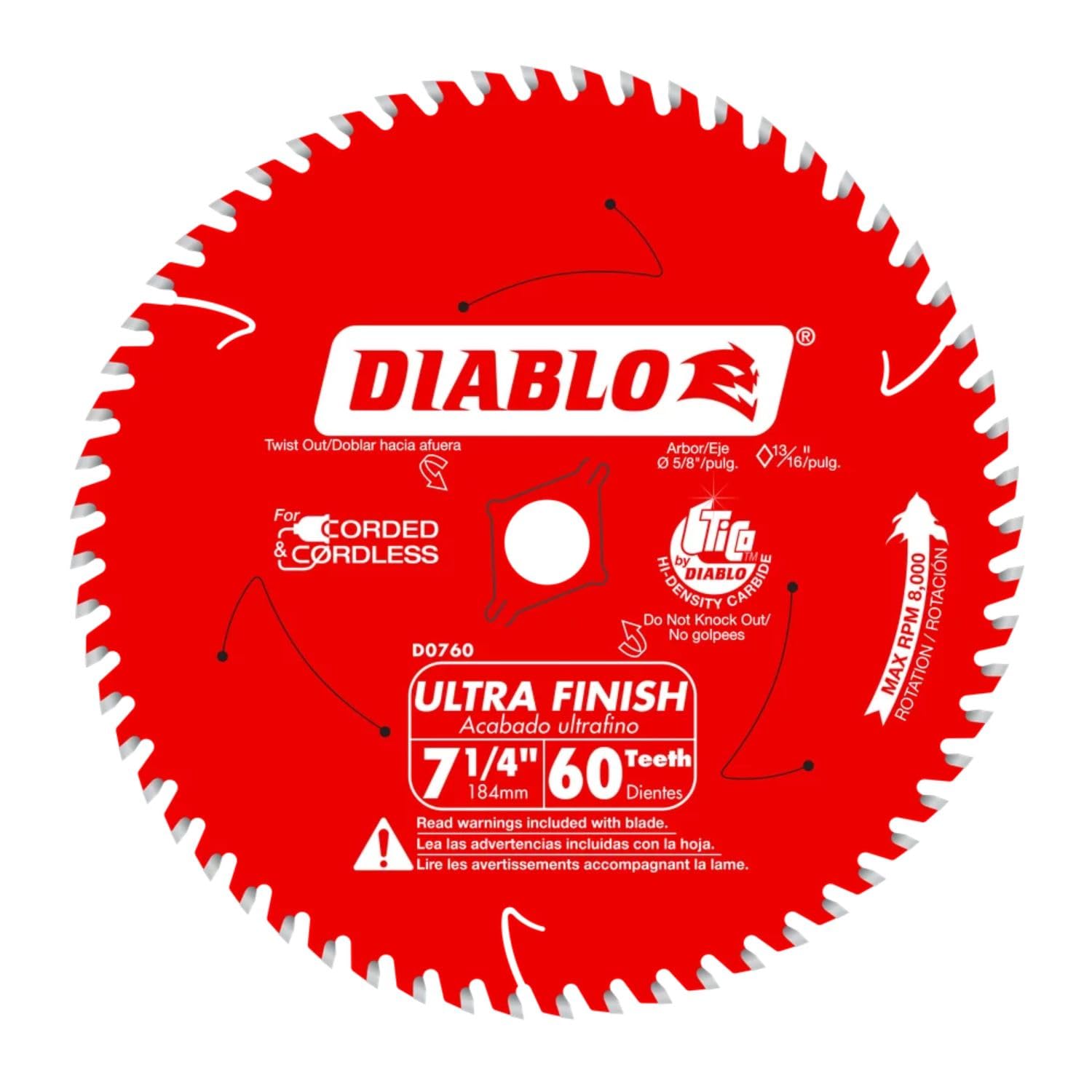
Crosscuts left by this blade often eliminate the need for sanding on plywood, hardwood, and melamine. The 60 alternating-top-bevel teeth with a 10° hook shear cleanly through wood fibers, while the Perma-Shield coating resists pitch buildup and keeps the plate running cool. TiCo carbide holds an edge through repeated use in finish-grade material, and many woodworkers report factory-sharp cuts long after the first install.

This is a blade built for finish carpenters, cabinetmakers, and trim installers who demand zero tear-out on visible edges. It is engineered exclusively for crosscutting clean, nail-free stock — not for ripping thick lumber or demolition where hidden fasteners lurk. For those jobs, a 24T or 40T blade is the right tool. Within its design window, the Diablo 60T delivers premium results at a mid-range price that outperforms blades costing twice as much.

Bottom line: If your work demands splinter-free finish carpentry and you are willing to dedicate a blade to crosscut-only duty, the Diablo 60T Ultra Finish delivers results that rival dedicated cabinet-shop blades at a fraction of the cost.

Check Latest Price
#02

Best All-Purpose Finish

Diablo 7-1/4" 40T Finish

96 /100
Kirk Score Outstanding
Kerf
0.09 in (thin)
Arbor Size
5/8 in
Tooth Count
40
Blade Diameter
7-1/4 in
Check Details on Amazon

Pros

  • Leaves glass-smooth edges on oak and plywood, reducing sanding across hardwoods and softwoods.
  • TiCo carbide resists dulling, maintaining clean cuts through many projects.
  • The 0.09-inch kerf reduces material waste and lets lower-powered saws cut without bogging down.

Cons

  • May show extra tear-out on melamine or veneer compared to a 60-tooth finish blade.

With 40 ATB teeth and a super-thin laser-cut kerf, this blade delivers clean crosscuts in hardwood and plywood while still biting through 2x material for ripping. TiCo carbide keeps the edge sharp over many projects, and the non-stick coating reduces heat buildup.

It suits woodworkers who move between framing and finish work and want one blade to handle both. Expect minimal tear-out on solid wood and plywood. On melamine or veneer, the 40-tooth design may show more chipping than a dedicated 60-tooth ultra-finish blade, but for most furniture and cabinet parts the cut is still clean enough.

Bottom line: If your work spans rough framing and visible finish cuts, this blade replaces two specialized blades without swapping — a time-saver for one-blade workshops.

Check Latest Price
#03

Best Budget Combo for Small Saws

Revvstark 6-1/2 24T&60T Combo

93 /100
Kirk Score Outstanding
Kerf
Arbor Size
5/8 in
Tooth Count
24 & 60
Blade Diameter
6-1/2 in
Check Details on Amazon

Pros

  • Gives you both a framing and a finish blade for less than a single name-brand blade often costs.
  • Clean, splinter-free cuts from both tooth counts, even on plywood and trim.
  • Fits almost any 6-1/2-inch saw

Cons

  • Edge retention may not match Diablo or DEWALT under heavy daily use.
  • Occasional balance variation between blades can appear right out of the box.

This 2-pack puts a 24-tooth framing blade and a 60-tooth finish blade in your kit for a price below many single name-brand blades. Both carbide-tipped blades slice through framing lumber, plywood, and plastic without splintering — the 60T leaves edges clean enough for visible trim work. Sharpness holds up through a string of weekend projects, and they drop into most 6-1/2-inch saws from Dewalt, Ryobi, and Makita. For a homeowner moving between rough demolition and cabinet-grade cuts, it’s a smart buy. Just don’t expect the edge longevity of a Diablo or DEWALT under daily job-site use; occasional quality variance in balance is possible.

💡 Tip: Check both blades for balance before first use — if one wobbles, contact support for a quick swap.

Bottom line: For the weekend woodworker who wants one affordable set to cover framing and finish cuts, this 2-pack delivers more value than any single blade at this price.

Check Latest Price
#04

Best for Cordless Saws

DEWALT 6-1/2 24T Cordless

95 /100
Kirk Score Outstanding
Kerf
Thin kerf
Arbor Size
Tooth Count
24
Blade Diameter
6-1/2 in
Check Details on Amazon

Pros

  • Rips through framing 2x stock with minimal motor strain, preserving cordless battery for more cuts per charge.
  • Durable carbide teeth retain edge through repeated use, resisting chipping on framing lumber.
  • Thin kerf design reduces material removal, making it a direct efficiency upgrade for cordless saw users.

Cons

  • Leaves a rough edge with visible saw marks

Compared to standard-kerf framing blades, this DEWALT’s thin kerf draws less current, translating to noticeably more cuts from a single cordless battery charge. On cordless saws, that means fewer battery swaps on a job site — a practical advantage when power outlets are scarce. The anti-stick ToughCoat coating keeps pitch from gumming up the teeth, and the reinforced shoulder adds stability in demanding cuts. It’s meant for cordless circular saw owners tackling studs, joists, and rough crosscuts where speed and battery efficiency matter more than a smooth finish. Expect a rough edge from the 24-tooth layout; this blade is not suited for trim or visible work.

💡 Tip: Check your saw’s arbor for play before mounting — excessive runout can cause the thin plate to deflect, especially in aggressive cuts.

Bottom line: For 6-1/2-inch cordless circular saws that need to stretch battery life while framing, this blade delivers. Skip it if your project calls for furniture or trim-grade surfaces.

Check Latest Price
#05

Best Budget Ripping Blade

DEWALT 7-1/4 24T Framing

95 /100
Kirk Score Outstanding
Kerf
Thin kerf
Arbor Size
Tooth Count
24
Blade Diameter
7-1/4 in
Check Details on Amazon

Pros

  • Cuts extremely sharp out of the box, restoring speed to older saws
  • Delivers name-brand framing performance at a fraction of typical cost
  • Reinforced shoulder stands up to nail-embedded lumber and pallet wood

Cons

  • Leaves a rough edge on all cuts

Sharp enough to make a tired saw feel new, this 24-tooth DEWALT blade rips through 2x lumber and plywood without bogging down. The reinforced shoulder design helps it survive nail impacts that would chip finer teeth, and the ToughCoat anti-stick coating reduces pitch buildup during long framing sessions. At this price, it's a disposable workhorse for rough construction.

Cost-conscious DIYers and pros treating blades as consumables will appreciate the value. It's built for pallet cutting, floorboard removal, and structural framing where edge quality doesn't matter. The tradeoff is a consistently coarse cut — sanding or a finish pass with a higher-tooth blade is mandatory if the surface will be visible.

Bottom line: If you need a cheap, tough blade for framing that you won't mourn when it hits a nail, this DEWALT is the right choice — just keep a finish blade handy for visible cuts.

Check Latest Price
#06

Best Makita Cordless Upgrade

Makita 6-1/2 40T Fine Crosscut

94 /100
Kirk Score Outstanding
Kerf
Ultra-thin
Arbor Size
5/8 in
Tooth Count
40
Blade Diameter
6-1/2 in
Check Details on Amazon

Pros

  • Glass-smooth crosscuts in plywood and laminates with minimal chipping.
  • Precise fit and high carbide quality on Makita cordless saws.
  • Clean performance across softwoods and hardwoods alike.

Cons

  • Ultra-thin kerf can flex if the arbor has play, causing slight wander.

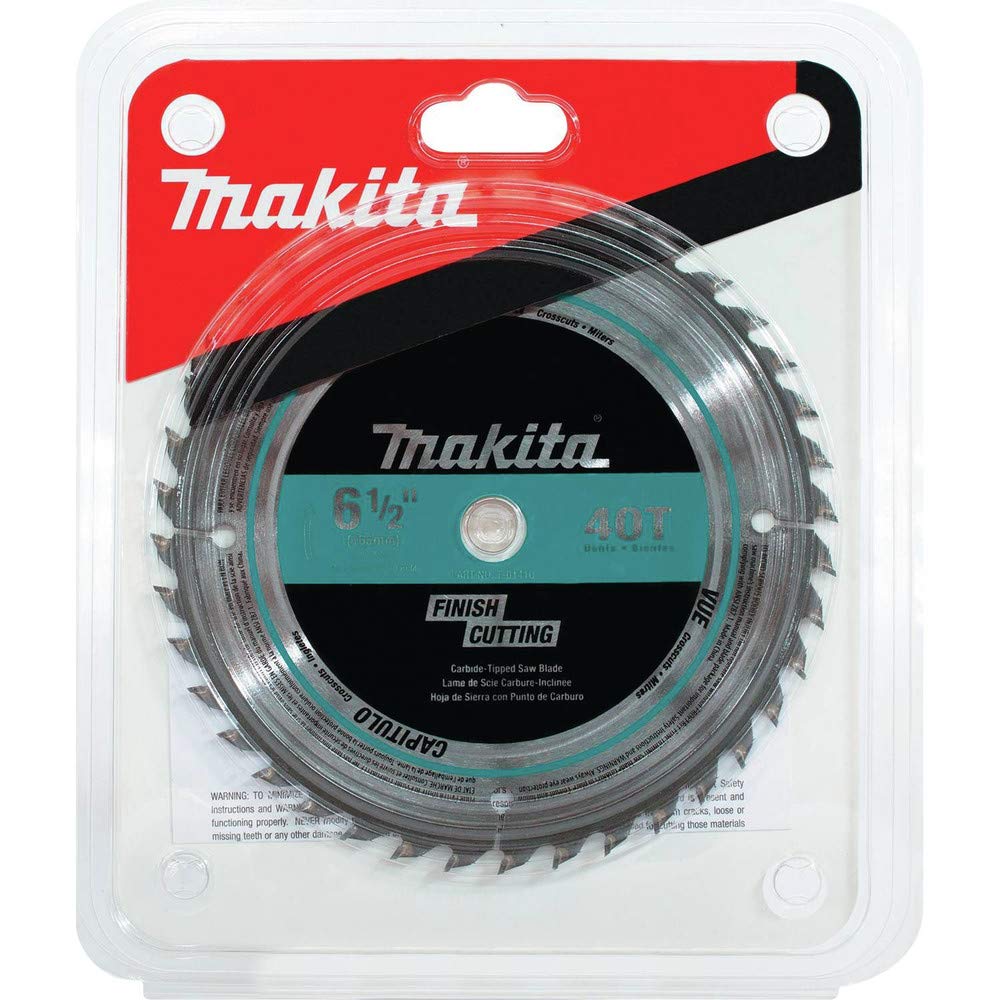
The Makita T-01410 brings 40 ultra-thin teeth to cordless 6-1/2-inch saws, cutting plywood and hardwoods with far less chipping than stock blades while drawing fewer amps. It’s built for finish work—crosscutting trim, shelving, and cabinet components—where a clean edge matters most. The thin kerf is a deliberate design choice to extend battery life, but it depends on a rigid arbor; saws with bearing play may lose a bit of precision. For Makita cordless users who keep their tool well-maintained, this blade turns rough cuts into crisp, glue-ready edges.

💡 Tip: If your saw has mileage on it, check the arbor bearing for play before mounting—the thin kerf rewards tight tolerances.

Bottom line: For Makita cordless saw owners doing finish work, this blade is the sharpest upgrade—smoother cuts and kinder to the battery.

Check Latest Price
#07

Plunge/track saw

Makita 6-1/2 56T Plunge

94 /100
Kirk Score Outstanding
Kerf
Ultra-thin
Arbor Size
Tooth Count
56
Blade Diameter
6-1/2 in
Check Details on Amazon

Pros

  • Cuts plywood, MDF, and laminates with near-zero chip-out, while the thin kerf conserves cordless battery life.
  • Quiet, smooth operation in plunge and track saws, a noticeable upgrade from stock blades.

Cons

  • Carbide can wear more quickly on hardwoods and abrasive materials, reducing lifespan relative to the premium price.

The Makita B-57342 blade rips through plywood, MDF, and laminate with a near-silent, chip-free finish on plunge saws. The 56-tooth ultra-thin kerf and fluorine coating make it ideal for cabinet installers. However, on hardwoods, the carbide can dull faster than expected, and the premium price is tough to justify for occasional use or standard saws.

Bottom line: If you use a Makita plunge saw for cabinet-grade sheet goods and can accept a shorter lifespan on hardwoods, this blade's chip-free finish justifies its niche. For heavy daily use in hardwood, step up to a blade with thicker carbide.

Check Latest Price

How to Choose

Tooth Count

Tooth count directly affects cut finish and speed. Low-count blades clear chips quickly but can tear grain on plywood, while high-count blades minimize tear-out at the cost of more friction, which can cause burning if you push too fast.

Match tooth count to the material: 24-tooth for fast ripping and framing, 40-tooth for all-purpose cuts in plywood and trim, 60-tooth and above for splinter-free crosscuts in hardwood, melamine, and veneer.

Kerf Thickness

Thin kerf blades remove less material, reducing the load on your saw and extending cordless battery life. The trade-off: a thin plate can flex if your saw's arbor has any play, leading to a wavy cut. Full-kerf blades resist deflection but drain batteries faster and demand more power.

Carbide Grade & Coating

Carbide tips determine longevity; TiCo and high-density tungsten carbide hold an edge longer through hardwoods and laminates. Anti-stick coatings like Perma-Shield or ToughCoat reduce pitch buildup and heat, but they wear away on heavy demolition work. A cheap blade with no-name carbide may dull after one weekend project.

Arbor Size

Most circular saw blades use a 5/8-inch arbor with a diamond knockout to fit different saws. If the arbor doesn't match your saw, the blade cannot be mounted safely. Check your saw's manual before buying.

Blade Diameter

Blade diameter must match your saw — using a larger blade than specified can overload the motor and contact the guard. Standard sizes are 6-1/2 inches for cordless saws, 7-1/4 inches for most corded saws, and 8-1/4 inches for heavy-duty models. A blade too small won't cut through thick material.

Frequently Asked Questions