// data-verified

12 Best Reciprocating Saw Blades of 2026: Pick the Right Blade for the Job

Which reciprocating saw blades hold up for demolition, pruning, and thick metal — and which budget packs fail too quickly. For DIYers and pros who need the right blade for the job.

A reciprocating saw only performs as well as its blade, yet too many homeowners end up with a drawer full of dull, bent metal after tackling a single project. Low-cost blades often lose their edge within minutes in hardwood or metal, leaving you fighting the saw instead of the material.

The real difference comes down to matching the blade material and tooth design to the job — carbon steel, bi-metal, or carbide-tipped all serve distinct purposes. A pruning blade dulls instantly in cast iron, and a demolition blade struggles on copper pipe.

Sorting through the options means ignoring flashy piece counts and focusing on whether a blade stays sharp in the material you actually cut — whether that's nail-embedded framing, thick tree roots, or stainless steel. Understanding these material and design differences is the difference between a quick job and a frustrating half-day.

#01

Best Overall

Milwaukee 49-22-1129

96 /100
Kirk Score Outstanding
Blade Material
Bi-metal
Set Composition
Metal, Wood
TPI & Tooth Design
Varied TPI
Check Details on Amazon

Pros

  • Thick .042-.062 inch blades resist flex and tooth breakage under heavy loads. — Quality (352 mentions, 99% positive), blade thickness praised for reducing flex.
  • 12-piece kit with 6-inch and 9-inch lengths covers wood, metal, and demolition in one organized case. — Variety (92 mentions, 100% positive), Carrying case (92 mentions, 99% positive).
  • Delivers clean, fast cuts in wood, metal, and nail-embedded lumber. — Performance (108 mentions, 96% positive), Cutting performance (90 mentions, 89% positive).

Cons

  • Bi-metal edges may wear faster than carbide blades during sustained heavy demolition. — Durability 159 mentions, 13% negative; some users note faster wear compared to Diablo carbide.

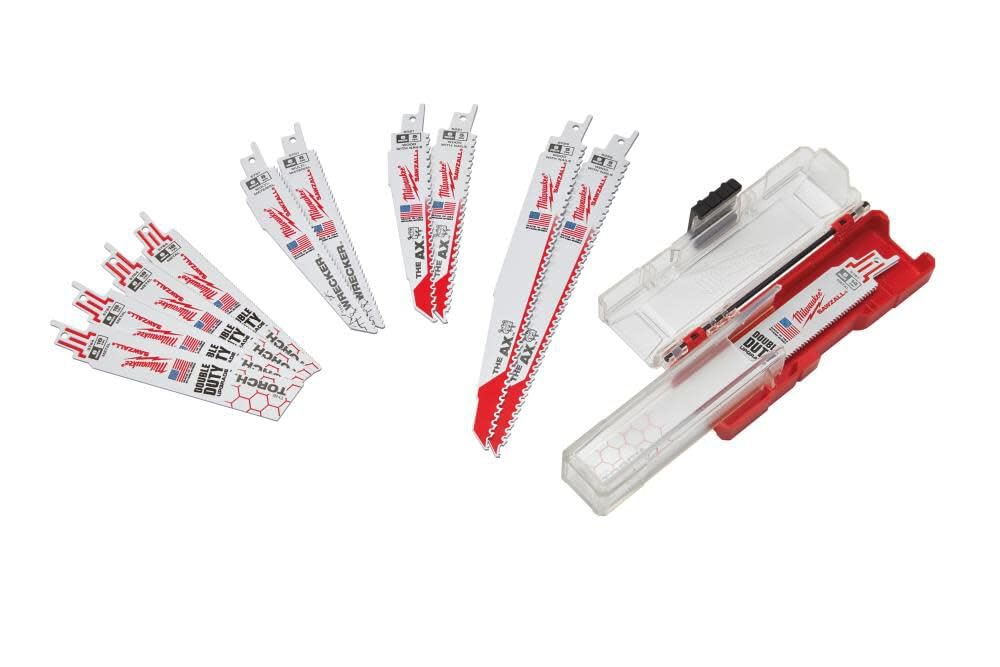
The .042-.062 inch thick blades resist flex across wood, metal, and demolition tasks, preventing wandering and tooth breakage. The thick profile reduces blade wobble, a common frustration with thinner economy blades. With 6-inch and 9-inch lengths covering metal cutting, wood pruning, and nail-embedded lumber, the kit handles mixed-material jobs without constant blade swaps. The included case organizes each blade securely, and clear labeling saves time on the job site. A light coating prevents rust without causing binding in wood.

Serious DIYers and contractors doing mixed-material demolition and remodeling will get the most from this set. The compact case fits easily in tool bags and protects blades from damage. Buyers focused exclusively on pruning or thick-metal cutting may want dedicated blades, and those pushing extreme demolition all day will see bi-metal wear faster than carbide alternatives. For a do-it-all kit that balances versatility and durability, this 12-piece setup covers the essentials.

💡 💡 Tip: For daily demolition with constant nail strikes, keep a carbide-tipped blade on hand to preserve edge life.

Bottom line: For mixed-material work, the 12-piece kit delivers blade variety and case durability that reduce downtime, accepting that carbide blades outlast bi-metal in extreme demolition.

Check Latest Price
#02

Best Budget Starter Set

DEWALT DW4856 Set

95 /100
Kirk Score Outstanding
Blade Material
Bi-metal
Set Composition
Metal, Wood
TPI & Tooth Design
14-24 TPI
Check Details on Amazon

Pros

  • Solid quality at a budget-friendly price point — Quality (639 mentions, 95% positive), Value (290 mentions, 95% positive)
  • Wide range of blades for wood and metal tasks — Variety (86 mentions, 100% positive)
  • Good cutting performance across materials — Performance (262 mentions, 98% positive)

Cons

The DW4856 kit spans both wood and metal cutting — not a thin-metal specialist like the brand's 24-TPI blade, but a general-purpose starter set. Six bi-metal blades in assorted lengths and tooth counts cover common tasks from pruning branches to cutting pipe. At its price, the set delivers practical value for light to medium cutting.

DIY homeowners tackling occasional demolition and mixed-material projects get a budget-friendly entry point. The thick paint coating can cause binding during aggressive cuts, though casual users rarely push it that hard. Blade life lags behind premium carbide options, but infrequent use masks the gap. Those needing a full demolition set with a case will prefer the top pick.

💡 💡 Tip: Scuff off the paint coating near the blade contact area to reduce binding — a few seconds of sanding helps the blade glide.

Bottom line: Casual DIYers get a capable, low-cost entry into mixed-material cutting. For heavy demolition, the top pick's larger set and case are a better fit.

Check Latest Price
#03

Best for Pruning & Landscaping

Diablo Pruning 3-Pack

96 /100
Kirk Score Outstanding
Blade Material
Carbide-tipped
Set Composition
Pruning
TPI & Tooth Design
3 TPI
Check Details on Amazon

Pros

  • Cuts up to 50X longer than standard pruning blades, even through soil and roots. — Durability (117 mentions, 86% positive), Cutting speed (27 mentions, 100% positive)
  • Aggressive, fast cutting through large limbs and dense wood without bogging down. — Cutting performance (147 mentions, 94% positive), Pruning performance (80 mentions, 96% positive)
  • Carbide tips maintain edge sharpness in dirty environments; Perma-SHIELD coating reduces bind-up.

Cons

  • Shank can snap under extreme prying or bending; best used with direct, straight cuts. — Durability topic 16% negative; reports of breakage at the connection point

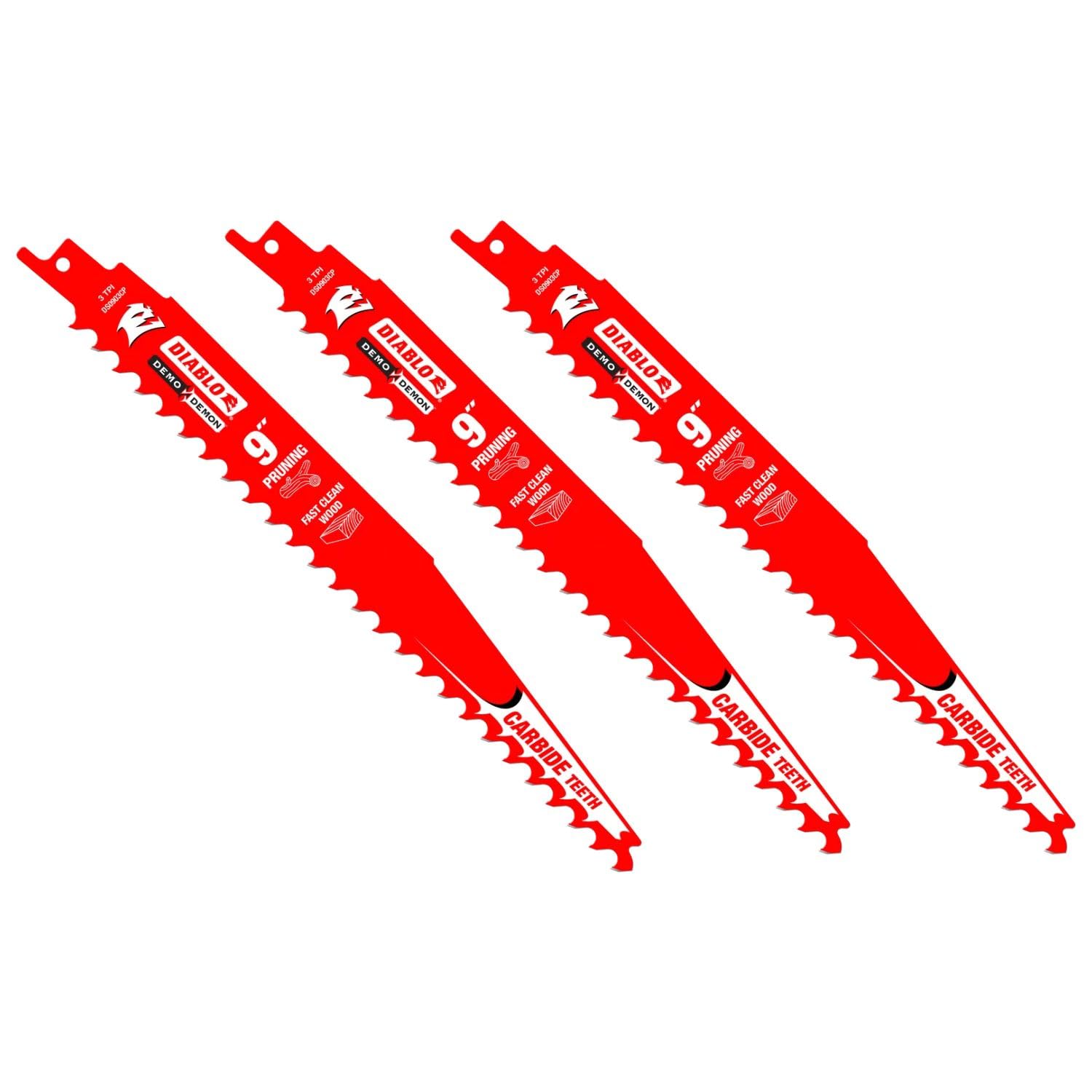
Carbide-tipped teeth cut up to 50X longer than standard pruning blades, holding their edge through soil, roots, and dense hardwood without immediate dulling. The Perma-SHIELD non-stick coating reduces drag in sappy wood, and the aggressive 3 TPI gullet clears chips quickly.

This 3-pack is built for professional landscapers and arborists working near the ground where dirt is unavoidable. The shank can snap under extreme prying, so avoid heavy side leverage — with direct, steady pressure, the blades power through large limbs and brush clearing jobs.

💡 💡 Tip: Keep cutting pressure straight; avoid side leverage or twisting that stresses the blade at the shank connection.

Bottom line: If you regularly cut through soil-laden roots and overgrown brush, these carbide blades extend the time between swaps dramatically compared to steel — just respect the shank's limits.

Check Latest Price
#04

Best for Thick Metal Cutting

Diablo Steel Demon

93 /100
Kirk Score Outstanding
Blade Material
Carbide-tipped
Set Composition
Metal
TPI & Tooth Design
8 TPI
Check Details on Amazon

Pros

  • Cuts through thick metal, cast iron, and hardened alloys where bi-metal blades fail. — Cutting performance (131 mentions, 93% positive), Functionality (72 mentions, 94% positive)
  • Lasts significantly longer than standard blades in extreme metal cutting jobs. — Durability (71 mentions, 75% positive); many users note one blade outperforms 10+ regular blades

Cons

  • Carbide teeth may fracture on highly hardened steel or abrupt impacts. — Durability topic 25% negative; some reports of teeth breaking on bed frames and hardened pins

Carbide edge lasts through jobs that would ruin a stack of bi-metal blades. It slices through thick metal, cast iron, and stainless — materials that quickly destroy standard teeth. Where bi-metal blades skate or dull rapidly, the Steel Demon's carbide makes steady progress through thick plate, cast iron soil pipe, and hardened alloys.

Plumbers cutting cast iron pipe and mechanics facing hardened steel will get the most value from this single blade. It is not built for wood, pruning, or general demolition; the tooth configuration is strictly for metal. On extremely hardened stock, carbide teeth can fracture if pushed aggressively without cutting oil.

💡 💡 Tip: Use cutting oil and moderate feed pressure to reduce tooth shock on hardened steel.

Bottom line: High single-blade cost offset by exceptional life and ability to cut materials others can't; a must for metalworkers.

Check Latest Price
#05

Best for Large Limbs

EZARC 15-inch Pruning

91 /100
Kirk Score Outstanding
Blade Material
Alloy steel
Set Composition
Pruning
TPI & Tooth Design
6 TPI
Check Details on Amazon

Pros

  • Extra-long 15-inch blade reaches high limbs and clears large trunks with less effort. — Cutting performance (134 mentions, 90% positive), Functionality (104 mentions, 93% positive)
  • Smooth, fast cutting in wet or dry wood, thanks to Japanese arc edge design. — Quality (128 mentions, 92% positive), Sharpness (72 mentions, 86% positive)

Cons

  • Incompatible with Ryobi reciprocating saws — check your tool before buying. — Product listing specification; confirmed by some user frustration
  • Shank may snap under excessive side load or twisting; not suited for prying or levering. — Durability topic: several reports of blade breakage during heavy use

The 15-inch length and fleam-ground tooth geometry drive through wet and dry hardwoods quickly, letting you reach high branches without a ladder. It excels for professionals trimming overhead limbs or clearing thick brush on large properties. The tradeoff: the blade is not for Ryobi reciprocating saws, and the shank can snap if you twist or lever the saw aggressively — use controlled, straight-line pressure for best results.

💡 💡 Tip: Use long, straight strokes without prying; reserve aggressive levering for hand pruning saws.

Bottom line: For arborist-style pruning of high limbs and large trunks, the extra reach and smooth cuts are hard to beat — provided you own a compatible saw and avoid twisting motions.

Check Latest Price
#06

Best Mid-Range Value Set

Bosch RAP7PK Set

94 /100
Kirk Score Outstanding
Blade Material
Bi-metal/High carbon
Set Composition
Wood, metal, demo
TPI & Tooth Design
Varied TPI
Check Details on Amazon

Pros

  • Swiss-made bi-metal construction provides low-vibration, straight cuts. — Owners remark on the steel's clean cutting performance in mixed materials.
  • Optimized tooth geometry for wood, metal, and demo yields fast, chatter-free results. — Feedback confirms smooth cutting in plywood and metal conduit.
  • Compact 7-blade selection covers essential tasks without overwhelming beginners.

Cons

  • Metal blades wear faster when cutting hardened steel; carbide blades are a better match for that task. — Some owners report edge loss after repeated cuts in thick steel.

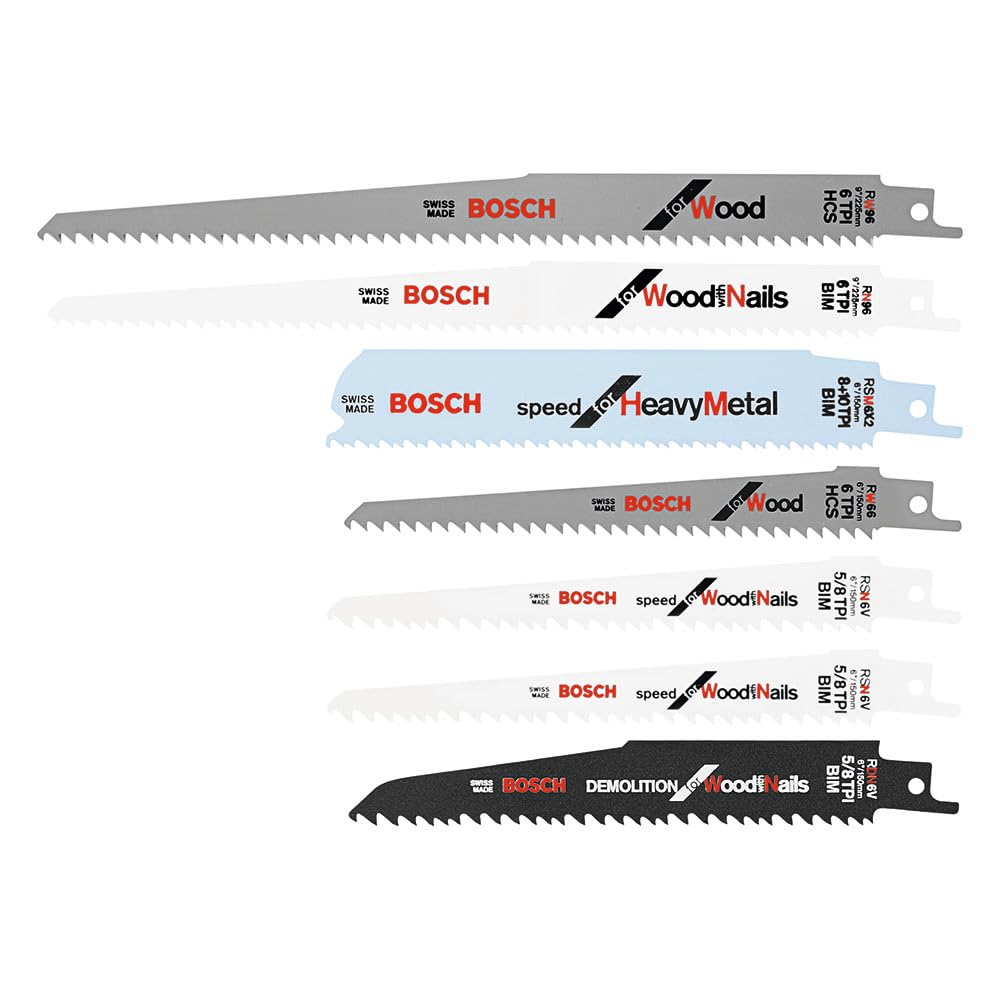
The Bosch RAP7PK set delivers Swiss-made cutting precision in a compact 7-piece kit that handles wood, metal, and demolition without clutter. Rather than chasing quantity, Bosch optimized tooth geometry for each blade type, resulting in clean cuts across common household materials. The top pick offers more variety, but this set appeals to homeowners and Bosch tool users who value OEM quality and don't need a dozen blades. Metal blades will lose their edge sooner on hardened steel — if your projects regularly involve rebar or thick alloy, a dedicated carbide blade from another set will handle that better.

Bottom line: For everyday home maintenance and mixed-material cutting, this Bosch set offers refined performance — but keep a carbide blade handy if hardened steel enters the job.

Check Latest Price
#07

Great Value for Craftsman Owners

CRAFTSMAN 11-Pc Kit

93 /100
Kirk Score Outstanding
Blade Material
Bi-metal
Set Composition
Wood, Metal, Demo
TPI & Tooth Design
Varied TPI
Check Details on Amazon

Pros

  • Bi-metal construction delivers clean cuts in wood, metal, and demolition tasks. — Quality (33 mentions, 97% positive), Functionality (16 mentions, 94% positive)
  • Guaranteed fit across older and newer Craftsman reciprocating saws. — Fit (7 mentions, 100% positive)

Cons

  • Edge life trails premium carbide blades — plan for more frequent swaps on heavy demolition. — Durability (12 mentions, 25% negative); some reviews note dulling quicker than expected

Craftsman tool owners get an OEM-fit set that slides securely into both older and newer reciprocating saws without adapter hassles. The bi-metal blades cover wood, metal, and demolition, and they cut cleanly through common home-project materials like PVC, drywall, and framing lumber. The included hard case keeps the assortment organized and protects teeth between jobs.

Blade longevity is adequate for weekend projects but trails carbide options when tackling nail-embedded wood or sustained demolition. This kit is right for DIYers who value perfect tool compatibility and don't mind replacing blades a bit sooner than a pro-grade carbide set would require.

Bottom line: For Craftsman system users who need a no-guesswork blade set for occasional pruning, framing repairs, and pipe cuts, the factory fit and organized case make this kit a practical grab-and-go option.

Check Latest Price
#08

Light yard cleanup

Caliastro Pruning 5-Pack

93 /100
Kirk Score Outstanding
Blade Material
High carbon steel
Set Composition
Pruning
TPI & Tooth Design
5 TPI
Check Details on Amazon

Pros

  • Light pruning without breaking the bank. — Value (121 mentions, 92% positive), Performance (157 mentions, 90% positive)
  • Holds up on small branches and roots for occasional tasks. — Sturdiness (31 mentions, 77% positive), Versatility (77 mentions, 97% positive)

Cons

  • Sharpness fades faster on dense hardwoods and after limited cuts. — Sharpness topic 132 mentions, 42% negative — many reports of dulling after limited cuts

These high carbon steel blades cut through softwood branches and roots without binding, making quick work of seasonal cleanup. Sharpness fades quickly on dense hardwoods, so expect to replace blades often during heavy use. That tradeoff suits homeowners tackling a one-time property clean-up, not ongoing pruning cycles.

Bottom line: For a one-time yard clean-up or light trimming of softwoods, this pack saves money up front — just expect to swap blades more often than with a pricier alternative.

Check Latest Price
#09

Budget yard trimming

VICRING Pruning 5-Pack

92 /100
Kirk Score Outstanding
Blade Material
High carbon steel
Set Composition
Pruning
TPI & Tooth Design
5 TPI
Check Details on Amazon

Pros

  • Budget-friendly option for light tree trimming and pruning. — Value (98 mentions, 97% positive); Performance (139 mentions, 94% positive)
  • Cuts mesquite and other common yard woods without immediate failure. — Cutting performance (96 mentions, 88% positive)

Cons

  • Sharpness can degrade quickly on repetitive thick cuts. — Sharpness (87 mentions, 25% negative); some users note reduced bite after heavy use

Remarkably affordable high carbon steel blades handle light trimming of mesquite and common yard woods without immediate failure. Edge life is limited on dense hardwoods, so this pack works best treated as a disposable option for occasional yard cleanups or dirty root work where blade damage is expected.

Bottom line: For budget-conscious weekend gardeners handling occasional trimming or dirty root work where blade damage is likely, these low-cost blades keep you stocked without a significant expense.

Check Latest Price
#10

Hardwood yard work

KOWOOD Pruning 5-Pack

92 /100
Kirk Score Outstanding
Blade Material
High carbon steel
Set Composition
Pruning
TPI & Tooth Design
5 TPI
Check Details on Amazon

Pros

  • Cuts through thick hardwood branches up to 12 inches without bending — Durability (88 mentions, 86% positive); users report cutting 12-inch hardwood without bending
  • Exceptional per-blade value for occasional yard work — Value (93 mentions, 97% positive)

Cons

  • Edge may dull relatively quickly on dry hardwood, requiring earlier replacement — Sharpness topic 75 mentions, 41% negative — some users found dulling after several cuts

High carbon steel blades handle 12-inch hardwood without bending, making them a sturdy choice for clearing mixed wood lots. This five-pack keeps per-blade cost low, though the edge fades after several cuts in dry hardwood — best for shorter pruning sessions rather than all-day use.

Bottom line: A cost-effective choice for homeowners with mixed wood lots or storm debris that doesn't demand marathon cutting sessions.

Check Latest Price
#11

Softwood pruning

EZARC 9-inch Pruning

91 /100
Kirk Score Outstanding
Blade Material
Cr-V steel
Set Composition
Pruning
TPI & Tooth Design
5 TPI
Check Details on Amazon

Pros

  • Quick cutting through softwood branches and roots. — Effectiveness (154 mentions, 95% positive)
  • Low per-blade cost suits occasional yard maintenance. — Value (112 mentions, 83% positive)

Cons

  • Edge life shortens on dense hardwood, making blade swaps more frequent than with premium options. — Durability (121 mentions, 32% negative)

The blades slice through softwood branches and roots with little effort, making them a practical choice for occasional yard trimming. Edge retention drops noticeably on dense hardwoods, so you'll reach for a fresh blade sooner than with pricier alternatives — but for light, frequent jobs the per-piece value still holds.

Bottom line: For homeowners trimming softwoods or clearing roots in soft soil, these blades offer a serviceable, low-cost solution — but plan on swapping them out sooner when tackling dense branches.

Check Latest Price
#12

Thin metal cutting

DEWALT DW4813 Metal Blades

93 /100
Kirk Score Outstanding
Blade Material
Bi-metal
Set Composition
Metal
TPI & Tooth Design
24 TPI
Check Details on Amazon

Pros

  • Clean, precise cuts in EMT, copper, and thin steel — 49 mentions, 82% positive – success on EMT, copper, exhaust
  • Budget-friendly 5-pack for light metal tasks — 34 mentions, 97% positive

Cons

  • Can snap or dull when cutting thick hardened alloys like bed frames or heavy exhaust — Breakage reported on exhaust pipes and bed frames

The DEWALT DW4813 5-pack delivers burr-free cuts in EMT conduit, copper pipe, and exhaust tubing thanks to its tightly spaced 24 TPI teeth. For thicker hardened alloys, the bi-metal teeth are out of their depth — stick to light metal stock. This makes the set a cost-effective choice for electricians, plumbers, and DIYers who don't need to cut cast iron or bed frames.

Bottom line: A solid choice for plumbers, electricians, or DIY metalwork where cost per blade is critical.

Check Latest Price

How to Choose

Blade Material

Carbon steel blades are the most affordable and work adequately in soft, clean wood, but lose their edge rapidly in hardwoods, metal, or abrasive conditions like dirt. For general renovation and mixed-material demolition, bi-metal blades — a flexible spring steel body with a hardened high-speed steel cutting edge — offer much better durability and resistance to snapping. Carbide-tipped blades take longevity to another level, lasting up to 50 times longer than standard blades in abrasive materials like root balls or cast iron, but they are brittle and can fracture under heavy impact or side load.

TPI & Tooth Design

Low TPI blades (3-6 teeth per inch) make fast, aggressive cuts in wood and pruning stock, but they leave a rougher finish and can cause vibration if pushed too hard. High TPI blades (14-24) produce smoother cuts in thin metal and pipe, but they remove material slowly and overheat if used for demolition. Variable-tooth designs combine alternating tooth patterns that reduce chatter and extend life when cutting nail-embedded wood — a smart middle ground for demolition.

The hidden trade-off is feed pressure: forcing a fine-tooth metal blade through wood will quickly burn the teeth, while a coarse demo blade in thin metal will grab, bend, and possibly snap. Match the TPI to the material thickness and hardness for safe, efficient cutting.

Set Composition

Multi-piece sets often bundle wood, metal, and demolition blades in a single kit, which can be convenient for occasional users. But the metal blades included in budget sets are frequently carbon steel and will dull almost immediately on actual pipe or conduit. Before buying a set, verify whether metal blades are bi-metal or carbide — otherwise you may pay for blades that never get used.

The smart approach is to treat a mixed set as a starter for wood and general demolition, then buy dedicated high-quality metal blades separately when you tackle metal work.

Blade Thickness & Rigidity

Blade thickness directly affects control and longevity. Thicker blades (0.042-0.062 inches) resist bending and vibration, keeping the cut straight even when plunging into embedded nails or cutting overhead. Thinner blades are lighter and put less strain on the saw, but they can wander, bind, or snap under side loads.

For demolition and rough framing, choose the thickest bi-metal blade your saw can handle. For pruning small branches, a thinner blade reduces fatigue and is less likely to crack if it hits a knot.

Shank Compatibility

Virtually all modern reciprocating saw blades use a universal 1/2-inch shank that fits major brands — DeWalt, Milwaukee, Makita, and most others. However, a few specialty blades (like the extra-long EZARC 15-inch pruning blade) are explicitly not compatible with Ryobi saws, and older or off-brand tools may have unusual clamps.

Before buying any blade, especially an extended-reach or premium option, check your saw's manual for shank restrictions. A blade that won't lock properly can become a serious safety hazard.

Frequently Asked Questions