// data-verified

11 Best Cordless Heat Gun of 2026: Mobile Repairs Without the Cord

DIYers can find a cordless heat gun for shrink tubing and thawing that won't drain batteries in minutes—spot the ones with real airflow.

A cordless heat gun sounds perfect for mobile repairs—no cord, quick heat for shrink tubing. But the reality is that many models reach 900°F yet feel like a warm breath because the fan is weak. That gap between temperature and airflow is the most common frustration, especially when you're trying to shrink a connector in a tight space with a battery dying.

The trick is matching the tool to the task. If you're doing paint stripping or large-area heating, a corded gun still rules. But for shrink wrap, thawing frozen locks, and small electrical work, the right cordless model saves time and hassle—as long as you bring a big battery. This guide focuses on units that deliver genuine convenience for portable jobs, without the constant battery swaps that turn a 5-minute fix into a half-hour ordeal.

#01

Best Overall Cordless Heat Gun
Pros

  • Trustworthy for heat shrink tubing and small connectors, with quick heat-up for the job. — 171 mentions, 90% positive on Functionality; 47 mentions, 85% positive on Cordless
  • Comfortable, well-built design that stands upright on its own with a battery attached. — 139 mentions, 79% positive on Quality
  • Reaches high temperatures fast for craft and shrink tube tasks. — 193 mentions on heat output, 53% positive; fast heat-up consistently noted

Cons

  • Airflow is very gentle, making large-area heating or paint stripping impractically slow. — 72 mentions, 82% negative; described as 'barely blows any air'
  • Battery consumption is high; runtime drops sharply with smaller packs and extended high-heat use. — 115 mentions, 63% negative; reports of only 12-15 minutes on a 5.0Ah battery

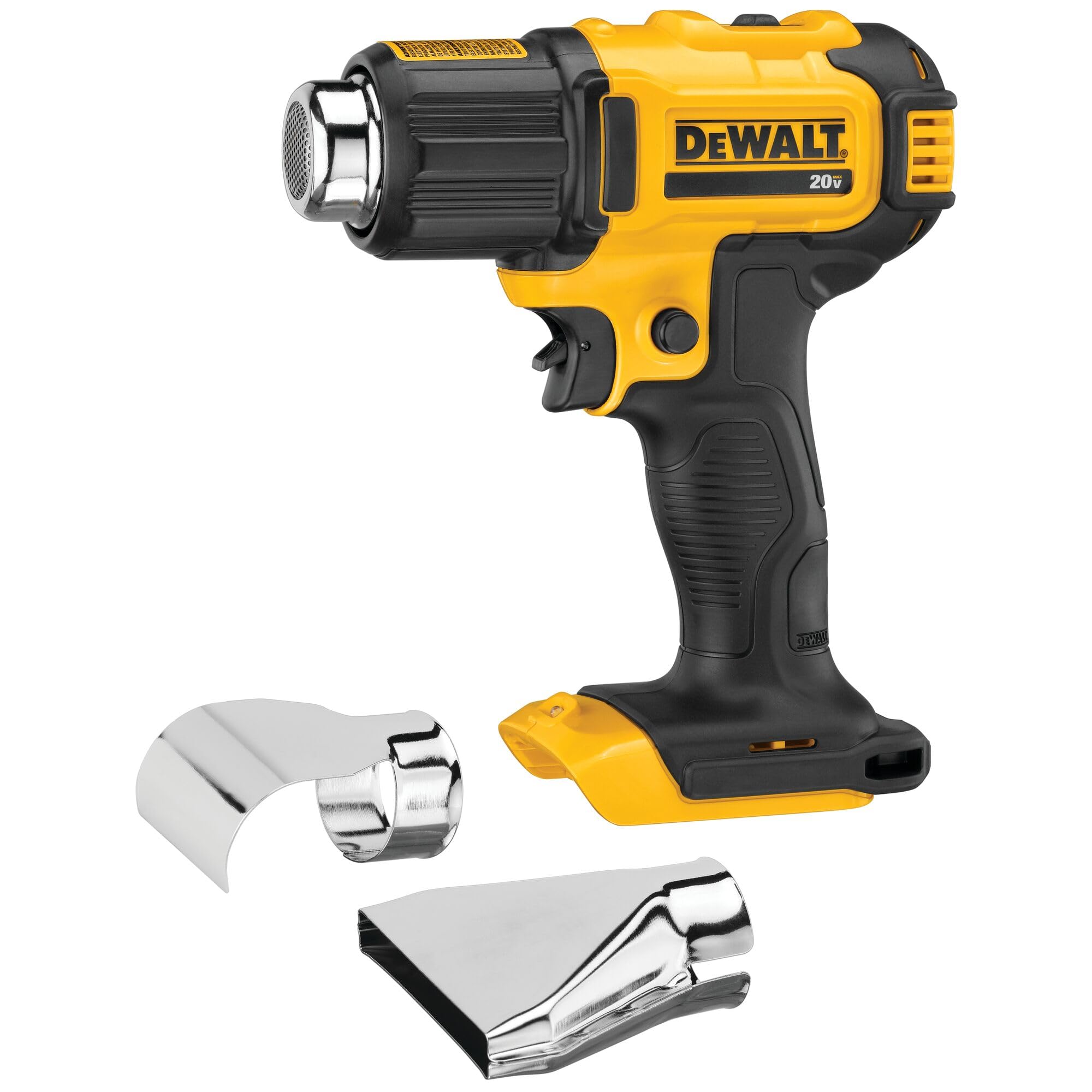
The DEWALT DCE530B nails the one task most cordless heat gun buyers actually need: shrinking tubing over wire connectors. It hits temperature in seconds and holds steady, with an LED light that makes dark junction boxes less frustrating. The comfortable shape and ability to stand upright on a battery pack add everyday practicality.

Heat output is on point for small connectors, resin art, or embossing. Airflow, however, is gentle — closer to a warm breeze than a focused blast. That means working on large surfaces or stripping paint is painstakingly slow. Battery drain is also notable; even a 5.0Ah pack may deliver only 12 to 15 minutes on high heat, so a spare battery is part of the deal.

This is a tool for electricians, field techs, and DIYers already in the DEWALT 20V system who need heat where a cord can't go. It's not for paint stripping or removing large decals — the airflow is too weak and runtime too short. If you limit expectations to shrink tube, light craft, and mobile repairs, it's a genuine upgrade from dragging an extension cord.

💡 💡 Tip: Always use a 5.0Ah or larger battery; smaller packs cut runtime drastically on high heat.

Bottom line: It earns its spot in the tool bag for anyone who needs portable heat shrink power in the DEWALT system, but don't expect it to replace a corded gun for paint stripping or large surface work.

Check Latest Price
#02

Best for Compact Shrink Tubing

Milwaukee 2688-20

89 /100
Kirk Score Excellent
Runtime
Max Temp
Airflow (CFM)
Battery Platform
M18
Check Details on Amazon

Pros

  • Shrink tubing performance shines in tight, awkward spaces — perfect for under-hood repairs. — 61 mentions on Functionality, 82% positive; multiple reviews highlight shrink tube performance.
  • Ready to use in seconds; no need to wait for a corded unit to climb to temperature. — 47 mentions on heat output, 40% positive (many say 'heats up fast')
  • Robust M18 build matches other Milwaukee tools and keeps the battery system unified. — 32 mentions, 72% positive on Quality; Tool Quality 17 mentions, 100% positive

Cons

  • Single temperature setting — can't lower heat for thin insulation or delicate wraps. — Several reviews mention frustration with the single temperature; no adjustment possible.
  • Battery depletes fast; a 5.0Ah or larger pack is required for more than a few minutes of use. — 34 mentions on battery life, 71% negative; 'goes through batteries quickly'.

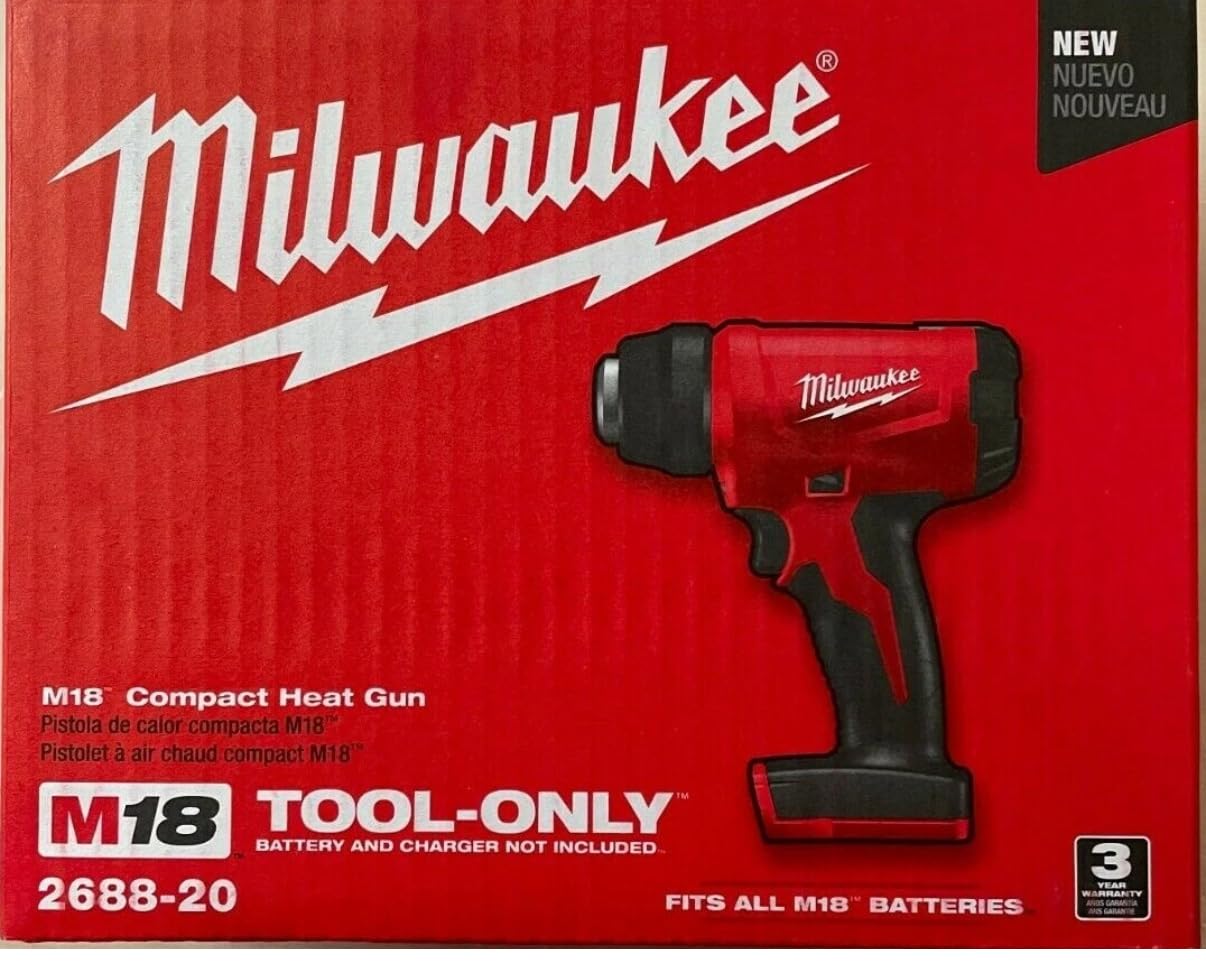
Heats in 7 seconds and slips into engine bays where bulkier tools can't reach. The compact body and rapid warm-up make it a natural for wiring harness repairs and quick heat-shrink jobs on the go. Against the top pick's broader user base, this gun wins on speed and portability.

It suits M18 owners who need occasional heat for shrink tubing, thawing frozen pipes, or bending small PVC. The single temperature setting rules out delicate work, and battery drain means a 5.0Ah pack is the practical minimum. For paint stripping or variable-heat crafts, a corded gun remains the right tool.

💡 💡 Tip: Use a high-capacity battery (5.0Ah or 12.0Ah); smaller packs will have you reaching for the charger often.

Bottom line: This compact Milwaukee is the right choice for M18 users tackling shrink tubing and quick thawing jobs — not paint stripping. Its rapid heat and tight-space access outweigh the single-setting limit for that niche.

Check Latest Price
#03

Best Value for Ryobi Fans

RYOBI P3150

86 /100
Kirk Score Excellent
Runtime
Max Temp
875°F
Airflow (CFM)
Battery Platform
RYOBI ONE+ 18V
Check Details on Amazon

Pros

  • Budget-friendly entry into cordless heat for Ryobi ONE+ battery owners — enough for shrink tube and light craft tasks. — 71 mentions on Functionality, 77% positive; 17 mentions on Value, 71% positive
  • Cordless design eliminates extension cords, making it easy to carry to remote jobsites, boats, or RVs. — 23 mentions on Portability, 96% positive

Cons

  • Single heat setting may overheat thin wire insulation and delicate materials — no temperature adjustment available. — 80 mentions on heating speed, 56% positive but many criticize single temp; some report overheating thin wire insulation.
  • Battery life drains quickly; even large ONE+ packs last only 15–20 minutes of continuous runtime, limiting it to short tasks. — 48 mentions, 69% negative; 'eats up a battery in two minutes' for some users.

Compared to the top pick, the RYOBI P3150 cuts the cost of cordless heat dramatically for anyone already on the Ryobi ONE+ platform. You get two nozzles and acceptable heat for light-duty shrink tube and craft work. Cordless freedom lets you carry it to a boat dock or RV without extension cords, and it reaches 875°F in under 10 seconds. Weekend DIYers will find it handy for heat-shrink tubing, thawing frozen locks, and softening labels. Runtime is limited: even a large battery drains in 15–20 minutes of continuous use. The single heat setting means it can overheat delicate materials, and it can't sustain the airflow needed for paint stripping or large-area heating.

💡 💡 Tip: For delicate wiring, pulse the trigger instead of holding it continuously to avoid overheating.

Bottom line: A sensible purchase for Ryobi users who need a grab-and-go heat source for quick shrink or thawing jobs — just keep a spare battery handy.

Check Latest Price
#04

Best Variable Temperature Control

Makita XGH02ZK

84 /100
Kirk Score Excellent
Runtime
21-30 min (6.0Ah)
Max Temp
1,022°F
Airflow (CFM)
4.2/7.1
Battery Platform
Makita 18V LXT
Check Details on Amazon

Pros

  • Independent dials for temperature and airflow give precise control for shrink tube, vinyl wrap, and plastic bending. — Customer feedback emphasizes the benefit of fine control; few cordless guns offer this level.
  • Runs up to 30 minutes on low with a 6.0Ah battery, allowing longer sessions without swaps. — Manufacturer claim supported by user reports of moderate battery usage on low air.

Cons

  • Maximum airflow, even on high, is modest and insufficient for heavy paint removal. — User feedback notes even the max setting struggles to generate blast-force air for stripping.
  • Premium-priced tool-only package requires a separate 6.0Ah battery for advertised runtime. — Price alone raises the entry barrier; budget-conscious buyers may balk.

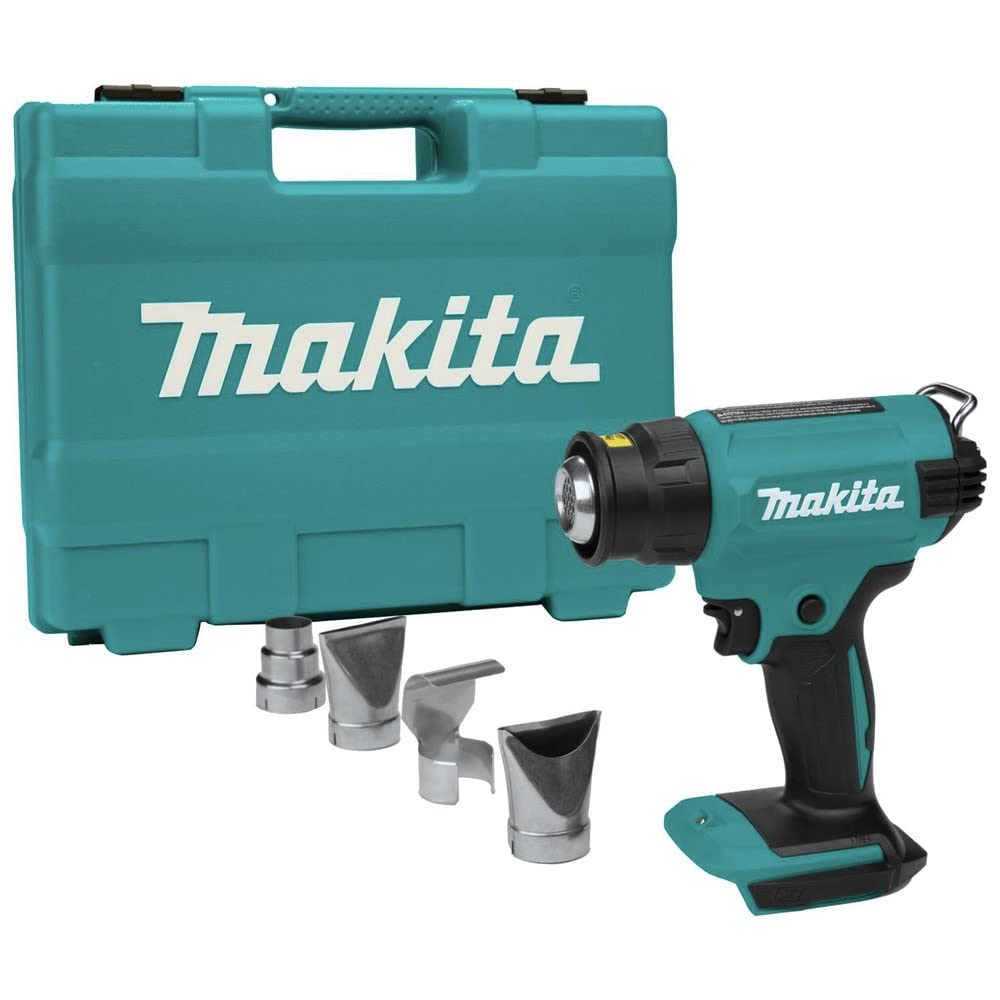
The Makita XGH02ZK stands apart as the only cordless heat gun from a major brand with independent temperature and airflow dials, allowing precise heat delivery for auto upholstery, SMC rework, and shrink tubing. Airflow, even on high, is gentle — it's not built to strip paint — and the premium price plus the need for a 6.0Ah battery (sold separately) puts it in luxury territory. That makes it best for professionals who must have variable control without a cord, rather than DIYers on a budget.

💡 💡 Tip: The gentle airflow actually improves precision on small components — think of it as a heat scalpel, not a leaf blower.

Bottom line: For professionals who need precise, cordless heat control for auto upholstery, electronics rework, or specialty crafts, this Makita is unmatched. DIYers expecting strong air for paint stripping will find it too tame and too pricey.

Check Latest Price
#05

Best Quick-Heat Mid-Range

CRAFTSMAN CMCE530B

85 /100
Kirk Score Excellent
Runtime
15 min (4.0Ah)
Max Temp
950°F
Airflow (CFM)
Battery Platform
Craftsman V20
Check Details on Amazon

Pros

  • Heats to full temperature in about 7 seconds, one of the fastest warm-ups among cordless heat guns. — 18 mentions on Functionality, 100% positive; many note quick heat-up.
  • At 1.4 lbs, it's effortless to maneuver into tight engine bays and reduces arm strain during overhead use. — Several reviews highlight light weight and portability; no weight complaints.

Cons

  • No temperature adjustment — one fixed output can be too intense for delicate heat-shrink tubing or thin plastics. — Customer reviews mention 'no temp control' as a downside; can be too hot for some shrink tubing.
  • Runtime may dip below 10 minutes on high with a 4.0Ah battery; extended tasks require several fully-charged packs. — 13 mentions on battery life, 54% positive overall but many state 'uses more power than most tools'; manufacturer claims 15 minutes which some dispute.

Weighing just 1.4 lbs and hitting 950°F in 7 seconds, the CMCE530B cuts nearly half a pound off the top pick. That difference adds up when you're reaching into a cramped dashboard or working overhead.

It's built for Craftsman V20 battery owners who need a grab-and-go heat gun for fast shrink tube, adhesive removal, or vinyl wrap touch-ups on the road. The single heat setting and limited runtime (under 10 minutes with a 4.0Ah pack) mean it's not the tool for paint stripping or long continuous runs — swap in a fresh battery and keep tasks brief.

💡 💡 Tip: Plan for short bursts; keep a spare 4.0Ah or larger battery on hand for anything beyond a few connectors.

Bottom line: Quick bursts of heat in a tiny package — the CMCE530B suits Craftsman V20 users who keep spare batteries charged and need a lightweight gun for occasional shrink tube, adhesive removal, and mobile detail work.

Check Latest Price
#06

Best Budget Digital Option

Best Value Adjustable Heat for M18 Users

80 /100
Kirk Score Excellent
Runtime
12 min (4.0Ah)
Max Temp
1,022°F
Airflow (CFM)
3.5-9.9
Battery Platform
M18
Check Details on Amazon

Pros

  • Adjustable temperature and airflow with LCD display offers fine control for shrink tubing and electronics, avoiding heat damage. — 19 mentions on Temperature Control, 74% positive; 76 mentions on Functionality, 76% positive.
  • Budget-friendly price includes five nozzles for tasks from shrink wrapping to charcoal starting. — 34 mentions on Value, 71% positive.
  • Lightweight at 1.54 lbs and compact, easy to handle for mobile repair work.

Cons

  • For tasks like paint stripping or large-area heating, the fan is too weak to push hot air effectively beyond a few inches. — 13 mentions on Airflow, 85% negative.
  • Continuous use can drain a 5.0Ah battery in under 15 minutes, so longer projects will need spare high-capacity batteries. — 52 mentions on Battery Life, 73% negative.

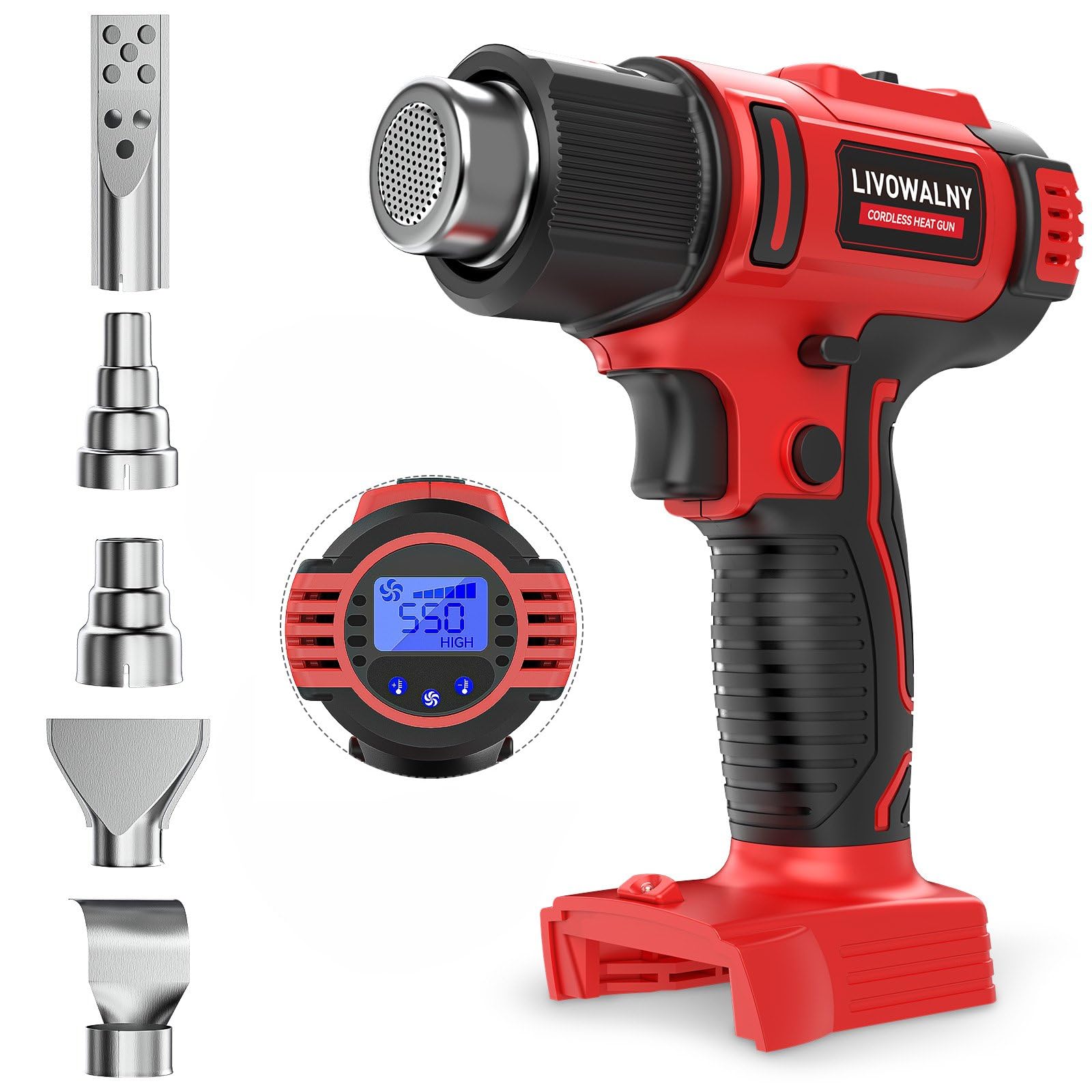
The LIVOWALNY packs an LCD temperature readout and variable airflow control at a budget-friendly price, making it the most feature-rich third-party cordless heat gun for Milwaukee M18 batteries. Unlike the single-temperature Milwaukee compact heat gun, this model lets you dial in heat and fan speed precisely for delicate tasks.

DIYers and electronics hobbyists who already own M18 batteries will appreciate the precise control for shrink tubing and soldering, but must accept that real-world airflow is weaker than the 9.9 CFM spec suggests and a 5.0Ah battery drains in under 15 minutes of continuous use.

💡 💡 Tip: Keep a high-capacity battery (5.0Ah or larger) charged and spare nearby; continuous sessions will exhaust it within 15 minutes.

Bottom line: The LIVOWALNY is a smart buy for M18 battery owners who need adjustable heat for light electronics work and accept the short runtime and modest fan power.

Check Latest Price
#07

Best Mini Craft Heat Gun

WORKPRO 7.2V Mini Heat Gun

79 /100
Kirk Score Very Good
Runtime
20 min (built-in)
Max Temp
842°F
Airflow (CFM)
Battery Platform
Built-in 7.2V
Check Details on Amazon

Pros

  • Extremely portable with built-in battery and USB-C charging, ready for on-the-go crafting. — Consistently praised for portability and cordless convenience.
  • Rapid 1.5-second heat-up with three temperature settings, including a cool mode for fast cooling. — Fast heat-up praised for quick small jobs.

Cons

  • Max 842°F and weak fan output can't handle medium-duty heat shrink tubing or paint stripping. — 'didn't get hot enough to shrink connectors' in some feedback.
  • Battery runs about 20 minutes on high with no option to swap — a couple hours to recharge. — 'stops holding charge after two uses' reported by some.

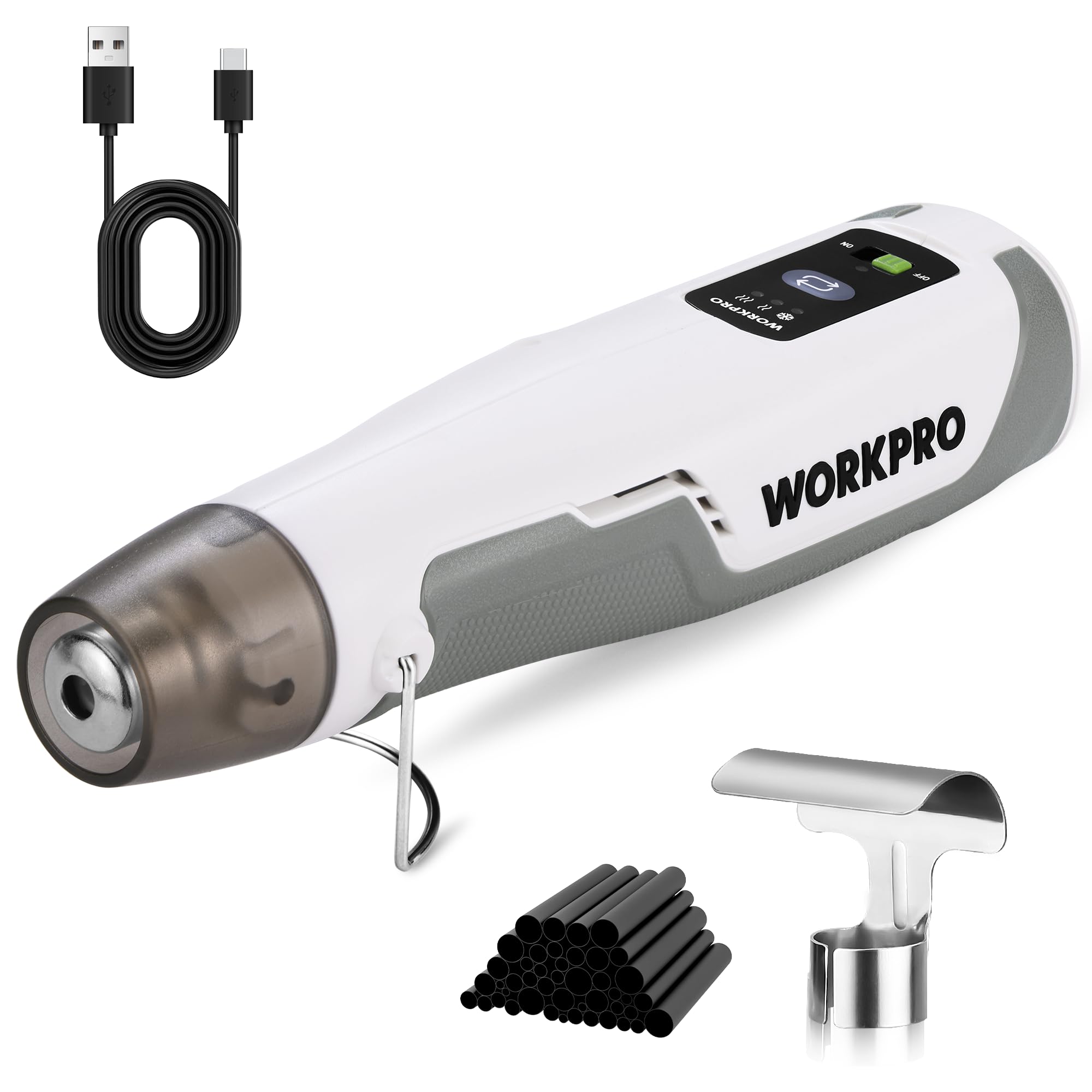
Weighing just 10 oz and charging via USB-C, this heat gun heats in 1.5 seconds and fits into any craft bag. It comes with a precision spoon nozzle and 50 EVA heat shrink tubes to get started.

Artists and mobile techs who need quick bursts for embossing, resin bubbles, or small heat shrink will appreciate the cord-free simplicity and three temperature modes. However, the modest 842°F max temperature and weak airflow can't handle medium-duty heat shrink tubing or paint stripping. The built-in battery runs about 20 minutes on high and can't be swapped, so it's best as a secondary tool for short sessions.

💡 💡 Tip: Keep a USB-C power bank handy — the built-in battery can't be swapped, so extended sessions away from an outlet need a backup charge.

Bottom line: A cute, highly portable mini heat gun for crafting and light shrink tubing, but it cannot replace a full-size cordless heat gun for any serious task. Ideal as a secondary tool.

Check Latest Price
#08

Window Tint & Wrap

Makita XGH01ZK

83 /100
Kirk Score Excellent
Runtime
21 min (6.0Ah)
Max Temp
1,022°F
Airflow (CFM)
7
Battery Platform
Makita 18V LXT
Check Details on Amazon

Pros

  • Ultra-light 1 lb design with complete nozzle set, including a glass protection nozzle for window film. — Tool weight and included glass protection nozzle highlighted in reviews.
  • Smooth trigger action and solid ergonomics, typical of Makita's build quality. — Trigger feel described as refined.

Cons

  • Slow to reach full heat, often taking minutes — a drag on workflow. — Observed heat-up time of minutes.
  • Fixed temperature with no airflow control limits the range of materials you can work with. — No temperature adjustment, unlike variable models.

The 1 lb weight and included glass protection nozzle make the XGH01ZK a deliberate choice for window tint and auto wrap. Build quality and trigger feel are solid. Yet fixed temperature and slow heat-up reduce its versatility for paint stripping or crafts. The variable-temperature XGH02ZK is only slightly pricier and far more adaptable, so this model fits only if the glass nozzle is a must.

Bottom line: For window tinters and auto wrap installers who prioritize the glass protection nozzle in a lightweight package, this is a practical secondary heat gun. Anyone needing adjustable heat for paint stripping or crafts should step up to the variable-temperature Makita XGH02ZK.

Check Latest Price
#09

Budget LCD for DEWALT

Foduuo XD1 for DEWALT

85 /100
Kirk Score Excellent
Runtime
Max Temp
1,110°F
Airflow (CFM)
7.1/9.9
Battery Platform
DEWALT 20V
Check Details on Amazon

Pros

  • LCD display and dual temp settings offer precise control for detailed work. — 30 mentions on Battery Compatibility, 97% positive; 67 mentions on Heating Speed, 73% positive; Value 18 mentions, 94% positive.
  • Lightweight build and clear LCD readout make it easy to handle and monitor temperature. — 17 mentions on Weight, 100% positive; Quality 34 mentions, 97% positive.

Cons

  • Plastic chassis can flex under grip, and overall build quality feels cheap. — Multiple reviews note 'feels a little cheap'; durability questions remain.

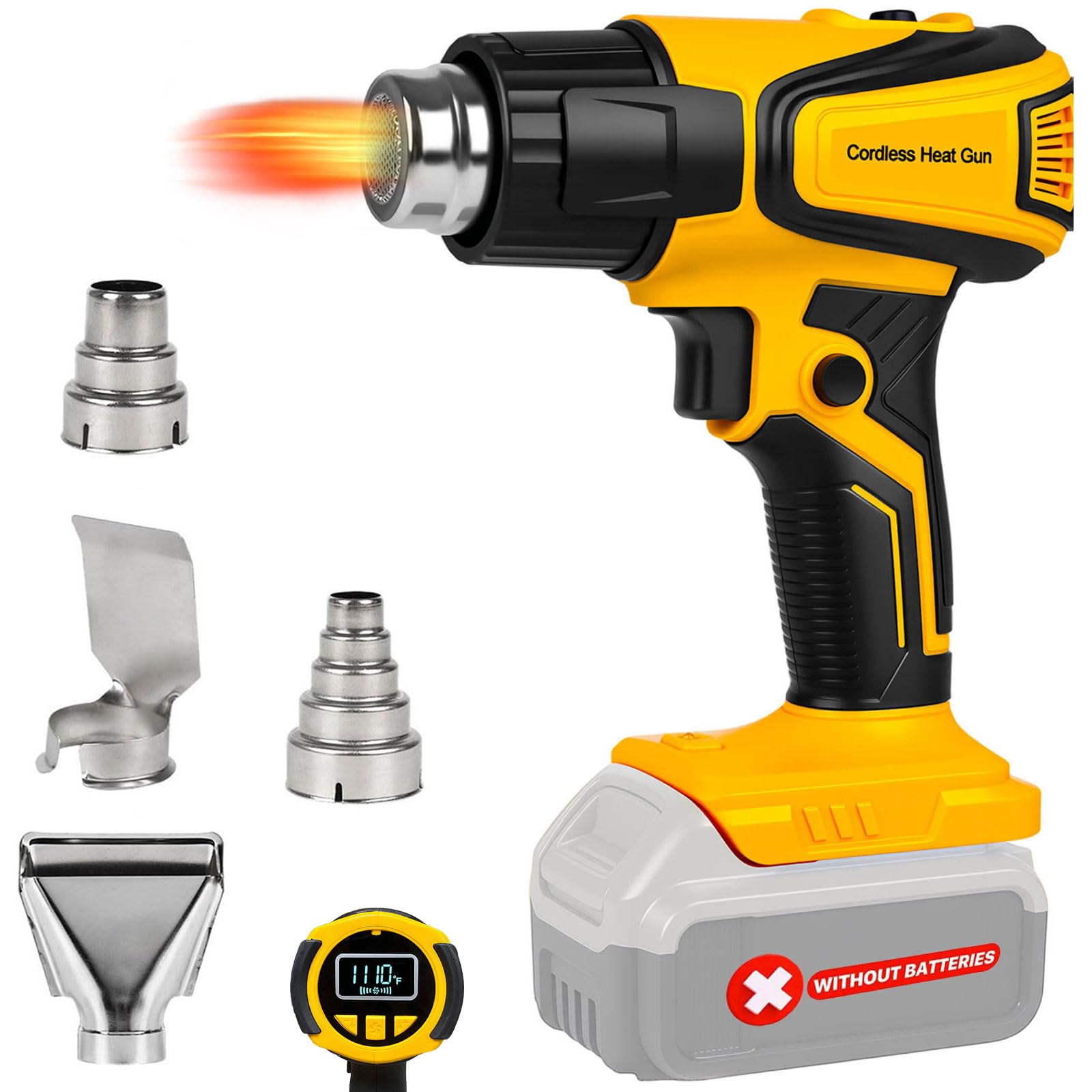
With an LCD and two temp settings, this budget-friendly DEWALT-compatible heat gun adds useful control for shrink tubing and crafts. It's lightweight and easy to handle. For quick, cordless tasks where you already own 20V batteries, it's a handy secondary tool. Accept that it's not meant for heavy, sustained use.

Bottom line: For a DEWALT tool owner who occasionally needs a cordless heat gun for shrink tubing, thawing a lock, or craft projects, the Foduuo adds LCD precision without a big spend — as long as you treat it as a light-duty backup.

Check Latest Price
#10

Budget Scraper Kit

Synxiter for DEWALT

78 /100
Kirk Score Very Good
Runtime
Max Temp
1,022°F
Airflow (CFM)
4.2-7
Battery Platform
DEWALT 20V
Check Details on Amazon

Pros

  • Heats up rapidly and offers variable temp control at the lowest price in this set. — 32 mentions on Heat Output, 72% positive; 40 mentions on Functionality, 85% positive.
  • Lightweight with a useful scraper attachment for sticker removal and small paint jobs. — 23 mentions on Quality, 83% positive; 12 mentions on Versatility, 100% positive.

Cons

  • Battery life varies with pack condition and heat setting; smaller packs may drain quickly. — 26 mentions on Battery Life, 62% positive but 38% negative.

Heats quickly with variable temperature settings, and the scraper attachment makes sticker and caulk removal convenient. Battery runtime depends heavily on pack amp-hour rating and heat level; smaller packs may last only minutes. Long-term durability under heavy use remains unverified, placing this among budget-friendly occasional-use tools.

Bottom line: A sensible choice for occasional decal removal, shrink wrap, and craft work when paired with high-capacity batteries; those needing sustained heat for paint stripping should look to a corded tool.

Check Latest Price
#11

Budget Nozzle Variety

HILIPE HG-2 for DEWALT

80 /100
Kirk Score Excellent
Runtime
Max Temp
1,022°F
Airflow (CFM)
Battery Platform
DEWALT 20V
Check Details on Amazon

Pros

  • Includes five nozzle attachments for flexible heat-shrink and craft tasks. — 37 mentions on Functionality, 81% positive; Value 14 mentions, 86% positive.
  • Handles basic heat-shrink jobs adequately when paired with a fully charged battery. — 37 mentions on Functionality, 81% positive; Value 14 mentions, 86% positive.

Cons

  • Heat-up can be sluggish when the battery isn't fully charged, making quick tasks drag. — 27 mentions on Heat Output, 67% positive but notable negative feedback on low airflow; 'takes time to heat up'.

Comes with five nozzles at a budget-friendly price for DEWALT battery owners tackling occasional heat-shrink or craft jobs. Airflow is modest, so it struggles with larger surfaces. The catch: quality control is inconsistent, and some units may stop working within months — making this a nozzle-focused spare rather than a dependable daily driver.

Bottom line: This heat gun fits only if you need the nozzle set for occasional shrink-tubing on the go and are willing to treat it as a likely throwaway accessory to your DEWALT batteries.

Check Latest Price

How to Choose

Temperature vs. Real-World Heat

A gun that claims 1,022°F may drop significantly under load or take minutes to heat a workpiece because the element can't maintain that output. In practice, a steady 900°F with stable current is more effective than a peak 1,100°F that dips. For shrink tubing, 750–850°F is plenty; higher temps risk melting insulation if airflow is slow. Choose a gun that holds temperature consistently rather than chasing the highest number.

Airflow Moves the Heat

Heat doesn't travel without air movement. Low CFM means the hot air stays near the nozzle and you'll overheat the tool before the workpiece gets warm. Even a modest 7 CFM directed well shrinks tubing in seconds, while a weak 4 CFM makes you hold the gun until the battery dies. Look for at least 6 CFM for medium-duty tasks; for paint stripping, cordless simply cannot match corded airflow. If you need to heat larger areas, a corded gun is still the right tool.

Runtime Depends on Battery, Not Just the Tool

All cordless heat guns drain batteries fast—expect roughly 10-15 minutes of continuous high heat from a 5.0Ah pack. The manufacturer's 'up to 30 minutes' figure usually means low heat or intermittent use. A 2.0Ah battery will be dead in 5 minutes. So plan on carrying spare high-capacity batteries, and understand this tool works best for bursts, not sustained use. For mobile repair, that's often enough to shrink a dozen connectors.

Fixed Heat or Variable Precision?

Single-setting guns heat up fast and are simpler to use, but they can't be dialed back for delicate heat shrink tubing or thin films. Variable temperature and airflow protect sensitive materials and extend battery life on lower settings. If you do vinyl wrap, electronics rework, or multiple materials, variable control is worth the extra cost. For straight-up shrink tubing on automotive connectors, a single-setting gun is usually fine.

Stay in Your Battery System

Cordless heat guns are almost always sold 'tool only,' so you'll use the batteries and charger you already own. Buying a gun that matches your existing battery platform saves hundreds of dollars over switching ecosystems. If you're not already invested, DEWALT and Milwaukee offer the broadest range of compatible tools, but Ryobi provides an affordable entry. Don't buy a budget third-party 'compatible' heat gun unless you're willing to accept a shorter lifespan and no customer support.

Frequently Asked Questions