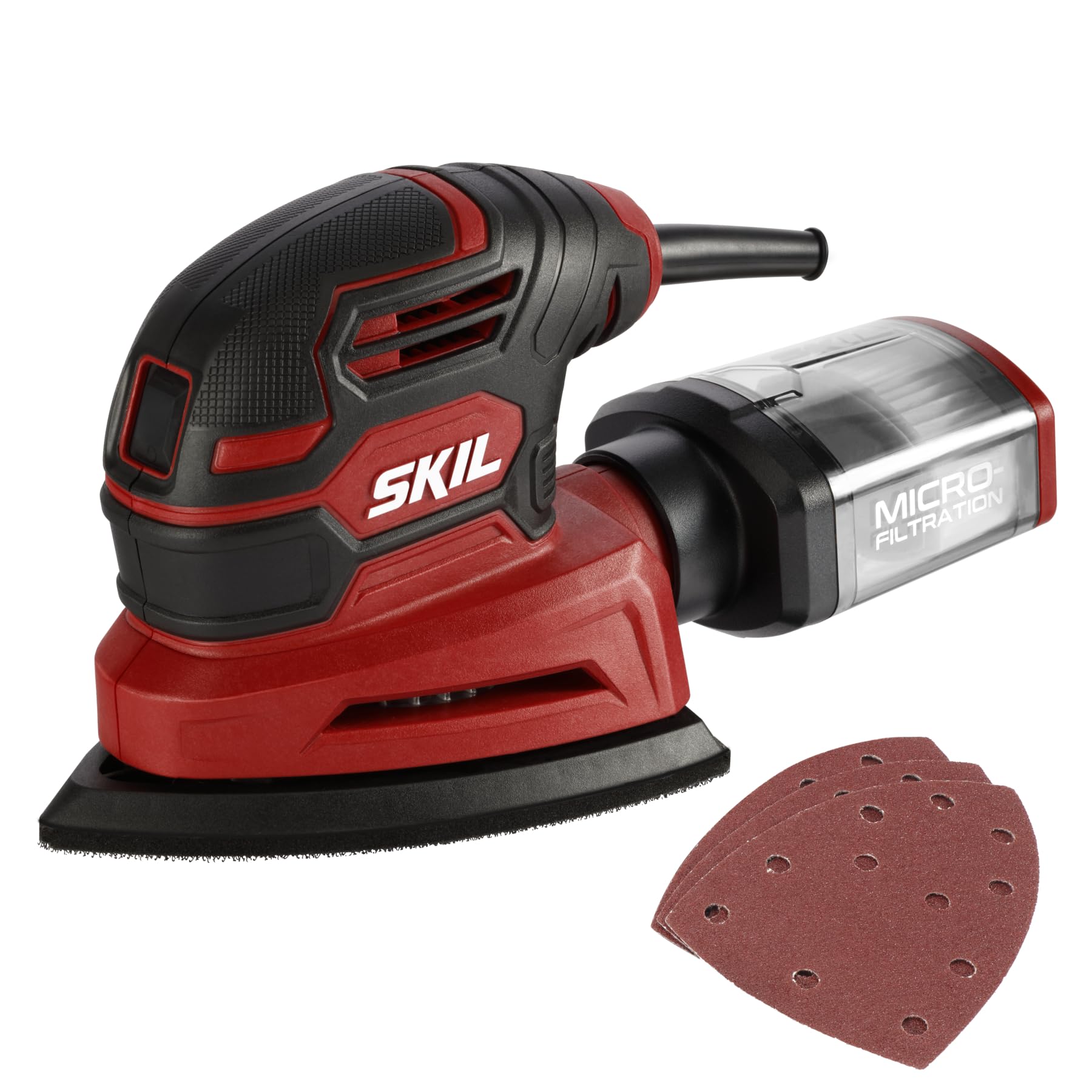
// data-verified

5 Best Detail Sander of 2026: Which Ones Keep Dust Contained

Find the best detail sander for dust-free corners and edges — these models actually work with your shop vac and don't break down after a few furniture projects.

Walk into any home improvement store and you'll find detail sanders promising dust-free corner sanding — but crack open the box and you'll likely discover a tiny plastic dust bin that fills in minutes and scatters fine particles everywhere. Most built-in dust collection on budget and mid-range sanders is cosmetic at best; the tool only becomes truly clean when you attach a shop vacuum.

That doesn't mean you should skip a detail sander altogether. The right corded model, paired with a properly fitted vacuum port, can strip paint from inside cabinet doors and smooth tight corners without coating your entire shop in a layer of grit. We zero in on sanders that have robust hook-and-loop pads that don't shed sandpaper, attachment mechanisms that survive more than a single afternoon, and vacuum connections that actually hold a seal — so you spend less time sweeping up and more time sanding.

From mouse-shaped sanders that hug door frames to narrow belt files that sneak into scroll cuts, this guide matches you with the tool that fits your exact detail work — and helps you keep the dust contained from start to finish.

#01

Best Overall

SKIL SR250801 Detail Sander

92 /100
Kirk Score Outstanding
OPM
12,000 OPM
Weight / Grip
2.3 lb
Pad Retention System
Hook-and-loop
Dust Collection Design
Micro-filter box, vac port
Check Details on Amazon

Pros

  • Hook-and-loop pad makes sandpaper changes simple and secure. — 55 mentions, 91% positive
  • Compact, low-weight design reduces fatigue during corner and edge work. — 92 mentions, 83% positive
  • Very good value for a no-frills detail sander that handles typical refinishing tasks. — 62 mentions, 94% positive

Cons

  • The grip lacks a defined contour and can feel less comfortable for larger hands. — 19 mentions, 53% negative
  • The built-in dust box may not stay seated, reducing dust collection. — 39 mentions, 36% negative — the dust box often fails to seal or hold position during use.

The SKIL SR250801's hook-and-loop pad grips sandpaper securely and makes changes quick, while the vacuum port connects directly to a shop vac hose — no delicate plastic clips that snap under heat. A 1-amp motor at 12,000 orbits per minute handles edge rebates, trim refinishing, and small flat surfaces with enough speed to get the job done without excessive vibration.

Onboard dust collection is where this sander asks for a hose. The included dust box can slip or fail to seal, so plan to use a shop vac for cleaner air. The grip is functional but lacks a contoured shape; larger hands may notice discomfort during extended passes. That trade-off keeps the tool lightweight and uncluttered — the right match for home DIYers who want a detail sander that won't demand special care or spare attachments.

💡 💡 Tip: Attach a shop vacuum hose to the dust port to keep debris contained, especially during longer sanding sessions.

Bottom line: This SKIL detail sander earns its place by doing the essentials well: a hook-and-loop pad that stays put, a vac port for clean air, and none of the weak plastic joints that complicate competing models.

Check Latest Price
#02

Best for Comfort & Control

BLACK+DECKER BDEMS600 Review

91 /100
Kirk Score Outstanding
OPM
16,000 OPM
Weight / Grip
2.5 lb, 3-position grip
Pad Retention System
Hook-and-loop
Dust Collection Design
Dust canister
Check Details on Amazon

Pros

  • Three-position grip minimizes wrist fatigue on long projects. — 321 mentions, 94% positive
  • Slim triangular pad reaches tight corners and edges. — 141 mentions, 88% positive
  • Consistent sanding action for furniture and detailed work. — 186 mentions, 85% positive

Cons

  • Finger attachment can snap under moderate pressure; best reserved for light touch-ups. — 428 mentions, 75% negative — the attachment mechanism is fragile and may fail quickly under normal pressure.

The BDEMS600 is one of the most comfortable detail sanders you'll hold, thanks to a three-position grip that reduces wrist strain during long sessions. Its slim profile and triangular pad navigate tight corners, scribe lines, and delicate profiles with control that heavier designs lack.

It's best suited for DIYers refreshing furniture or trim who value ergonomic handling over accessory durability. The included finger attachment is fragile — it can snap quickly under normal pressure — so treat it as disposable. The sander's core performance remains dependable without it.

💡 💡 Tip: Skip the built-in dust canister and connect a shop vacuum to control fine particles.

Bottom line: If your projects demand hours of corner sanding and you already own a shop vacuum, the BDEMS600 offers exceptional comfort and capable performance — just skip the finger attachment.

Check Latest Price
#03

Best for Extreme Tight Spaces

WEN 6307 Belt File Sander

93 /100
Kirk Score Outstanding
OPM
1080–1800 FPM
Weight / Grip
2.4 lb
Pad Retention System
Dust Collection Design
Dust port
Check Details on Amazon

Pros

  • Reaches deep into scroll cuts and 90-degree joints where standard detail sanders can't go — 382 mentions, 94% positive
  • Impressive performance for the price, outperforms expectations for a budget tool — 222 mentions, 96% positive
  • Belt swaps are quick and tool-free, so you waste no time switching grits — 130 mentions, 92% positive

Cons

  • Plastic housing may not withstand sustained heavy use; motor failure has been noted in some units — 99 durability mentions, frequent negative — some units stop working after a handful of projects.

Woodworkers who need to sand inside scroll cuts, tight radii, or 90-degree joints will find the WEN 6307’s narrow 1/2-inch belt reaches where triangular pads cannot. Variable speed control and tool-free belt changes give you precise, hassle-free sanding on delicate edges. At its budget price, it’s a specialized complement to a standard detail sander — not a replacement for broad surfaces. The trade-off: belt seams can separate under heavy pressure, so keep spares handy and let the tool’s speed do the work.

💡 💡 Tip: Keep spare belts on hand and avoid pressing hard — belt seams can snap if you force the sander instead of letting the tool's speed do the work.

Bottom line: If you're shaping tight curves or sanding inside cutouts, this belt file reaches places a standard detail sander can't — just treat it as a light-duty specialist and keep spare belts ready.

Check Latest Price
#04

Best Multi-Attachment Detail Sander

SKIL SR232301 Multi Sander

91 /100
Kirk Score Outstanding
OPM
13,500 OPM
Weight / Grip
2.6 lb
Pad Retention System
Hook-and-loop
Dust Collection Design
Micro-filter box, vac port
Check Details on Amazon

Pros

  • Swapping between flat, corner, and contoured pads takes seconds without tools. — 124 mentions, 93% positive
  • Handles furniture refinishing and small trim projects smoothly at 13,500 OPM. — 204 mentions, 91% positive
  • Hook-and-loop pad makes paper changes fast and straightforward. — 97 mentions, 96% positive

Cons

  • The onboard micro-filter dust box lets most fine dust escape unless a shop vacuum is attached. — 86 mentions, 70% negative
  • The plastic attachment switch and hook-and-loop pad can deform under sustained friction, especially during aggressive sanding or rapid shape changes. — 66 mentions, 77% negative

Where the top pick stays with a single triangular pad, this SKIL adds three extra attachments to tackle curved edges, tight corners, and broader surfaces. Quick tool-free changes let you move between contours seamlessly during a furniture refinish or trim job. The plastic switch and hook-and-loop pad can soften from friction heat during aggressive sanding or hot swaps, so treating the attachment change gently and giving the tool a brief pause between shapes keeps it running. For DIYers who value multi-shape versatility over extreme durability, it's a capable companion.

💡 💡 Tip: Expect to attach a shop vacuum for effective dust capture — the onboard micro-filter box is mainly a convenience for quick touch-ups.

Bottom line: The extra shapes earn their keep if you tackle furniture with varied profiles and treat the attachment switch like a delicate lever — and hook up a vacuum for dust control.

Check Latest Price
#05

Best Budget Palm Sander for Detailing

WEN 6301 Palm Sander

93 /100
Kirk Score Outstanding
OPM
13,500 OPM
Weight / Grip
2 lb
Pad Retention System
Hook-and-loop
Dust Collection Design
Dust bag
Check Details on Amazon

Pros

  • Hassle-free hook-and-loop pad makes sandpaper swaps fast and tool-free. — 130 mentions, 96% positive
  • Outstanding value for entry-level refinishing — consistent light-duty results. — 191 mentions, 91% positive
  • Light 2-pound body reduces fatigue during prolonged overhead or vertical work. — 58 mentions, 88% positive

Cons

  • Dust collection bag captures almost nothing — expect to wear a mask and work in a ventilated area. — Multiple mentions in top negative comments — the collection bag fails to capture fine dust.

At a budget price, the WEN 6301 delivers quick paper changes and capable light-duty sanding on flat panels, stair treads, and gentle curves. Its rectangular pad and 2-pound weight make it an alternative to heavier orbital sanders for flat work, not a substitute for a detail sander with a triangular tip that reaches into corners. It suits budget-conscious beginners refinishing furniture on open surfaces, with the understanding that a subset of units may stop working after limited use — a risk that keeps the price entry-level.

💡 💡 Tip: The onboard dust bag is ineffective, so connect a shop vacuum to the dust port if you want cleaner air.

Bottom line: If you need a low-cost sander for flat furniture surfaces and don't mind wearing a dust mask, the WEN 6301 covers the basics — but it can't replace a true detail sander for tight corners.

Check Latest Price

How to Choose

Orbits Per Minute (OPM)

OPM measures how many tiny oscillations the pad makes per minute, which translates to stock removal speed and swirl pattern size. A higher OPM sands faster, but on a detail sander, too much speed can cause the pad to hop, overheat, or leave visible swirl marks on stained wood. For delicate refinishing, a sander with 12,000–13,500 OPM offers a sweet spot — fast enough to strip paint but controlled enough to avoid gouges. If you frequently sand veneers or intricate profiles, look for a variable-speed model so you can dial back the pace for final passes.

Attachment Versatility

Some detail sanders come with extra attachments — finger, round, or contoured profiles — that snap on to reach different shapes. The trade-off is durability: the plastic locking mechanisms that hold these attachments in place often melt or snap under friction, especially if you bear down. If your project requires sanding flat door panels one minute and curved spindles the next, a 4-in-1 sander saves tool changes, but treat the attachment switch with care and let the tool cool between swaps.

Dust Collection Design

Onboard dust boxes on budget detail sanders rarely trap more than a few teaspoons of dust; they fill quickly, clog, and leak fine particles around the seal. A sander with a dedicated vacuum port — ideally one that fits standard 1-1/4- or 1-1/2-inch shop vac hoses without an adapter — transforms dust management.

When you connect even a small shop vac, the suction pulls dust through the sanding pad holes and out of the work area, keeping your mask and workpiece clean. Verify that the port doesn't crack or pop off under hose tension.

Pad Retention System

All mouse sanders rely on a hook-and-loop (Velcro-style) pad to grip sanding sheets, but the quality of that pad varies enormously. Cheap pads lose their grip after a few heat cycles, causing sandpaper to fly off mid-stroke — a frustration that can ruin a project. Look for sanders whose replacement pads are affordable and whose original hook-and-loop material stays aggressive even after prolonged use. To extend pad life, avoid excessive pressure; let the weight of the tool do the work, and clean the pad surface regularly with a stiff brush.

Weight & Ergonomics

A detail sander's weight matters most when you're sanding overhead or in tight vertical areas. Ultralight models under 2.5 pounds reduce arm fatigue, but some sacrifice vibration damping, leading to numb fingers after an hour. Grip shape is equally personal: a contoured, three-position handle like the one on the BLACK+DECKER BDEMS600 allows you to shift your hand for different angles, while simpler cylindrical grips can feel awkward if you have large hands. If possible, hold the sander before buying to ensure the grip fits your hand comfortably.

Frequently Asked Questions