// data-verified

4 Best Gas Pressure Washer of 2026: Where Flow Rate Trumps Pressure

Which gas pressure washers clean driveways and decks fastest — not just high PSI — for homeowners tired of slow rinsing.

The spec sheet headline number — PSI — is the first thing every shopper sees, but pressure alone doesn't clean the way you think. When you're blasting caked-on mud from a 40-foot driveway, what actually moves the debris out of your path is water volume (GPM). A machine with only 2.0 GPM can have impressive PSI yet will rinse slower, forcing you to linger on each section while the tank guzzles fuel. The real-world difference between a satisfying Saturday cleanup and a dragged-out chore often traces back to a single spec many buyers ignore.

Starting frustration is another hidden constant of the category, but the culprit is frequently not the pressure washer itself. Fresh ethanol-free fuel and a fuel stabilizer prevent the tiny carburetor passages from gumming up during storage — the same scenario that leads owners to pull the starter cord dozens of times thinking the engine is defective. Pump type matters for longevity too: axial cam units are maintenance-free and fine for the 20-30 hours a typical homeowner puts on each year, while triplex plunger pumps handle hundreds of hours without losing pressure. A machine that matches your actual usage pattern — seasonal or weekly — will outlast even a more expensive unit bought on specs alone.

#01

Best Overall

Westinghouse WPX3400 Gas Pressure Washer

93 /100
Kirk Score Outstanding
Hose
25 ft
Engine
Westinghouse 212cc
PSI & GPM
3400 PSI / 2.6 GPM
Pump Type
Axial cam
Check Details on Amazon

Pros

  • Exceptional build quality and out-of-box dependability — 1,725 mentions, 96% positive
  • Simple, tool-free assembly; ready to use in minutes — 1,662 mentions, 97% positive
  • Strong cleaning power consistent across a variety of surfaces — 1,483 mentions, 96% positive; 543 cleaning-specific mentions, 97% positive
  • Plenty of water pressure even on tough driveway stains and siding — 947 mentions, 99% positive
  • Outstanding value — packs high PSI/GPM and a full kit for its mid-range price — 634 mentions, 97% positive

Cons

  • Plastic wheels may vibrate and leave scuff marks on delicate decking materials like Trex — Mentioned in multiple reviews; can scuff composite materials
  • Recoil start can be stubborn after running the tank dry or when the engine is hot, requiring a choke reset and a few extra pulls — Noted in owner feedback; restart sequence benefits from choke and throttle reset

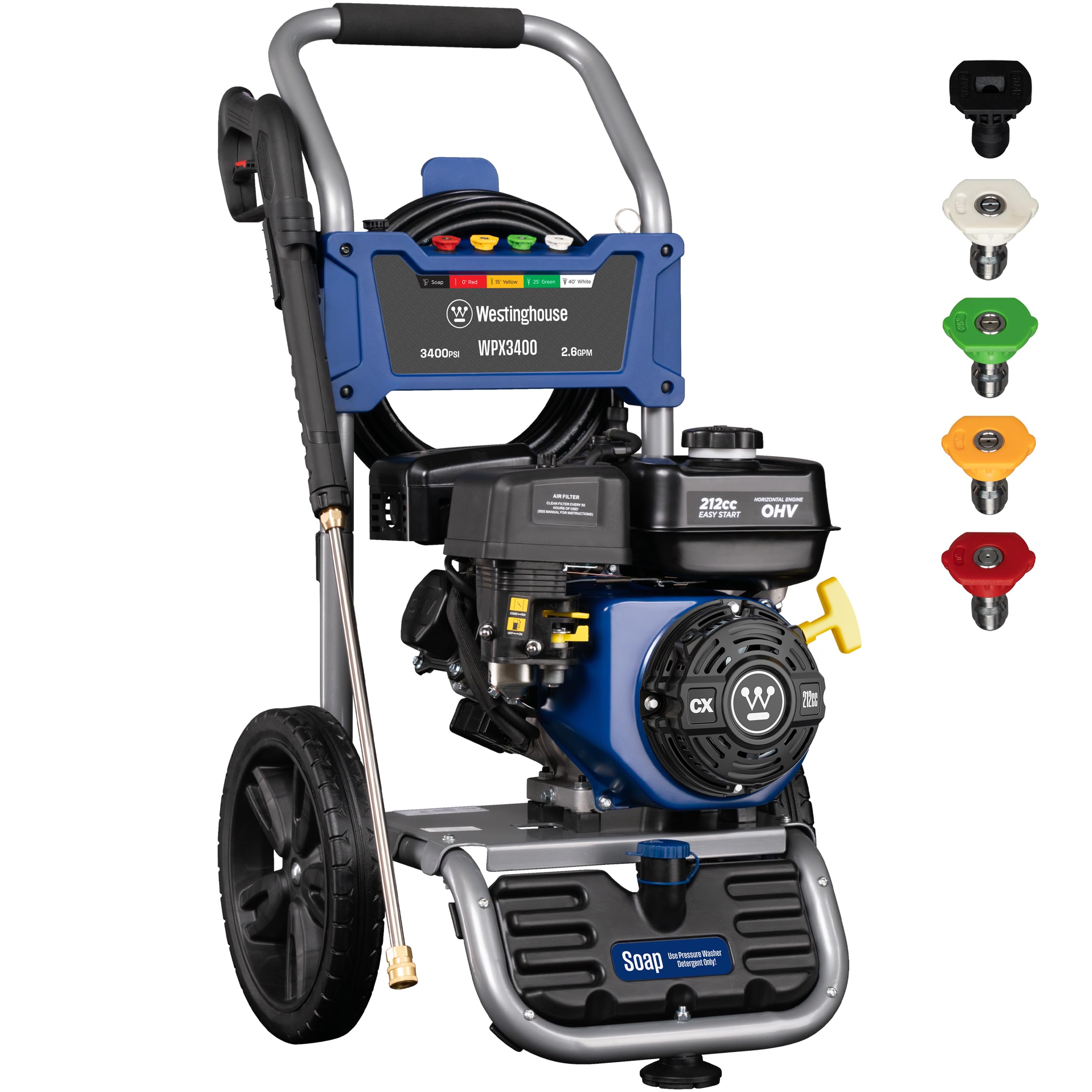
Unboxing the Westinghouse WPX3400 and watching driveway grime peel away in minutes tells you why this model consistently wins household loyalty. The tool-free assembly takes under ten minutes — attach the handle, snap on the hose, add oil and fuel — and the 212cc OHV engine starts cold with a steady pull. 3400 PSI at 2.6 gallons per minute delivers enough force to strip mildew from siding and rinse mud without tearing up wood when you use the right nozzle.

Five quick-connect nozzles dial from a wide 40-degree fan for windows down to a zero-degree spot jet for concrete seams. The half-gallon onboard soap tank eliminates dragging a bucket around the car or deck, and it drains cleanly when you switch back to rinse. The included 25-foot hose resists kinks better than many stock hoses at this price, letting you work around a two-car driveway with minimal repositioning.

Weekend warriors and DIYers who want predictable, powerful cleaning out of the box will find their rhythm with the WPX3400. It’s purpose-built for seasonal deep cleans and regular home maintenance — not for multi-hour daily commercial cycles. The maintenance-free axial cam pump removes oil-change chores, though its lifespan reflects homeowner rather than contractor duty cycles. For properties with Trex or other delicate decking, the firm plastic wheels can transfer vibration that may leave light scuffs; a protective mat resolves this easily.

The value proposition is hard to ignore: a complete accessory kit with five nozzles, a soap tank, and a 25-foot hose bundled into a machine that hits 3400 PSI and 2.6 GPM at a mid-range cost. Owners upgrading from electric units or budget gas washers routinely notice the jump in cleaning speed and dwell-time reduction, making the WPX3400 a sensible step up without stepping into commercial pricing.

💡 💡 Tip: After refueling a hot engine, move the choke to full and pull with the throttle in the fast position — the engine restarts predictably with this sequence.

Bottom line: For the homeowner who wants tool-free setup, a strong flow rate, and all the key accessories in one box, the WPX3400 stands as the clear benchmark among mid-range gas pressure washers.

Check Latest Price
#02

Best Honda-Powered Upgrade

Simpson PS3228

86 /100
Kirk Score Excellent
Hose
25 ft MorFlex
Engine
Honda GX200
PSI & GPM
3300 PSI / 2.5 GPM
Pump Type
Triplex plunger
Check Details on Amazon

Pros

  • Honda GX200 engine starts effortlessly and runs smoothly even after winter storage. — 77 engine mentions, 79% positive; starting complaints rare
  • AAA triplex pump maintains consistent pressure and outlasts axial cam designs under frequent use. — Frequently praised by contractors and repeat users in reviews
  • 3300 PSI and 2.5 GPM clean driveways, siding, and decks with noticeably less effort than electric or lower-tier gas units. — 218 mentions, 90% positive; many say it outperforms electric and lower-tier gas units
  • The Honda/triplex combination delivers long-term durability that justifies the price for regular users. — 130 mentions, 87% positive

Cons

  • Wand and trigger assembly feel less premium than the engine and pump; occasional wand breakage has been noted. — Durability topic shows some wand failures, though many relate to shipping damage
  • Included 25 ft MorFlex hose can be stiff and awkward, leading some owners to upgrade to a longer, more flexible hose. — Mentioned in durability complaints — hose can be difficult to handle straight out of the box

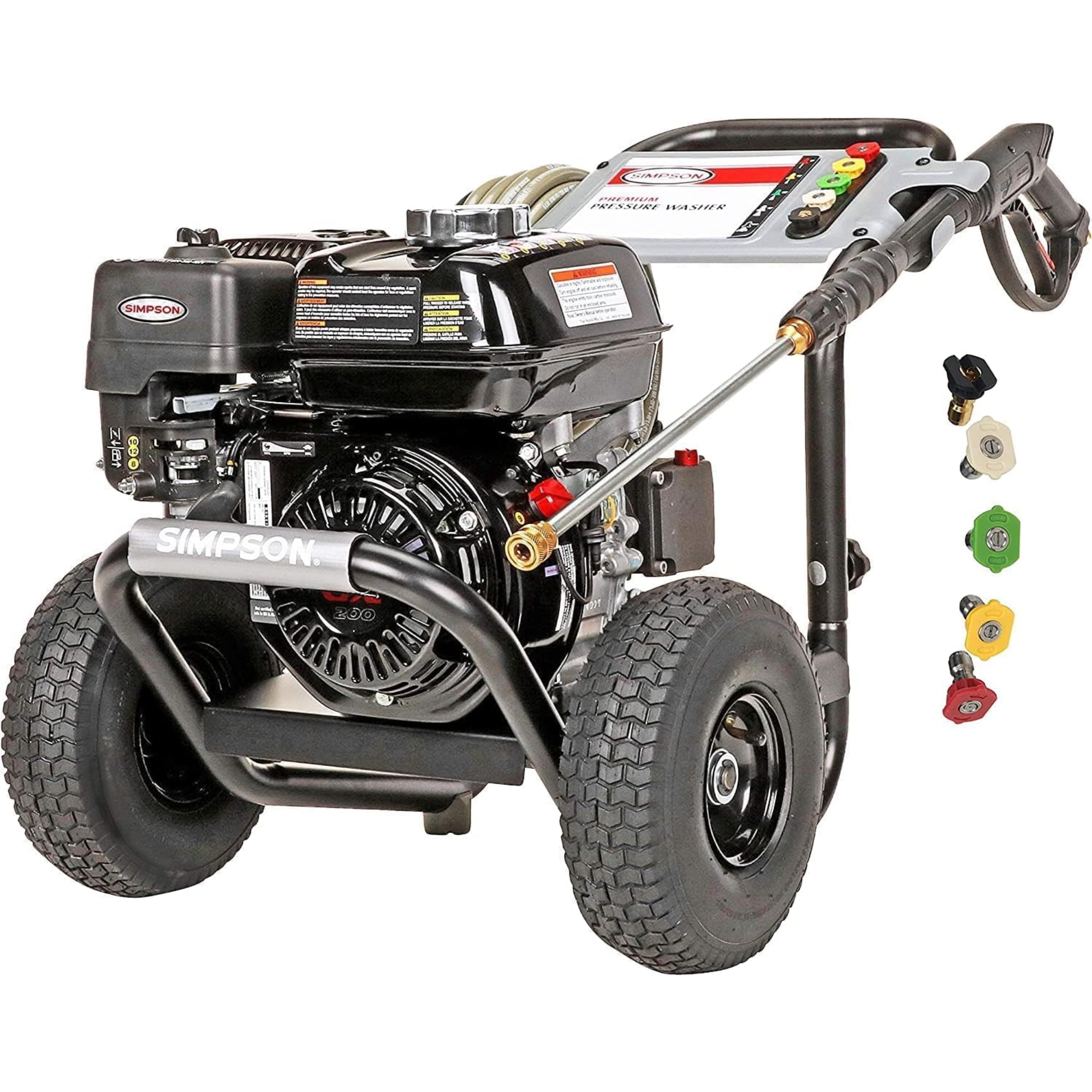
The Honda GX200 engine and AAA triplex pump separate this washer from budget axial cam models that wear out under frequent use. Starts are consistently easy, even after sitting through winter, and the triplex design holds pressure without the fading common in entry-level pumps. The 3300 PSI and 2.5 GPM output cleans driveways, siding, and decks with noticeably less effort than electric or lower-tier gas units.

Compared to the top-rated all-around homeowner machine, the Simpson prioritizes powertrain durability over out-of-the-box accessory completeness. You get a commercial-grade engine and pump, but the included 25 ft MorFlex hose and wand are more basic — a fair trade for those who plan to use the washer weekly and value Honda reliability over an accessory bundle.

This machine fits homeowners with large properties or small business owners who will run it often. Occasional users may prefer the top pick's full accessory kit, and those who only wash once a season will be better served by a cheaper axial cam unit. If you're willing to swap the stiff 25 ft hose for a flexible 50 ft aftermarket option, the Simpson becomes a long-term workhorse.

💡 💡 Tip: Plan to swap the stiff 25 ft MorFlex hose for a flexible 50 ft aftermarket hose; the machine's pump and engine are worth the modest accessory upgrade.

Bottom line: The premium pays for a Honda GX200 engine and AAA triplex pump that outlast budget alternatives by years — a smart investment if you'll use the washer weekly and don't mind upgrading the hose.

Check Latest Price
#03

Best Budget Power

Mutaomay MTPW01

85 /100
Kirk Score Excellent
Hose
25 ft
Engine
209cc 4-stroke
PSI & GPM
3500 PSI / 2.3 GPM
Pump Type
Axial cam
Check Details on Amazon

Pros

  • Cleaning power easily outpaces electric washers at this price, cutting through driveway grime and deck mildew quickly. — 86 mentions, 87% positive; many note it exceeded expectations
  • Assembly is quick and straightforward — many users go from unboxing to pressure washing in under 20 minutes. — 26 mentions, 85% positive
  • The price delivers genuine gas pressure for occasional use, making it an excellent value for first-time buyers. — 22 mentions, 91% positive

Cons

  • The pneumatic tires can leave black rubber streaks on clean concrete when dragged rather than rolled, adding extra cleanup. — Specific complaint in top reviews; an annoyance on fresh surfaces
  • The detergent tank connector is thin plastic; snapping it on with too much force can crack the fitting before first use. — Mentioned in several reviews pointing to a thin plastic connector
  • Starting can be inconsistent — some units need a few extra pulls and a precise choke sequence before they fire. — 23 mentions, 35% negative; some units are stubborn, especially out of the box

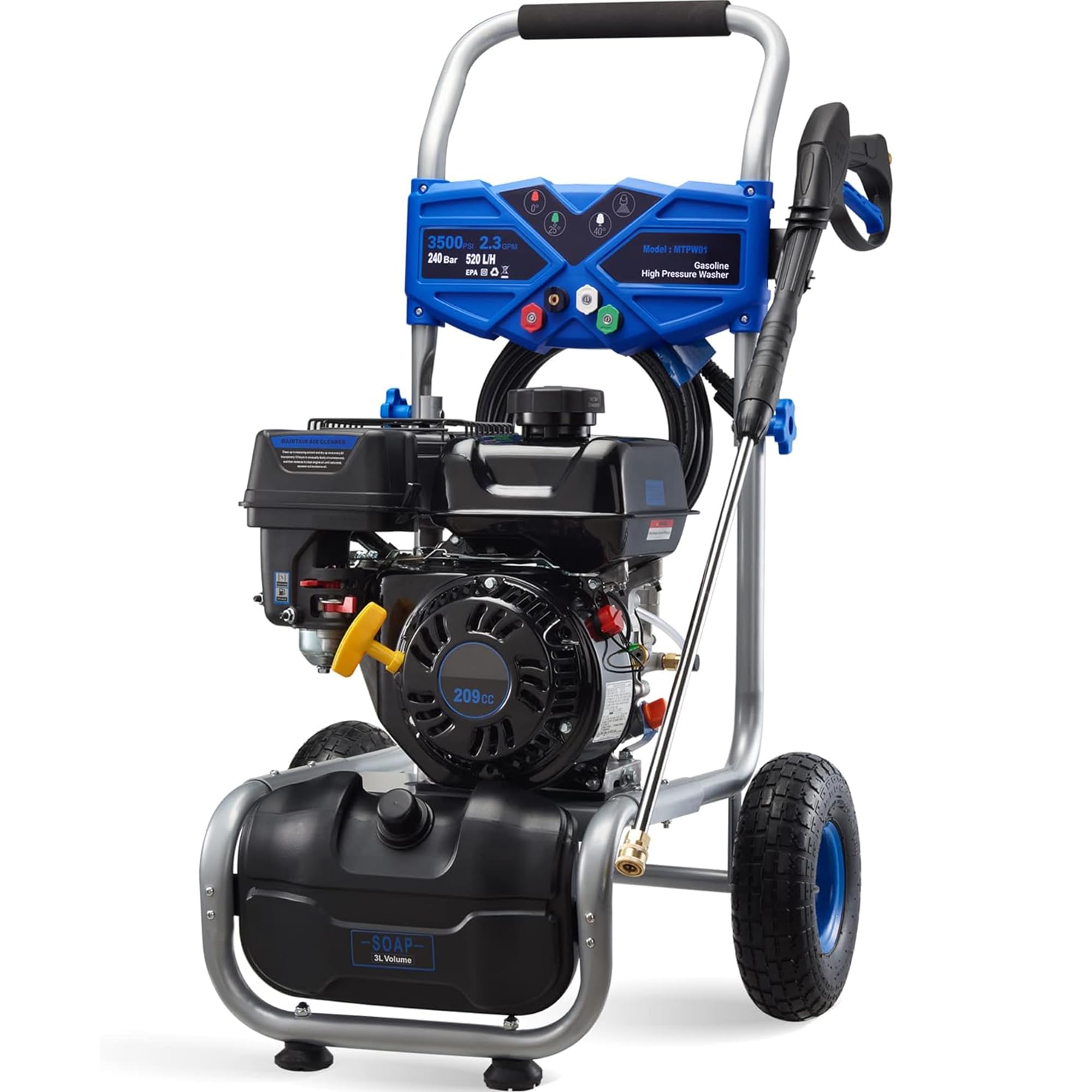
The 209cc OHV engine pumps out 3500 PSI and 2.3 GPM of cleaning force that easily outperforms the electric washers crowding this price band. Unlike the top pick, which bundles tool-free assembly and a built-in soap tank, this Mutaomay keeps things basic — a straightforward setup most owners finish in under 20 minutes with common tools. The included 25 ft hose and quick-connect nozzle set handle the foundational chores right out of the box.

In use, the axial cam pump strips grime from driveways quickly and the four quick-connect nozzles let you move from a wide fan to a zero-degree jet without swapping wands. The supplied 25 ft hose is short if you need to work around a large home, but it handles deck and vehicle cleaning without constant repositioning.

This washer suits first-time gas users who want occasional driveway, patio, and vehicle cleaning without a heavy investment. The starting routine deserves patience: some engines fire on the first pull, others need a few extra attempts with the choke set just right. The detergent tank's plastic nipple is thinner than it looks — snapping it on roughly can lead to leaks even before the first wash. These are livable quirks for Saturday morning sessions, not daily production work.

💡 💡 Tip: On first use, open the choke fully and don't be discouraged if it takes several pulls — starting gets more predictable after the engine runs in for a few minutes.

Bottom line: For first-time gas washer buyers on a tight budget, this machine's cleaning output makes the occasional frustrating start and delicate detergent connector worth accepting; if you need a washer that starts every time without fiddling, step up to the top pick.

Check Latest Price
#04

Professional Contractor

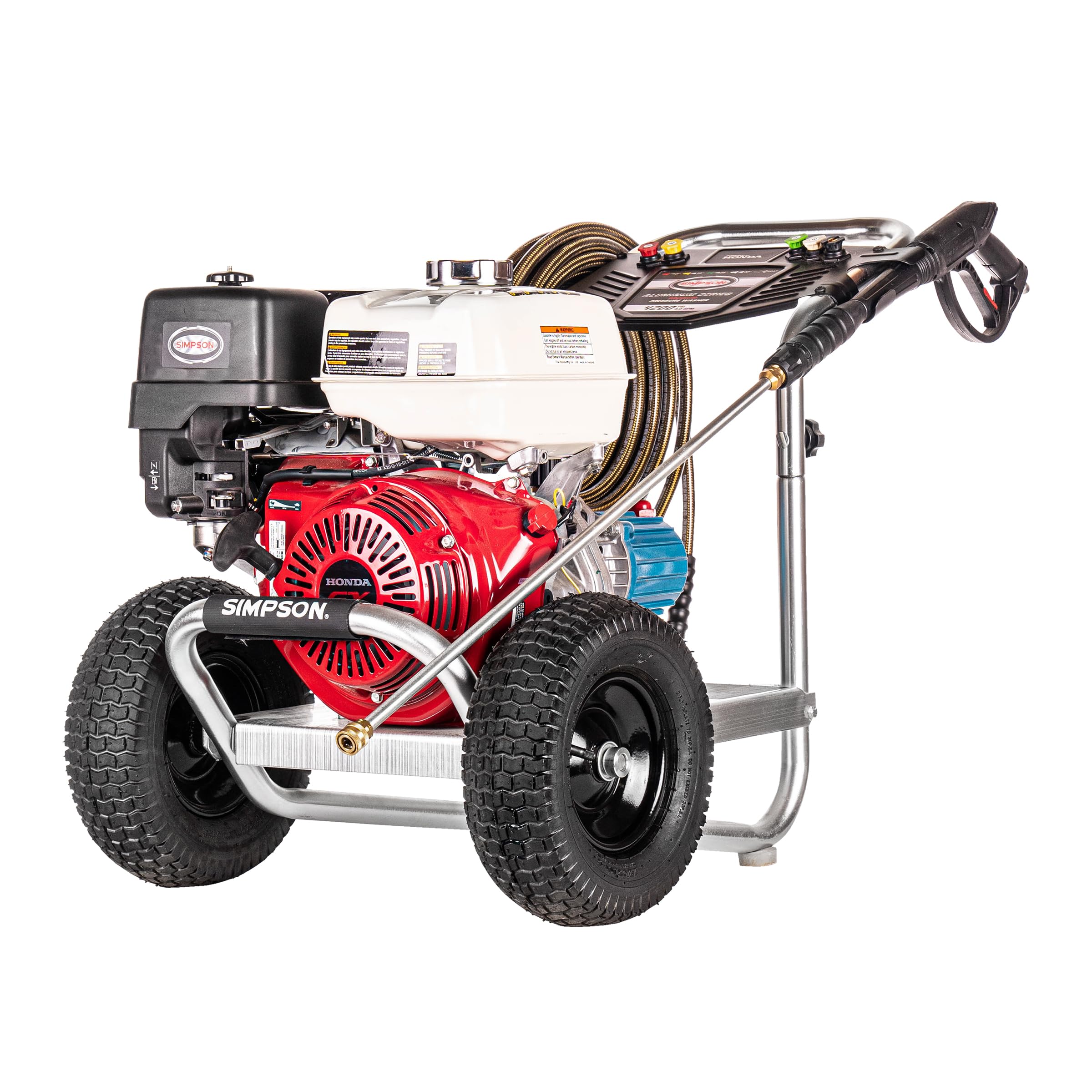
Simpson ALH4240

83 /100
Kirk Score Excellent
Hose
50 ft Monster
Engine
Honda GX390
PSI & GPM
4200 PSI / 4.0 GPM
Pump Type
CAT triplex
Check Details on Amazon

Pros

  • 4.0 GPM flow paired with the CAT pump slashes cleaning time on large surfaces — one user reported 5x faster pool screen enclosure cleaning. — One review reports cleaning a pool screen enclosure 5x faster than with a smaller unit.
  • Honda GX390 engine and CAT triplex pump are the professional standard for longevity, making this a years-long investment. — Commercial users consider the Honda GX390 and CAT pump a years-long investment.
  • Aircraft-grade aluminum frame resists corrosion and remains lightweight for its class. — Owners describe it as a well-built and sturdy frame that resists corrosion.

Cons

  • The included 50-ft Monster hose is notably stiff, especially in cooler temperatures, making it a hassle to manage. — Several users note the hose becomes difficult to manage in cooler temperatures.
  • Heavy weight and insufficient packaging can lead to dented fuel tanks, bent frames, or muffler dings upon arrival. — Durability complaints center on arrival condition, including dented tanks and bent frames.

The 4.0 GPM flow from the CAT triplex pump paired with the Honda GX390 commercial engine cuts cleaning time on large jobs dramatically — barns, long driveways, and heavy equipment get cleared in a fraction of the time a mid-range washer would need. At 124 pounds and a premium price, this machine far exceeds typical homeowner requirements and is squarely designed for full-time power-washing contractors who bill by the square foot. Because of its heft, expect to thoroughly inspect the fuel tank, frame, and muffler upon delivery; minor transit dings are a known possibility, so checking for damage is an essential step before signing off.

💡 💡 Tip: In cooler weather, the Monster hose stiffens — a hose reel or aftermarket flexible hose can save time on daily jobs.

Bottom line: Only justified for full-time contractors who can handle a 124-lb machine and inspect the fuel tank, frame, and muffler for transit damage upon arrival.

Check Latest Price

How to Choose

PSI vs. GPM

PSI measures the force at the nozzle tip, but GPM is the water volume that actually carries debris away. A 2.5 GPM unit can rinse away pulverized grime almost 25% faster than a 2.0 GPM unit, even when both claim the same PSI. For large flatwork like driveways, prioritize models with at least 2.5 GPM; the extra rinse speed saves fuel and reduces fatigue.

Axial Cam vs. Triplex Plunger Pumps

Axial cam pumps are lighter and maintenance-free, designed for the 20–30 hours most homeowners log in a year. They trade long-term rebuildability for simplicity and a lower price point.

Triplex plunger pumps use three ceramic-coated pistons that withstand hundreds of hours of continuous use without losing pressure. If you pressure-wash every weekend or run a side business, the triplex design pays for itself by avoiding an early pump replacement.

Engine Brand and Displacement

A name-brand engine like a Honda GX200 or Westinghouse OHV gives you a carburetor tuned for easy starts and low vibration, and parts are easy to find years later.

Displacement matters more under load: a 212cc engine paired with a 2.6 GPM pump recovers faster when you release the trigger than a smaller 196cc engine, reducing surging and stalling.

Hose Length and Flexibility

A standard 25 ft hose forces you to reposition the washer repeatedly on large surfaces. Upgrading to a 50 ft hose lets you work around a two-car driveway without moving the cart, but that longer hose can be stiff and kink-prone when cold. Models that include a MorFlex or similar flexible hose add real-world usability even at 25 ft.

Frame and Wheel Design

Pneumatic tires absorb vibration and handle gravel and lawn transitions smoothly, but they need air checks and can leave black skid marks on concrete.

Plastic never-flat wheels eliminate flats and scuffs but transmit more vibration, which can cause handle buzz on rough surfaces. For most driveways, never-flat wheels are the lower-maintenance choice; if you roll across lawns or gravel, pneumatics are worth the upkeep.

Frequently Asked Questions