// data-verified

8 Best Rotary Hammer Drills of 2026: Match Impact to Concrete Jobs

Choose the best rotary hammer drill for your project—whether anchoring overhead or demolishing slabs—with picks that match impact energy to real demands without hidden battery costs or missing chisel modes.

A 'hammer drill' isn't always a rotary hammer—and using the wrong tool on concrete leads to slow drilling and burnt-out motors. Impact energy, measured in Joules, is what actually breaks aggregate, and too little means you're just making noise while the bit skates. This guide sorts through the specs so you can match the tool's punch to your project, whether it's setting anchor bolts or chipping out a tile floor.

Cordless rotary hammers offer freedom from outlets, but they also drink batteries fast—a high-capacity pack might last only 20 to 40 holes in reinforced concrete. Many compact cordless models skip a dedicated chisel mode entirely, surprising buyers who planned to remove tile. We've mapped out which tools have the modes you need and whether corded reliability is the smarter choice for your workload.

Even within major brands, a small number of units can develop mechanical issues early on. We've focused on picks with overwhelmingly positive long-term usage patterns, so you're betting on a tool that contractors and homeowners consistently trust, not one with a patchy track record.

#01

Best Overall

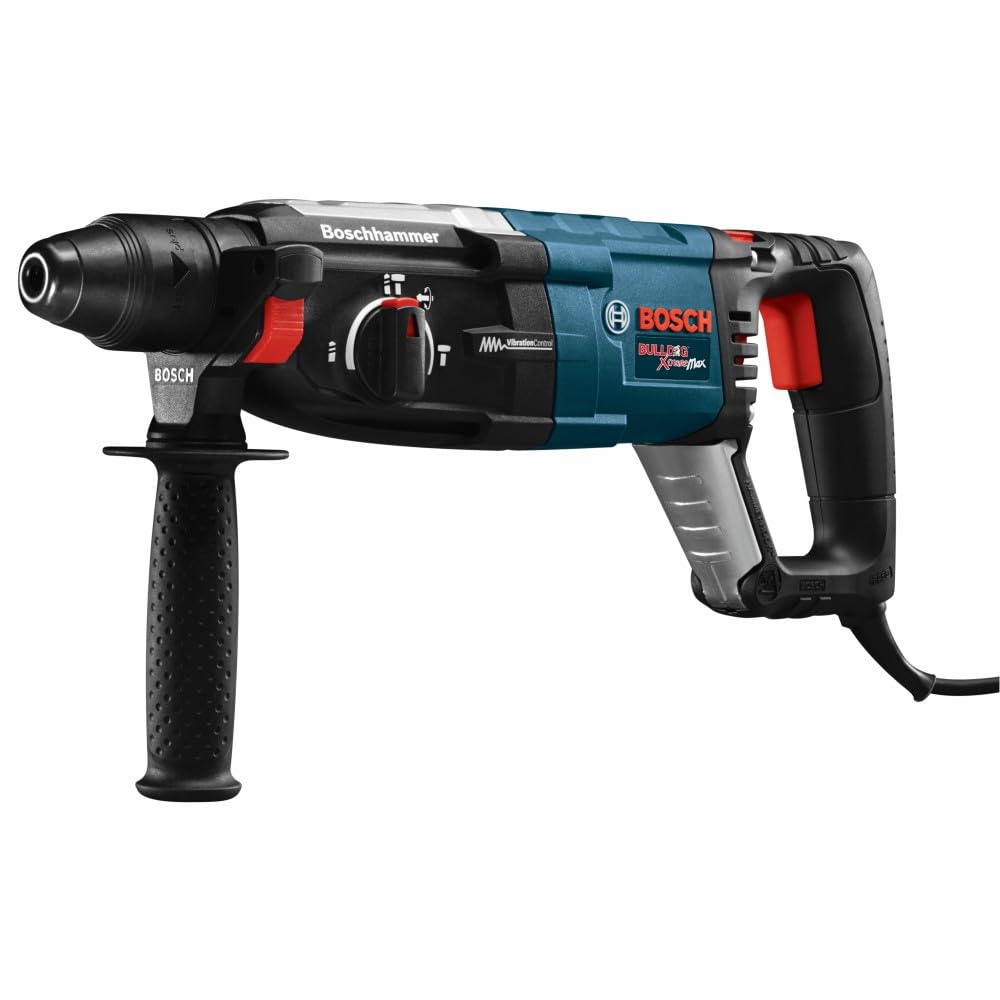
BOSCH 11255VSR Bulldog Xtreme

94 /100
Kirk Score Outstanding
Weight
10.4 lbs
Power Source
Corded (7.5 Amp)
Impact Energy
2.7 J
Operating Modes
Drill, Hammer, Chisel
Check Details on Amazon

Pros

  • Outstanding build quality that holds up to repeated jobsite use without hiccups. — Owners report it simply works, year after year.
  • Effortless concrete drilling with a good SDS bit, often described as ‘like butter.’ — Consistent praise for smooth, fast hole production in cured concrete.
  • Impressive value: comparable impact and capability to much costlier brands at a budget-friendly price. — Many buyers note it paid for itself on the first project.
  • Intuitive handling and fast drilling speed make quick work of anchors and through-holes. — Users highlight fast drilling even in deep holes and ease of control.

Cons

  • Lacks active vibration damping found on premium hammers, so prolonged use may transmit more fatigue to hands.
  • At 10.4 lbs, overhead drilling or chiseling can be tiring; all-day ceiling work is better suited to lighter models.

The Bosch 11255VSR’s 2.7 Joules of impact and SDS-Plus chuck make fast work of 3/8-inch to 1-inch holes in concrete, brick, and stone. Its motor and hammer mechanism routinely outlast rental units, and the variable speed trigger offers precise starts without skating. The three-mode selector gives you rotation-only, hammer drill, and hammer-only for light chiseling.

Drilling cured concrete with a quality bit is repeatedly described as ‘like butter’—the tool bites in and clears dust quickly without stalling. At 10.4 pounds, it feels planted and stable for vertical or waist-level work; even deeper anchor holes drill at a fast clip. Light chipping tasks like tile removal or small masonry protrusions are handled with ease. The lack of active vibration damping means extended runs may transmit more buzz to your hands, but for typical home projects this rarely becomes an issue.

This rotary hammer best suits DIYers, homeowners, and pros who need a budget-friendly workhorse for occasional concrete, brick, and stone jobs. It lacks the ultralight feel and advanced vibration control of pricier corded models, so overhead drilling or chiseling sessions will tire arms sooner. If your work is primarily at waist level or below, the extra mass actually aids stability and is not a drawback.

💡 💡 Tip: For overhead work, plan short sessions; at waist or floor level, the tool’s weight actually increases stability and reduces wander.

Bottom line: For waist-level concrete drilling and occasional chiseling, the Bosch 11255VSR provides impact and longevity that make rental options look like a poor investment.

Check Latest Price
#02

Best Cordless with Vibration Control

DEWALT DCH273B 20V MAX Cordless SDS Plus Rotary Hammer Drill (Bare Tool)

94 /100
Kirk Score Outstanding
Weight
6.4 lbs
Power Source
Cordless (20V MAX)
Impact Energy
2.1 J
Operating Modes
Drill, Hammer Drill, Chip
Check Details on Amazon

Pros

  • Solid build quality that handles chipping without excessive bulk — 158 mentions, 97% positive
  • Strong cordless concrete drilling power that often matches corded expectations — 57 mentions, 82% positive – many users report it handles reinforced concrete easily
  • Effective vibration control significantly reduces user fatigue — SHOCKS Active Vibration Control praised in multiple reviews; lightweight and comfortable handling noted in comfort topics

Cons

  • Mechanical failure can occur early in some units during light-duty use — 64 durability mentions, 34% negative; some reports of failure after three weeks of light use

Where ultralight anchor-only rotary hammers drop chiseling and impact to save ounces, the DCH273B delivers full three-mode operation and genuine vibration damping at a weight that still allows one-handed positioning. Its 2.1 Joules impact punches above its class for concrete anchors and light chipping, and the SHOCKS system noticeably reduces arm fatigue during repetitive overhead work.

This tool suits DEWALT 20V MAX owners who hang rod, set drop-in anchors, or drill into concrete across a workday. It is not a demolition hammer; swapping batteries during sustained chipping is expected. The larger boundary is durability: a small number of units have experienced mechanical failure under light use, so those who demand zero downtime should keep a backup plan. For contractors already on the DEWALT battery platform who prioritize daily comfort, the DCH273B remains a persuasive mid-range cordless option.

Bottom line: For DEWALT users who need a vibration-damped rotary hammer for overhead work and light chipping, the DCH273B offers a compelling comfort-to-power ratio—just keep spare batteries ready for longer chipping sessions.

Check Latest Price
#03

Best Heavy-Duty Budget Hammer

ENEACRO ENRH3201

92 /100
Kirk Score Outstanding
Weight
12.6 lbs
Power Source
Corded (13 Amp)
Impact Energy
7.4 J
Operating Modes
4 modes: drill, hammer only, hammer drill, chisel angle
Check Details on Amazon

Pros

  • 7.4 Joules of impact energy demolishes old concrete and tile with authority. — Handles old concrete and tile removal effortlessly.
  • Delivers impact energy typically found in tools costing twice as much. — Widely considered a steal for the capability at this price.
  • Build quality is solid for a budget hammer, with simple mode switching and bit changes. — 92% positive quality feedback in owner experiences.

Cons

  • The 12.6 lb weight causes fatigue in overhead or vertical drilling, so it is strictly a two-handed tool. — Overhead fatigue is a recurring observation.
  • Internal brushes and chuck components may wear out under sustained professional use. — Durability concerns include brush burnout and chuck loosening after heavy use.

With a 13 Amp motor and 7.4 Joules of impact, this ENEACRO rotary hammer delivers demolition-level force that few budget tools match, outclassing lighter corded models that trade impact for portability. Four operating modes, including a chisel-angle lock, let you switch from drilling to angled chipping without extra tools, and the SDS-Plus chuck makes bit swaps quick.

This is a tool for DIYers and property owners tackling one-off heavy concrete breaking, tile removal, or large-diameter coring where maximum hitting power matters more than all-day comfort. Weighing 12.6 lbs, it demands two hands and quickly exhausts you during prolonged overhead work. Internal wear parts like brushes may need replacement sooner than expected under continuous daily use, so it is not a substitute for a premium-brand jobsite hammer. Keep it for high-impact weekend projects and it will pay for itself fast.

💡 💡 Tip: Brace the tool against your body and take frequent rests to manage the 12.6 lb weight during overhead tasks.

Bottom line: A high-impact weekend warrior for budget-conscious DIYers tackling concrete breaking and tile removal; the heavy weight and wear-part durability make it a poor fit for daily overhead work.

Check Latest Price
#04

Best Professional-Grade Corded

Bosch GBH2-28L

92 /100
Kirk Score Outstanding
Weight
6.4 lbs
Power Source
Corded (8.5 Amp)
Impact Energy
3.25 J
Operating Modes
Drill, Hammer Drill, Chisel
Check Details on Amazon

Pros

  • 6.4-pound body and 3.25 Joules reduce arm strain during all-day overhead drilling. — 15 power and 10 weight mentions, all positive
  • KickBack Control and vibration damping help maintain control in awkward positions. — Safety features corroborated by ease-of-use and comfort feedback
  • Strong concrete and tile removal performance, even through hard aggregate and rebar. — 47 performance mentions, 94% positive

Cons

  • Higher upfront cost versus corded hammers that deliver comparable impact, trading weight savings for price.

The GBH2-28L sets itself apart with a 6.4-pound weight and 3.25 Joules of impact—roughly 40% lighter than the top-value corded hammer in this comparison, yet it adds KickBack Control and counter-balanced vibration damping. Three-mode operation—drilling only, hammer drilling, and chiseling—covers core masonry jobs without tool changes. In concrete and hard aggregate, it drills fast and chips evenly with less user fatigue than heavier alternatives.

This is a premium tool for contractors and serious renovators who spend long days anchoring, through-drilling, or chiseling overhead. The weight savings and safety features justify the higher cost only if used daily; those who can accept a heavier, less ergonomic tool for occasional work will find similar core impact at a lower price in the budget corded pick. It is not for buyers who need cordless mobility.

Bottom line: For jobsite professionals who value reduced fatigue and kickback safety, the GBH2-28L is the corded hammer that earns its keep through all-day comfort—provided you use it daily.

Check Latest Price
#05

Best Ultra-Compact for Anchoring

DEWALT DCH172B

93 /100
Kirk Score Outstanding
Weight
4.59 lbs
Power Source
Cordless (20V MAX)
Impact Energy
1.4 J
Operating Modes
Drill, Hammer Drill
Check Details on Amazon

Pros

  • Weighs just 4.59 lbs—effortless overhead in tight spaces for installing tapcons and anchors. — 14 weight mentions, 86% positive; frequently called 'surprisingly light'
  • Drills clean 1/4-inch to 1/2-inch holes in concrete for sleeve anchors and small fasteners. — 50 performance mentions, 82% positive; works well for 1/4" to 1/2" holes
  • Works with existing DEWALT 20V MAX batteries, simplifying the cordless kit. — 49 quality mentions, 92% positive

Cons

  • No chisel/hammer-only mode—can't be used for tile removal or light demolition. — Multiple users note it cannot chip or chisel; mode selector only offers drill and hammer-drill
  • In hard concrete, the overload protection may cut power when drilling holes larger than 3/8 inch. — 22 power mentions, 41% negative; some say it shuts off under pressure beyond 3/8" anchors

At 4.59 pounds, the DEWALT DCH172B is the lightest SDS-Plus rotary hammer in its class, making overhead anchor installations far less fatiguing. Its compact body fits between studs and inside cabinets where bulkier hammers can't reach. Unlike vibration-damped cordless competitors that add chiseling, this DEWALT strips weight to a minimum and focuses exclusively on drilling.

DEWALT 20V MAX owners who already have a larger hammer for heavy work will appreciate this as a secondary drill for tapcon and sleeve-anchor holes up to 1/2 inch. Because it lacks a hammer-only mode, there's no way to chip tile or break through brick—it is strictly a drilling tool. In very dense concrete, the motor may shut off to protect itself when pushing beyond 3/8-inch anchors, so keeping tasks small and light preserves its advantage.

💡 💡 Tip: Pair it with a corded rotary hammer if your jobs ever require tile chipping or wall opening—this tool strictly drills.

Bottom line: For DEWALT users who need the most compact drill for overhead anchoring and already own a chipping-capable hammer, this lightweight tool reduces fatigue without adding bulk. Anyone expecting even occasional chiseling should look to the top pick's three-mode operation instead.

Check Latest Price
#06

Best for Milwaukee Battery Users

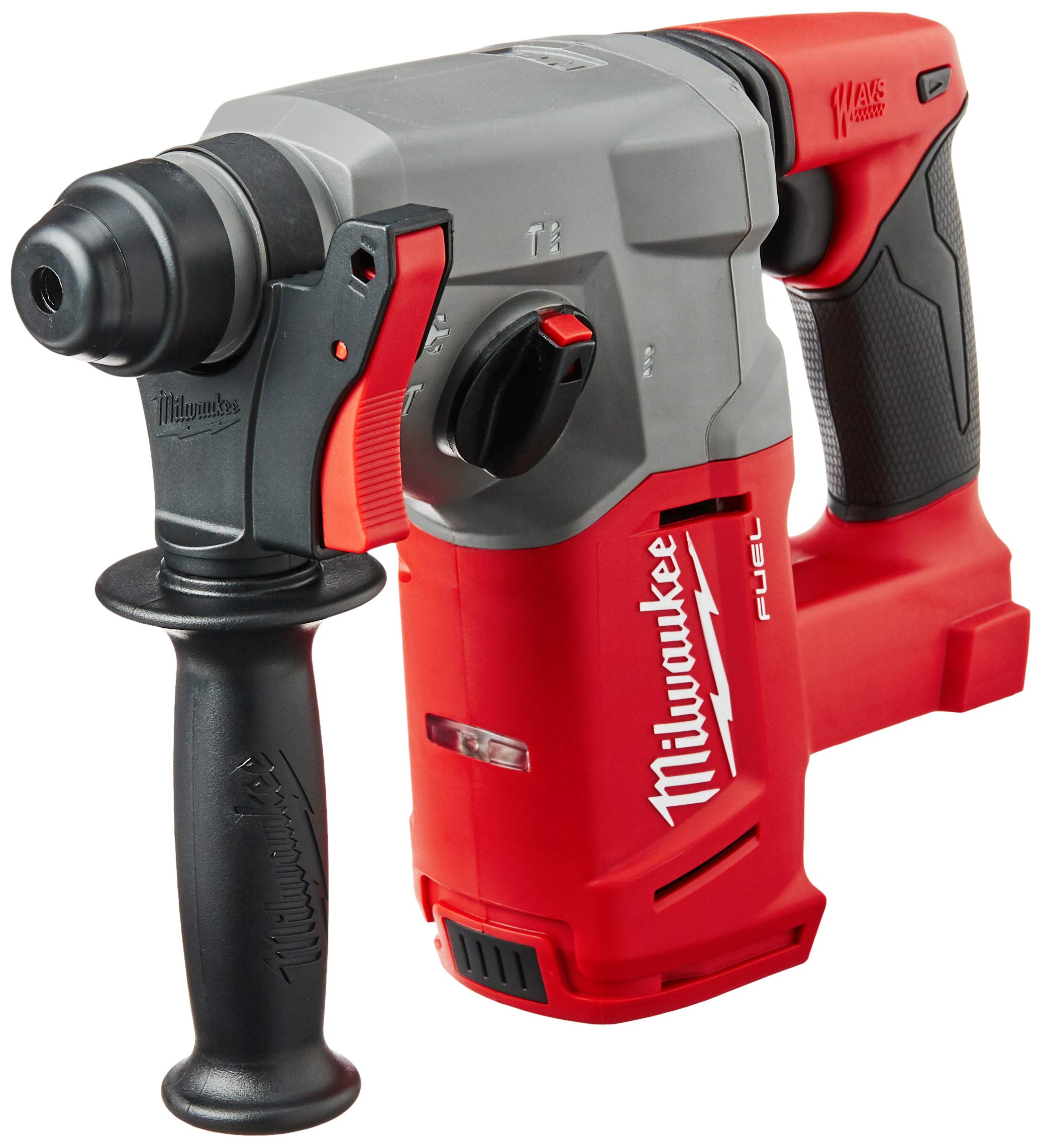
Milwaukee 2712-20 M18 FUEL Cordless SDS Plus Rotary Hammer

94 /100
Kirk Score Outstanding
Weight
6.9 lbs
Power Source
Cordless (M18)
Impact Energy
Operating Modes
Drill, Hammer Drill, Chisel
Check Details on Amazon

Pros

  • Cuts through concrete, brick, and stone easily for anchoring and light chipping. — 47 quality mentions, 100% positive
  • Handles drilling, chiseling, and tile removal with consistent cordless power. — 28 performance mentions, 86% positive; 13 drill mentions, 92% positive
  • Good blend of 6.9-pound weight and impact for overhead or all-day use. — 18 power mentions (94% positive), 16 weight mentions (81% positive)

Cons

  • Price is not shown in the listing, so instant value assessment requires extra comparison steps. — credibility flags: no_price_data
  • Impact energy is not officially stated, leaving spec-driven buyers without a verified number. — spec_highlights: impact energy not officially stated, only estimated ~2.3 J

The 2712-20 puts cordless SDS-Plus performance in a package that feels nimble for its class. At 6.9 pounds and with three operation modes, it drills anchor holes and tackles light tile removal without tethering you to an outlet. Where Milwaukee's higher-impact cordless model trades weight for outright energy, this tool leans into maneuverability—still plowing through brick and masonry with authority for typical fastening and chipping tasks.

It fits Milwaukee M18 users who need a capable cordless rotary hammer for concrete anchors, electrical boxes, or occasional chisel work, not sustained demolition. Because the listing lacks a displayed price and Milwaukee does not publish an official impact energy specification, spec-focused shoppers will need to research current cost and accept that exact joules are unconfirmed—something that may frustrate direct comparison or heavy-duty planning.

Bottom line: A solid cordless pick for Milwaukee M18 owners who prioritize manageable weight and strong real-world drilling over spec-sheet completeness—just plan to check current pricing and accept that the joule rating remains unofficial.

Check Latest Price
#07

Light Anchoring

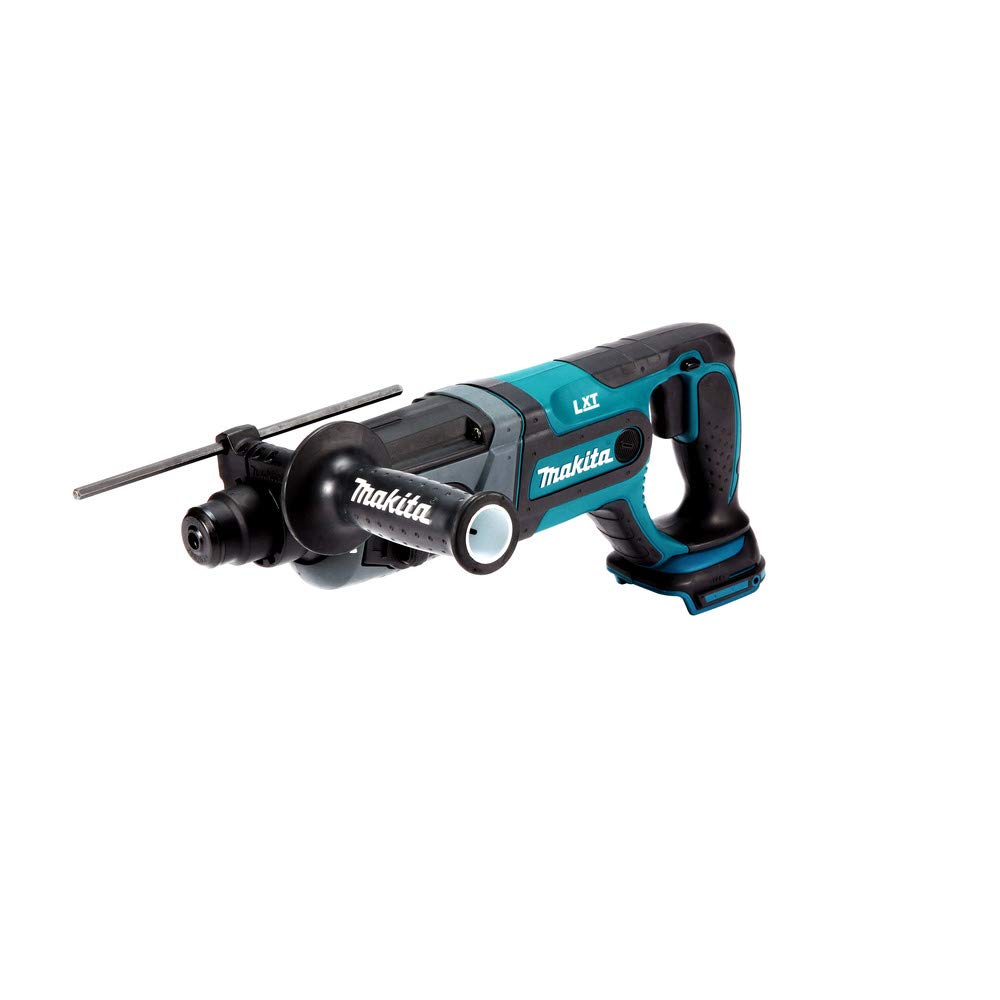
Makita XRH04Z 18V LXT Rotary Hammer

94 /100
Kirk Score Outstanding
Weight
7.4 lbs
Power Source
Cordless (18V LXT)
Impact Energy
Operating Modes
Drill, Hammer Drill, Chisel
Check Details on Amazon

Pros

  • Built to Makita's manufacturing standards for consistent anchor setting in block and concrete. — 47 quality mentions, 91% positive
  • Drills through concrete smoothly with a quality SDS-Plus bit, making short work of anchor holes. — 11 drill-performance mentions, 73% positive; many report easy concrete penetration

Cons

  • Battery drains quickly during demanding jobs; having multiple high-capacity packs on hand is advisable for extended work. — 11 battery-life mentions, 82% negative; users report short runtime even with high-capacity packs

The Makita XRH04Z brings cordless convenience and three-mode operation to a 7.4 lb frame, making it a natural fit for Makita 18V LXT owners who drill a few anchor holes or do light chiseling. The build quality inspires confidence, and with a sharp SDS-Plus bit it punches through concrete with ease. However, battery drain accelerates quickly under continuous use, so anyone tackling more than an occasional hole should keep extra high-capacity packs charged. Pricing remains unavailable, making it tougher to weigh against rivals that offer longer runtime.

Bottom line: For Makita 18V LXT owners who need a light, occasional-use hammer for a few anchors at a time, this drill delivers — just keep extra batteries handy.

Check Latest Price
#08

Ryobi ONE+ Users

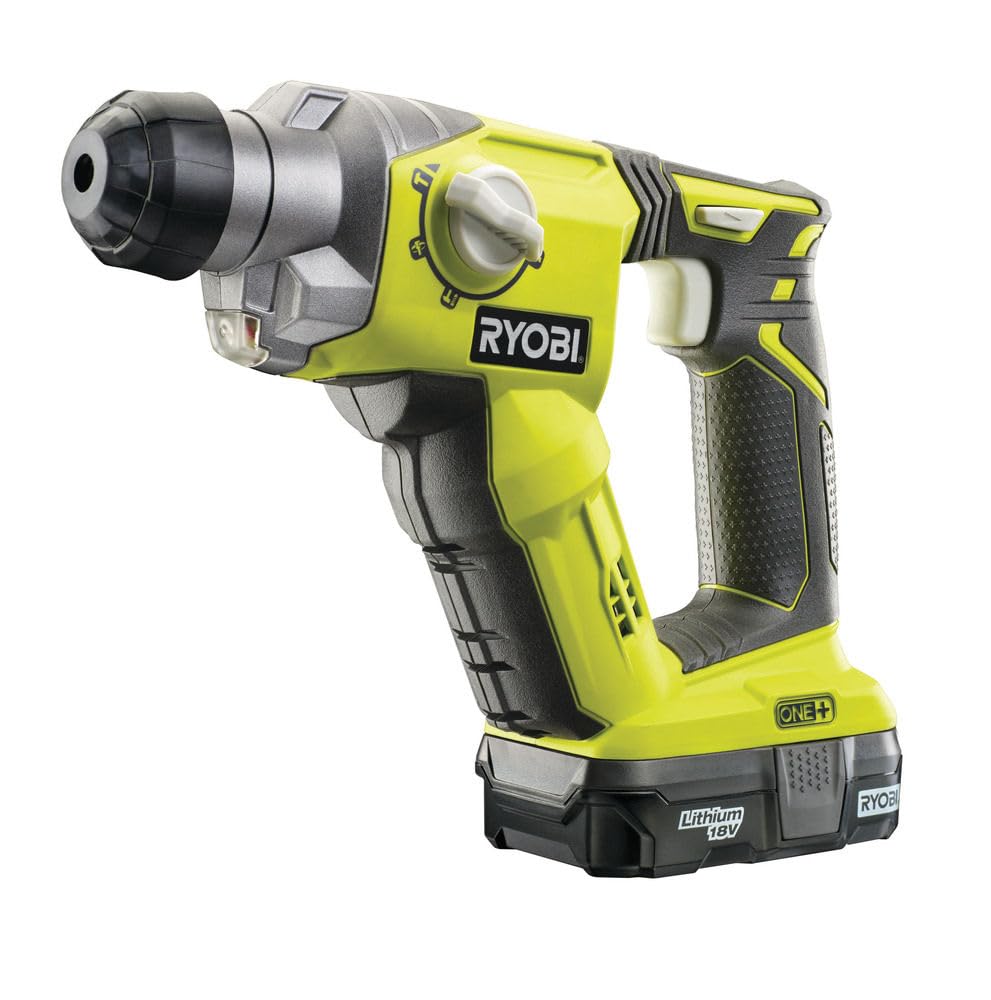
Ryobi R18SDS-0

92 /100
Kirk Score Outstanding
Weight
4.34 lbs
Power Source
Cordless (18V ONE+)
Impact Energy
Operating Modes
4 modes: drill, hammer drill, chisel, vario-lock
Check Details on Amazon

Pros

  • Only 4.34 lbs for overhead drilling and extended use without arm fatigue.
  • Four-mode operation with vario-lock chisel positioning for controlled chipping at any angle.

Cons

  • Impact energy is not disclosed, so buyers can't directly compare its striking force against heavier models.
  • Long-term reliability when used for repetitive concrete drilling has not been field-verified.

Weighing only 4.34 lbs, the R18SDS-0 is among the lightest rotary hammers in its class, and the four-mode dial—drill, hammer drill, chisel, plus vario-lock positioning—adds flexibility for anchor holes and light chipping. The tradeoff is that extended reliability under daily jobsite loads hasn't been verified, which tempers confidence for demanding professional use. For occasional small-diameter holes and chisel tasks on the Ryobi ONE+ platform, the weight savings and low system cost make it a practical addition.

💡 💡 Tip: Pair with a 4Ah or higher ONE+ battery to maintain consistent impact force during larger-diameter holes.

Bottom line: For Ryobi ONE+ users who need a lightweight rotary hammer for intermittent anchor holes and light chiseling, the R18SDS-0 is a cost-effective choice, provided they accept that its heavy-duty endurance hasn't been thoroughly documented.

Check Latest Price

How to Choose

Impact Energy (Joules)

A rotary hammer's impact energy, measured in Joules or foot-pounds, is the force delivered by each piston strike. This energy shatters aggregate and drives the bit forward; if it's too low, the bit merely skates over hard concrete, generating heat instead of progress. A 1.4J compact hammer can handle 1/4-inch tapcon holes comfortably, but consistently drilling 1/2-inch or larger holes in old, hard concrete demands at least 2.5 Joules to avoid burnt bits and stalling.

The trade-off is weight and cost: a 7J demolition brute chews through slabs but becomes punishing overhead. Match impact to the largest hole you'll routinely drill—occasional big holes can be rented, but a daily workhorse should sit in the 2.5–3.5J sweet spot.

Power Source: Corded vs. Cordless

Corded rotary hammers deliver unlimited runtime and full-rated impact from the moment you pull the trigger, making them the default for sustained chiseling and production drilling. A corded 8–13 amp motor won't sag under load, and you never need spare batteries.

Cordless models offer maneuverability beyond the outlet, but the high-current hammering mechanism drains batteries aggressively. A 5Ah pack may drill only 20–40 half-inch holes in reinforced concrete before swapping, and older or compact batteries trigger overload shutdowns. If you go cordless, budget for at least one high-capacity spare battery, and consider whether swapping packs mid-task is acceptable.

Weight

Rotary hammer weight directly affects overhead fatigue and control. Every additional pound above shoulder level multiplies strain, and heavy tools can wander off-mark when you're tired. Lighter models (under 6 lbs) sacrifice impact mass, relying on higher blow rates to compensate, which works for small anchors but under-delivers in hard aggregate. Demolition hammers exceeding 12 lbs are two-handed beasts designed for vertical breaking, not overhead work. If you spend hours on a ladder, value a tool under 7 lbs even if it means slightly slower drilling.

Chuck Type and Maximum Bit Size

SDS-Plus is the standard for bits up to about 1-1/8 inches in concrete; the chuck's rapid bit-change mechanism also transfers impact without a keyed jaw. The maximum bit diameter printed on the tool isn't just a suggestion—a 5/8-inch-max chuck physically can't accept a 1-inch core bit. If you plan to use larger hole saws, carbide coring bits, or deep anchor sizes, confirm the chuck capacity. For the vast majority of homeowner and contractor anchoring tasks, an SDS-Plus with 1-inch capacity covers the range.

Operating Modes

The three critical modes are rotation-only (for wood/metal with a chuck adapter), hammer-drill (rotation with impact), and hammer-only for chiseling and light demolition. Some compact cordless models omit the hammer-only mode entirely, giving you no way to chip tile, break concrete, or scrape mortar. Without that function, you'll need a separate demolition hammer for even modest chipping work. Before buying, check that the mode selector includes a chisel position if you expect to remove tile, brick, or thinset.

Frequently Asked Questions