// data-verified

8 Best Stud Finders for Plaster Walls 2026: Which Actually Work

Which magnetic and electronic stud finders actually locate framing behind plaster and lath, even through thick layers, for confident mounting in old homes.

Older homes with plaster and lath walls hide a frustration many renovators discover too late: the stud finder that worked perfectly on drywall becomes useless, giving false readings or no signal at all. Thick plaster, dense backer materials, and metal mesh lath can defeat weak magnets and confuse electronic sensors, leaving you guessing where to drill.

But the solution isn’t simply spending more—it’s matching the tool to the wall’s specific structure. A strong rare-earth magnet in a design that gives clear tactile or visual confirmation often outperforms a basic electronic unit on typical plaster. For extremely thick or multi-layered walls, an electronic deep-scan model that maps stud edges becomes worth the extra size and cost.

Knowing the difference means you won’t waste money on a tool that can’t handle your home’s construction. The right stud finder for plaster walls prioritizes grip strength, feedback clarity, and explicit compatibility over brand reputation or flashy features.

#01

Best Overall

StudPoP Magnetic Stud Finder

91 /100
Kirk Score Outstanding
Indicator
Visual pop-up + audible click
Self-Adhering
No self-stick feature
Detection Type
Magnetic with visual pop-up
Magnet Strength
Rare-earth (1' magnet)
Check Details on Amazon

Pros

  • Finds fasteners reliably on plaster and lath, often outperforming electronic units
  • Intuitive slide-and-pop operation; no calibration or batteries required
  • Eliminates false positives; consistent results on dense or uneven surfaces

Cons

  • Only detects fastener locations
  • Magnet may need support on thick plaster instead of self-sticking, requiring a free hand to mark

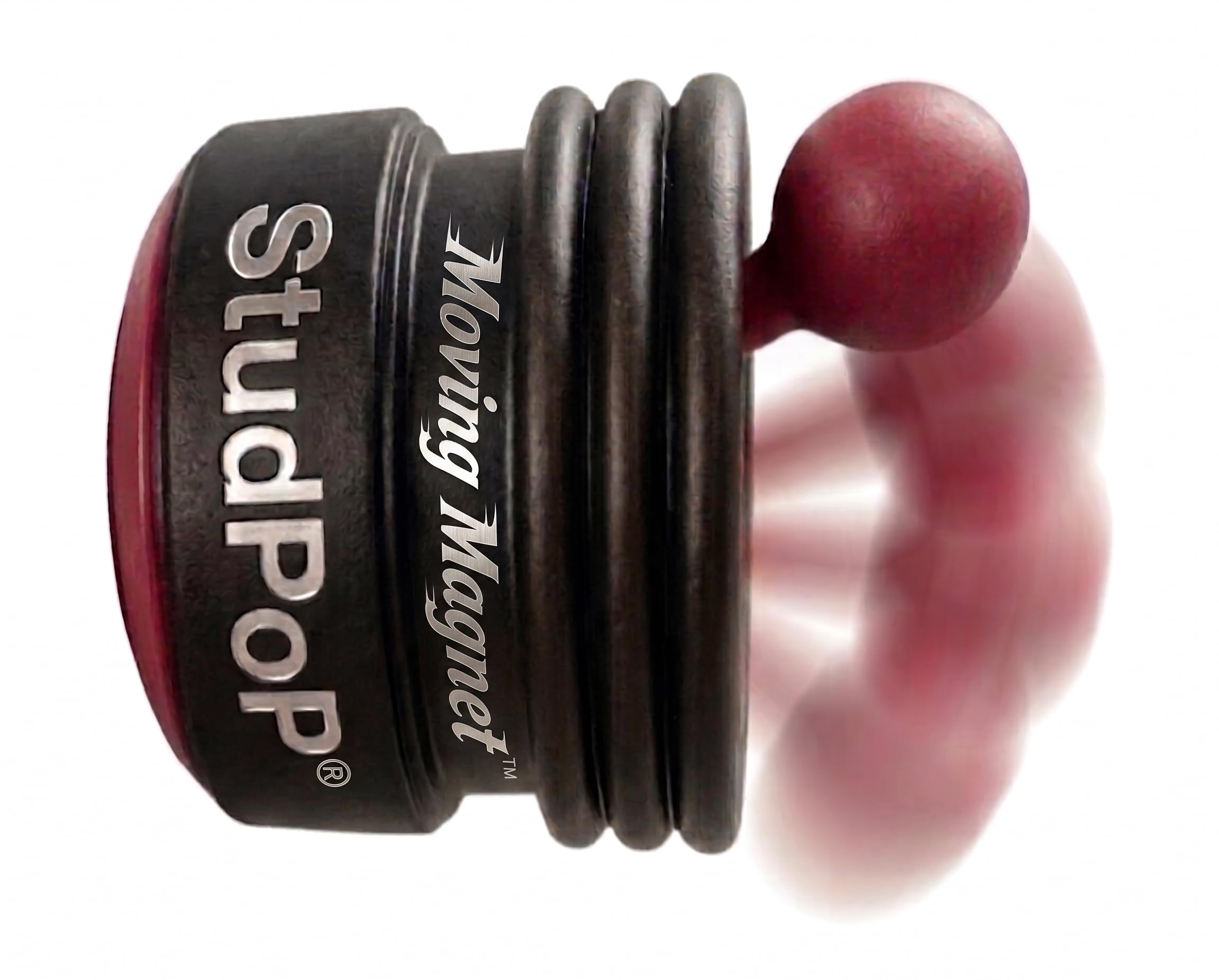
The stud-finding experience on lath and plaster is swift and certain—simply slide the StudPoP across the wall and watch for the magnet to pop up and click. It locates fasteners in drywall, plaster, and tile without calibration or batteries, and on many plaster walls it outperforms electronic units that can be confused by metal lath. The visual pop-up and audible click confirm a stud even when magnetic pull is faint, making false positives rare. On typical drywall or plaster, the strong magnet will often remain attached to the wall on its own, freeing your hands for marking. On walls with thick plaster or multiple paint layers, the magnet may not hold itself against the surface, so you'll need a free hand to support it while marking—this is manageable but worth noting.

This finder is built for homeowners with older plaster-and-lath walls who want a battery-free, instant-read tool for mounting heavy items. DIY beginners will appreciate the unmistakable pop-and-click feedback that eliminates guesswork. If your project requires mapping the full stud edges or drilling through plaster exceeding 1.5 inches, consider pairing it with a deep-scan electronic stud finder.

💡 Tip: On thick plaster, a strip of painter's tape gives the magnet something to grip, so it sticks on its own while you mark the spot.

Bottom line: The StudPoP's pop-up feedback and zero-battery design make it the clearest, most affordable way to hang heavy items on plaster—it feels like a trustworthy tool, not a guessing game.

Check Latest Price
#02

Best Precision Electronic

Franklin ProSensor MAX

90 /100
Kirk Score Outstanding
Indicator
LED display shows stud width
Self-Adhering
No (electronic)
Detection Type
Electronic with 13 sensors, deep-scan
Magnet Strength
N/A
Check Details on Amazon

Pros

  • Deep-scan mode detects studs through thick plaster and lath, even multi-layer walls that stop other scanners.
  • No calibration needed; automatically adjusts even when starting over a stud.
  • Displays full width of studs, revealing edges and center simultaneously.

Cons

Where magnetic finders detect fasteners, the ProSensor MAX scans wall density with 13 sensors and a dedicated plaster mode capable of reaching framing up to 2.5 inches deep. It auto-calibrates even when placed over a stud, and its LED display marks both edges and the center simultaneously, so you know exactly where to drill.

For homeowners with very thick, multi-layer plaster-and-lath walls or renovation contractors who need exact stud edges, this is the most capable electronic finder. Its size and weight, however, make it awkward in tight spaces and for one-handed operation — a key consideration if you're navigating narrow closets or behind furniture.

Bottom line: If thick plaster has defeated other stud finders, the ProSensor MAX is the electronic benchmark.

Check Latest Price
#03

Best Value 2‑Pack

CH Hanson Stud Finder 2-Pack

95 /100
Kirk Score Outstanding
Indicator
None
Self-Adhering
No claim
Detection Type
Magnetic
Magnet Strength
Not specified
Check Details on Amazon

Pros

  • Strong rare-earth magnets grab fasteners even through thick plaster and lath.
  • Accurate on old plaster walls when electronic models may struggle.
  • Spare unit ensures you're never without a finder during multi-room jobs.

Cons

  • Compact profile can be easy to misplace
  • No visual or audible indicator; you must feel for the magnetic pull to confirm a stud.

Unlike the top pick's pop-up visual indicator, this magnetic finder relies on feel alone — no batteries, no electronics. Strong rare-earth magnets find screws and nails in old plaster walls just as well, but you must slide the tool until you sense the tug. That makes it a fit for cost-conscious homeowners who don't mind the lack of confirmation and value a spare. The two-pack compensates for the small, losable design; keep one in your tool belt and the other in the drawer.

💡 Tip: Mark studs with a pencil when you feel the pull, or keep the second finder in a different room for quick cross-checking.

Bottom line: If you're comfortable feeling for the magnet instead of seeing a light, this two-pack offers dependable plaster-wall detection at a budget-friendly price, with a built-in backup.

Check Latest Price
#04

Best for Heavy‑Duty Magnetic Grip

Stud Ball Magnetic Stud Finder

95 /100
Kirk Score Outstanding
Indicator
None
Self-Adhering
Not advertised
Detection Type
Magnetic (rare-earth)
Magnet Strength
27 lb pull force
Check Details on Amazon

Pros

  • Finds studs through plaster and multiple layers without batteries.
  • One-handed slip-on design lets you scan and mark quickly.
  • Powerful rare-earth magnet clings tight to most wall surfaces.

Cons

  • On heavily textured plaster, the magnet may not hold itself in place and can slip.

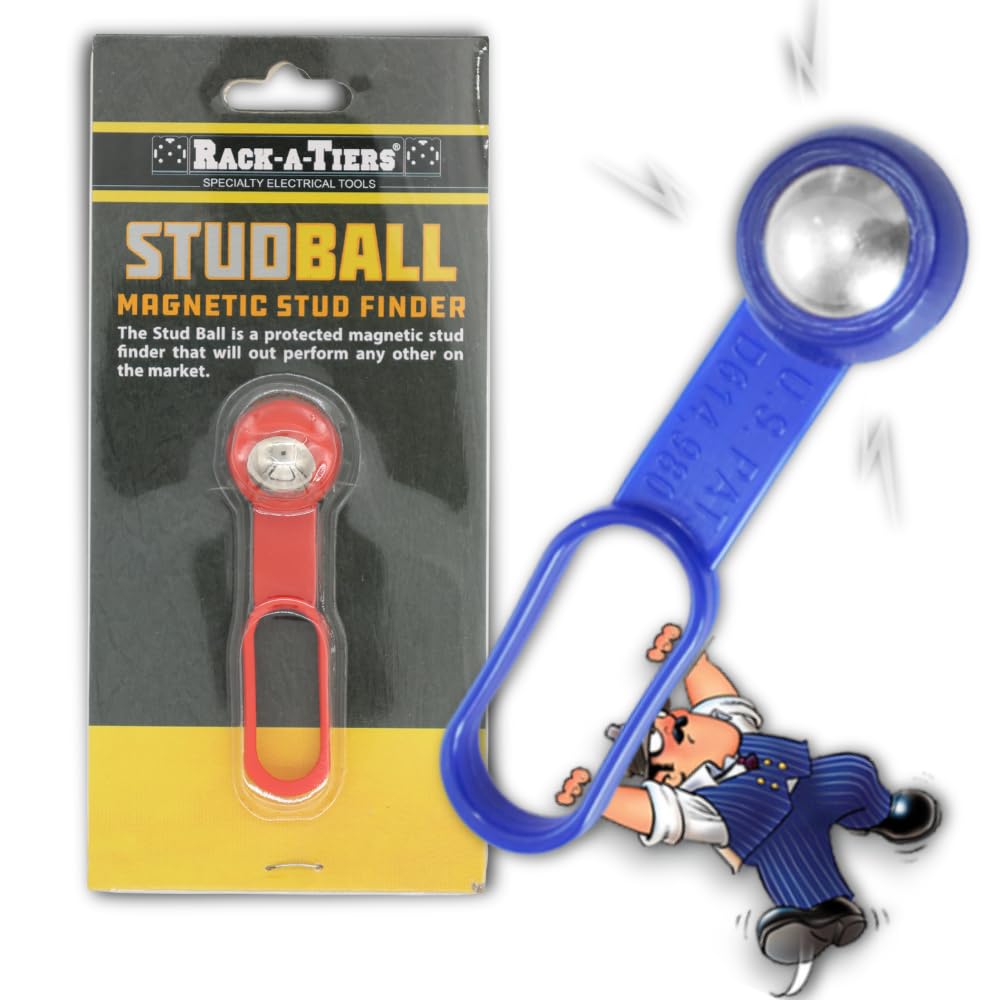
The Rack-A-Tiers Stud Ball uses a 27-pound pull force spherical rare-earth magnet that locks onto drywall screws and nails through multiple plaster layers — a step up in grip from finders that rely solely on visual indicators. The finger-loop design lets you scan with one hand and mark with the other, and there are no batteries or calibration steps. It’s a straightforward grab-and-stick tool.

This is a strong choice for older homes with thick plaster where smaller magnets slide off. On heavily textured walls, the magnet’s cling can be less secure; you might need to hold it in place for accurate spotting.

💡 Tip: On rough surfaces, holding the Stud Ball in place with your finger ensures it doesn’t slip before you mark the spot.

Bottom line: For heavily plastered walls, this is the magnetic stud finder that sticks when others won’t — just be ready to steady it on rough textures.

Check Latest Price
#05

Best with Built‑In Level

Vaughan Stud Finder Leveler

91 /100
Kirk Score Outstanding
Indicator
None
Self-Adhering
Does not self-adhere
Detection Type
Magnetic
Magnet Strength
Not specified
Check Details on Amazon

Pros

  • Reliably locates nails or screws behind plaster and lath to identify stud position.
  • Strong magnets provide a confident hold when metal is detected, reducing uncertainty.
  • Built-in dual bubble levels enable plumb and level marking without a second tool.

Cons

  • Won’t stick to the wall on its own

Unlike stud finders that rely on a pop-up visual indicator, this Vaughan tool adds dual bubble levels to its magnetic detection, so you can locate a fastener behind plaster and immediately check plumb or level without switching tools. It’s compact and works on plaster and lath where electronics may struggle. The tradeoff: there’s no self-stick magnet on the back — you must hold it against the wall while marking, which adds a step for solo projects. That makes it a better match for DIYers who frequently need both stud finding and level alignment during the same task and are comfortable keeping a hand on the tool.

💡 Tip: Hold the finder with one hand and mark with the other; a pencil with a slim grip helps when working alone.

Bottom line: For plaster-wall DIYers who want a combined stud finder and level, this tool delivers solid magnetic detection and the convenience of onboard bubble levels — just be prepared to hold it while marking.

Check Latest Price
#06

Best Compact Professional Tool

Klein MSF100 Stud Finder

90 /100
Kirk Score Outstanding
Indicator
None
Self-Adhering
No claim
Detection Type
Magnetic
Magnet Strength
N52 rare-earth
Check Details on Amazon

Pros

  • Strong N52 magnet detects metal fasteners through plaster
  • No batteries needed
  • Felt pad protects plaster surfaces from scratches during use

Cons

  • No audible alert or visual indicator

Where the other stud-finder-with-level in this set must be held in place, the MSF100 adds a felt pad to glide across plaster without scratching. The N52 magnet has enough pull to detect fasteners through moderate plaster, and the integrated bubble level lets you mark level lines as you find studs. The tradeoff is that it gives no beep or light — you interpret stud location by the magnet’s tug. This suits trade pros and serious DIYers who need a pocket-sized, battery-free locator that treats plaster gently and can survive a tool bag.

💡 Tip: Move slowly and feel for the magnet’s subtle grab — there’s no beep or light to signal a hit.

Bottom line: Tough and plaster-friendly, the MSF100 is a sound choice for job-site carry when battery-free simplicity matters more than visual confirmation.

Check Latest Price
#07

Laser alignment

Kreg Laser-Mark Stud Finder

89 /100
Kirk Score Excellent
Indicator
Laser line marker
Self-Adhering
Advertised self-stick (fails)
Detection Type
Magnetic with laser
Magnet Strength
Rare-earth (weak per reviews)
Check Details on Amazon

Pros

  • Laser projects a straight reference line for easy marking after locating a stud.
  • Finds metal fasteners reliably through standard drywall.

Cons

  • Magnets may not self-adhere on plaster or textured drywall, requiring the tool to be held in place.

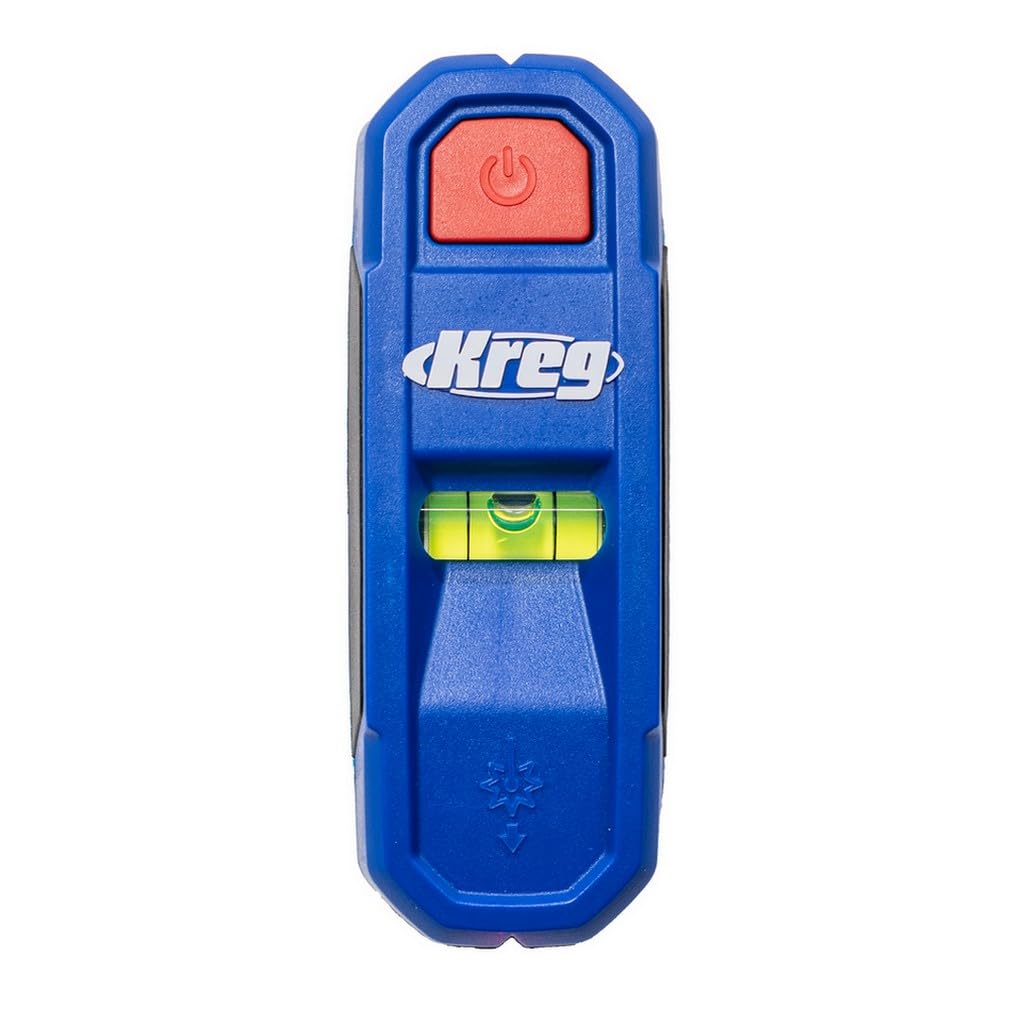
The built-in laser projects a clear line, turning stud location into a straight marking step. On plaster walls, the magnetic detection still works — just hold the finder manually, because the magnets may not grip on thick or textured surfaces. This suits users who value laser alignment over hands-free convenience.

Bottom line: If you're scanning plaster and can hold the finder yourself, the laser saves marking time — just ignore the hands-free promise.

Check Latest Price
#08

Quick checks

MagnetPal Stud Finder

87 /100
Kirk Score Excellent
Indicator
None
Self-Adhering
No claim
Detection Type
Magnetic
Magnet Strength
Not specified
Check Details on Amazon

Pros

  • Strong magnet for its size, grabs hidden screws and nails through thin plaster.
  • Works on lath and plaster, drywall, and tile.

Cons

  • Extremely tiny size makes it easy to lose and awkward to handle.

Inexpensive pocket-sized magnet for quick checks on thinner plaster. It finds fasteners behind lath and plaster, drywall, and tile, and its surprising strength often holds tight to hidden screws. However, it's extremely small — easy to misplace and hard to handle — and the magnet isn't powerful enough for thick plaster walls, so it's a backup for occasional use.

Bottom line: A spare magnet for quick checks on thinner plaster walls — keep it in a toolbox for emergencies, not as a primary stud finder.

Check Latest Price

How to Choose

Detection Type: Magnetic vs. Electronic

Simple magnetic stud finders locate the nails or screws in the stud, not the wood itself. They work behind thick plaster because they rely on a powerful magnet’s pull to a metal fastener, but the sensation can be faint if the nail is deep. Electronic finders sense density changes and can show the stud’s edge and center, but they may pick up lath strips or metal mesh as false positives unless they have a deep-scan mode tuned for plaster.

For most plaster walls, a magnetic finder with a strong pull (over 20 lbs) will reliably grab a screw head and give enough feedback. Electronic deep-scan is really for walls over 1.5 inches thick or those with OSB sheathing behind plaster, where magnetics struggle.

Magnet Strength and Pull Force

Magnetic stud finders are rated by pull force and magnet size, but what matters on plaster is how that force transfers through layers. A 1-inch rare-earth magnet may provide strong attraction on thin plaster but can lose grip quickly as plaster thickens or if there’s metal lath interfering. The Stud Ball’s 27-pound pull concentrates through a spherical shape, creating a firmer attachment—a real advantage on dense walls. However, even strong magnets can have trouble on rough, bumpy surfaces where full contact with the fastener is compromised.

Don’t assume a ‘rare-earth’ label guarantees plaster performance; look for specific pull-force specs when walls are especially thick, and pair with a magnet that has a visual indicator to confirm a hit even when the pull is subtle.

Plaster Compatibility Claims

Many stud finders never mention plaster in their marketing. When a product explicitly states it’s designed for lath and plaster—like StudPoP’s listing or Franklin’s dedicated plaster mode—you can trust that it’s been engineered to handle the density and metal interference common in old construction. Tools that only mention drywall, even if reviewers have had success, introduce an element of risk. The safest choice is to prioritize products with explicit plaster compatibility, because that usually means the magnet strength, sensor algorithm, or mechanical design has been adjusted accordingly.

Confirmation: Visual and Audible Indicators

The magnetic pull on a stud finder can be subtle behind plaster, leaving you uncertain whether you’ve truly found a screw. Stud finders with a pop-up indicator or an audible click remove this doubt by physically showing you when the magnet aligns with a fastener. Electronic deep-scan models with LED arrays go further, displaying the entire stud’s width so you can find edges and center. Without any indicator, you rely on faint ‘feel’ alone—a recipe for misdrilling on thick, uneven walls. For plaster work, prioritize a clear confirmation signal over raw magnet force.

Self-Adhering and Hands-Free Marking

A stud finder that sticks to the wall while you mark is convenient, but plaster’s texture and thickness often defeat weak magnets. Most magnetic finders aren’t designed to cling vertically on rough plaster—they slip or fall. Even products that advertise hands-free operation may not hold securely on bumpy surfaces. If you frequently work alone, choose a finder with a proven self-stick track record on plaster (like the Stud Ball’s heavy grip) or accept that you’ll need to hold it in place while using a pencil. For many, the trade-off is acceptable given the faster, one-handed marking it enables when conditions are right.

If you rely on self-stick, test it on your specific plaster texture before committing to a project.

Frequently Asked Questions