Best Overall
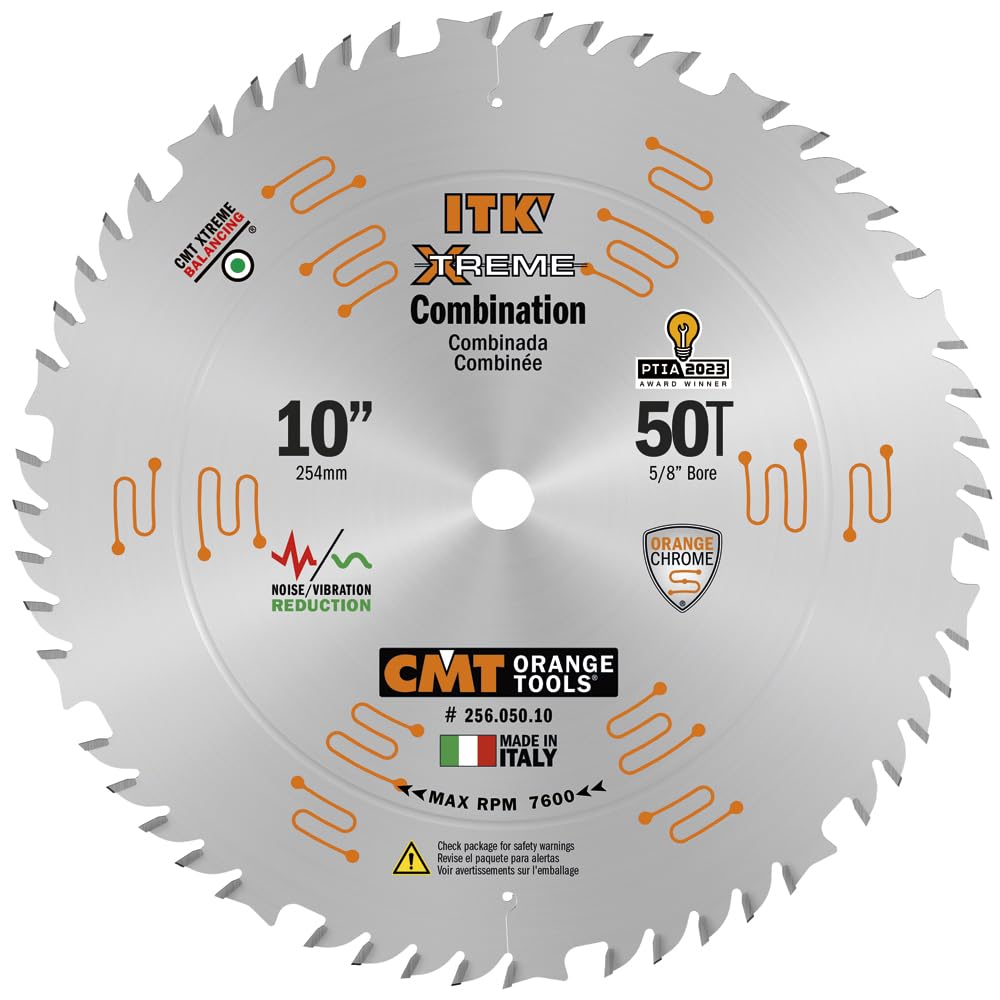
CMT 50T Combo
- Arbor Size
- 5/8"
- Kerf Thickness
- .102"
- Tooth Count & Grind
- 50T, ATB+Flat
- Carbide & Anti-Vibration
- Carbide, anti-vib slots
Pros
- Exceptionally quiet, vibration-free cutting
- Leaves edges requiring minimal sanding on both rips and crosscuts.
- Punches above its price with durable carbide that stays sharp through demanding projects.
Cons
- Kerf at .102" is slightly thicker than some ultra-thin blades, leading to minimal additional wood waste and power draw.
The CMT 50T Combo blade distinguishes itself with a finely machined plate and anti-vibration expansion slots that make it one of the quietest, smoothest-cutting combo blades in its class. On both rips and crosscuts, the 50-tooth ATB+Flat grind leaves edges so glassy that sanding is often unnecessary. Its carbide holds sharpness through demanding projects, delivering durability that rivals industrial blades costing significantly more. While many budget blades suffer from balance issues and short lifespan, this CMT's damping and consistency produce cuts that feel precise and controlled.
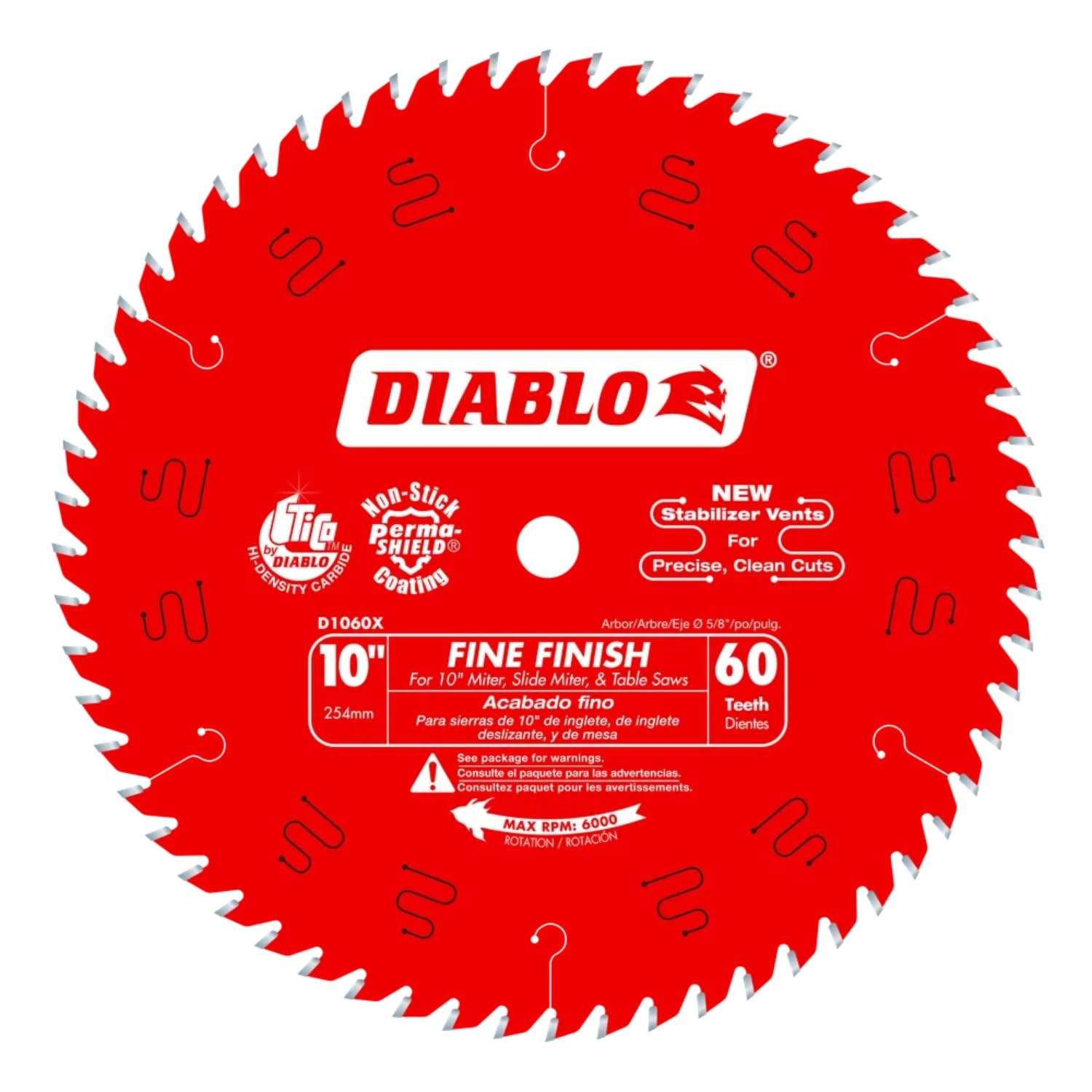
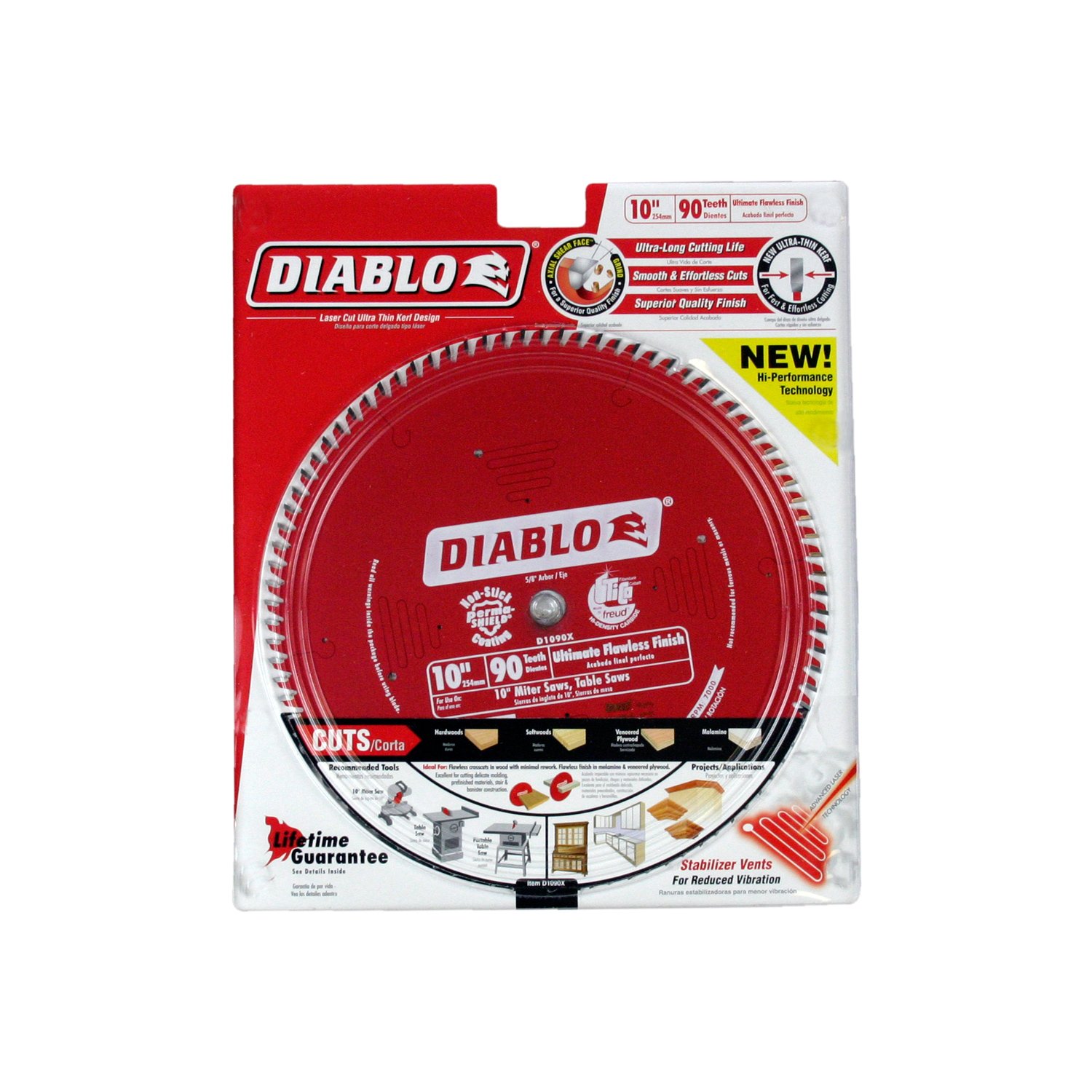
The blade's .102" kerf is slightly thicker than popular thin-kerf options from Diablo, so it requires a touch more motor power and produces marginally more sawdust. In exchange, that extra thickness contributes to its exceptional vibration control. This tradeoff suits woodworkers who prioritize finish quality and quiet operation over absolute material savings. It's an ideal single-blade solution for joinery, panel work, and general table saw use where precision matters more than shaving off thousandths of an inch.
💡 Tip: On underpowered saws, feed a bit slower in dense hardwood to let the thicker plate clear chips without bogging.
Bottom line: For woodworkers who want premium cut quality and silence without paying industrial prices, this blade is a standout — the modestly thicker kerf is a small tradeoff for its damping and finish.
Check Latest Price