How Long Does Spray Paint Take to Dry? (Full Timeline)
Spray paint feels dry in minutes but isn't truly cured for days. Here's the real timeline — dry to touch, safe to handle, ready to recoat — plus what speeds it up.
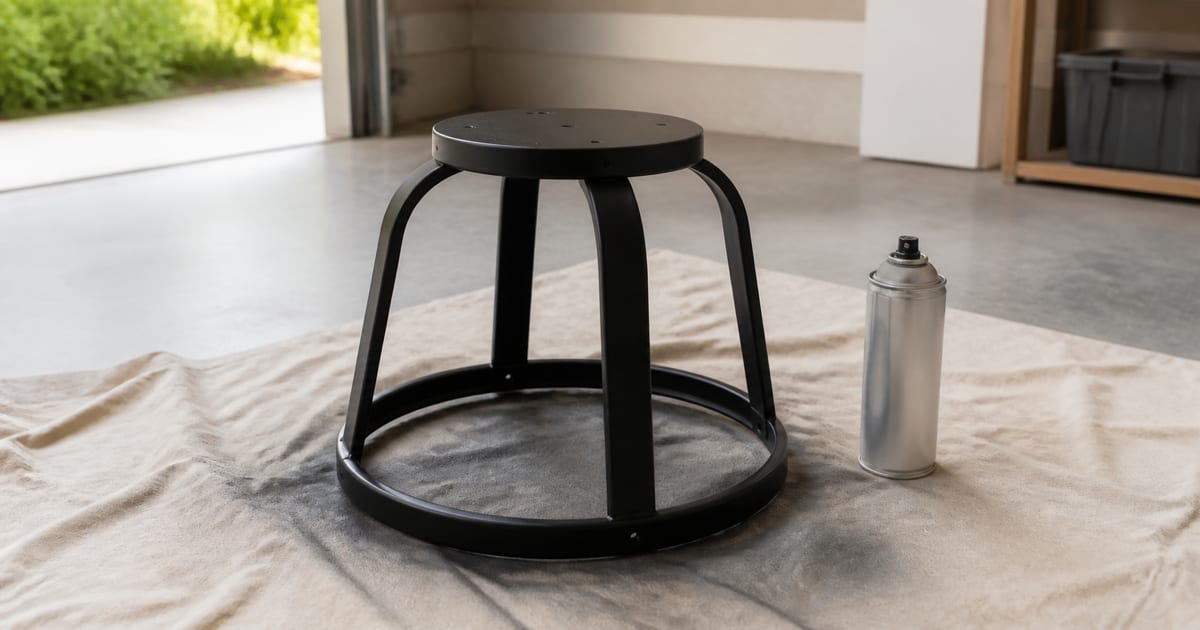
Spray paint dries deceptively fast on the surface, which tempts people to stack coats or handle the piece too soon — and that's exactly how you get fingerprints, drips, and wrinkled finishes. 'Dry' and 'cured' are two different things. Here's the full picture.
The quick timeline
| Stage | Typical time | What it means |
|---|---|---|
| Surface dry | 10–30 min | No longer tacky to a light touch |
| Touch dry | 30 min – 1 hr | Can touch gently without marking |
| Handle dry | 1–2 hrs | Safe to move or flip the piece |
| Recoat window | within 1 hr, or after 48 hrs | Avoid the in-between zone |
| Fully cured | 24 hrs – 7 days | Hard, durable, and washable |
Dry vs. cured — why it matters
A coating is dry when the solvents have evaporated enough that it's no longer wet. It's cured when the paint has fully hardened all the way through and reached its final durability. You can usually handle a piece within a couple of hours, but put it into real service — a shelf that holds weight, a chair that gets sat on — before it's cured and you'll dent or scratch the finish. When in doubt, give it a full day.
The recoat trap
This is the mistake that ruins more spray projects than any other. Spray paint should be recoated either within about an hour (while the first coat is still fresh) or after 48 hours (once it's fully cured). Recoat somewhere in between and the solvents in the new coat partially re-dissolve the half-set coat underneath, causing wrinkling and lifting. Always check the back of the can — recoat times vary by brand.
What changes the timeline
- Temperature: warm air (around 65–80°F) dries paint fastest. Cold garages drag it out for hours.
- Humidity: damp air slows evaporation; dry air speeds it up.
- Coat thickness: several light passes dry far faster — and look better — than one heavy, drippy coat.
- Paint type: lacquer dries fastest, enamel slowest. Specialty paints (metallics, chalk) have their own timings.
Speed it up safely
Work in a warm, dry, well-ventilated space, apply thin coats, and keep good airflow moving over the piece (a fan helps). Don't try to rush it with a heat gun or hair dryer on a fresh coat — forcing the surface to skin over while the layer underneath is still wet traps solvents and causes bubbling.
Frequently Asked Questions
-
Gentle airflow at room temperature helps, but hot air aimed at a fresh coat can do more harm than good — it skins over the surface while the layer beneath is still wet, trapping solvent and causing bubbles. A fan and a warm, dry room are safer.
-
Almost always too-thick coats, cold temperatures, or high humidity. A sticky finish that won't cure usually means the paint went on too heavy or the air is too cold/damp. Move it somewhere warm and dry and give it more time; severe cases may need to be sanded back and redone with lighter coats.