Paint or Stain a Deck? How to Choose (and Not Regret It)
Paint gives you more color and hides damage — but it peels. Stain shows the wood and lasts on foot traffic. Here's the honest trade-off, and which one is right for your deck.
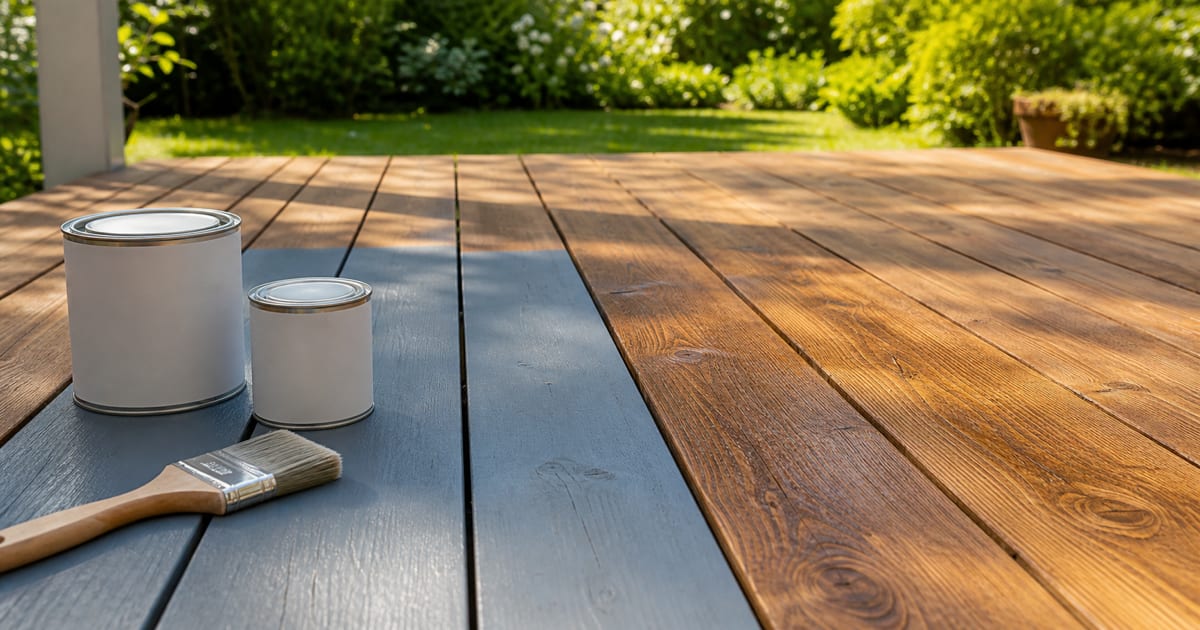
This is one of the most-asked deck questions, and the short answer is: stain is the better choice for most decks. But paint has its place. Here's how to decide.
Why stain wins on most decks
A deck takes a brutal beating — sun, rain, and foot traffic on a flat surface where water sits. Stain penetrates the wood rather than forming a film on top, so when it wears, it fades gracefully instead of peeling. That makes re-coating simple: clean it, let it dry, and apply more. No scraping. Stain also shows off the wood grain, which is the whole point of a real wood deck.
When paint makes sense
Paint isn't wrong — it's just a different commitment. Reach for it when you want a specific, solid color, when the boards are old and weathered and you want to hide the damage, or when the deck is already painted. Paint forms a thick, protective film that resists UV well. The downside is that same film: on a horizontal walking surface it eventually cracks and peels, and once water gets underneath, it lifts. Vertical parts — railings, posts, skirting — hold paint far better than the deck boards themselves.
Can you switch from one to the other?
Stain over old paint won't work — stain needs to soak into bare wood, and paint blocks it. To go from paint to stain you'd have to strip or sand the deck completely down to raw wood, which is a major job. Going the other way (paint over stain) is doable: clean, sand for grip, prime, then paint. The takeaway — decide before the first coat, because reversing it is the expensive part.
Prep is everything
Whichever you choose, the finish only lasts if the prep is right: clean the deck thoroughly, replace any rotten boards, sand rough spots, and — critically — let the wood dry for at least 48 hours after cleaning or rain. Sealing in moisture is the number-one cause of early failure for both paint and stain.
Building your deck kit? A good sander makes stripping and prep far less miserable, and a sprayer speeds up large surfaces. See our data-scored power tool picks to get set up.
Frequently Asked Questions
-
On the flat deck boards, neither lasts forever, but stain is easier to live with: it typically needs refreshing every 2–3 years, while paint can last longer until it starts peeling — at which point it needs scraping and full re-prep. For low-maintenance upkeep, stain wins.
-
Not directly. Stain has to penetrate bare wood, so you'd need to strip or sand off all the old paint first. If the deck is currently painted, repainting is usually the more practical route.