Types of Paint: A Simple Guide to Bases, Finishes & Uses
Latex or oil? Flat or satin? The paint aisle is overwhelming, but it comes down to two choices: the base and the sheen. Here's the whole thing in plain English.
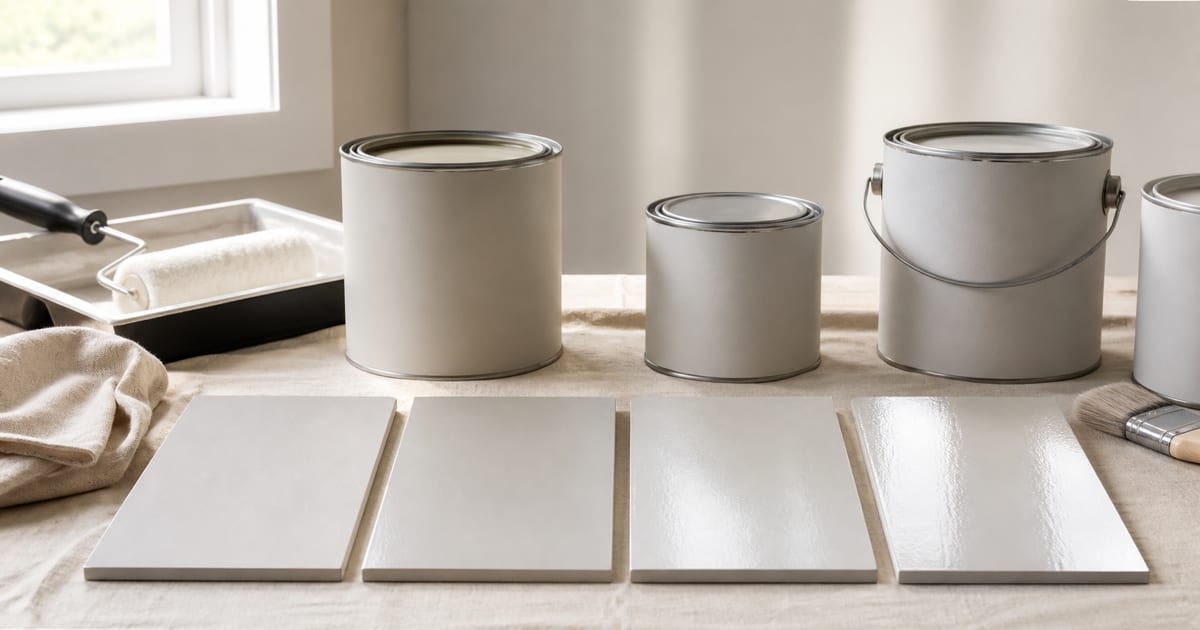
Walk into any paint aisle and the choices pile up fast. But strip away the marketing and almost every can comes down to two decisions: what it's made of (the base) and how shiny it dries (the sheen). Get those two right and you've made 90% of the decision.
1. The base: water vs oil
Water-based paint (you'll see it called latex or acrylic) is what most people should reach for. It dries fast, cleans up with soap and water, has low odor, doesn't yellow over time, and stays flexible. It handles walls, ceilings, and most interior and exterior surfaces.
Oil-based paint (alkyd) dries to a harder, ultra-smooth, durable film that levels out brush marks beautifully — which is why it's still favored for trim, doors, cabinets, and metal. The trade-offs: strong fumes, slow drying, cleanup with mineral spirits, and a tendency to yellow with age. Many regions now restrict it for environmental reasons, and modern water-based enamels have closed much of the durability gap.
2. The sheen: flat to gloss
Sheen is how much light the dried paint reflects. The rule of thumb: more sheen is more durable and easier to wipe clean, but it highlights every bump and patch on the wall.
| Finish | Look | Best for |
|---|---|---|
| Flat / Matte | No shine, hides flaws | Ceilings, low-traffic walls, hiding imperfections |
| Eggshell | Soft, subtle glow | Living rooms, bedrooms, hallways |
| Satin | Gentle sheen, wipeable | Kitchens, kids' rooms, busy walls |
| Semi-gloss | Noticeably shiny, scrubbable | Trim, doors, bathrooms, cabinets |
| Gloss | High shine, hardest wearing | Trim accents, furniture, high-use surfaces |
3. Specialty paints worth knowing
- Primer — not a color coat but a base layer that seals the surface and helps paint stick. Use it on bare, patched, stained, or drastically color-changing surfaces.
- Enamel — a hard, durable topcoat (water- or oil-based) for trim, cabinets, and anything that gets handled.
- Chalk paint — an ultra-matte, low-prep favorite for furniture makeovers; usually sealed with wax.
- Masonry / exterior — formulated to flex and breathe on brick, stucco, concrete, and siding.
How to pick, fast
For a typical room: water-based paint, eggshell or satin on the walls, semi-gloss on the trim and doors, flat on the ceiling. That combo covers most homes. Step up to oil-based or a tough water-based enamel only where you need maximum durability and a glass-smooth finish.
Got your paint picked? Now the tools. See our tested painting tool reviews to put it on cleanly.
Frequently Asked Questions
-
Both are water-based. The practical difference is the binder: 100% acrylic paint is more flexible and adheres better, especially outdoors and on tricky surfaces, while cheaper 'latex' paints may use vinyl binders. For exterior and high-wear jobs, look for '100% acrylic' on the label.
-
For most walls, eggshell or satin hits the sweet spot — enough sheen to wipe clean, but not so much that it spotlights every imperfection. Use flat on ceilings and low-traffic areas, and step up to semi-gloss for trim, doors, and bathrooms.